Is Your AC Acting Up? Here's What to Check Before You Call Anyone
When it comes to ac troubleshooting before calling a pro, most problems have a surprisingly simple fix — and you can often find it in under 30 minutes. HVAC professionals consistently report that nine out of ten service calls for central AC systems not working properly come down to one easy-to-fix culprit: a dirty air filter. Before you schedule a service visit in the middle of an Antelope Valley summer, it's worth running through a few quick checks yourself.
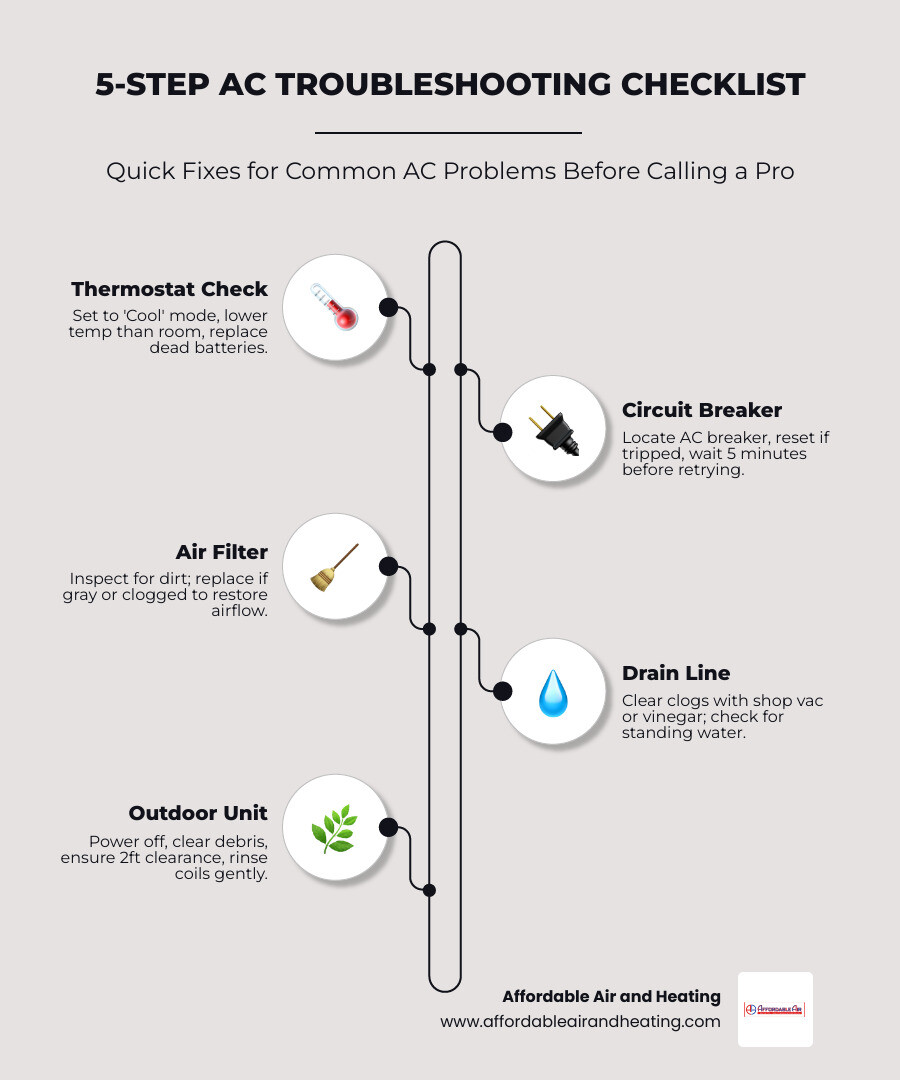
Here are the 5 things to check first:
- Thermostat settings and batteries - Make sure it's set to "Cool," the temperature is below the current room temp, and the batteries aren't dead.
- Circuit breaker - Check if the AC breaker has tripped and reset it once if needed.
- Air filter - A clogged filter is the #1 cause of poor cooling and system shutdowns; replace it if it's grey or blocked.
- Condensate drain line - Standing water near your indoor unit usually means a clogged drain; clear it with a shop vac or vinegar flush.
- Outdoor condenser unit - Remove debris, ensure 2 feet of clearance around the unit, and gently rinse the coils with a garden hose (power off first).
These five checks alone resolve the vast majority of common AC complaints — no tools, no technical knowledge, and no service call required. In the sections below, we'll walk you through exactly how to do each one safely and effectively.
Check Your Power Supply and Thermostat Settings First
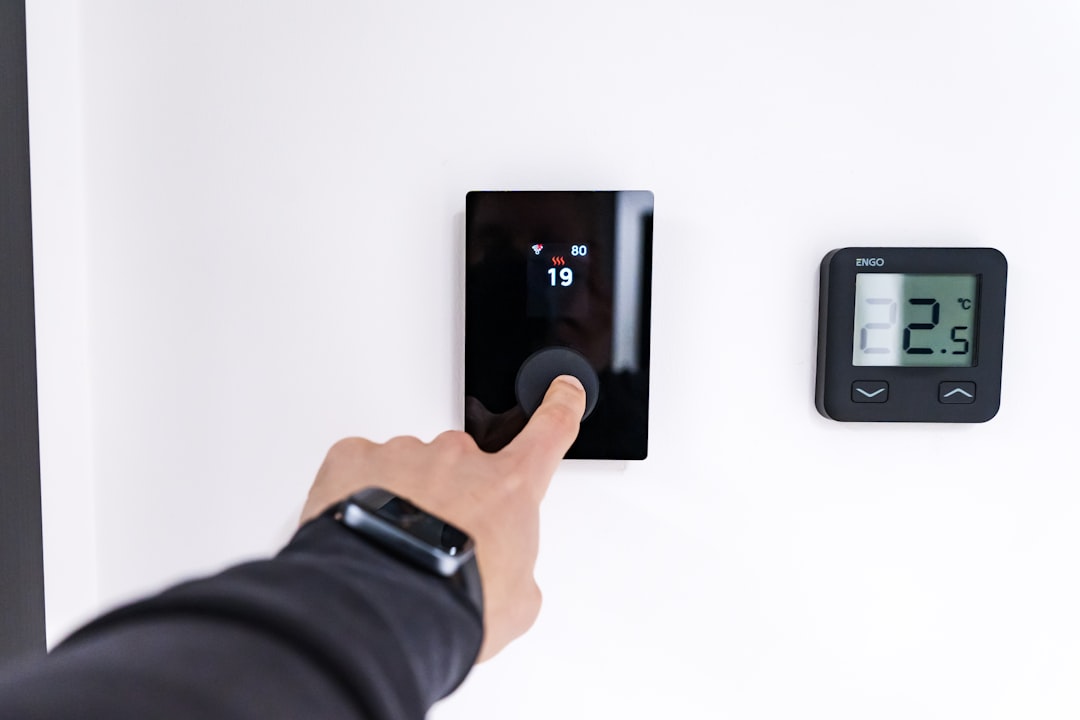
It sounds almost too simple to be true, but a significant number of calls we receive in areas like Lancaster and Palmdale are resolved just by adjusting the thermostat. In May 2026, as the Antelope Valley heat starts to climb, your thermostat is the "brain" of your cooling system. If the brain isn't sending the right signals, the rest of the body won't move.
Before you assume your compressor has failed, start at the wall. Is the screen blank? If so, you might be dealing with a power issue rather than a mechanical one. If the screen is on, double-check that the mode is set to "Cool" and not "Heat" or "Fan Only." We’ve seen many cases where a family member accidentally bumped the settings while cleaning or during a seasonal change.
Troubleshooting Your Thermostat Before Calling a Pro
If your thermostat screen is blank or unresponsive, the first step in ac troubleshooting before calling a pro is replacing the batteries. Most modern thermostats use AA or AAA alkaline batteries. Even if the screen looks faint but visible, the batteries may not have enough juice to trigger the relay that starts your outdoor unit.
If fresh batteries don't work, try a "soft reset." Most digital models have a small reset button or a specific sequence of buttons to hold down. Refer to your manual to see how to clear any software glitches. Additionally, check the location of your thermostat. If it’s in direct sunlight or near a heat-producing appliance, it might "think" the room is much hotter than it actually is, causing the AC to run constantly or cycle incorrectly. For more detailed steps on this, check out our guide on AC Thermostat Troubleshooting in Lancaster.
If the thermostat seems fine but the system won't kick on, you may need to look at AC Won't Turn On Solutions in Santa Clarita to rule out other electrical disconnects.
Resetting the Circuit Breaker Safely
Your air conditioner usually runs on two separate circuits: one for the indoor air handler and one for the outdoor condenser. If a power surge occurs—common during our high-wind days in the Antelope Valley—one of these breakers might trip.
Go to your home’s main electrical panel. Look for switches labeled "AC," "HVAC," or "Air Conditioner." A tripped breaker won't always be flipped all the way to the "Off" position; often, it gets stuck in a "middle" position. To reset it:
- Flip the switch completely to the "Off" position.
- Wait about 30 seconds.
- Flip it firmly back to the "On" position.
Safety Warning: It is safe to reset a breaker once. However, if it trips again immediately or shortly after, do not keep resetting it. This indicates a serious electrical fault, a failing motor, or a short circuit that requires professional attention. Repeatedly resetting a breaker can lead to electrical fires or permanent damage to your compressor. For more on this specific issue, see our article on Solving AC Breaker Tripping in Lancaster.
Inspect Your Air Filter and Vents for Airflow Blockages
If we could give homeowners one single piece of advice to prevent 90% of AC problems, it would be this: Change your air filter. A dirty filter is the #1 cause of poor cooling complaints and system failures. When the filter is clogged with dust, pet hair, and Antelope Valley pollen, your blower motor has to work twice as hard to pull air through. This leads to overheating, high energy bills, and eventually, a total system shutdown.
AC Troubleshooting Before Calling a Pro: The Air Filter Test
How do you know if your filter is actually "dirty"? Don't just look at the calendar. Use the "Light Test." Take your filter out and hold it up to a bright light or the sun. If you cannot see light passing through the fibers, the filter is too clogged and needs to be replaced immediately.
In our local climate, we recommend checking your filter every 30 days, especially if you have pets or live in dustier areas like Quartz Hill or Rosamond. While some high-efficiency MERV-rated filters claim to last 90 days, the high dust volume in the desert often shortens that lifespan significantly. Running your system without a filter is never a good idea long-term, but you can briefly remove a suspected clogged filter to see if airflow improves—just don't leave it that way for more than an hour.
If your system is running but you're getting weak airflow, it might be a sign of AC Fan Problems Solutions or a failing blower motor. For residents noticing a drop in performance, AC Not Cooling Properly in Palmdale offers more specific local insights.
Clearing Obstructions from Registers and Returns
Airflow is a two-way street. Your AC needs to "breathe in" warm air through the return vents and "breathe out" cold air through the supply registers. If you've recently rearranged furniture in your Santa Clarita home, you might have inadvertently blocked a return vent with a sofa or rug.
Walk through every room and ensure:
- All supply registers are open. (Closing vents in unused rooms is a myth—it actually creates pressure imbalances that can leak or damage your ductwork!)
- No curtains, furniture, or toys are blocking the airflow.
- The vents are free of heavy dust buildup.
Maintaining clear pathways for air is a cornerstone of Tips for DIY HVAC Maintenance & Cleaning. If you catch these issues early, you can often Detect AC Issues Early in Palmdale before they turn into expensive repairs.
Clearing the Condensate Drain Line and Managing Water Leaks
Did you know that water leaks account for nearly 90% of all central AC service calls? Your air conditioner doesn't just cool the air; it removes humidity. That moisture turns into water (condensate) that drips into a pan and flows out of your house through a small PVC pipe.
Because that pipe is dark and damp, it's the perfect breeding ground for algae and slime. If that pipe clogs, the water backs up. Modern systems in places like Saugus and Valencia are equipped with a "float switch"—a safety device that detects standing water and shuts your AC off completely to prevent a flood in your home.
Identifying a Tripped Safety Float Switch
If your AC won't turn on and you see water pooling in the secondary drain pan under your indoor unit, your float switch has likely done its job. To fix this:
- Turn off the power to your HVAC system at the breaker.
- Clear the clog: Use a wet/dry shop vac on the end of the drain line (usually located outside near the condenser) to suck out the blockage.
- Flush the line: Once clear, pour a cup of distilled white vinegar down the drain line from the indoor access point to kill any remaining algae.
- Empty the pan: Use towels or the shop vac to remove all standing water from the pan so the float switch can drop back down.
Preventing these leaks is much easier than fixing the resulting water damage. We recommend a monthly vinegar flush during the peak cooling season. You can find more tips on this in our guide to Prevent AC Water Leaks in Palmdale and Determining Why Your AC is Leaking. If you ignore a leak, you might also have to deal with What to Do if You Notice Mold Growth on Your AC Unit.
Inspecting and Cleaning the Outdoor Condenser Unit Safely
The outdoor unit (the condenser) is responsible for releasing the heat collected from inside your home. If the metal fins on the side of the unit are covered in dirt, grass clippings, or spider webs, the heat gets trapped. This forces the compressor to run hotter and longer, which can lead to a premature "burnout."
Maintaining Proper Clearance for Optimal Airflow
In the Antelope Valley, wind-blown debris and tumbleweeds are common enemies of the outdoor unit. For ac troubleshooting before calling a pro, check the area around your condenser:
- The 2-Foot Rule: Ensure there is at least two feet of clear space on all sides of the unit. Trim back any bushes, weeds, or tall grass.
- The 5-Foot Rule: Ensure there is at least five feet of clearance above the unit. Do not store items on top of the AC or build decks directly over it.
- Cleaning the Coils: Turn off the power at the outdoor disconnect switch. Use a garden hose with a gentle spray (never a pressure washer, which will flatten the delicate aluminum fins) to rinse the dirt out of the coils. Spray from the top down.
Regularly clearing away mulch and vegetation helps with heat dissipation and is a key part of AC Tune-Up Maintenance in Canyon Country, CA. Keeping this unit clean is one of the best Tips for DIY HVAC Maintenance & Cleaning we can offer for long-term system health.
When to Stop DIY AC Troubleshooting and Call a Professional
While we love empowering homeowners to handle the basics, some issues are dangerous or require specialized tools. If you’ve checked the thermostat, the breaker, the filter, and the drain line, and the system still isn't cooling, it's time to call in the experts at Affordable Air and Heating.
TaskDIY Safe?Why?Changing Air FilterYesSimple, no tools required.Resetting Breaker (Once)YesSafe if done correctly.Cleaning Drain LineYesUse a shop vac and vinegar.Cleaning Coils (Rinsing)YesGarden hose only, power off.Fixing Refrigerant LeaksNoRequires EPA certification and specialized gear.Electrical Wiring RepairsNoHigh voltage risk; fire hazard.Replacing Capacitors/MotorsNoDangerous electrical discharge risk.Thawing Frozen CoilsYesTurn off AC, run fan only for 2-5 hours.
If you notice your unit is making strange sounds, check our guide to Fix Loud AC Noises in Valencia. If you see ice forming on the copper lines, you are likely dealing with Why My AC Freezing Up in Santa Clarita.
Recognizing the Signs of a Refrigerant Leak
Refrigerant is not like gas in a car; it isn't "used up." If your system is low, it means there is a leak. Handling refrigerant is strictly regulated by the EPA, and it is illegal for anyone without a Section 608 certification to handle or "top off" a system.
Signs you have a leak include:
- A hissing or bubbling sound coming from the indoor or outdoor unit.
- Oily residue on the copper refrigerant lines or valves.
- The AC is running constantly, but the air coming out of the vents is only lukewarm.
- Ice buildup on the evaporator coil (the indoor unit) or the "fat" copper line outside.
If you suspect a leak, turn the system off to prevent compressor damage and contact a pro to Detect Refrigerant Leaks in AC Units.
Handling Persistent Short Cycling Issues
Short cycling is when your AC turns on and off every few minutes without ever finishing a full cooling cycle. This is incredibly hard on your compressor and can skyrocket your energy bills. While a dirty filter is a common cause, short cycling can also be caused by an oversized unit or a malfunctioning control board. If a filter change doesn't fix it, you should look into how to Fix AC Short Cycling in Lancaster.
Frequently Asked Questions about AC Troubleshooting
What is the very first thing to check if my AC won't turn on?
The very first thing to check is your thermostat. Ensure it has fresh batteries and is set to "Cool" with a temperature at least 3-5 degrees lower than the current room temperature. If the thermostat is fine, check your circuit breaker panel for a tripped switch.
How do I know if my evaporator coils are frozen?
You can usually tell if your coils are frozen if you see ice forming on the copper refrigerant lines (either inside or outside), or if the airflow from your vents feels very weak and warm. If this happens, shut the AC off immediately. Set the thermostat fan to "On" (not "Auto") and let it run for 2 to 5 hours to thaw the ice. Never try to chip the ice off with a tool, as you will likely puncture the coils.
Is it safe to reset my AC circuit breaker multiple times?
No. You should only reset a tripped breaker once. If it trips a second time, it is a clear warning that there is an electrical problem, such as a grounded compressor or a failing fan motor. Repeatedly resetting the breaker can cause a fire or lead to much more expensive repairs.
Conclusion
Taking the time for ac troubleshooting before calling a pro can save you a lot of stress and money. By keeping your filters clean, your drain lines clear, and your outdoor unit free of debris, you’re already doing more than the average homeowner to protect your investment.
However, even the best-maintained systems occasionally need professional help. Since 1996, Affordable Air and Heating has been the family-owned choice for residents across the Antelope Valley, from Acton to Valencia. We pride ourselves on offering energy-efficient solutions and flexible financing to keep your home comfortable year-round.
If your DIY efforts haven't brought the cold air back, don't suffer in the heat. Our expert technicians are ready to diagnose and repair your system quickly and affordably. Schedule your professional air conditioning service today and let us help you stay cool!