Replacing a Faulty Blower Motor vs. Upgrading the Entire Air Handler Before Winter


The October Heating Startup: Catching a Failing Blower Motor Early
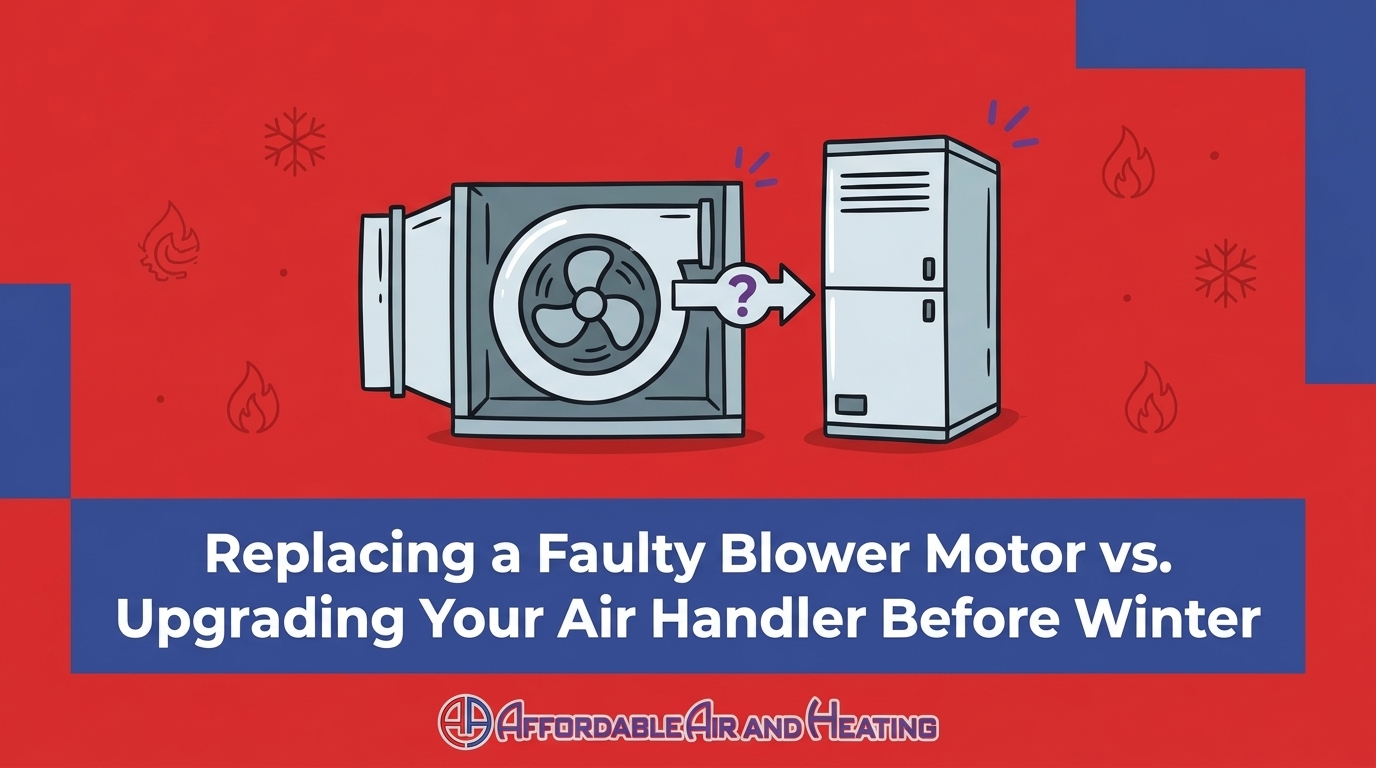
Before the first major freeze hits the High Desert, your heating equipment has likely been sitting idle for months. If an inspection reveals trouble, you might find yourself weighing a critical choice: replacing a faulty blower motor vs. upgrading the entire air handler before winter arrives. A mid-fall / October heating startup is the critical window to evaluate the health of your heating equipment before freezing temperatures turn a mechanical issue into a safety concern.
If you want to ensure your HVAC system is ready for the cold season, catching component wear early is the smartest strategy. During this initial seasonal startup, our technicians at Affordable Air and Heating often discover high amp draw or reduced CFM airflow, signaling an impending blower motor failure. Homeowners are then faced with a sudden, localized decision: repair the isolated component or upgrade the aging system entirely.
Why the High Desert Climate Demands Proactive Care
In our years serving Lancaster, our team has seen firsthand how winter nights frequently drop to freezing. This makes overnight heating reliability a critical safety factor, not just a matter of comfort. When a heating system sits dormant through the long, hot summer, the electrical components and mechanical bearings inside the air handler can degrade. Dust settles on the motor housing, capacitors lose their charge, and lubrication can dry out.
The risk of waiting: If you skip the fall evaluation and wait until the first freezing night to turn on the heat, a struggling motor will immediately be pushed to its absolute limit. Making this choice proactively prevents a catastrophic breakdown during the coldest nights of the year. Addressing the problem on your own terms in October gives you the time to weigh your options logically, without the stress of a freezing house rushing your decision.
Understanding the Role of the Blower Motor in Your Air Handler
The blower motor is the beating heart of your air handler. While the furnace or heat pump generates the actual heat, it is the blower motor's job to push that conditioned air through the ductwork and into your living spaces. Without a fully functioning motor, even the most efficient heating elements are entirely useless.
When the motor struggles, it often manifests as high amp draw or reduced CFM airflow, forcing the entire system to work harder. High amp draw means the motor is pulling more electrical current than it was designed to handle just to keep spinning. Reduced CFM (Cubic Feet per Minute) means the volume of air moving through your vents has dropped significantly. If you need heating replacement and repair services, these are the primary metrics our team uses to diagnose the severity of the problem.
The Domino Effect of a Struggling Motor
A failing blower motor rarely suffers in isolation. Because the components inside an air handler are so tightly integrated, extra strain on the motor creates a domino effect throughout the equipment. Understanding this interconnected relationship is key to evaluating whether a localized repair is sufficient.
• Tripped breakers: As the high amp draw increases, the electrical panel may trip the circuit breaker to prevent overheating and potential fire hazards.
• Overheating furnaces: If reduced CFM airflow fails to push enough air over the heat exchanger, the internal temperature of the unit spikes, triggering safety shutoffs.
• Unusual noises: Grinding, squealing, or rattling sounds usually point to failing bearings or an unbalanced blower wheel, which puts immense physical stress on the motor mount.
• Uneven heating: Weak airflow means the rooms furthest from the air handler will remain cold, no matter how high you set the thermostat.
When to Replace Just the Blower Motor
Replacing just the motor is often the most logical path forward under specific, favorable conditions. Not every mechanical failure requires a total system overhaul. If the rest of the unit is healthy, a localized repair can restore your heating reliability for years to come.
What We Look For in a Healthy System
A standalone repair makes sense when diagnostics confirm that high amp draw or reduced CFM airflow is strictly an isolated motor issue, not a symptom of broader systemic failure. Here is the checklist our experts at Affordable Air and Heating use to determine if a simple motor replacement is the right call:
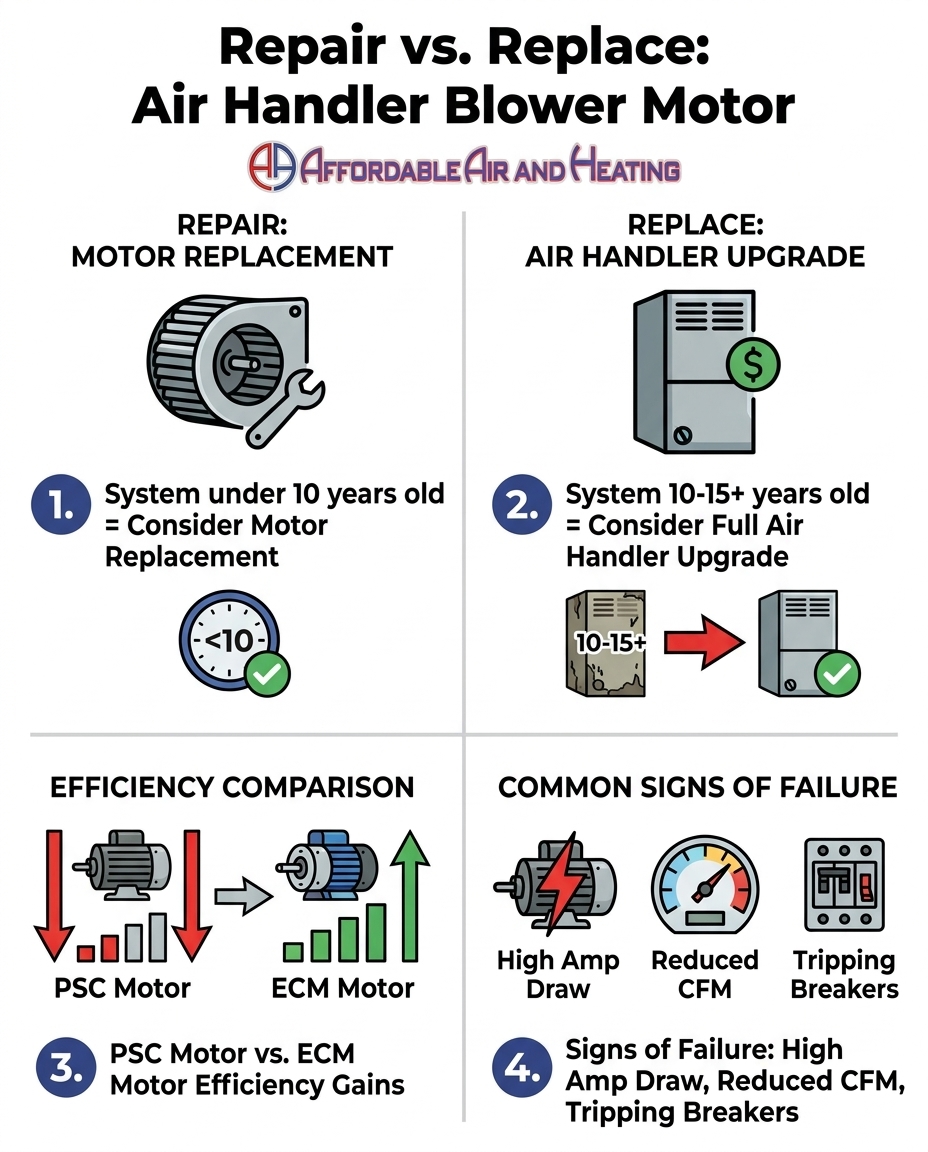
• System age is under 10 years: Air handlers are generally built to last 10 to 15 years. If your unit is relatively young, the surrounding components still have plenty of life left.
• Active manufacturer warranty: If the component is still covered under a parts warranty, the cost of the repair drops significantly, making replacement the obvious choice.
• Pristine evaporator coil: The indoor coil must be free of heavy rust, corrosion, or refrigerant leaks. A healthy coil indicates the system hasn't been subjected to chronic moisture issues.
• Solid control board: The circuit board that directs the motor must show no signs of scorch marks or electrical degradation.
• Isolated electrical readings: The high amp draw must be localized to the motor itself, proving that a fresh motor will completely resolve the electrical strain.
If your air handler meets all these criteria, swapping out the faulty blower motor is a sound investment that will get your home ready for winter without unnecessary expense.
When Upgrading the Entire Air Handler is the Smarter Choice
Standard air handlers have a lifespan of 10 to 15 years. Investing in a brand-new motor for a system at the very end of its life often leads to compounding failures. If an October heating startup reveals a failing motor alongside an aging evaporator coil or degraded control board, a full replacement prevents a cascade of frustrating breakdowns.
The Compounding Risks of Aging Equipment
Putting a powerful, brand-new motor into a 15-year-old air handler can sometimes cause more problems than it solves. The new motor will push air with factory-level force, which can stress older, brittle ductwork or overpower a weak control board. Knowing when to cut your losses on an older heating system requires looking at the total mechanical picture.
Furthermore, modern air handlers feature Electronically Commutated Motors (ECM), which provide significantly better airflow and efficiency than older Permanent Split Capacitor (PSC) motors. A full upgrade resets the warranty clock on the entire unit, providing long-term peace of mind that a patchwork repair simply cannot match.
• System Age — Replace Motor Only: Under 10 years old — Upgrade Entire Air Handler: 10 to 15+ years old
• Warranty Status — Replace Motor Only: Active parts warranty available — Upgrade Entire Air Handler: Warranty expired; frequent repairs needed
• Component Health — Replace Motor Only: Coil and control board are pristine — Upgrade Entire Air Handler: Rust, wear, or leaks present in other areas
• Technology — Replace Motor Only: Maintains older PSC technology — Upgrade Entire Air Handler: Upgrades to high-efficiency ECM technology
• Long-Term Value — Replace Motor Only: Fixes the immediate problem — Upgrade Entire Air Handler: Resets the lifespan and total system warranty
Efficiency Gains and Generic Incentive Opportunities
Upgrading to a high-efficiency air handler resolves underlying issues with high amp draw or reduced CFM airflow permanently. Older blower motors operate at a single speed—they are either completely on or completely off. This creates massive power surges every time the system kicks on, which drives up energy consumption and puts heavy wear on the mechanical parts.
The Shift from PSC to ECM Technology
Newer systems optimize energy consumption through advanced technology. Modern Electronically Commutated Motors (ECM) are variable-speed. Instead of blasting at full capacity constantly, they ramp up slowly and adjust their speed based on the exact heating demands of the house. This reduces the mechanical strain required to heat the home, provides whisper-quiet operation, and eliminates the cold spots caused by poor air circulation.
Financial incentives to consider: While a standalone motor repair rarely qualifies for any kind of financial assistance, generic federal tax credits and utility rebates may apply to qualifying high-efficiency heating system upgrades. Many government and local utility programs are designed to incentivize homeowners to move away from outdated, energy-wasting units. Homeowners should consult with a tax professional or their local utility provider to verify current program eligibility before making a final decision.
Transparent Diagnostics: Making an Empowered Decision
At Affordable Air and Heating, we believe deciding between a repair and a replacement shouldn't be based on guesswork or high-pressure sales tactics. Your home is your largest investment, and you deserve to understand exactly what is happening inside your mechanical equipment before agreeing to any major work.
What a Transparent Diagnostic Looks Like
A professional diagnostic should provide a clear mechanical breakdown, including specific measurements like high amp draw or reduced CFM airflow. When one of our technicians evaluates your system, we will show you the multimeter readings. If the motor is rated to pull 5 amps but is currently pulling 9 amps, you will see that data firsthand. This transparent, pressure-free approach empowers the homeowner with objective facts rather than pushing a quick sale.
Homeowners deserve a transparent financial and lifecycle analysis of their equipment to make the right long-term choice. A thorough evaluation looks at the age of the unit, the cost of the immediate repair, the likelihood of future breakdowns, and the potential energy savings of a new system. Exploring flexible financing options can also help bridge the gap between a temporary fix and a permanent solution, allowing you to invest in reliable comfort without compromising your household budget.
Secure Your Heating Reliability Before Freezing Temperatures Hit
Don't wait for a complete system failure in the middle of winter to address a struggling blower motor. Lancaster's High Desert winters are unforgiving, and losing your heat overnight poses a serious risk to your home's safety and your family's comfort. By taking action early, you retain complete control over the process.
A mid-fall / October heating startup provides the objective criteria needed to make a confident go/no-go decision. Whether the data points toward a simple motor swap or a comprehensive air handler upgrade, knowing the facts allows you to prepare properly. Schedule a comprehensive system evaluation with our team today to ensure your home remains safe, efficient, and comfortably warm all season long.
Frequently Asked Questions
Is it worth replacing a blower motor on an older HVAC system?
If the system is over 10 to 15 years old, our team typically finds that replacing the blower motor is not worth the investment. Older systems are prone to compounding failures, meaning another expensive part like the control board could fail shortly after. We usually recommend putting that repair money toward a new, highly efficient air handler that comes with a fresh warranty.
What happens if my air handler blower motor fails in winter?
If the blower motor fails, your heating system will be completely unable to circulate warm air through your home. The furnace or heat pump may still generate heat, but without the motor to move it, the system will quickly overheat and trigger a safety shutdown. This leaves your home without heat until a professional can replace the motor.
Does a new air handler improve heating efficiency?
Yes, a new air handler significantly improves overall heating efficiency. Modern units utilize Electronically Commutated Motors (ECM) that adjust their speed dynamically, using far less electricity than older single-speed motors. This advanced technology provides better, more consistent airflow while lowering your monthly energy consumption.
How long do air handler blower motors typically last?
A well-maintained blower motor typically lasts between 10 and 15 years, closely mirroring the lifespan of the air handler itself. Regular maintenance, such as changing air filters and scheduling seasonal tune-ups, prevents excess dust buildup and strain, helping the motor reach its maximum potential lifespan.
What are the signs of a failing blower motor?
The most common signs include weak airflow from your vents, unusual grinding or squealing noises, and a system that frequently trips its circuit breaker. Technicians will also look for high electrical amp draw during an inspection, which indicates the motor is working too hard to spin the fan.
Can upgrading my air handler qualify for energy tax credits?
Upgrading to a qualifying high-efficiency air handler or complete heating system may make you eligible for generic federal tax credits or local utility rebates. Standalone repairs, like replacing a single motor, generally do not qualify. You should always consult with a tax professional or your local utility provider to verify current program requirements and eligibility.