Choosing Between a Heat Pump and Traditional AC in Southern California


Debunking the Summer Heat Pump Myth
A persistent rumor claims that heat pumps are built strictly for cold climates and fold under the pressure of real summer heat. The truth is quite the opposite, especially when you are choosing between a heat pump and traditional AC in Southern California. If you are evaluating a cooling replacement during peak-heat July, you might assume a standard air conditioner is your only reliable option. In reality, modern heat pumps are engineered to handle the exact same triple-digit temperature spikes with incredible efficiency. The decision comes down to understanding how these systems actually operate under extreme stress, rather than relying on outdated myths.
Whether you are looking to upgrade your traditional air conditioning systems or want to explore a high-efficiency heat pump installation, we can help you navigate the best choice for your home.
The Mechanical Reality: How Both Systems Cool Your Home
The biggest hurdle for many homeowners is simply the name "heat pump." It sounds like a device designed exclusively to warm a house, which makes it feel counterintuitive to install one right before the hottest months of the year. The problem begins when you assume a heat pump uses a fundamentally different process to cool your home than a standard air conditioner.
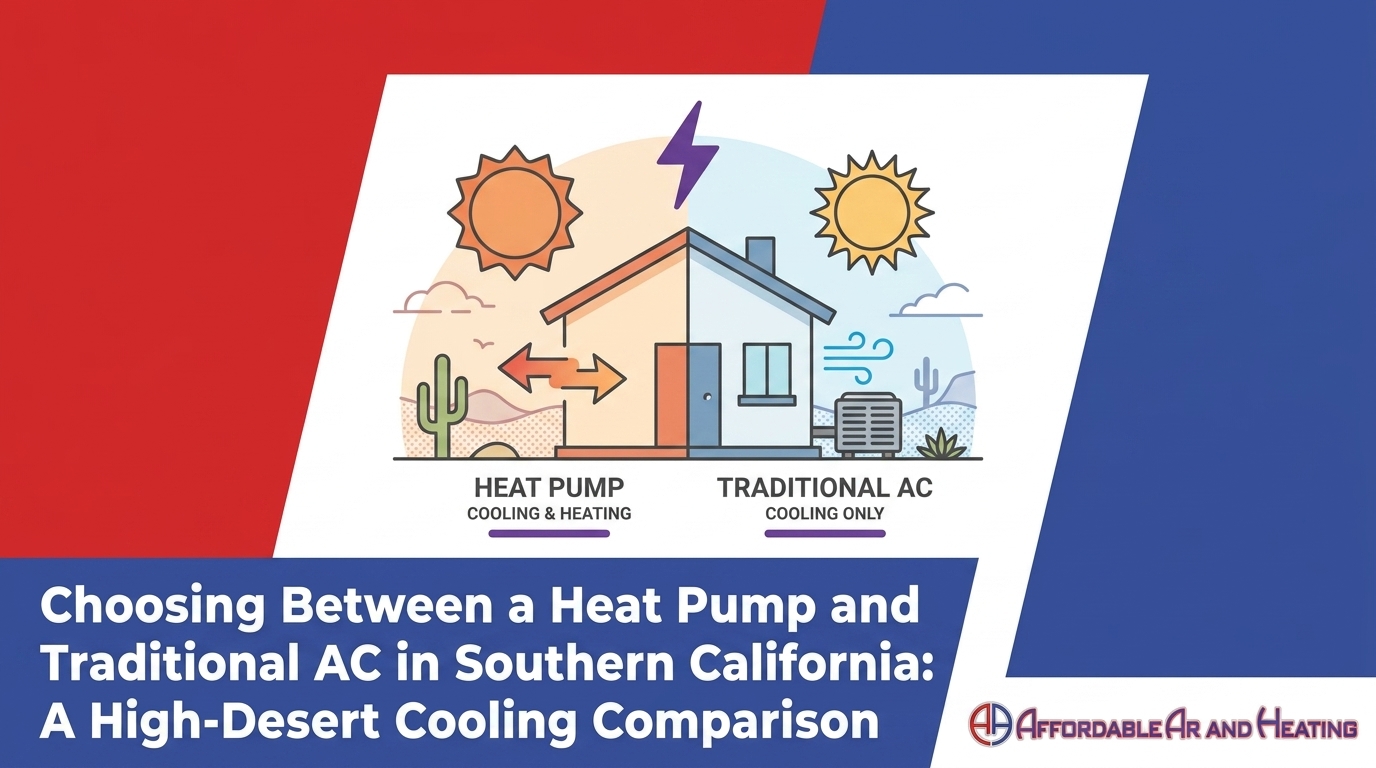
The cause of this confusion is purely marketing terminology. In reality, during the summer months, a heat pump is mechanically identical to a traditional air conditioner. Both systems do not "create" cold air; instead, they move heat from inside your home to the outside environment. The only mechanical difference between the two systems is that a heat pump contains a reversing valve. During the summer cooling mode, this valve remains inactive, allowing the unit to function exactly like a standard AC. You are not sacrificing any cooling power by choosing one over the other.
The Refrigeration Cycle Explained
To fully understand why both systems are equally capable, it helps to look at the shared technology working behind the scenes. Both systems rely on a closed-loop refrigeration cycle to keep your living space comfortable:
• The Evaporator Coil: Located inside your home, this coil holds cold, low-pressure liquid refrigerant. As warm indoor air blows over it, the refrigerant absorbs the heat, turning into a gas.
• The Compressor: The heated gas travels to the outdoor unit, where the compressor squeezes it, raising its pressure and temperature significantly.
• The Condenser Coil: Also located outside, this coil allows the intensely hot, pressurized gas to release its heat into the outdoor air, returning the refrigerant to a liquid state.
• The Expansion Valve: The liquid cools further as it passes through this valve, returning inside to start the cycle all over again.
Because both systems use this exact same cycle, a high-quality heat pump will deliver the exact same refreshing blast of cold air as a top-tier air conditioner.
Cooling Performance in the Extreme High Desert Climate
It is one thing to cool a home in coastal cities where the summer breeze keeps temperatures relatively mild. It is an entirely different challenge in the Lancaster high desert, where extreme, triple-digit heatwaves place a massive, relentless load on your HVAC system. The Antelope Valley climate requires heavy, reliable cooling loads that run for hours at a time without a break.
When extreme weather hits, it places immense stress on aging or improperly sized equipment. A typical pattern we see is an older unit simply giving up in the middle of a massive heatwave. For example, one local homeowner recently reached out because their air conditioner suddenly stopped blowing cool air during a brutal summer stretch. A technician was dispatched within four hours and had the system fixed and running again in just ten minutes. While quick, professional repairs are a lifesaver, relying on an aging system during extreme heat is always a gamble.
High-efficiency heat pumps are specifically engineered to maintain consistent indoor comfort even when outdoor temperatures soar well past 100 degrees. Because they are built to handle the rigorous demands of both heating and cooling, their internal components are often highly robust. They do not "struggle" in the desert heat; they thrive in it, pulling warm air out of your home just as aggressively as a dedicated air conditioner would.
Energy Efficiency and Long-Term Savings Under Heavy Load
When evaluating your options, long-term energy consumption is just as critical as raw cooling power. High-efficiency heat pumps frequently meet or exceed the efficiency ratings of standard air conditioners, leading to lower energy consumption during heavy summer use. Furthermore, generic federal tax credits and local utility incentive programs frequently apply to high-efficiency heat pump upgrades, making the initial investment more accessible (always consult a tax professional to verify current programs).
Understanding SEER2 Ratings
Both heat pumps and traditional ACs are measured by the same cooling efficiency standard: SEER2 (Seasonal Energy Efficiency Ratio 2). This rating calculates the total cooling output during a typical cooling season divided by the total electrical energy input. A higher SEER2 rating means the system uses less electricity to produce the same amount of cooling.
Modern heat pumps often feature variable-speed compressors. Unlike older, single-stage units that blast on at 100% capacity and then shut off, variable-speed systems ramp up and down smoothly. This precise cooling reduces the massive energy spikes associated with systems constantly turning on and off, keeping your home at a steady temperature while drawing less power.
• Cooling Mechanism — Traditional Air Conditioner: Refrigeration cycle (absorbs indoor heat) — Modern Heat Pump: Refrigeration cycle (absorbs indoor heat)
• Efficiency Metric — Traditional Air Conditioner: SEER2 — Modern Heat Pump: SEER2
• Compressor Type — Traditional Air Conditioner: Often single or two-stage — Modern Heat Pump: Frequently variable-speed
• Winter Function — Traditional Air Conditioner: None (requires separate furnace) — Modern Heat Pump: Reverses cycle to heat the home

The Third Option: When to Consider Ductless Alternatives
Sometimes, the choice isn't just between two central units. Homes without existing ductwork, or those with leaky, aging ducts that waste energy, might benefit significantly from ductless mini split systems. These systems operate on the exact same heat pump technology discussed above, but they bypass the ductwork entirely, delivering conditioned air directly into individual rooms.
Understanding how ductless mini splits use coolant is simple: just like a central system, refrigerant flows between an outdoor compressor and an indoor air handler. However, because the air handler is mounted directly on your wall or ceiling, you experience zero energy loss through attic ductwork. This direct transfer makes them incredibly efficient.
The greatest advantage of a ductless alternative is zoning. Instead of paying to cool empty guest rooms or an unused dining room, you can set different temperatures for different zones. You can keep the living room ice-cold during the day and shift the cooling power to the bedrooms at night, maximizing your energy savings.
Installation, Lifespan, and Year-Round Utility
When an old AC unit breaks down unexpectedly, replacing it with a heat pump provides a seamless transition to a dual-purpose system. While a traditional air conditioner sits dormant for half the year, a heat pump runs year-round, reversing its cycle in the winter to pull ambient heat from the outside air into your home. This eliminates the need for a separate furnace, consolidating your heating services and cooling into one single footprint.
Because they run year-round, heat pumps do require diligent, twice-a-year maintenance to reach their full expected lifespan. Timely, professional installation is also critical to ensure the system operates at peak efficiency from day one. When systems start showing signs of wear, quick intervention is key. For example, another local customer recently needed immediate AC troubleshooting when their unit began struggling in the heat. Technicians arrived the same day, identified a faulty fan motor, and replaced it with a quick turnaround. However, if that failure had been a major compressor blowout on a 15-year-old unit, upgrading to a dual-purpose heat pump would have been the smartest long-term investment.
System Sizing and Making the Right Choice for Your Home
Surviving extreme heatwaves requires more than just picking a good brand; it requires a system sized specifically for your home's unique footprint. As the local experts who understand the exact system sizing and efficiency requirements needed to survive Antelope Valley heatwaves, the team at Affordable Air and Heating knows that an improperly sized unit will fail you when you need it most.
If a system is too small, it will run continuously without ever reaching your desired temperature, driving up your energy bills and burning out the motor. If a system is too large, it will "short-cycle," turning on and off rapidly. This prevents the unit from properly dehumidifying the air, leaving your home feeling cold but clammy.
When making your final decision, consider this checklist:
• Current Infrastructure: Do you have existing ductwork, and is it in good condition? If not, a ductless system might be best.
• Heating Needs: Is your furnace also aging? A heat pump replaces both the AC and the furnace at once.
• Climate Reality: Are you prepared for the Lancaster high desert heat? Ensure your contractor performs a strict load calculation.
• Efficiency Goals: Are you looking for variable-speed technology to lower your long-term energy consumption?
Frequently Asked Questions About High-Desert Cooling
Can a heat pump cool effectively in 100-degree weather?
Yes, a high-quality heat pump is more than capable of cooling your home during triple-digit heatwaves. Because it uses the exact same refrigeration cycle and components as a standard air conditioner, it removes heat from your home with the exact same power. The key to surviving 100-degree weather is ensuring the system is properly sized for your specific square footage and insulation levels.
Is a heat pump the same as an AC in the summer?
Mechanically speaking, a heat pump operates identically to an air conditioner during the summer months. Both systems utilize refrigerant to absorb indoor heat and pump it outside through a compressor and condenser coils. The only difference is that a heat pump has a reversing valve that stays inactive during the summer, allowing it to function purely as an AC.
Which system offers better energy efficiency in Southern California?
High-efficiency heat pumps often edge out older traditional ACs because they frequently utilize variable-speed compressors. This technology allows the unit to adjust its cooling output in small increments rather than blasting at full power and shutting off completely. Both systems are rated by SEER2, and you can easily find heat pumps that match or exceed the highest-rated standard air conditioners.
Do heat pumps struggle in extreme heat?
Modern heat pumps do not struggle in extreme heat any more than a traditional air conditioner would. If a system is struggling, it is usually due to improper sizing, a dirty filter, low refrigerant, or aging components, rather than the type of technology it uses. A properly installed heat pump will thrive in the desert heat.
What is the downside to a heat pump in the summer?
There is no specific downside to using a heat pump for summer cooling compared to a traditional AC. The main consideration is simply that because a heat pump is used year-round for both heating and cooling, it accumulates run-time faster than a system that rests all winter. This makes regular, biannual maintenance essential to protect your investment.
How does high-desert system sizing differ from coastal AC installation?
High-desert sizing must account for significantly higher peak temperatures and extended periods of heavy cooling loads. Coastal installations often rely on smaller units because the ambient outdoor temperature rarely reaches extremes. In the desert, a rigorous load calculation is required to ensure the system has the capacity to overcome massive thermal heat gain during the hottest parts of the day.
Secure Reliable Cooling for the Next Heatwave
Choosing between a heat pump and traditional AC in Southern California is a major decision that impacts your long-term comfort and energy efficiency. Having a clear, region-specific breakdown of cooling performance helps take the guesswork out of the process, ensuring you are prepared when the extreme high-desert weather hits. Whether you are leaning toward replacing your current setup or want to explore the year-round benefits of a heat pump installation, consulting with local experts is the best way to evaluate your home's specific cooling loads. Secure your comfort today and ensure your home stays perfectly chilled all summer long.