Whole-House Humidifiers vs. Portable Units for High Desert Winters


Are Portable Humidifiers Enough to Combat Extreme Aridity?
Is your current setup actually solving the dry air problem, or are you just running a daily water-hauling marathon? When evaluating Whole-House Humidifiers vs. Portable Units for High Desert Winters, the first thing our team at Affordable Air and Heating hears from local homeowners is that single-room devices struggle to keep up with the severe indoor dryness of the region. You buy one unit for the primary bedroom, then another for the living room, and soon you are spending your evenings juggling heavy tanks, scrubbing moldy reservoirs, and wiping up accidental spills. The decision you face is straightforward: continue this demanding daily chore, or upgrade to an integrated system before the heavy heating demand arrives.
If you are ready to move past temporary fixes and achieve comprehensive home comfort, upgrading your indoor air quality solutions often starts with looking at integrated whole-house air purification and IAQ systems.
Why Central Heating Exacerbates Arid Climate Conditions
Most homeowners don't realize that the air inside their home can actually become drier than the desert outside. The Environmental Protection Agency (EPA) recommends maintaining indoor relative humidity between 30% and 50% for optimal health, comfort, and protection of your home's interior. However, achieving that balance in our region requires fighting against two powerful forces: the natural climate and your own HVAC system.
With the Lancaster CA / High Desert climate, naturally low outdoor humidity plummets even further during the colder months. When you draw that already-dry air into your home and run it through a furnace, the heating process bakes out whatever residual moisture remains. Running a central furnace during winter can easily drop indoor humidity levels to below 15% if unmitigated. In our extensive experience serving the area, we see firsthand how this extreme drop creates a harsh indoor environment that directly affects your daily life.
The physical toll of extreme dryness:
• Respiratory irritation: Dry air pulls moisture from your nasal passages and throat, leading to morning sore throats, persistent coughing, and an increased susceptibility to winter colds.
• Skin and eye discomfort: Flaky, itchy skin and dry, irritated eyes are constant battles when indoor humidity falls below 20%.
• Static electricity: A lack of moisture in the air causes static electricity to build up, leading to painful shocks every time you touch a doorknob or light switch.
• Damage to home interiors: Hardwood floors, wooden furniture, musical instruments, and even drywall can crack, warp, or separate when starved of moisture for months on end.
While relying on professional heating services ensures your furnace runs efficiently and safely, humidity control must be actively managed alongside it. A perfectly tuned furnace will keep you warm, but without a dedicated moisture strategy, it will also dry out your living space faster than you can say "static shock."
The Daily Labor and Limitations of Room-by-Room Portable Units
When the dry air hits in November pre-winter, the immediate reaction is usually a trip to the local big-box store to grab a portable humidifier. While there are plenty of valid reasons to install a humidifier, we constantly meet exhausted homeowners who realize that relying on portable units to treat an entire house quickly devolves into a part-time job. These room-by-room devices only offer a partial, high-effort solution to a whole-home problem.
The sheer physical labor and maintenance burden of relying on portable humidifiers becomes apparent within the first week of use. To effectively humidify a standard home, you often need three to five separate units running simultaneously. Managing them requires a frustrating, repetitive routine.
The daily and weekly portable humidifier chore list:
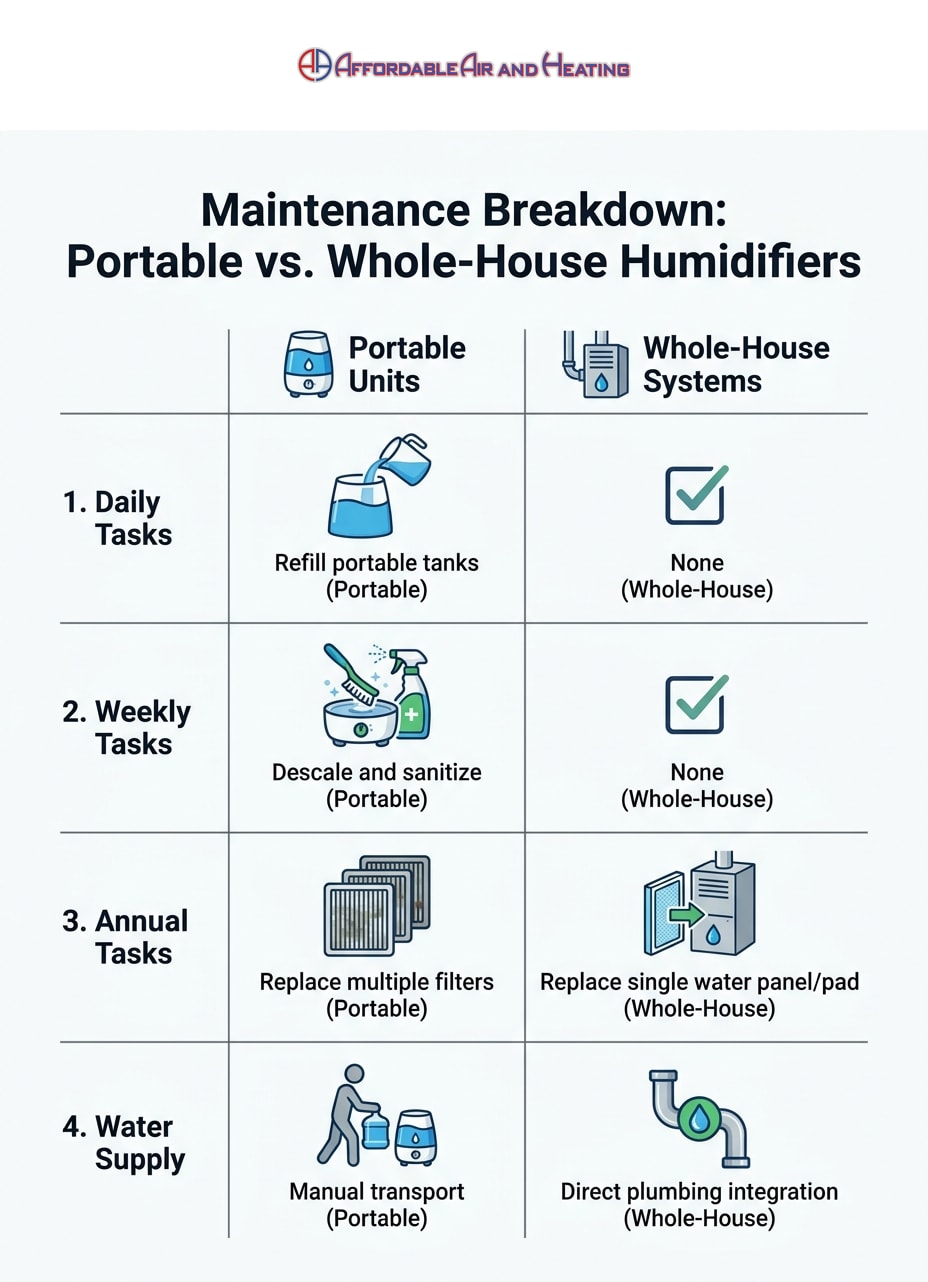
1. The daily water haul: Most portable units hold between one and two gallons of water. In an arid climate, a unit running on high will empty that tank in less than 12 hours. This means hauling heavy, sloshing water tanks from the bathroom sink to various rooms twice a day.
2. Uneven moisture distribution: Portable units blast moisture into a concentrated area. This creates a risk of localized over-humidification—where the area immediately around the unit feels clammy or damp—while the hallway just ten feet away remains bone dry.
3. Frequent descaling: The heating elements and ultrasonic plates in portable units attract mineral buildup rapidly. Scrubbing these delicate parts with vinegar requires a delicate touch and a lot of patience.
4. Mold and bacteria prevention: Stagnant water in a room-temperature reservoir is a breeding ground for mold and bacteria. If you skip a few cleanings, your portable unit will simply aerosolize those contaminants and blow them directly into your breathing air.
Portables are excellent for a temporary fix in a single nursery or office, but they simply do not have the output capacity or the automated design required to combat extreme winter dryness across a multi-bedroom home.
How Integrated Humidity Control Transforms Home Comfort
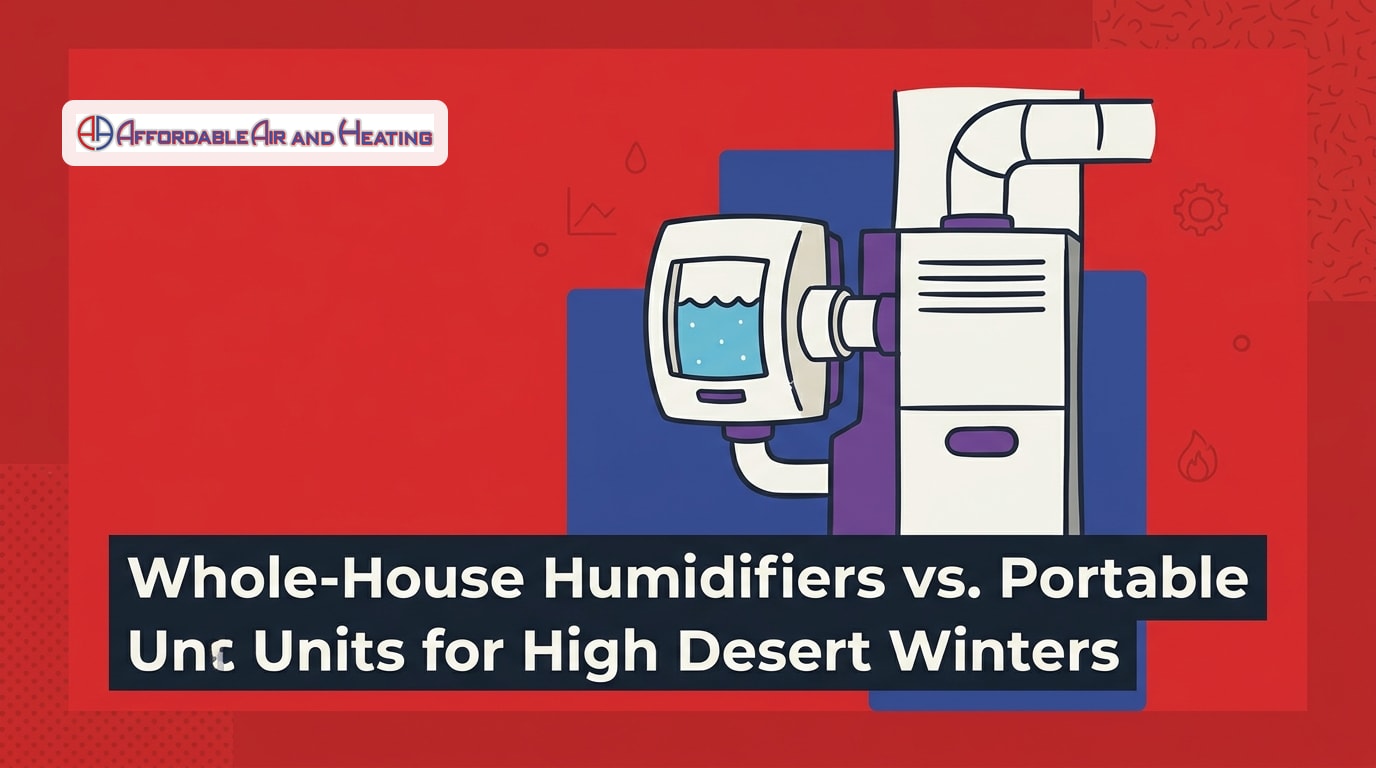
The alternative to the daily water-hauling routine is an integrated, whole-house humidifier. Instead of treating the air room by room, this system treats the air at the source. A whole-house humidifier integrates directly into your existing HVAC ductwork and ties directly into your home's plumbing system. The transformation in convenience and comfort is immediate.
Seamless Automation and Water Supply
Because the unit is plumbed directly into your water supply line, the automated nature of the system completely eliminates daily refilling. When your thermostat or dedicated humidistat detects that indoor humidity has dropped below your target level (for example, 35%), it signals the humidifier to activate. Water flows over an internal evaporator pad, and the warm air from your furnace passes through it, absorbing moisture before it is distributed evenly throughout the entire house via your existing air vents.
Consistent, Edge-to-Edge Coverage
The most significant advantage is the consistent, whole-home square footage coverage. You never have to worry about one room being too humid while another is too dry. Every room that receives heat from your furnace also receives perfectly balanced, moisturized air. This protects all the wood furnishings in your home simultaneously and ensures every bedroom is comfortable for sleeping.
Expert Engineering Over Box Store Fixes
Living in the Lancaster CA / High Desert area means dealing with specific environmental challenges that standard equipment often can't handle. As local HVAC experts, our technicians at Affordable Air and Heating engineer tailored, whole-home IAQ solutions specifically for High Desert realities, rather than relying on one-size-fits-all box store fixes. After years of installing and servicing these systems across Lancaster, we understand exactly how much moisture needs to be added to the air to counteract a powerful furnace in an incredibly dry climate.
Furthermore, the maintenance required for an integrated system is minimal. For most homeowners, maintenance is limited to a single annual humidifier pad replacement and a quick inspection of the water valve, which can easily be handled during your standard fall furnace tune-up.
Head-to-Head Comparison: Coverage, Maintenance, and Effectiveness
To make the best decision for your home, it helps to look at a direct, scannable comparison of the two options. When you weigh the daily labor against the upfront installation of an integrated system, the long-term benefits become very clear.
• Daily Labor — Portable Humidifiers (Multiple Units): High: Requires refilling 2-4 tanks every 12-24 hours. — Whole-House Integrated System: None: Automated water draw from plumbing.
• Maintenance Frequency — Portable Humidifiers (Multiple Units): Weekly: Descaling, scrubbing, and sanitizing reservoirs. — Whole-House Integrated System: Annually: Replace the evaporator pad once a year.
• Coverage Area — Portable Humidifiers (Multiple Units): Single room (typically 200-400 sq. ft. per unit). — Whole-House Integrated System: Entire home square footage (up to 4,000+ sq. ft.).
• Aesthetic & Space Impact — Portable Humidifiers (Multiple Units): Takes up floor/counter space; visible cords and noise. — Whole-House Integrated System: Hidden away in the utility room or garage on the ductwork.
• Moisture Consistency — Portable Humidifiers (Multiple Units): Uneven: Damp near the unit, dry across the room. — Whole-House Integrated System: Even: Distributed perfectly through existing vents.
The comparison highlights a simple truth for Lancaster CA / High Desert homeowners: while portables have a lower initial checkout price, the ongoing cost in time, physical effort, and replacement filters quickly outpaces the convenience of a system that manages itself.
The Impact of Local Hard Water on Your Equipment
Beyond the daily refilling chores, there is a specific regional challenge that makes portable units particularly frustrating in our area: municipal water hardness. The Lancaster CA / High Desert region is known for having hard water, meaning it contains high levels of dissolved minerals like calcium and magnesium. On our winter service calls, we frequently witness the drastic effect this mineral content has on humidification equipment.
The Problem with Portables and Hard Water
Most modern portable humidifiers use ultrasonic technology, which vibrates a small metal plate at high frequencies to turn water into a fine mist. When you put hard tap water into an ultrasonic humidifier, it aerosolizes everything in the water—including the minerals. As the mist evaporates into the air, those minerals are left behind, settling on your furniture, electronics, and floors as a fine, chalky "white dust."
Worse, the minerals quickly calcify on the internal components of the portable unit. Without frequent, labor-intensive cleaning using specialized descaling solutions, this mineral buildup will ruin the ultrasonic plate or clog the heating element, often causing the unit to fail completely within a single winter season.
The Whole-House Solution to Mineral Scale
Integrated systems are designed to handle hard water much more gracefully. Whole-house bypass or fan-powered humidifiers do not aerosolize standing water. Instead, they trickle water over a specialized evaporator pad (often called a water panel). The warm air absorbs the pure moisture, leaving the minerals behind on the pad.
Crucially, these systems are designed to flush excess water through the pad and directly down a drain line. This flushing action naturally washes away a significant portion of the mineral deposits, preventing severe calcification. The minerals that do remain simply collect on the disposable water panel. Because you swap out this inexpensive panel during your annual maintenance visit, the hard water never has a chance to permanently damage the humidifier's mechanical components. It is a highly effective, low-stress way to manage the region's known hard water issues.
Preparing Your Home Before the Heavy Heating Season Begins
Timing is everything when it comes to upgrading your home's comfort systems. We always advise our Lancaster customers that November pre-winter is the ideal window to address indoor air quality, right before the heavy heating season begins in earnest and holiday hosting starts. Early preparation prevents the sudden shock of severe indoor dryness that occurs the moment your furnace first kicks into high gear for the winter.
Why proactive scheduling matters:
• Beat the emergency rush: Once the first real freeze hits, HVAC technicians are heavily booked with peak winter heating emergencies and broken furnaces. Scheduling an installation or assessment now ensures you get prompt, flexible service times.
• Day-one protection: Protecting your expensive wood floors, antique furniture, and your family's respiratory health is much easier when the system is ready on day one of the cold season, rather than trying to play catch-up after the air has already dried out.
• Seamless integration: A pre-winter installation can often be combined with your annual heating maintenance, saving you an extra service appointment and ensuring your entire HVAC system is synchronized and ready for the months ahead.
Waiting until January to address dry air means you will spend the holidays battling static shocks and dry skin. By acting proactively, you secure a comfortable, healthy environment for the entire winter.
Frequently Asked Questions About Winter Humidity Control
Are whole house humidifiers worth it in dry climates?
Yes, they are highly recommended for dry climates because they provide consistent, whole-home moisture without the daily hassle of portables. In regions like the High Desert, relying on room-by-room units requires constant refilling and cleaning that quickly becomes unsustainable. An integrated system ensures your entire floor plan remains comfortable and protects your home's woodwork from cracking.
How much maintenance does a whole house humidifier need compared to a portable unit?
Whole-house units typically require just one annual pad change and a basic inspection, which is usually done during your fall furnace tune-up. In stark contrast, portable units demand daily water refilling and weekly deep cleaning to prevent scale buildup and bacterial growth. Upgrading to a central system eliminates dozens of hours of manual labor over the course of a single winter.
Can portable humidifiers keep up with furnace heating?
Usually no; furnaces dry out the entire home rapidly, and portables simply lack the moisture output to compensate across multiple rooms. Portables only treat the immediate room they are placed in, and even then, they struggle to maintain target humidity levels when the furnace is running constantly. A whole-house system is specifically sized to match your home's square footage and your furnace's airflow.
Do whole house humidifiers cause mold?
Not when they are properly installed and maintained by a professional. Integrated humidistats regulate moisture to safe, optimal levels (typically between 30% and 50%), shutting off the water flow before the air becomes overly damp. Because the moisture is distributed evenly through your ductwork as a vapor, it does not create the localized wet spots that often lead to mold with portable units.
How does hard water affect my choice of humidifier?
Hard water scales portable units quickly, requiring intense, frequent cleaning with vinegar to keep them operational, and often creating a messy "white dust" on your furniture. Whole-house systems are designed to handle hard water much more effectively; they flush excess minerals down a drain line, and whatever scale remains is caught by a disposable water panel that you simply replace once a year.
Reclaim Your Winter Comfort with an Integrated Solution
Upgrading to a whole-house system eliminates the demanding daily chores of hauling water and scrubbing tanks, all while providing superior, consistent comfort across every square foot of your home. You don't have to spend another November pre-winter dreading the return of dry skin, static shocks, and endless humidifier maintenance.
A clear, practical breakdown of your home's specific air quality needs is just a consultation away. Our team at Affordable Air and Heating is ready to evaluate your current HVAC setup and recommend a seamlessly integrated solution that fits your lifestyle. Reclaim your time and your comfort—reach out to our local experts today to schedule your assessment before the winter chill takes over.