Why Your Furnace Smells Like Burning: High Desert HVAC Maintenance Answered


That Alarming Burning Odor When the Heat First Kicks On
You flip the thermostat on the first cold October night, expecting warm air, and instead, you are hit with a harsh, burning smell pouring out of the vents. When the temperature drops across Lancaster, one of the most common homeowner questions answered by our dispatchers at Affordable Air and Heating is whether that sudden burning odor means the house is in danger. It is a terrifying moment for any homeowner. After months of relying on your air conditioning services to survive the brutal summer heat, switching over to heating mode should bring comfort, not panic.
The transition from cooling to heating is a massive shift for your HVAC systems. While some odors during this initial startup are completely normal and will fade quickly, others are warning signs that require you to shut down the equipment immediately. Ignoring a dangerous smell can lead to severe mechanical failures or serious safety hazards.
This guide will help you decode those alarming scents. We will break down exactly why your heater smells like burning, how to tell the difference between harmless dust and a true emergency, and why proactive maintenance is the only way to prevent these stressful surprises when the freezing weather arrives.
The Culprit: Summer Dust Accumulation in the High Desert
To understand why your furnace smells like a campfire on its first run, you have to look at the environment around your home. The mechanics of this common problem are directly tied to the unique climate we live in.
The Antelope Valley Wind Factor
Living in the Antelope Valley / Lancaster high desert means dealing with pervasive high winds and extremely dry conditions for most of the year. Throughout the long summer, these winds blow massive amounts of fine particulate matter and desert dust toward your home. In our years of servicing HVAC units across Lancaster, our technicians consistently see how microscopic dust particles inevitably make their way past filters, settling deep inside your heating equipment while it sits dormant for months.
The Heat Exchanger's Role
The core component of your furnace is the heat exchanger. This is the metal chamber that gets incredibly hot to warm the air circulating into your living spaces. All summer long, while your air conditioner is running, the heat exchanger is completely inactive. Because it is inactive, it becomes a magnet for all that blowing desert dust. A thick, insulating layer of dirt builds up directly on the metal surface.
The Burn-Off Process
When you finally turn the thermostat to "heat" in October, the furnace burners ignite. The heat exchanger rapidly heats up to hundreds of degrees. The accumulated layer of summer dust resting on the metal literally incinerates. This burn-off process creates a distinct, temporary smell that travels through your vents and fills the house.
The hidden danger: In our experience, even if the smell is just harmless dust, that layer of dirt acts as an insulator. It forces the equipment to work much harder to push heat through the grime, wasting energy and putting unnecessary strain on the system during its most critical operating hours.
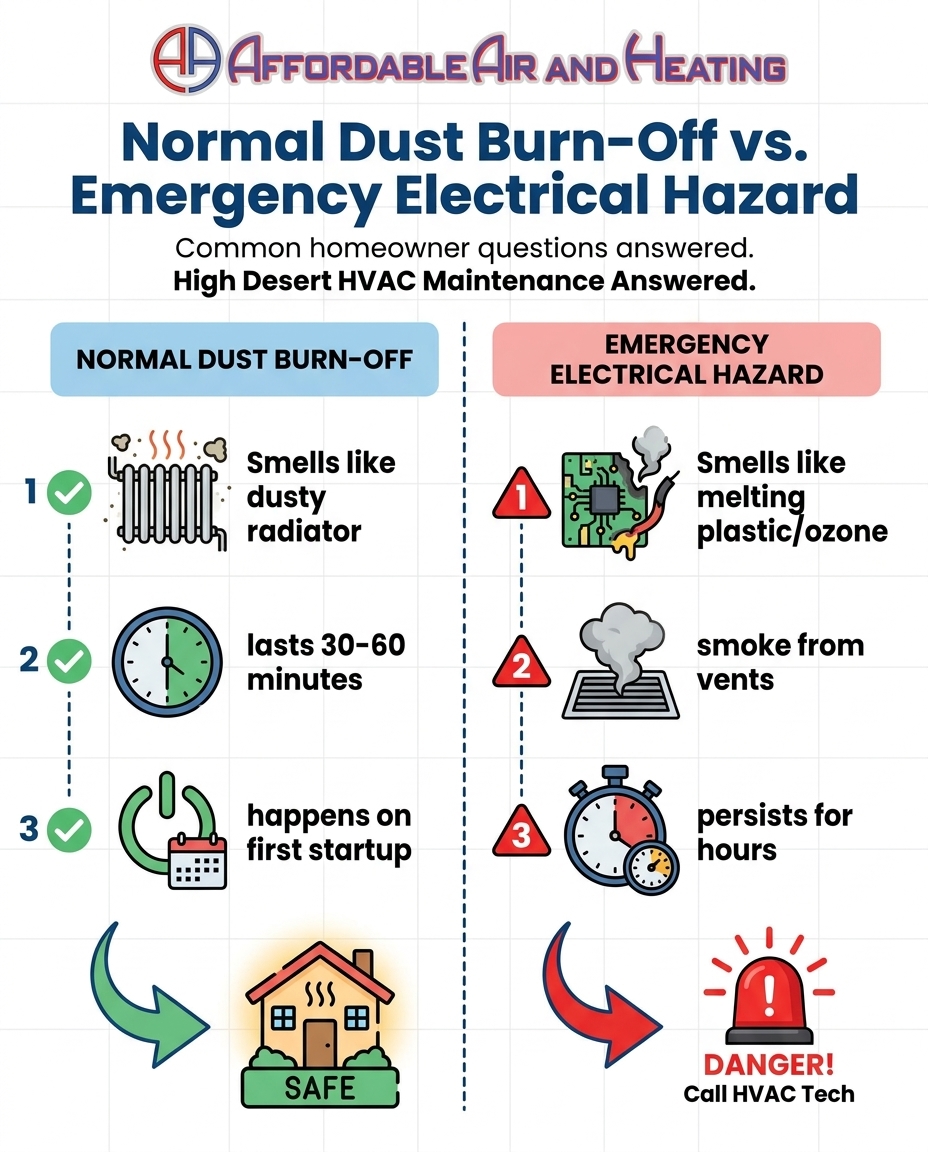
Checklist: Normal Dust Burn-Off vs. Emergency Hazard
When you are facing a concrete problem like turning on the furnace and smelling a burning odor, you need to make a quick decision. You must determine if the system is safe to leave running or if it poses an immediate hazard. Use this checklist to evaluate the situation.
• Scent Profile — Normal Dust Burn-Off: Smells like a dusty, warm radiator or toasted dirt. — Emergency Electrical Hazard: Smells like melting plastic, burning wires, rubber, or sharp ozone.
• Duration — Normal Dust Burn-Off: Dissipates completely within 30 to 60 minutes of the first run. — Emergency Electrical Hazard: Persists for hours or gets stronger the longer the system runs.
• Visual Cues — Normal Dust Burn-Off: No visible smoke anywhere in the home or near the unit. — Emergency Electrical Hazard: Visible smoke coming from the vents, the furnace cabinet, or the blower compartment.
• System Sounds — Normal Dust Burn-Off: Normal, steady hum of the blower motor pushing air. — Emergency Electrical Hazard: Grinding, screeching, popping, or loud electrical buzzing noises.
The Action Step: If your situation points to an emergency hazard—specifically if you smell melting plastic or ozone—turn off your thermostat immediately. Go to your breaker box and cut the power to the heating system. Never attempt DIY electrical inspections or repairs on a high-voltage system. Call our licensed professionals to diagnose the short circuit or failing motor before you attempt to run the heat again.
How Summer Wear and Tear Sets the Stage for Fall Failures
It is easy to think of your heating and cooling systems as two completely separate machines. In reality, they share several critical components that work year-round. The most important shared piece is the blower motor. This motor is responsible for circulating chilled air all summer and heated air all winter.
The Strain of the Summer Cooling Season
During a typical Antelope Valley summer, your blower motor runs almost constantly to keep up with the extreme heat. Prolonged summer use, combined with the infiltration of abrasive desert dust, puts immense strain on the motor's bearings, belts, and electrical connections. By the time October rolls around, that motor is exhausted.
When Wear and Tear Turns into a Burning Smell
If a blower motor is on the verge of burning out due to summer wear and tear, the added stress of starting up the heavy heating cycle can push it over the edge. When a motor fails, its internal wiring overheats, melting the protective insulation. This produces a dangerous, toxic electrical smell that is often mistaken for normal dust burn-off.
Our team recently helped a Lancaster homeowner who experienced this exact type of component strain over the summer when their unit suddenly failed to function due to a faulty fan motor. Reaching out for same-day troubleshooting, one of our technicians arrived that afternoon to diagnose the issue and replace the broken motor, restoring the cooling fast. That same fan motor works just as hard all winter long. Catching these wear-and-tear issues early during routine AC tune-up and maintenance visits prevents them from turning into sudden, freezing fall breakdowns when you need the heat the most.
Why Proactive HVAC Maintenance is Essential Before the First Freeze
The best way to handle a burning smell is to prevent it from happening in the first place. Routine maintenance does much more than just verify that the unit turns on and off. A professional tune-up is a deep, physical reset for your equipment before extreme weather hits.
Physical Cleaning and Dust Removal
At Affordable Air and Heating, our technicians provide comprehensive, transparent tune-ups that go far beyond superficial visual checks. We physically remove the accumulated desert dust from the heat exchanger, the burner assembly, and the blower motor. By cleaning away this thick layer of grime before you turn the heat on, we eliminate the fuel source for that alarming dust burn-off smell. This process ensures your system is truly ready for the demands of extreme weather.
Electrical and Mechanical Safety Checks
During a tune-up, every electrical connection is tightened and inspected. Our technicians test the voltage and amperage of the blower motor to ensure it is not overdrawing power—a key indicator that it is about to overheat and produce a melting plastic odor. We also inspect the wiring harnesses for any signs of fraying or summer heat damage.
Carbon Monoxide and Venting Verification
For our team, safety is the primary goal of heating maintenance and repair. A cracked heat exchanger can leak deadly carbon monoxide into your living space, sometimes accompanied by a strange, chemical-like formaldehyde odor. Pre-winter maintenance includes rigorous testing of the heat exchanger and the exhaust venting to ensure all combustion gases are safely directed outside your home.
Protecting Your Home's Air Quality from Desert Particulates
Beyond the startling smell and the risk of mechanical failure, the first-run burn-off has a secondary impact on your home: compromised indoor air quality. When that dust incinerates on the heat exchanger, the blower motor pushes the resulting fine particulate matter (PM10) directly into your ductwork and out into your living spaces.
The Threat of Fine Particulates
Because the Antelope Valley's high winds and dry climate lead to significantly higher particulate matter accumulation compared to other regions, the amount of dust blown into your home during a startup can be substantial. Breathing in these fine particles can trigger asthma, allergies, and respiratory irritation, especially for vulnerable family members.
Upgrading Your Filtration Strategy
The first line of defense is a high-quality air filter. Standard fiberglass filters only catch large debris like pet hair and lint. To capture fine desert dust and ash from the burn-off, you need a high-MERV pleated air filter. Based on the heavy dust buildup we routinely clear out of Antelope Valley ductwork, our technicians strongly recommend swapping out your filter immediately after the first heating cycle of the year, as it will likely be clogged with the debris that was knocked loose during startup.
Advanced Purification Methods
If you want to completely neutralize startup odors and capture microscopic desert dust before it reaches your lungs, standard filters are not enough. Integrating advanced indoor air quality solutions—such as UV light purifiers, electronic air cleaners, and whole-home scrubbers—can actively destroy lingering odors and trap the finest particulates, keeping your indoor air pristine regardless of the wind outside.
Common Homeowner Questions Answered: Heating Startup Safety
When the October temperatures drop rapidly, homeowners naturally have a lot of questions about their system's safety. Here are the most frequent concerns our Affordable Air and Heating dispatchers address during the fall transition.
Is it normal for a heater to smell like burning?
Yes, it is normal if the heater smells like a dusty, dry heat for a short period during the very first use of the season. This is just the accumulation of summer dust burning off the heat exchanger. However, it is never normal if the air smells like electrical burning, rubber, or melting plastic, which indicates a serious mechanical failure.
How long should a furnace smell like burning?
A normal dust burn-off should last typically 30 to 60 minutes, or roughly one to two heating cycles. Once the dust is incinerated, the smell will fade completely. If the burning smell persists beyond a few hours, or if it returns days later, shut the system off immediately and call a professional for an inspection.
Can a furnace catch fire from dust?
While extremely rare, severe neglect and heavy debris buildup near the burner assembly can pose a localized fire hazard. In most residential cases, standard dust accumulation usually just causes a temporary, unpleasant odor and significantly reduced heating efficiency. Regular cleaning prevents the buildup from ever reaching a dangerous level.
What does a bad furnace smell like?
A failing furnace produces distinct warning odors that you should never ignore. A rotten egg smell indicates a natural gas leak, requiring you to evacuate the home immediately. The scent of melting wire or sharp ozone indicates an electrical short or a failing blower motor. Finally, a formaldehyde or chemical odor often points to a cracked heat exchanger leaking combustion gases.
Will a standard tune-up stop the burning smell?
Yes, a comprehensive professional cleaning removes the dust from the heat exchanger before it has a chance to burn off. Our technicians wipe down the internal components and vacuum the cabinet out completely. A tune-up also allows us to identify failing electrical components and loose wiring before they can overheat and produce melting plastic odors.
Enjoy a Safe, Odor-Free Winter in the Antelope Valley
That initial blast of burning dust on a cold October night is usually harmless, but it serves as a loud, unavoidable reminder that your heating system needs attention. Guessing the difference between a normal dust burn-off and a dangerous electrical hazard simply isn't worth the risk to your property or your family.
You deserve a clear, safety-focused checklist and the peace of mind that comes with knowing your equipment is sound. Don't wait until the first freeze leaves you shivering in the dark. Schedule a comprehensive pre-winter inspection with our experienced team today to clear out the summer desert dust, secure your electrical connections, and guarantee a warm, safe, and odor-free winter for your home.