Why We Use Drop Cloths and Shoe Covers on Every Service Call


Keeping the Desert Outside: The True Cost of Careless Service
If you have ever been left scrubbing sandy footprints out of your hallway carpet after a technician leaves, you already understand exactly why we use drop cloths and shoe covers on every service call. Letting a contractor into your clean home often comes with a subtle layer of anxiety. You want your heating or cooling system fixed, but you do not want to spend the rest of your evening cleaning up the mess they left behind. In the Lancaster and Antelope Valley high desert, this problem is magnified by the sheer amount of abrasive sand and dust that coats outdoor walkways, driveways, and equipment.
When you invite a team into your home for professional HVAC services or a routine air conditioning service, you expect them to solve problems, not create new ones. True professionals do not view cleanliness as an optional courtesy or a polite favor. Instead, it is treated as a non-negotiable operational standard. Mandatory floor protection is the baseline of respect. By covering our boots and laying down heavy-duty mats, we ensure that the harsh desert environment stays exactly where it belongs—outside. This strict protocol protects your physical property, preserves your indoor air, and guarantees that your family's comfort is never compromised by careless habits.
The Abrasive Threat of High Desert Sand and Dust
The geographical reality of living in the Lancaster and Antelope Valley high desert means dealing with unique environmental challenges. The local dirt is not just soft soil; it is heavily composed of fine silica, sand, and sharp particulate matter. When frequent high winds sweep through the valley, this abrasive dust coats everything outdoors. If a technician walks from their service van, across your driveway, and straight into your living room without protective shoe covers, they are effectively wearing sandpaper on the soles of their boots.
Generic floor mats or a quick wipe of the shoes are completely insufficient against this level of abrasive debris. The deep treads of heavy-duty work boots are designed to grip rough terrain, which means they easily trap sharp desert sand. When those boots pivot on your interior floors, the trapped dirt grinds downward under the weight of the technician. This mechanical grinding action is exactly what degrades expensive flooring materials long before their natural lifespan is up.
How Abrasive Dirt Damages Different Flooring Types
• Hardwood Floors: Fine sand acts as a micro-abrasive. Every step taken by an unprotected work boot creates microscopic scratches in the polyurethane finish, eventually leading to dull, cloudy patches that require expensive refinishing.
• Plush Carpeting: When sharp dust particles are ground deep into carpet fibers, they act like tiny razor blades. Over time, this friction cuts and frays the fibers from the inside out, causing the carpet to look worn and matted down.
• Tile and Grout: Muddy or dusty boot treads push fine dirt directly into porous grout lines, causing permanent discoloration and staining that standard mopping cannot remove.
Guarding Your Floors Against Heavy Equipment and Tools
Proper HVAC maintenance requires serious equipment. A technician's standard diagnostic tool bag can easily weigh between thirty and fifty pounds. Beyond the bag, a thorough service call in the Lancaster and Antelope Valley high desert often involves hauling heavy metal recovery cylinders, steel wrenches, sharp sheet metal screws, and bulky replacement components into your home. Carrying this gear through tight hallways and living spaces introduces a significant risk of accidental property damage.
Without a designated, protected space to work, setting these tools down on bare floors is a recipe for disaster. A dropped wrench can instantly crack a ceramic tile. The sharp metal corner of a blower motor can gouge a deep trench into natural hardwood. Even just resting a heavy, grease-smudged toolbox on a light-colored carpet can leave a permanent stain.
Heavy-duty drop cloths eliminate this risk entirely. They do not just keep dirt off the floor; they provide a thick, impact-absorbing staging area for all necessary equipment. By laying out these protective barriers around the indoor air handler or furnace, technicians create a safe, controlled workspace. This proactive measure ensures that heavy tools and sharp metal edges never make direct contact with your delicate flooring, completely removing the stress of potential property damage from the service experience.
Why Floor Protection is Actually an Indoor Air Quality Strategy
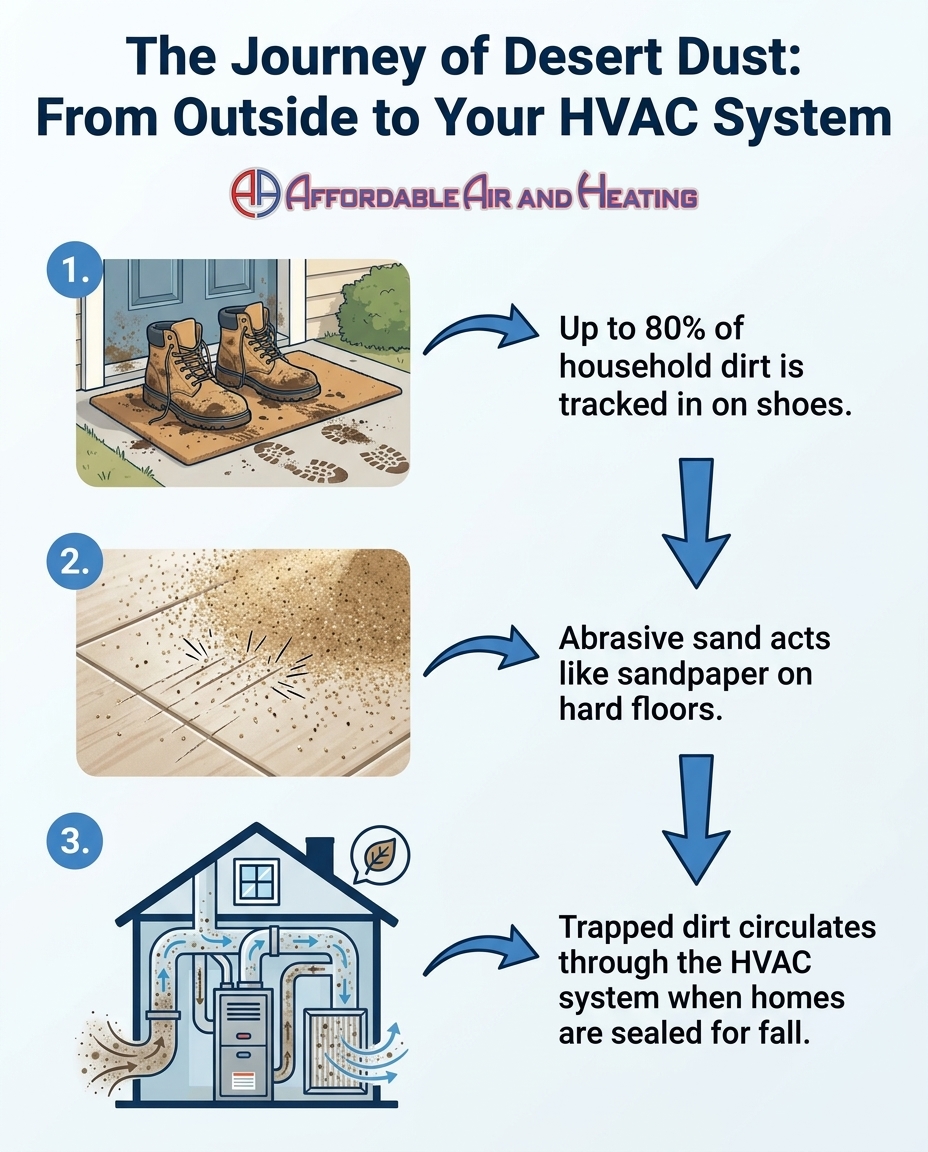
Most homeowners associate shoe covers strictly with keeping floors looking clean, but the benefits extend directly into the air you breathe. According to the Environmental Protection Agency (EPA), up to 80% of the dust, dirt, and contaminants found inside a home are tracked in from the outside on the bottoms of shoes. When this outdoor debris is introduced into your living space, it does not just stay on the floor. Normal foot traffic kicks these microscopic particles back into the air, where they are eventually pulled into your HVAC system's return vents.
This cycle becomes especially critical during September pre-heating tune-ups. As the season transitions, homeowners begin closing their windows and sealing their homes tightly to keep out the chill of cooler autumn nights. If a careless technician tracks high desert dust inside during a fall maintenance visit, that dirt becomes trapped inside the sealed house. Once the heating system kicks on, the blower motor will continuously circulate those abrasive particles, pet dander, and outdoor allergens through your ductwork and into every room.
Stopping dirt at the front door is the most effective form of source control. By utilizing drop cloths and shoe covers, we prevent external contaminants from ever entering your home's airflow. This simple physical barrier is a foundational step in our comprehensive indoor air quality solutions. Keeping the floors spotless directly translates to keeping your air filters cleaner and your indoor air purer throughout the long winter months.
Operational Mandates vs. 'Budget Contractor' Habits
There is a massive difference between a technician who occasionally remembers to wipe their feet and a company that enforces a strict, non-negotiable operational mandate. Budget contractors often view prep work as an unnecessary delay. In a rush to move on to the next job, they routinely cut corners on cleanliness, treating your living room like a rugged construction site. This lack of care is a major red flag. If a technician is careless with your expensive hardwood floors, it is highly likely they are taking similar shortcuts when wiring your furnace or checking your refrigerant levels.
Our brand is built on the absolute respect for the customer's property, which is what distinctly separates professional care from the messy, rushed habits of budget contractors. We understand that knowing what to expect during an AC service visit should bring you comfort, not anxiety. You should never have to follow a technician around with a vacuum cleaner or a mop once the job is done.
• Home Entry — Budget Contractor Habits: Walks straight in with dirty work boots. — Our Operational Mandate: Applies fresh shoe covers before stepping inside.
• Workspace Prep — Budget Contractor Habits: Sets heavy, dirty tools directly on bare floors. — Our Operational Mandate: Lays down thick, impact-absorbing drop cloths.
• System Care — Budget Contractor Habits: Rushes the job to save time, risking property damage. — Our Operational Mandate: Treats the home with absolute respect, ensuring careful work.
• Departure — Budget Contractor Habits: Leaves dust, debris, and footprints behind. — Our Operational Mandate: Leaves the workspace exactly as clean as they found it.
During September pre-heating tune-ups, our focus is entirely on your peace of mind. Implementing these strict cleanliness standards ensures that the only evidence we were ever in your home is a perfectly functioning HVAC system.
Scaling Cleanliness for Major System Replacements
While routine tune-ups require careful attention, major system breakdowns demand an even higher level of logistical precision and home protection. Replacing an entire HVAC system is a massive undertaking. It involves disconnecting and hauling out heavy, filthy, decades-old equipment that has been collecting dust in an attic or closet for years. Moving these massive units through your hallways while simultaneously bringing in brand-new, bulky components is a high-risk operation for your walls and floors.
Even under intense pressure, our cleanliness protocols are never bypassed. Whether we are responding to an urgent summer repair—like when one local homeowner's air conditioner was not blowing cool air and our technician arrived within four hours to fix the problem—or managing a full system overhaul, the standards remain identical. High-stress situations do not excuse sloppy habits.
When providing comprehensive heating repair and installation services, we scale our protection to match the job. Entire walkways are lined with heavy-duty runners. Door frames are protected, and staging areas are heavily padded. This rigorous approach showcases how a highly professional team balances speed, technical execution, and absolute respect for your property, ensuring that even the messiest jobs leave your home completely pristine.
Safety First: How Proper Footwear Protects Everyone
Beyond protecting your flooring and indoor air, the use of drop cloths and shoe covers is a critical component of worksite safety. HVAC repairs can be inherently messy. Technicians frequently deal with condensation line clear-outs, unexpected water leaks, dripping oil, and fine metallic debris. If these substances spill onto bare floors, they create immediate slip-and-fall hazards for both the technician and your family.
Managing Debris Safely: Drop cloths act as a containment zone. Any moisture, oil, or sharp debris generated during a repair is caught by the heavy fabric rather than spreading across your slick tile or hardwood. This keeps the hazardous materials isolated to the immediate work area, making cleanup fast and safe.
High-Traction Protection: The shoe covers our technicians wear are not just flimsy plastic bags. They are designed with high-traction, non-slip grips on the bottom. In the Lancaster and Antelope Valley high desert, fine sand blown onto a smooth tile floor acts like microscopic marbles, making the surface incredibly slippery. Proper protective footwear ensures that technicians have stable footing while carrying heavy equipment, directly aligning with OSHA safety recommendations.
Reducing Liability: Maintaining a clean, controlled work environment inside your home protects you from the unnecessary liabilities associated with worksite accidents. Safety and cleanliness are inseparable standard operating procedures for elite technicians. By keeping the site secure and clean, we protect our team while ensuring your home remains a safe sanctuary.
Common Questions About Our In-Home Service Standards
Why do HVAC technicians wear shoe covers?
Technicians wear shoe covers primarily to protect your floors from outdoor dirt, mud, and abrasive sand. This simple practice prevents micro-scratches on hardwood and keeps stains out of carpeting. Additionally, stopping dirt at the door helps maintain your home's indoor air quality by preventing outdoor contaminants from entering your HVAC system's airflow. It is a fundamental sign of respect for your property.
How do contractors protect floors during service?
Professional contractors protect floors by utilizing a combination of high-traction shoe covers and heavy-duty drop cloths. The shoe covers prevent tracking dirt through the home, while the drop cloths are laid down around the work area to create a safe staging zone. This padded layer absorbs impacts from heavy tools and catches any debris, oil, or moisture that might result from the repair process.
Do HVAC techs have to wear booties?
While industry regulations do not legally mandate booties, elite HVAC companies enforce them as a strict internal operational standard. Budget contractors may treat them as an optional courtesy, but professional teams wear them on every single call without exception. We require our technicians to wear them to guarantee your home remains spotless and safe during any maintenance or repair visit.
How should I prepare my house for HVAC service?
You do not need to do any special cleaning or preparation before our technicians arrive. The best thing you can do is simply clear a walking path to the indoor unit and ensure any delicate items or furniture are moved a few feet away from the equipment. Our team will handle all the necessary floor protection, laying down drop cloths and wearing shoe covers to keep your home pristine.
Will drop cloths prevent scratches on my hardwood floors?
Yes, heavy-duty drop cloths are highly effective at preventing scratches on delicate flooring. They provide a thick, cushioned barrier between heavy metal HVAC tools and your bare floors. By creating a dedicated staging area, technicians avoid setting sharp wrenches or heavy motors directly onto the wood, eliminating the risk of accidental gouges or scrapes.
Does keeping doors closed during service help with indoor air quality?
Keeping exterior doors closed as much as possible during service certainly helps keep outdoor allergens and desert dust out of your home. However, the most effective strategy is source control—which means preventing the technician from tracking dirt inside in the first place. Combined with closed doors, the strict use of shoe covers ensures that your indoor air remains clean, especially during September pre-heating tune-ups when homes are sealed tightly.
Experience Professional Care That Respects Your Home
Inviting a technician into your home should never feel like a gamble with your clean floors. The peace of mind that comes from hiring a team with strict, non-negotiable cleanliness protocols is invaluable. We believe that respecting your home is the absolute baseline for respecting your HVAC system, and we prove that on every single visit.
As you prepare for the changing seasons with September pre-heating tune-ups, choose a team that values your property as much as you do. You deserve high-quality technical expertise delivered with meticulous care. Schedule your seasonal maintenance with a team that guarantees a spotless departure, leaving you with perfect indoor comfort and zero mess to clean up.