The Anatomy of a Failing Furnace Fan Motor and Why It Sounds Like Grinding Metal


That Alarming Grinding Noise During Your Pre-Winter Heating Startup
October is here, and as you prepare for your pre-winter heating startup, understanding the anatomy of a failing furnace fan motor and why it sounds like grinding metal can save your entire heating system from a catastrophic breakdown. Here in Lancaster, our team at Affordable Air and Heating often gets frantic calls on the first crisp evening of the season when homeowners switch their thermostats from cooling to heating. You expect a quiet rush of warm air, but instead, you are met with a terrifying, loud scraping sound echoing through your vents. This jarring metal-on-metal noise is not a minor nuisance or a quirk of an aging system. It is a critical mechanical warning that something deep inside your blower assembly is actively tearing itself apart.
If you hear this sound, our technicians always advise that the most important action you can take is to shut off your furnace at the thermostat immediately. Allowing the system to continue running while it grinds will only multiply the damage. The root cause of this alarming noise lies inside the mechanical core of your system. Catching it early makes the difference between a targeted repair and a complete blower assembly replacement. If you need professional HVAC services, reaching out for an expert diagnosis right away is the safest path forward. To understand exactly what is happening behind that metal cabinet, we need to break down the anatomy of the fan motor itself.
The Mechanical Core: Understanding Your Furnace Blower Motor
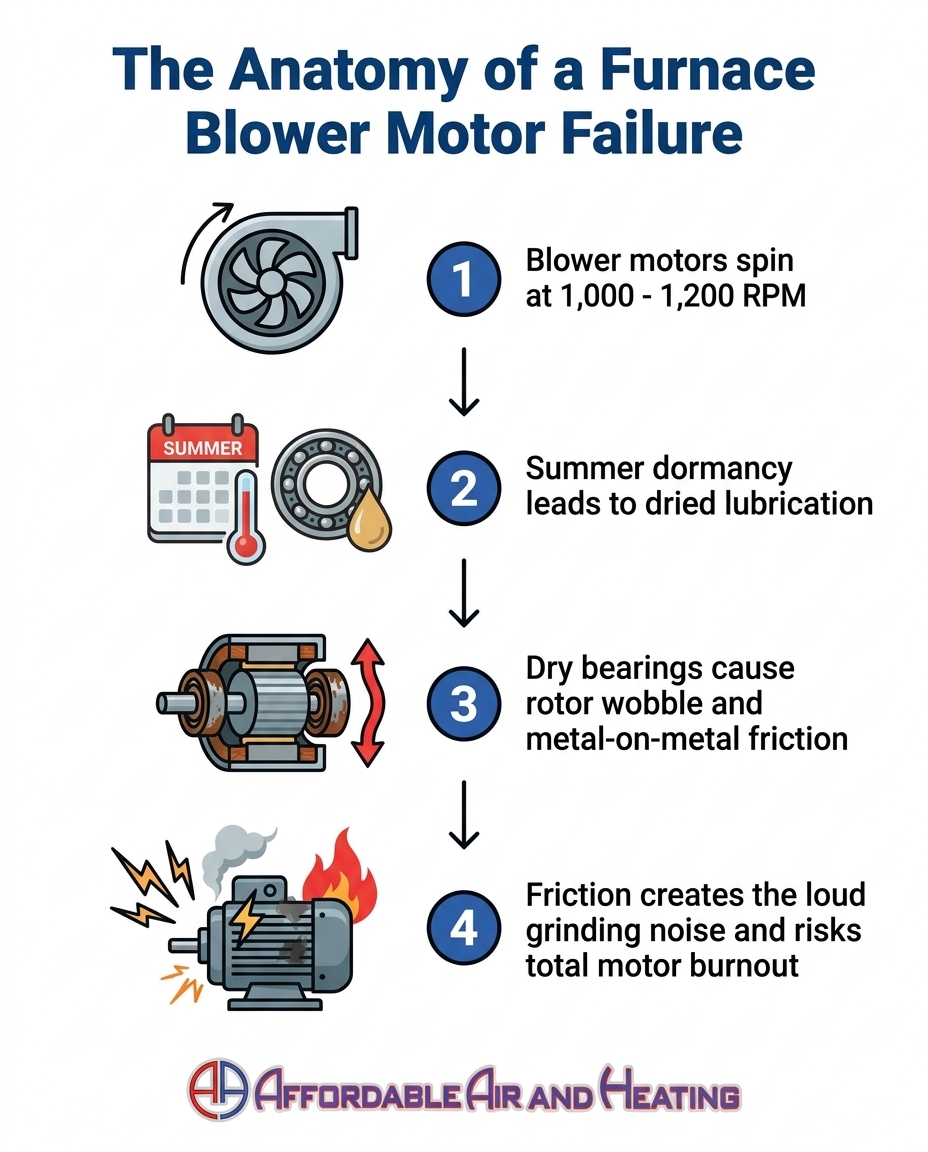
The blower motor is the beating heart of your home's forced-air system. Its primary function is to draw in cool air from your return vents, push it over the hot heat exchanger, and circulate that newly conditioned air throughout every room in your home. To move that much air effectively, this motor operates at incredibly high speeds. Most residential furnace blower motors spin at anywhere from 1,000 to 1,200 revolutions per minute (RPM). At 1,200 RPM, the internal components are completing 20 full rotations every single second. With that level of continuous motion, precision is everything.
The internal anatomy of this motor consists of a few primary components. The stator is the stationary outer ring packed with copper electrical windings that create a magnetic field. The rotor is the spinning solid metal core suspended inside that magnetic field. Because the rotor spins at such high speeds, it cannot simply rest against the stator. It requires a suspension system to keep it perfectly centered. That is where the bearings come in. In our experience performing heating repair and maintenance, understanding these components is essential to diagnosing the root cause of the noise.
The Crucial Role of Motor Bearings
Bearings bear the entire physical load of the spinning rotor and the heavy blower wheel attached to it. They are the only things preventing the spinning metal rotor from crashing into the stationary metal stator. To function, bearings rely on a microscopic layer of lubrication.
• Sleeve Bearings — How They Work: Use a porous bronze sleeve surrounded by oil-soaked felt pads to maintain a thin film of oil. — Vulnerability: Oil can dry out, harden, or leak over time, especially during long periods of inactivity.
• Ball Bearings — How They Work: Use tiny steel balls encased in a ring to reduce friction, typically packed with grease and sealed. — Vulnerability: Seals can degrade, allowing grease to escape and abrasive dust to enter the housing.
Without proper lubrication, the microscopic space between the moving parts completely disappears. The result is direct, aggressive metal-on-metal contact at 20 spins per second.
Why Summer Dormancy Leads to Bearing Failures in the Fall
The Problem: You turn on your furnace for your October pre-winter heating startup, and the motor immediately starts grinding, even though it ran perfectly fine at the end of last winter.
The Cause: The specific seasonal cause of this failure is directly linked to the long off-season. During months of summer dormancy, a furnace motor sits completely inactive in a hot, dry environment. In older or unmaintained motors, our technicians typically see the residual oil or grease inside the bearings begin to change state. The lubrication can dry out, harden into a sticky sludge, or become heavily compromised by microscopic dust particles that settle into the motor housing over the summer.
When you finally call for heat in the fall, the motor experiences what technicians call "startup shock." The system demands the heavy blower wheel spin up to 1,200 RPM instantly. Because the bearings are now dry or sticky, they cannot provide that smooth, frictionless glide. Instead, the dry metal seizes or scrapes violently. While homes that utilize heat pump systems or run their air conditioning blower year-round keep these parts moving, dedicated heating blowers that sit idle for six months are incredibly vulnerable to this exact type of dormancy failure.
The Solution: Our regular fall maintenance visits introduce fresh lubrication (for motors that allow it) or identify failing sealed bearings before the heavy load of a cold winter night forces them to break entirely.
The Anatomy of the Sound: Why It Sounds Like Scrap Metal
When those bearings fail, the physical physics of the motor change instantly, which directly answers why your furnace suddenly sounds like a scrap metal yard. At 1,200 RPM, even a single millimeter of bearing wear causes the heavy rotor to lose its perfect center. It begins to wobble. As it wobbles, the spinning metal rotor physically scrapes against the stationary metal stator. You are hearing the sound of high-speed steel grinding against copper and iron.
Furthermore, the metal housing of your furnace acts as a giant acoustic amplifier. The internal friction vibrations travel down the motor shaft, into the blower wheel, and resonate through the sheet metal cabinet and your ductwork, turning a small internal scrape into a loud, screeching roar that fills the house.
Diagnosing the Noise: Grinding vs. Squealing
When diagnosing these systems across the Antelope Valley, we've found that not all furnace noises mean the same thing. Being able to identify the specific sound helps you understand the severity of the problem.
• Grinding or Scraping: This indicates heavy metal-on-metal contact. It usually means the bearings are completely seized or destroyed, and the rotor is dragging. Shut the system down immediately.
• High-Pitched Squealing: This is often related to a slipping blower belt (in older belt-driven models) or the very early stages of bearing dryness. It still requires prompt service, but the motor may not be destroying itself just yet.
• Loud Banging or Booming: This is typically not a motor issue. A loud bang when the system turns on usually points to delayed gas ignition or a severely unbalanced blower wheel striking the housing.
The Immediate Risks of Ignoring a Grinding Fan Motor
Hearing a grinding sound and hoping it will just "go away" as the furnace warms up is one of the most dangerous assumptions a homeowner can make. We cannot overstate the absolute necessity of turning off the furnace at the thermostat the moment you hear this noise. If you leave a compromised motor running, a cascading sequence of mechanical failures will unfold rapidly.
1. Immense Heat Generation: As the dry bearings grind, they generate extreme friction heat. This heat transfers directly into the motor's copper windings.
2. Electrical Burnout: The protective coating on the electrical windings melts away from the heat, causing the motor to short circuit and burn out completely, often accompanied by an acrid electrical burning smell.
3. Blower Wheel Destruction: A seizing motor can violently jerk the attached blower wheel. This sudden stop can warp the delicate fins of the wheel or snap the central hub, turning a single motor replacement into a much larger blower assembly repair.
4. Heat Exchanger Overheating: If the motor stops spinning but the burners keep firing, the heat exchanger cannot shed its heat. This extreme temperature spike will trip safety limit switches, but repeatedly stressing the heat exchanger this way can cause it to crack.
For the homeowners we serve in Lancaster and surrounding areas, ignoring this noise carries a specific climate risk. We see firsthand how rapidly temperatures drop in the high desert at night. A pleasant afternoon can turn into a freezing evening in a matter of hours. If you ignore the grinding noise until the motor completely dies at 9:00 PM, your home will be freezing shortly after, leaving you in an emergency no-heat situation.
Why Fan Motor Diagnostics Require Professional Expertise
Because a furnace motor is tucked away inside a metal cabinet, we know it might be tempting to open the access panel and try to spray some lubricant on the squeaking parts. However, accessing and diagnosing a blower motor involves navigating high-voltage electrical components and heavy, sharp mechanical parts. This is strictly professional territory.
Our professional diagnostic process at Affordable Air and Heating is thorough. Our technicians use a multimeter to check the motor's amp draw, which reveals if the motor is overworking due to internal friction. We will test the run capacitor, which provides the electrical torque needed to start the motor. Finally, we physically inspect the blower wheel and motor shaft for "play"—any wiggling that confirms the bearings are shot. Sometimes, electrical issues can mimic mechanical ones; for instance, understanding why your vents are blowing warm air after a power outage involves checking how electrical surges affect the motor's operation.
The Danger of DIY Furnace Disassembly
Attempting to fix a blower motor yourself carries significant risks:
• Electrical Shock Hazards: Furnaces carry a severe risk of electrical shock even when seemingly powered down at the switch. Motor capacitors store high-voltage charges and can deliver a dangerous shock if not properly discharged by a professional.
• Secondary Mechanical Failures: Blower wheels are precision-balanced. Improperly removing and reinstalling a blower motor can throw off the balance of the wheel, causing severe vibrations and immediate secondary failures the moment the system turns back on.
• Sealed Bearing Limitations: Modern motors often use sealed bearings that physically cannot be re-lubricated by a homeowner. Once they grind, the motor or the bearing assembly must be professionally replaced.
Restoring Reliable Heat Before the High Desert Freeze
A loud grinding noise is a clear, physical cry for help from your furnace's motor bearings. It is your system's way of telling you that the lubrication has failed and metal is destroying metal. However, there is good news: catching this noise early and shutting down the system immediately makes the repair highly manageable. You stop the damage before it spreads to the blower wheel or the electrical board.
Fast, accurate diagnostics are essential to getting your system running safely before the evening cold sets in. Pleasant October days in Lancaster are deceptive, making rapid restoration of your heating system absolutely essential before the nightly temperature plummet. You do not want to be left without heat when the high desert freeze takes over.
This is where our team's quick-turnaround repair capabilities stand out. Our trusted diagnostics save homeowners from total mid-winter system breakdowns by addressing these mechanical warnings exactly when they happen. We focus on getting to the root of the problem safely and restoring your home's comfort without delay. Furthermore, scheduling proactive fall maintenance with us is the best way to catch dry bearings before they ever reach the point of metal-on-metal grinding.
Protect Your Heating System with Prompt Professional Care
A clear understanding of your furnace's internal anatomy empowers you to make smart, safe decisions when things go wrong. Knowing that a grinding noise means failing motor bearings helps you realize the urgency of the situation. Prompt professional intervention is the only safe, effective way to resolve a grinding fan motor without risking further damage to your home's heating system. If your pre-winter startup sounded more like a scrap yard than a gentle breeze, leave the thermostat off and reach out to our local experts at Affordable Air and Heating for a proper diagnostic and repair today.
Frequently Asked Questions
Is it safe to run a furnace that is making a grinding noise?
No, it is never safe to continue running a furnace that is grinding. That sound indicates severe metal-on-metal friction, usually from failing motor bearings. Continuing to run the system will generate extreme heat, potentially melting the electrical windings and causing a total motor burnout. Shut the system off at the thermostat immediately to prevent further damage.
What does a bad furnace blower motor sound like?
A failing blower motor typically produces loud, aggressive noises that are hard to ignore. You will most commonly hear a harsh metal-on-metal grinding, a loud scraping sound, or a high-pitched screeching roar. These sounds occur because the internal bearings have lost lubrication, causing the spinning rotor to wobble and scrape against the stationary housing.
Can a furnace blower motor be repaired?
In some cases, if the issue is caught very early, a technician might be able to replace just the bearings or the capacitor. However, many modern blower motors use sealed bearings that cannot be serviced. If the internal windings are damaged or the bearings are completely destroyed, the most cost-effective and reliable solution is usually a full motor replacement.
Why is my furnace making a loud metal noise when it turns on?
A loud metal noise precisely at startup is often due to "startup shock" after months of summer dormancy. The lubrication inside the motor bearings dries out or hardens over the summer. When the system suddenly demands the motor to spin at 1,200 RPM, the dry, unlubricated metal parts grind against each other violently.
How long do furnace blower motor bearings typically last?
With proper annual maintenance, a high-quality furnace blower motor and its bearings can last 10 to 15 years, which is roughly the lifespan of the furnace itself. However, skipped maintenance, excessive dust buildup, and long periods of inactivity can cause bearings to dry out and fail much earlier.
Can I lubricate my furnace blower motor myself?
It is highly recommended that you leave motor lubrication to a professional. Accessing the motor requires navigating high-voltage electrical components, including dangerous capacitors that hold a charge even when the power is off. Furthermore, many modern motors are permanently sealed and do not have oil ports, meaning DIY lubrication attempts are often ineffective and dangerous.