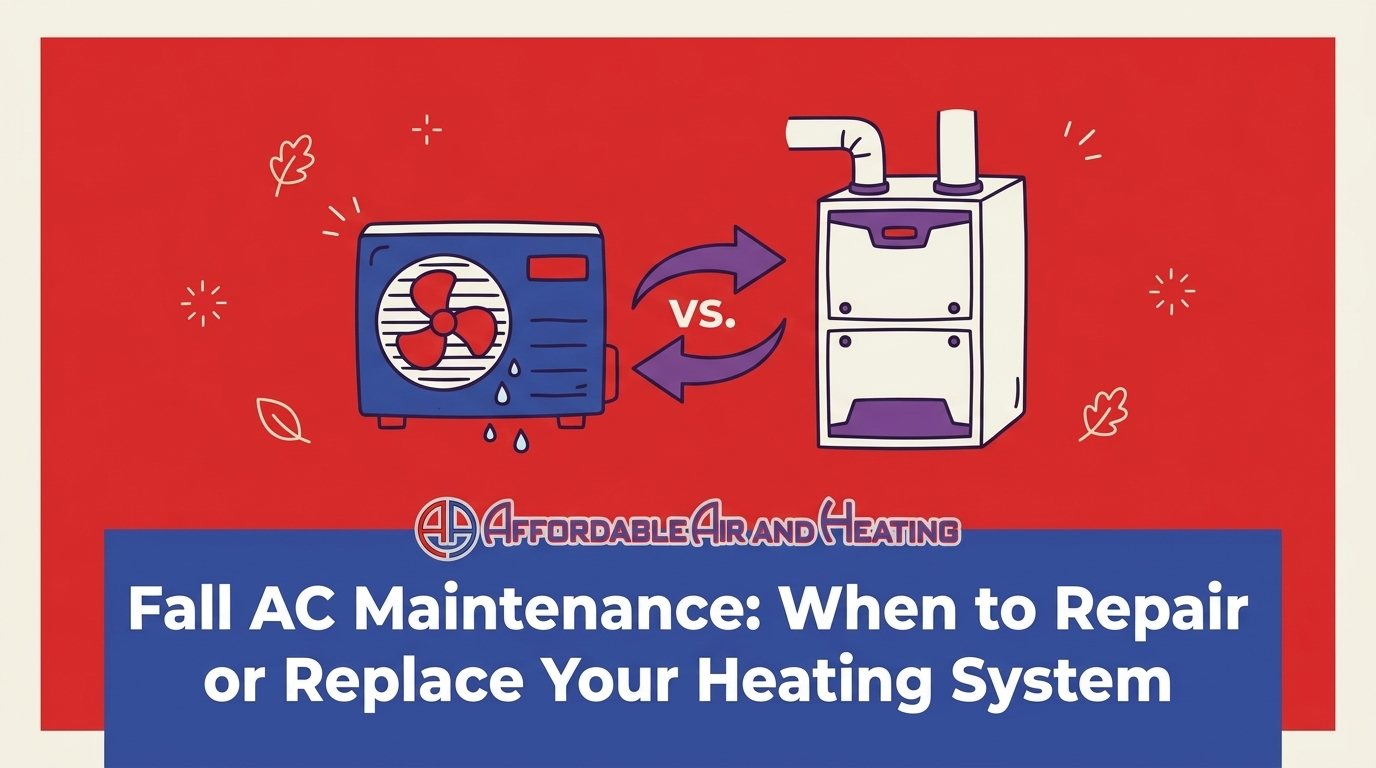
Facing the October Chill: The Dual Role of Fall AC Maintenance
That familiar rattling noise from your aging furnace is not going away on its own, and as the nights grow colder, navigating heating options comparisons for homeowners becomes a pressing priority rather than a weekend research project. In our years of serving the Antelope Valley, we know that sinking feeling when the thermostat drops, but the house stays stubbornly cold. It is a concrete problem that forces a critical decision: do you keep pouring money into an aging unit, or is it time for a fresh start?
By mid fall, specifically as October rolls in, transitioning your home from summer cooling to winter heating requires a reliable system that will not leave you shivering at 2 a.m. This transition period is the ideal window to evaluate the true health of your equipment. That is why our team at Affordable Air and Heating always recommends relying on professional HVAC services during your seasonal air conditioning maintenance check. It is the perfect time to catch underlying issues before they turn into mid-winter emergencies.
The diagnostic turning point: An October checkup serves as the ultimate decision point for older HVAC units. Our technicians can assess the wear and tear accumulated over the blistering summer and determine if the internal components can handle the heavy lifting required for the upcoming freezes. Balancing immediate repair costs against the long-term benefits of a full system replacement is never easy, but starting with a clear, fact-based evaluation of your current system takes the guesswork out of the equation.
How Pervasive Desert Dust Accelerates HVAC Wear and Tear
Living in the Lancaster and Antelope Valley region means dealing with unique environmental challenges that go far beyond standard temperature fluctuations. The pervasive desert dust that blows through the high desert is relentless. As we see on almost every fall maintenance call, it does not just settle on your furniture; it gets pulled directly into your heating and cooling equipment, quietly accelerating wear and tear on critical moving parts.
The impact of fine particulate matter: When microscopic desert dust bypasses standard filters, it coats your blower motor and evaporator coils. This layer of grime acts like an insulating blanket. For the blower motor, this means it retains heat and runs significantly hotter than its design parameters allow, leading to premature motor failure. For the coils, the dust restricts vital airflow, forcing the entire system to run longer cycles just to reach your set temperature. This mid-summer strain carries over directly into the fall, leaving your system highly vulnerable just as you need to switch over to heating.
Why proactive care is non-negotiable:
• Breakdown prevention: Routine, proactive maintenance prevents up to 95% of unexpected mid-season breakdowns by catching dust-related friction before it snaps a belt or burns out a motor.
• Airflow restoration: Cleaning the blower assembly restores proper airflow, reducing the electrical load on your system.
• Component longevity: Removing abrasive grit from moving parts extends the functional lifespan of your unit, preventing early replacement.
To combat this constant influx of abrasive particles, we have found that standard one-inch fiberglass filters simply are not enough. Upgrading to robust indoor air quality solutions, such as high-efficiency media cabinets or advanced filtration systems, plays a massive role in protecting your internal system components from the harsh Antelope Valley environment.
Top Signs It Is Time to Upgrade Your Heating System
Deciding to replace a major home appliance is a significant step. However, waiting for a total system failure in the dead of winter is the most stressful way to make that decision. By paying attention to a few clear warning signs during mid fall, specifically in October, you can make a calculated, stress-free choice.
Here is a straightforward checklist our team uses to help you evaluate whether your current system is at the end of the line:
1. Evaluate the 50% rule: If the cost of an upcoming repair approaches or exceeds half the price of a brand-new installation, replacement is almost always the smarter financial move. Pouring substantial funds into a deteriorating unit yields diminishing returns.
2. Track your repair frequency: One repair every few years is normal maintenance. Multiple service calls in a single calendar year indicate systemic, cascading failure.
3. Monitor your utility bills: If your energy costs are steadily rising despite regular tune-ups and consistent thermostat settings, your system is losing its efficiency and burning more fuel to produce the same amount of heat.
4. Listen for structural noises: Banging, popping, or persistent rattling often points to severe internal wear that cannot be fixed with a simple tune-up.
Age and Frequency of Repairs
A pattern we see often is that systems over 15 years old face declining efficiency, regardless of how well they have been maintained. The technology inside a two-decade-old unit is simply outdated compared to modern standards. When you combine advanced age with multiple service calls in a single year, it is a clear indicator that the unit's functional lifespan is ending. The parts are wearing out faster than we can replace them, and the reliability you need for winter is gone.
Safety and Efficiency Concerns
Beyond comfort and cost, safety is the most critical factor in the repair versus replace debate. Aging gas furnaces carry the inherent risk of a cracked heat exchanger. The heat exchanger is the metal shield that separates the combustion process from the breathing air circulated through your home. Over years of expanding and contracting with heat, this metal can develop hairline cracks, potentially allowing dangerous carbon monoxide to leak into your living spaces. If one of our technicians discovers a compromised heat exchanger, replacement is not just recommended—it is a safety necessity. Furthermore, outdated technology drains energy and inflates utility costs, meaning you pay a premium every month just to operate an unsafe system.

Heat Pumps vs. Gas Furnaces: Options Comparisons for Homeowners Adapting to Extreme Temperature Shifts
When you determine that replacement is the right path, the next step is choosing the right technology for your home. When guiding our clients through options comparisons for homeowners, we emphasize that the Antelope Valley presents a unique challenge: extreme diurnal temperature shifts. It is not uncommon to experience warm, sunny afternoons that rapidly transition to freezing nights. These drastic swings require highly resilient HVAC systems that can pivot quickly without consuming massive amounts of energy.
Understanding energy efficiency ratings is the first step in this comparison. For gas furnaces, efficiency is measured by AFUE (Annual Fuel Utilization Efficiency), which tells you what percentage of the fuel is converted directly into usable heat. For heat pumps, you look at HSPF (Heating Seasonal Performance Factor), which measures the efficiency of the heating mode over an entire season.
• Heating Method — High-Efficiency Heat Pump: Transfers ambient heat from outside air — Modern Gas Furnace: Combusts natural gas or propane
• Climate Suitability — High-Efficiency Heat Pump: Excellent for moderate days and cool nights — Modern Gas Furnace: Excellent for rapid heating during deep freezes
• Efficiency Metric — High-Efficiency Heat Pump: HSPF (Heating Seasonal Performance Factor) — Modern Gas Furnace: AFUE (Annual Fuel Utilization Efficiency)
• Year-Round Use — High-Efficiency Heat Pump: Yes (provides both heating and cooling) — Modern Gas Furnace: No (requires a separate AC unit for cooling)
The Case for High-Efficiency Heat Pumps
Heat pumps have evolved dramatically over the last decade. They no longer struggle in colder weather. The primary benefit of a heat pump is that it provides year-round climate control from a single unit. Instead of burning fuel to create heat, it uses electricity to transfer heat from the outside air into your home. During the moderate daytime temperatures typical of Lancaster, a heat pump operates with incredible efficiency. For homes looking to eliminate natural gas usage or streamline their equipment, we often recommend exploring ductless mini-split systems or central heat pumps as a versatile, highly efficient solution for the high desert.
When Gas Furnaces Make Sense
Despite the rise of heat pumps, gas furnaces remain a powerhouse for a reason. When the sun goes down and the temperature plummets below freezing, a gas furnace provides rapid, robust heating capabilities that can warm a house in minutes. For homes with existing, well-maintained gas infrastructure, swapping an old furnace for a high-efficiency condensing furnace is a straightforward process we perform regularly. Longevity considerations also play a role; a well-maintained gas furnace can easily last 15 to 20 years, providing peace of mind during the coldest nights of the year.
Leveraging General Energy Rebates for High-Efficiency Upgrades
Upgrading your heating system is a major investment, but you do not have to shoulder the entire burden alone. There are numerous financial incentives designed to encourage homeowners to adopt high-efficiency, environmentally friendly technologies. Navigating these incentives during mid fall, specifically October, allows you to finalize your installation before the winter rush depletes local inventory and stretches scheduling timelines.
Federal and local incentives: The availability of federal tax credits for qualifying high-efficiency installations has made upgrading more accessible than ever. These credits are designed to offset a portion of your initial investment when you choose equipment that meets strict efficiency guidelines, such as top-tier heat pumps. In addition to federal programs, general utility incentive programs frequently offer rebates to homeowners who reduce their overall energy consumption by upgrading outdated, energy-hogging furnaces.
Timing your upgrade: Upgrading before winter hits is crucial. It maximizes both your immediate energy efficiency and your ability to claim potential incentives for the current tax year. Waiting until your system completely fails in December often results in rushed decisions, where you might miss out on specific qualifying units due to emergency availability constraints.
The importance of verification: Because incentive programs, tax codes, and utility offerings change frequently, we strongly advise you to verify current programs with a qualified tax professional or your local utility provider before making a final purchase. As your local HVAC contractor, our team will provide you with the exact AHRI (Air-Conditioning, Heating, and Refrigeration Institute) certification numbers for your new equipment, which you will need to apply for these general energy rebates.
The Value of Honest Diagnostics During Your Fall Tune-Up
The anxiety of a heating breakdown is often compounded by the fear of dealing with pushy sales tactics. When you invite a technician into your home, you deserve a thorough maintenance check focused entirely on facts and system health, not a quota. This is where the value of honest diagnostics truly shines.
Recently, our team at Affordable Air and Heating helped a Lancaster homeowner during a late summer heat wave when they needed clarity on their system's performance and refrigerant levels. One of our technicians arrived promptly, diagnosing the equipment and explaining the necessary steps clearly. The outcome was a homeowner who fully understood the service process and the diagnostic findings, completely free from high-pressure sales tactics. We bring this exact same approach to your fall heating checkup.
Validating the right choice: Sometimes a simple repair is the most cost-effective and logical choice. If your furnace is eight years old and needs a minor sensor replacement, a trustworthy technician from our crew will tell you exactly that, rather than pushing a full system replacement. The peace of mind that comes from transparent explanations of system performance allows you to make climate-appropriate decisions based on reality.
Building long-term trust through reliable, pressure-free tune-ups ensures that when the time eventually comes to replace your system, you know you are making the right choice for your home. Knowing what to expect during a visit is crucial, which is why understanding AC tune-up and maintenance expectations helps you spot the difference between a genuine diagnostic evaluation and a masked sales pitch.
Frequently Asked Questions About Heating Upgrades and Maintenance
Is it better to repair or replace a 15-year-old furnace?
In our experience, replacement is usually the better option for a 15-year-old unit. At this age, you should apply the 50% rule: if the repair costs half as much as a new system, replace it. Furthermore, older units face significant safety and efficiency drop-offs, including the heightened risk of cracked heat exchangers and rising monthly utility bills.
Are heat pumps effective in high desert climates?
Yes, we find that modern heat pumps are highly effective in the high desert. They offer dual functionality, providing both robust cooling in the summer and efficient heating in the winter. They are particularly efficient during the moderate daytime temperatures frequently experienced in the Antelope Valley, though they can still extract heat from the air when temperatures drop at night.
When should I schedule fall HVAC maintenance?
We typically advise that mid fall, specifically October, is the critical transition month for scheduling your maintenance. Booking your tune-up during this window ensures your system is evaluated and prepped before the first freezing nights arrive. It also allows you to beat the winter rush, ensuring faster service times and better appointment availability.
What is the life expectancy of a furnace?
A standard gas furnace typically lasts between 15 and 20 years. However, this lifespan is heavily dependent on regular maintenance and the environmental conditions it operates in. Neglected systems, or those constantly battling heavy desert dust without proper filtration, often fail years before reaching that benchmark.
How does desert dust affect my heating system's lifespan?
Desert dust places immense strain on the moving parts of your HVAC system. It coats the blower motor, causing it to overheat, and clogs the internal mechanisms, leading to increased friction and wear. Regularly changing your filters and scheduling professional cleanings are essential steps to prevent this dust from cutting your system's lifespan short.
Prepare Your Home for Winter with Professional HVAC Support
Making an informed decision about your heating system before freezing night temperatures arrive in the Lancaster and Antelope Valley area is essential for your family's comfort and safety. Whether you decide to invest in a minor repair to keep your current furnace running or choose to completely upgrade to a high-efficiency heat pump, the foundation of that decision must be built on a professional, honest diagnostic evaluation.
Do not wait until the first winter freeze leaves you shivering in your own living room. By proactively exploring your heating options comparisons for homeowners today with the help of Affordable Air and Heating, you can leverage available incentives, avoid emergency installation fees, and secure a reliable system for the season ahead. Schedule your professional fall evaluation with our team now to ensure your home remains warm, safe, and efficient all winter long.