The Danger of Skipping Annual AC Service Before Summer


Surviving the August Heat: When Skipped Maintenance Catches Up
August is here, the triple-digit days are relentless, and the danger of skipping annual AC service before summer is finally catching up with residential cooling systems across the valley. As families settle into the back-to-school transition and late summer arrives, your air conditioner has already logged hundreds of grueling hours fighting against extreme outdoor temperatures. For many homeowners, the system seems to run fine through June and July, creating a false sense of security. However, the cumulative stress placed on mechanical components during these peak months is enormous. What started as a minor drop in efficiency in the spring can rapidly evolve into a catastrophic mechanical failure when the heat is at its worst.
The root of this problem usually traces back to a single decision point: bypassing a baseline spring check-up. Many people assume that if the air feels cool, the equipment is perfectly healthy. Unfortunately, hidden damage often builds up silently inside the cabinet. The longer the system runs without a professional clearing away the accumulated wear and tear, the harder the internal components have to work. By the time August late-summer wear peaks, the equipment is highly vulnerable to restricted airflow and overheating.
Protecting your home requires a proactive approach. Understanding the basic operation of your HVAC systems is just as important as scheduling prompt air conditioning service before minor performance drops turn into major breakdowns.
The Unique Threat of High Desert Dust to Your Cooling Equipment
Standard cooling advice often assumes a mild, suburban environment with paved roads and manicured lawns. However, our technicians at Affordable Air and Heating know firsthand that living in the Lancaster and Antelope Valley high desert presents an entirely different set of environmental challenges for your home's mechanical systems. Here, extreme triple-digit temperatures combine with pervasive blowing sand and fine particulate matter to create a uniquely hostile environment for an air conditioner. This continuous barrage of airborne debris drastically increases the workload on your equipment.
The Particulate Load in Extreme Climates
Every time your air conditioner cycles on, it pulls air from inside your home, passes it through a filter, and pushes it over the cooling coils. The amount of dust, pet dander, and microscopic debris suspended in that air is known as the particulate load. In a high desert climate, pervasive outdoor dust easily infiltrates the home through drafty doors, open windows, and normal daily foot traffic.
Because the air is saturated with these fine particles, standard one-inch fiberglass or pleated filters simply cannot last the full 30 to 90 days advertised on the packaging. In our specific regional conditions, we regularly see a fresh filter become completely saturated with heavy desert dust in just a matter of weeks. Once that filter reaches capacity, it stops acting as a protective screen and turns into a solid barrier.
• Average Filter Lifespan — Standard Suburban Climate: 60 to 90 days — High Desert Climate (Antelope Valley): 15 to 30 days during peak summer
• Primary Airborne Debris — Standard Suburban Climate: Household dust, pet hair, pollen — High Desert Climate (Antelope Valley): Fine blowing sand, heavy particulate dust
• Summer Run-Hours — Standard Suburban Climate: Moderate, cycling off at night — High Desert Climate (Antelope Valley): Extreme, running continuously through the evening
• Impact of Skipped Tune-Up — Standard Suburban Climate: Slight efficiency loss, minor strain — High Desert Climate (Antelope Valley): Rapid component overheating, severe airflow blockage
Compounding Late-Summer Effects
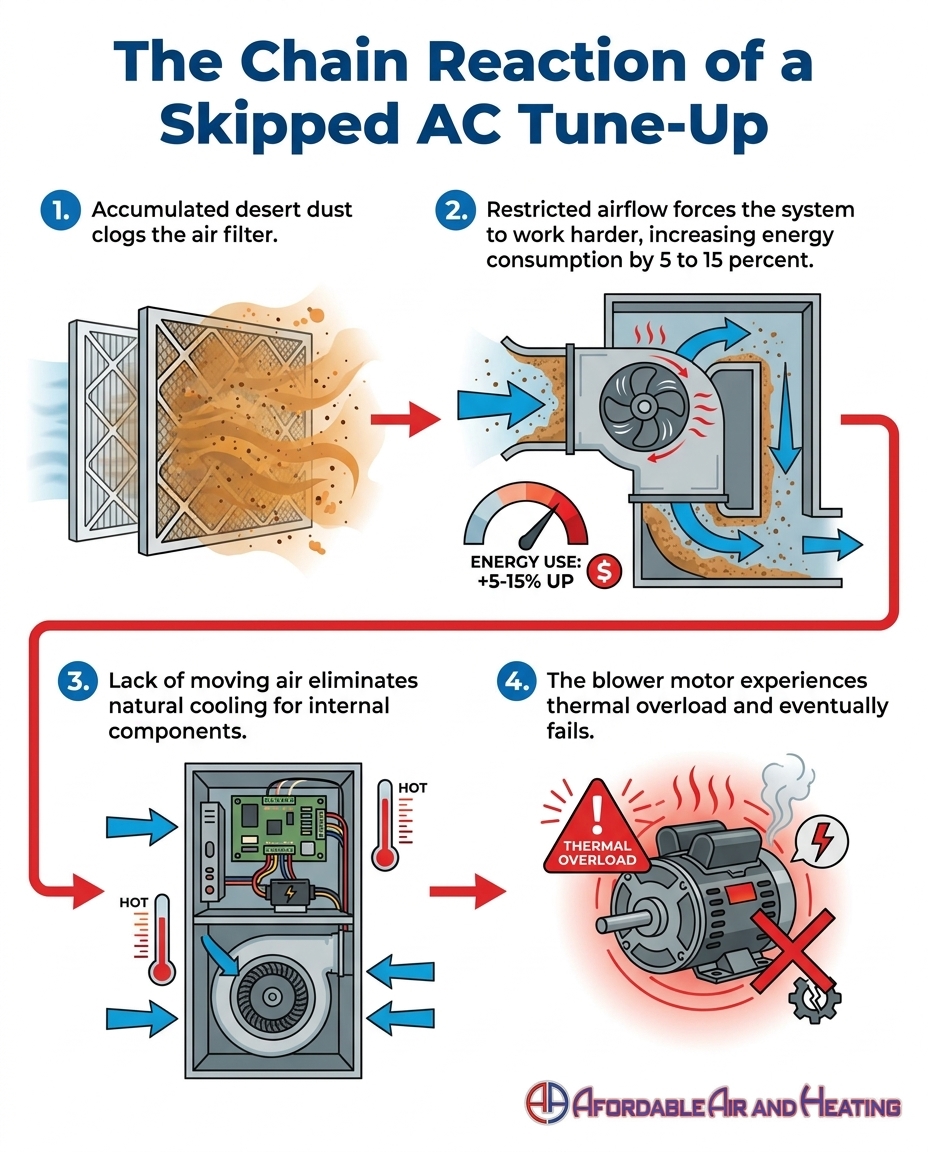
The transition from a dirty filter to a severe mechanical hazard happens quickly. According to data from the U.S. Department of Energy, replacing a dirty, clogged filter with a clean one can lower your air conditioner's energy consumption by 5 to 15 percent. But the issue goes far beyond just paying a higher utility bill.
By the time August arrives, your system has likely run for hundreds of hours. If that filter was not replaced and the internal components were not cleaned during a spring tune-up, the minor dust accumulation compounds into a critical blockage. The system is forced to draw more electricity just to pull a fraction of the necessary air through the clogged filter, setting the stage for a severe mechanical breakdown right when you need cooling the most.
The Chain Reaction: How a Clogged Filter Suffocates Your System
Airflow is the lifeblood of your air conditioner. The system does not actually "create" cold air; it removes heat from the existing air inside your home. When high desert dust severely restricts that airflow, it triggers a predictable and destructive mechanical chain reaction inside the unit.
1. The Return Ducts Pull in Contaminated Air: The blower motor creates suction, pulling warm indoor air through your return grilles. In a dusty environment, this air carries a heavy load of microscopic sand and debris.
2. The Filter Becomes a Wall: As the pleated filter catches the debris, its microscopic pores fill up. Without a professional tune-up or regular filter changes, the filter media becomes completely caked in dirt, acting like a solid piece of cardboard blocking the duct.
3. The Evaporator Coil Freezes: Because the AC blower motor cannot pull enough warm air across the indoor evaporator coil, the cold refrigerant inside the coil drops below freezing. The natural condensation on the coil turns to solid ice, further blocking the passage of air.
4. The System Works Harder: The thermostat still reads that the house is too warm, so it commands the system to keep running. The equipment does not simply shut down; it forces internal components to operate well outside their designed parameters, fighting against the solid block of ice and the clogged filter.
This chain reaction starves the system of the air it needs to function safely. The longer the unit runs in this suffocated state, the more stress is transferred directly to the internal motors and electrical components.
Thermal Overload: The Destruction of the Blower Motor
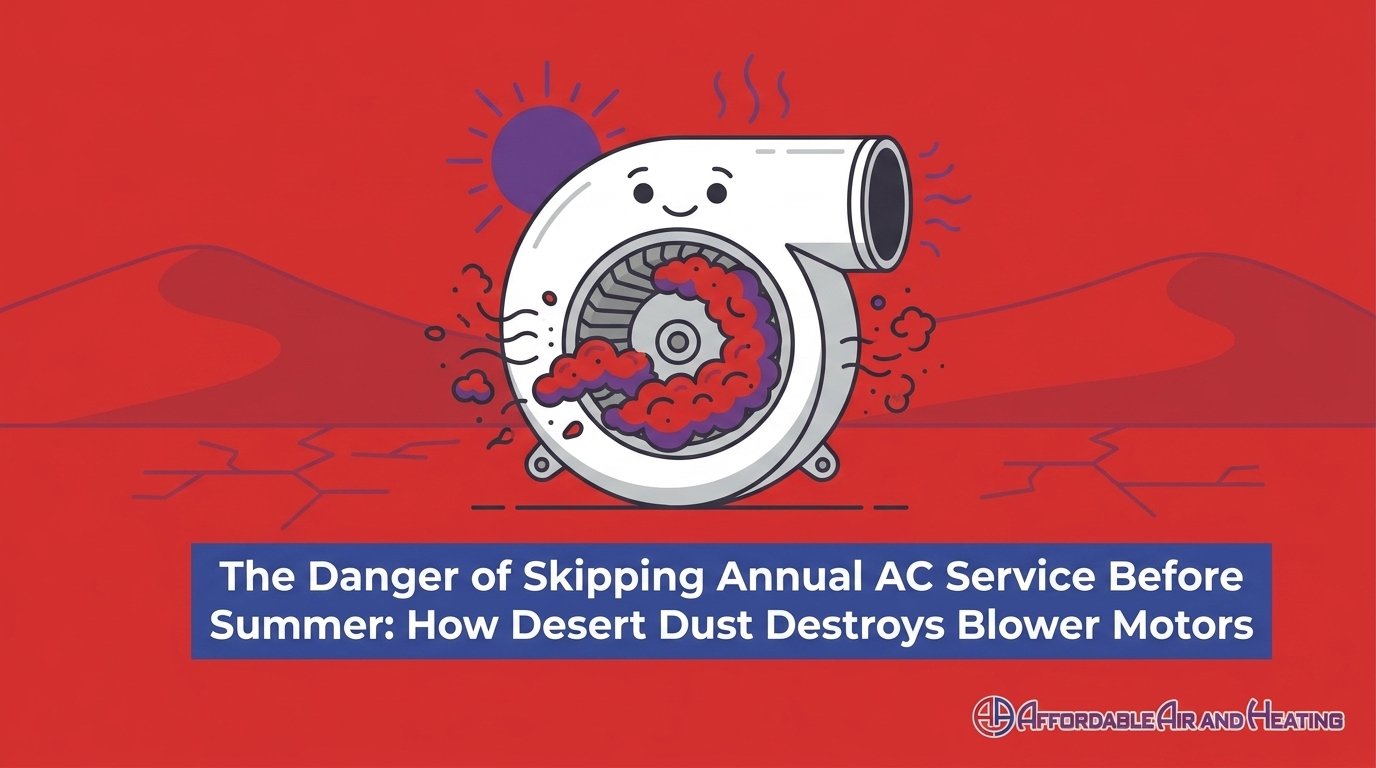
The most expensive casualty of restricted airflow is usually the AC blower motor. This crucial component is responsible for pushing the conditioned air through your home's ductwork and out of the vents. It is a heavy-duty mechanical part designed to run for hours at a time, but it relies on a very specific physical dynamic to survive the summer heat.
Why Motors Overheat in Late Summer
Electric motors generate a significant amount of heat while they operate. Under normal conditions, the constant stream of air flowing past the blower motor acts as a natural cooling mechanism, carrying that excess heat away. When a clogged filter and a frozen coil block that airflow, the motor loses its only source of cooling.
Simultaneously, the motor is working twice as hard trying to pull air through the blockage. To compensate for the resistance, the motor draws more electrical current (amperage). This spike in electrical draw generates even more heat. This dangerous combination—higher heat generation and zero cooling airflow—results in a condition known as thermal overload.
Sustained thermal overload physically degrades the motor. The intense heat melts the protective insulation around the internal copper wiring, causing electrical shorts. It also bakes the lubrication right out of the motor's bearings, leading to severe metal-on-metal friction. Eventually, the motor simply burns out and seizes up completely.
This is a common pattern our service team sees during the hottest weeks of the year. One local homeowner recently reached out to us for troubleshooting during a late-summer heatwave when their system suddenly stopped blowing air. Our technicians arrived the same day and discovered they had to replace a faulty fan motor that had completely burned out from overwork. Replacing a destroyed blower motor is a complex, major repair that leaves the home without cooling—and it is almost always avoidable with a simple baseline tune-up and proper filter management.
Late-Summer Warning Signs Before a Total Breakdown
Your air conditioner will usually give you several warning signs that it is struggling to breathe before the blower motor completely self-destructs. Recognizing these symptoms early allows you to shut the system down and call a professional before the damage becomes permanent. If you live in the Lancaster / Antelope Valley high desert and notice any of the following red flags, our team strongly advises you not to force the system to keep running.
• Grinding or squealing noises: If you hear a loud, metallic grinding or a high-pitched squeal coming from the indoor unit, it usually means the bearings inside the blower motor have lost their lubrication due to extreme heat.
• Loud electrical humming: A loud hum or buzz that occurs when the system tries to start is a strong indicator that the motor is drawing too much electrical current and struggling to turn against heavy resistance.
• Unusually long cooling cycles: If your system runs continuously for hours but the indoor temperature never reaches the number set on your thermostat, the equipment is likely starved for air and failing to exchange heat properly.
• Weak airflow at the registers: Place your hand over a vent. If you feel only a faint trickle of air—or if you notice vents blowing warm air instead of crisp, cold air—there is a severe blockage somewhere in the air pathway.
• Unexpected temperature fluctuations: If some rooms are freezing cold while others remain stiflingly hot, the blower motor is no longer generating enough static pressure to push the conditioned air to the furthest reaches of your ductwork.
The quick fix: If you notice any of these symptoms, turn the thermostat to "OFF" immediately. Check your air filter. If it is caked in dust, replace it. If the system still exhibits these warning signs after a fresh filter is installed, leave it off and contact a licensed technician to evaluate the motor.
Interrupting the Cycle: Why Proactive Care Outperforms Reactive Fixes
The mechanical explanations all point to one undeniable truth: proactive care is vastly superior to reactive emergency repairs. A pre-season inspection directly prevents the dust-to-failure chain reaction. When a technician services your equipment before the intense heat arrives, they reset the system to its factory-baseline performance.
Most homeowners don't realize that a professional tune-up entails much more than just swapping a dirty filter. During a comprehensive visit, a licensed technician will measure the electrical draw (amperage) of the AC blower motor to ensure it isn't over-amping. They will lubricate all moving parts to prevent friction, clear the condensate drain lines to prevent water damage, and carefully clean the delicate evaporator coil so air can flow freely.
Furthermore, consistent, documented maintenance protects your manufacturer warranties. Most major HVAC manufacturers explicitly state in their warranty documentation that coverage can be voided if the equipment fails due to neglect or a lack of routine professional maintenance. If a blower motor burns out because of a severely clogged filter, the manufacturer will likely deny the warranty claim, leaving you responsible for the entire repair bill.
For homeowners looking to protect their investment, Affordable Air and Heating offers accessible maintenance plans and memberships designed specifically to combat our harsh regional climate. Enrolling in a routine maintenance membership is a logical, cost-effective way to prevent catastrophic summer breakdowns. It takes the guesswork out of scheduling and ensures your system is evaluated by a professional before the extreme August heat pushes it to the breaking point.
Common Questions About Pre-Summer AC Service and Filter Maintenance
What happens if you don't change your AC filter all summer?
If you leave the same filter in place all summer, it will eventually become completely blocked by dust and debris. This solid barrier restricts the airflow your system needs to function, causing the indoor coil to freeze over. Ultimately, the lack of airflow forces the internal motors to overwork, leading to severe overheating and mechanical failure.
How does a dirty filter ruin an AC blower motor?
A dirty filter ruins the motor by causing a condition called thermal overload. The blower motor relies on the constant flow of air passing over it to stay cool during operation. When a clogged filter stops that airflow, the motor overheats, melting its internal wiring and destroying its bearings until it burns out completely.
Is annual AC maintenance really necessary?
Yes, annual maintenance is critical for keeping your system safe and efficient. A professional tune-up addresses hidden wear and tear, calibrates electrical components, and cleans internal parts that a homeowner cannot easily reach. Skipping this service greatly increases the risk of unexpected breakdowns and can even void your manufacturer's warranty.
How often should home AC be serviced in a high-dust environment?
In a high-dust environment like the high desert, your AC should be professionally serviced at least once a year, ideally in the spring before the cooling season begins. However, the air filters themselves must be checked and replaced much more frequently—often every 15 to 30 days during peak summer usage—to prevent dangerous airflow restrictions.
Can a dirty filter cause my system to freeze up?
Yes, a severely dirty filter is one of the most common causes of a frozen AC system. When the filter blocks warm indoor air from reaching the evaporator coil, the refrigerant inside the coil drops below freezing. The natural moisture in the air then freezes directly onto the metal, creating a solid block of ice.
Secure Your Comfort Before the Next Heatwave
Understanding the mechanical risks of restricted airflow is the first and most important step in protecting your home's cooling system. The August late-summer wear is unforgiving, and the high desert dust will quickly exploit any weakness in a neglected air conditioner. Allowing a minor maintenance task to spiral into a destroyed blower motor is a frustrating and stressful experience that no homeowner should have to face.
If you skipped your spring tune-up and are starting to notice the system struggling to keep up with the afternoon heat, it is not too late to intervene. Prioritize a professional evaluation to clear away the accumulated dust and reset your equipment's performance. Securing a reliable path to continuous comfort is as simple as scheduling a comprehensive inspection to ensure your system survives the remainder of the season.