When Antelope Valley Dust Meets Peak Summer Heat
Your air conditioner is running nonstop, but the house still feels uncomfortably warm. You step outside and notice a thick layer of grime coating the metal fins of your outdoor unit. The impact of desert dust on your air conditioner's lifespan becomes painfully obvious when you realize that strange noise from the fan isn't going away on its own. Living in the High Desert means dealing with a unique set of environmental challenges that standard home maintenance guides simply do not address.
If you need reliable HVAC services, understanding how our local climate attacks your equipment is the first step toward protecting it.
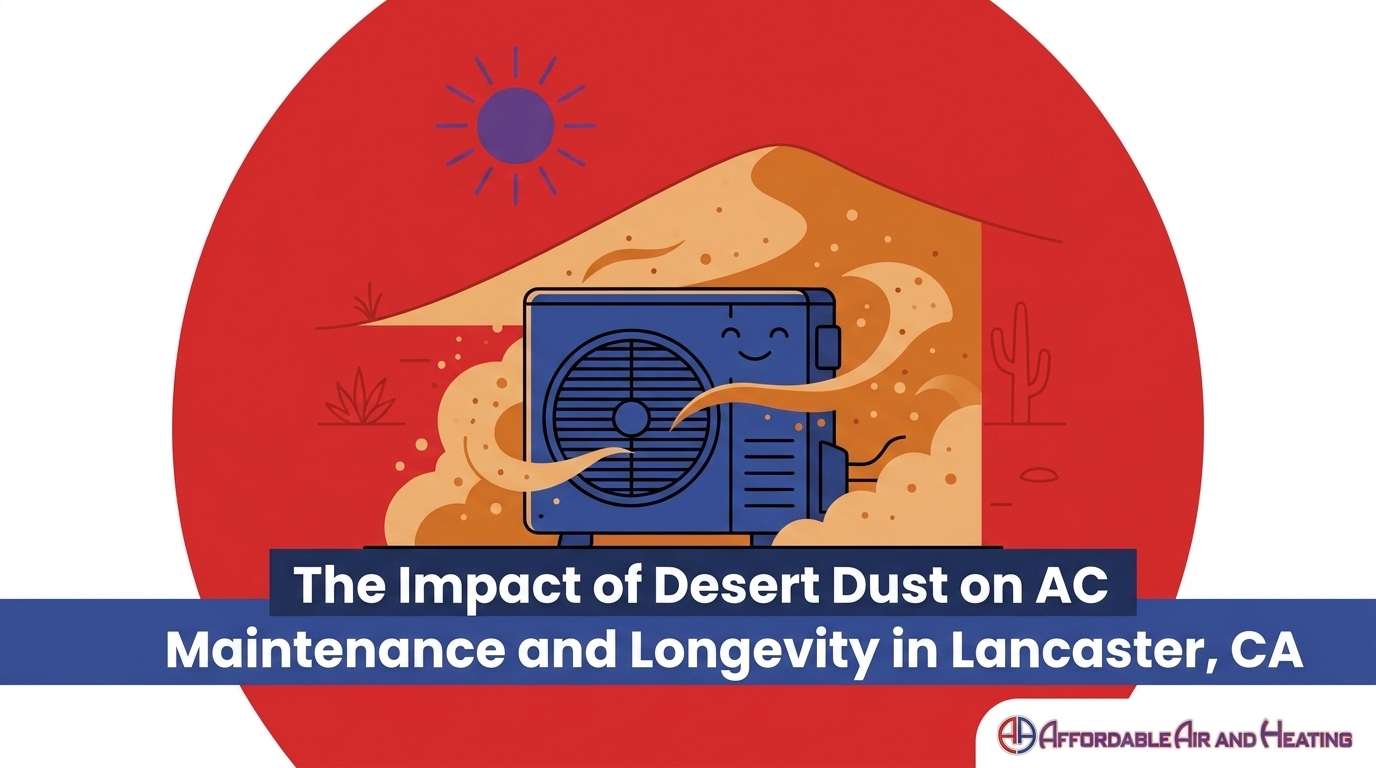
During July peak summer heat, temperatures regularly exceed 100 degrees Fahrenheit, accompanied by strong, relentless winds. This combination creates a perfect storm for mechanical strain. Your cooling system is forced to run continuously just to maintain a baseline level of comfort indoors. While it runs, the outdoor unit constantly pulls in vast amounts of air to release the heat it absorbed from inside your home. In our region, that air is heavily laden with ultra-fine sand.
This isn't just a cosmetic issue. The fine dust blows into the unit and begins cementing onto the internal components. Many homeowners reach a critical decision point when they see this buildup: do they grab the garden hose and try to blast the dirt away themselves, or do they call for specialized care? Recognizing that standard do-it-yourself maintenance advice often fails in this specific climate is the key to preventing catastrophic equipment failure.
Why High Desert Sand is Uniquely Destructive to HVAC Systems
Not all dirt is created equal. The soil found in coastal cities or heavily forested urban areas tends to be heavy, clumpy, and rich in organic matter. When that type of dirt hits an outdoor air conditioning unit, it often falls away or gets caught by the outermost protective grilles. The Palmdale and Lancaster High Desert environment presents a completely different geological challenge.
Our region is characterized by loose topsoil, arid conditions, and high winds that sweep across the valley floor. This creates a highly abrasive, powdery sand that remains airborne much longer than standard dirt. According to Environmental Protection Agency (EPA) data on suspended particulate matter in arid environments, these ultra-fine particles are small enough to easily bypass standard external leaf guards and mesh screens.
Because the particles are microscopic, they penetrate deep into the tightly packed metal fins of your outdoor unit. Once inside, they settle into every crevice. If you live anywhere within the Antelope Valley service areas, your cooling equipment is constantly filtering this powdery abrasive out of the air. This specific type of sand requires a completely different approach to removal than standard dirt. It does not simply brush off or wash away cleanly, making local environmental knowledge critical for proper system care.
The Mechanical Toll on Your Outdoor Condenser Coils
To understand why this dust is so damaging, you have to look at how your system actually cools your home. Your air conditioner does not create cold air out of nothing; it moves heat from inside your house to the outside. The outdoor condenser coils with delicate aluminum fins are responsible for releasing that trapped heat into the outdoor air.
The Physics of Heat Transfer
The compressor pumps hot, high-pressure refrigerant through these coils. A large fan pulls outside air across the aluminum fins, cooling the refrigerant down so it can cycle back inside and absorb more heat. For this process to work, the air must flow freely through the tiny gaps between the fins.
When ultra-fine sand packs into those gaps, it acts as a thick, insulating blanket. Instead of releasing heat into the air, the coils trap the heat inside the system. Department of Energy (DOE) guidelines note that dirty coils can reduce the energy efficiency of an air conditioner by up to 30%. This massive drop in efficiency forces the compressor to work much harder and run much longer to achieve the same cooling result.
The resulting increase in internal operating temperatures and electrical draw puts immense strain on the entire system.
• Airflow Rate — Clean Condenser Coils: Unrestricted and smooth — Sand-Caked Condenser Coils: Heavily blocked, causing fan strain
• Heat Transfer — Clean Condenser Coils: Efficiently released outdoors — Sand-Caked Condenser Coils: Trapped inside by insulating dust
• Energy Draw — Clean Condenser Coils: Normal baseline consumption — Sand-Caked Condenser Coils: Up to 30% higher electrical usage
• Compressor Wear — Clean Condenser Coils: Standard lifecycle degradation — Sand-Caked Condenser Coils: Accelerated wear from overheating
The DIY Trap: Why Hosing Off Your AC Creates Baked-On Mud
If you search the internet for advice on a dirty air conditioner, the most common tip you will find is to simply "hose off" the outdoor unit. In many parts of the country, this is acceptable advice. In the High Desert, it is an active threat to your equipment.
The Chemistry of Baked-On Mud
When water meets ultra-fine high desert sand in extreme heat, a detrimental physical reaction occurs. The powdery sand absorbs the water and turns into a thick, heavy paste. Because the outdoor unit is hot from running, and the ambient temperature is soaring, this paste rapidly dries and bakes directly onto the metal. You are no longer dealing with loose dust; you have effectively created a layer of hardened, sun-baked mud that permanently seals the gaps between the fins.
The Danger of Water Pressure
Frustrated homeowners often realize the gentle spray isn't working on this mud, so they attach a high-pressure nozzle or even a pressure washer. This is where catastrophic damage happens. The outdoor condenser coils with delicate aluminum fins are incredibly fragile. They are designed to be thin to maximize heat transfer, not to withstand blunt force. The high-pressure water stream easily bends and crushes the fins flat, permanently blocking airflow even if the dirt is removed.
This well-intentioned do-it-yourself effort often permanently damages the unit's ability to release heat, turning a simple maintenance issue into a reason for a full system replacement.

Warning Signs Your AC is Suffocating in the Heat
Identifying a dust-choked system before it suffers a complete mechanical failure can save your equipment. Because the buildup happens gradually, the symptoms often sneak up on homeowners until a major heatwave hits and the system finally buckles.
One local homeowner reached out when their cooling system stopped working entirely right before a major temperature spike. A technician arrived early for the appointment and diagnosed the suffocating unit, fixing the airflow restriction within 20 minutes so it was blowing cold air again. Catching the signs early prevents these stressful emergency shutdowns.
Watch for these immediate symptoms of restricted airflow during July peak summer heat:
• Continuous operation: The system runs for hours on end without ever reaching the temperature set on the thermostat.
• Lukewarm airflow: The air coming from your indoor vents feels weak and room-temperature rather than crisp and cold.
• Spiking utility bills: You notice unusually high energy costs despite making no changes to your daily usage habits or thermostat settings.
• Strange fan noises: The outdoor fan sounds louder than usual, often emitting a straining or humming noise as it fights against the restricted airflow.
• Tripped circuit breakers: The overworked compressor draws so much electricity that it repeatedly trips the breaker panel.
A suffocating unit can lose its cooling power in a matter of days when the summer heat is at its worst. If you notice any of these signs, the system is already under severe distress.
The Domino Effect: From Clogged Coils to Major Component Failure
Ignoring desert dust buildup does not just result in a slightly warmer house; it triggers a cascade of mechanical failures that dramatically shorten the overall lifespan of the equipment. What begins as a minor efficiency loss quickly transitions into severe physical damage.
Fan Motor Burnout
The first component to suffer is usually the fan motor. Because the airflow is restricted by the sand, the fan has to work overtime to pull air through the clogged fins. This continuous, high-resistance operation causes the motor to overheat and eventually burn out. A typical pattern we see involves the fan motor failing during a hot weekend. One customer required urgent weekend service because their system had a bad fan motor, causing cascading issues. Technicians had to diagnose and fix the problem—including addressing underlying airflow issues from a previous company's work—before the house could finally cool down again.
Compressor Failure
The compressor is the heart of your cooling system, and it is the most critical and expensive component to replace. When the condenser coils cannot release heat, that heat travels backward into the compressor. The compressor relies on the cool returning refrigerant to keep its internal temperature stable. Without that cooling effect, the compressor's internal lubricants break down, leading to a catastrophic lockup.
Indoor Air Quality Impacts
Furthermore, dust infiltration can also impact your home's internal environment if the system's overall health degrades. A struggling outdoor unit often leads to poor humidity control and reduced indoor circulation. Upgrading your indoor air quality solutions is only effective if the primary HVAC system is breathing properly outside.
Ultimately, these cascading failures in the Palmdale and Lancaster High Desert environment will dramatically shorten the lifespan of a system that should otherwise last 10 to 15 years.
The Safe Way to Restore Cooling Power and AC Longevity
Removing baked-on desert mud requires highly specialized, professional treatments. Because water and pressure only make the problem worse, the correct approach relies on chemistry rather than mechanical force.
Professional Dissolving Treatments
Professional technicians use specific foaming chemical agents designed to break down and dissolve the baked-on mud safely. These specialized cleaners are applied at low pressure, allowing the foam to expand deep inside the coil gaps. As the foam expands, it pushes the dissolved sand and debris outward, where it can be safely rinsed away without forcing it deeper into the unit.
This process requires immense precision. The outdoor condenser coils with delicate aluminum fins must be handled carefully to avoid bending or crushing the metal. Working with a company that possesses local expertise means you are relying on technicians who know exactly how to wash fine Antelope Valley sand out of condenser fins safely, without causing the accidental damage so common with DIY attempts.
This careful, chemical-based process restores the system's ability to "breathe." By clearing the microscopic airways, the unit regains its lost efficiency and cooling power, dropping the internal operating temperatures back to safe levels. If you want to know more about the long-term effects of this environment, reading about how extreme heat and desert dust shorten AC life expectancy highlights exactly why this professional intervention is so necessary.
Protect Your AC's Lifespan from the Desert Elements
Your cooling system is one of the most significant investments in your home, and protecting it from the harsh Palmdale and Lancaster High Desert environment requires proactive, professional care. Letting fine sand bake into mud over the summer will only lead to soaring energy bills and premature compressor failure.
If your system is running continuously but struggling to keep up with the heat, do not reach for the garden hose. Instead, rely on specialized air conditioning maintenance to safely dissolve the buildup and restore your equipment's cooling power. Having your system evaluated by professionals ensures you stay comfortable all summer long without destroying your equipment in the process.
Frequently Asked Questions
Can I spray my AC unit with water to clean it?
Spraying your outdoor unit with water is highly discouraged in a desert climate. When water mixes with fine blowing sand and extreme heat, it creates a thick mud that bakes directly onto the internal components. This hardened mud blocks airflow and is much harder to remove than dry dust. Always rely on professional chemical cleaning to dissolve the dirt safely.
How does sand affect an air conditioner?
Sand acts as a highly effective insulating blanket when it packs into the outdoor condenser coils. It prevents the system from releasing heat into the outside air, which forces the compressor to work harder and run longer. Over time, this constant strain leads to overheating, higher energy bills, and eventual mechanical failure.
Why is my AC struggling in the desert heat?
Your system is likely struggling because its airflow is restricted by a buildup of fine dirt and debris. When the outdoor unit cannot breathe properly, it cannot remove heat from your home efficiently, resulting in lukewarm air and continuous operation. Extreme ambient temperatures compound this issue by forcing the already-strained system to run without a break.
How often should an AC be serviced in a desert climate?
In regions with high winds and loose topsoil, your cooling equipment should be professionally serviced at least once a year, ideally right before the peak summer heat arrives. Frequent high winds blow abrasive dust into the unit year-round, meaning the coils require regular, specialized cleaning to maintain optimal energy efficiency.
What happens if AC condenser fins get bent?
Bent condenser fins physically block the air from flowing through the outdoor unit, trapping heat inside the system. Because the fins are made of delicate aluminum, they are easily crushed by high-pressure water or physical impacts. Once bent, they must be carefully straightened with a specialized tool by a professional to restore proper airflow.
Does fine dust ruin an air conditioner compressor?
Yes, fine dust can indirectly ruin the compressor by causing it to severely overheat. When dust clogs the condenser coils, the heat cannot escape and travels back into the compressor, breaking down its internal lubricants. This continuous overheating is one of the leading causes of premature compressor failure in arid environments.