Why Extreme Heat and Desert Dust Shorten AC Life Expectancy Faster Than You Think
Does extreme heat and desert dust shorten AC life expectancy? Yes — significantly. If you own a home in the Antelope Valley, your air conditioner is working far harder than systems in most of the country, and it's aging faster because of it.
Here's the short answer:
- National average AC lifespan: 15–20 years
- Arizona (Phoenix area): 12–15 years
- Las Vegas: 8–12 years
- West Texas (heavy dust/wind): 7.5–10 years
- Antelope Valley, CA (high desert, extreme heat, dust): Typically 10–15 years with good maintenance; less without it
The combination of triple-digit summer temperatures, abrasive silica dust, intense UV radiation, and long daily run times doesn't just add wear to your system — it multiplies it. A well-designed AC is tested and rated for around 95°F outdoor temperatures. In the Antelope Valley, temperatures regularly push past 105°F and can spike above 115°F during heat waves. That gap between design limits and real-world conditions is where years of lifespan quietly disappear.
Desert dust storms can saturate a standard air filter in a matter of hours. Dust loads here run 3–5 times higher than in most U.S. cities. And because cooling season in the high desert stretches so long, your system can log 2,500–3,500 operating hours per year — compared to just 800–1,500 hours in a moderate coastal climate. That's the equivalent of driving a car 40,000 miles a year instead of 10,000. The mileage adds up fast.
The good news is that the right maintenance habits and equipment choices can add years back onto your system's life. This guide breaks down exactly how heat and dust damage your AC, what warning signs to watch for, and what Antelope Valley homeowners can do to protect their investment.
Does Extreme Heat and Desert Dust Shorten AC Life Expectancy?
To understand how the high desert climate of the Antelope Valley impacts your cooling system, it helps to look at regional data. Air conditioners are mechanical systems with finite lifespans measured in operational hours rather than calendar years. In a mild coastal city, an AC unit might run for only a few hours a day during July and August. In places like Palmdale, Lancaster, and Rosamond, your air conditioner is running nearly non-stop from late spring through autumn.
When you factor in the abrasive nature of Mojave Desert dust, the lifespan of even premium systems begins to contract. Here is how regional conditions across the southwestern United States affect system longevity:
| Region | Average AC Lifespan | Annual Cooling Hours | Primary Environmental Stressors |
|---|---|---|---|
| National Average | 15–20 Years | 800–1,500 | Moderate humidity, mild seasonal heat |
| Phoenix, AZ | 12–15 Years | 2,500–3,000 | Sustained extreme heat, monsoon dust |
| Las Vegas, NV | 8–12 Years | 2,500–3,000 | Triple-digit heat, high wind-driven dust |
| West Texas | 7.5–10 Years | 2,000–2,500 | Extreme agricultural dust, high winds |
| Antelope Valley, CA | 10–15 Years | 2,000–3,000 | High winds, abrasive silica dust, extreme heat |
As shown above, the high desert climate shaves years off the standard operational lifespan. This accelerated aging is why understanding the average Lifespan of a Central Air Conditioner in a Hot Desert Climate is so critical for local homeowners.
Without proactive steps, your system can enter a premature "fatigue zone" where major components fail years ahead of schedule. To protect your home, you must first understand how the Antelope Valley Desert Climate Affects Your AC System on a mechanical level.
How Extreme Heat and Desert Dust Damage Critical AC Components
When extreme heat and abrasive dust work together, they create a destructive feedback loop. Heat increases the system's internal operating pressures, while dust acts as an insulating blanket that prevents the system from shedding that heat. This combination accelerates component degradation and leads to early mechanical failure.
To understand how this occurs, we can look at the specific impact of the desert environment on mini-split and split-system components. For a detailed breakdown of these effects, read about how desert dust affects mini split filter and coil performance.
How extreme heat and desert dust shorten ac life expectancy for compressors
The compressor is the heart of your air conditioning system. It pumps refrigerant through the coils to facilitate heat transfer. In extreme heat above 115°F, the compressor must work significantly harder to pump heat out of your home.
Modern R-410A refrigerant systems operate at high pressures, which can spike past 500 PSI during summer heat waves. When outdoor temperatures soar, the compressor's internal temperature can exceed 225°F. At this threshold, the lubricating oil inside the compressor begins to break down.
Without proper lubrication, friction increases, causing the motor windings to overheat and eventually burn out. This thermal limit is the leading cause of premature compressor failure in desert environments.
How extreme heat and desert dust shorten ac life expectancy on coils and motors
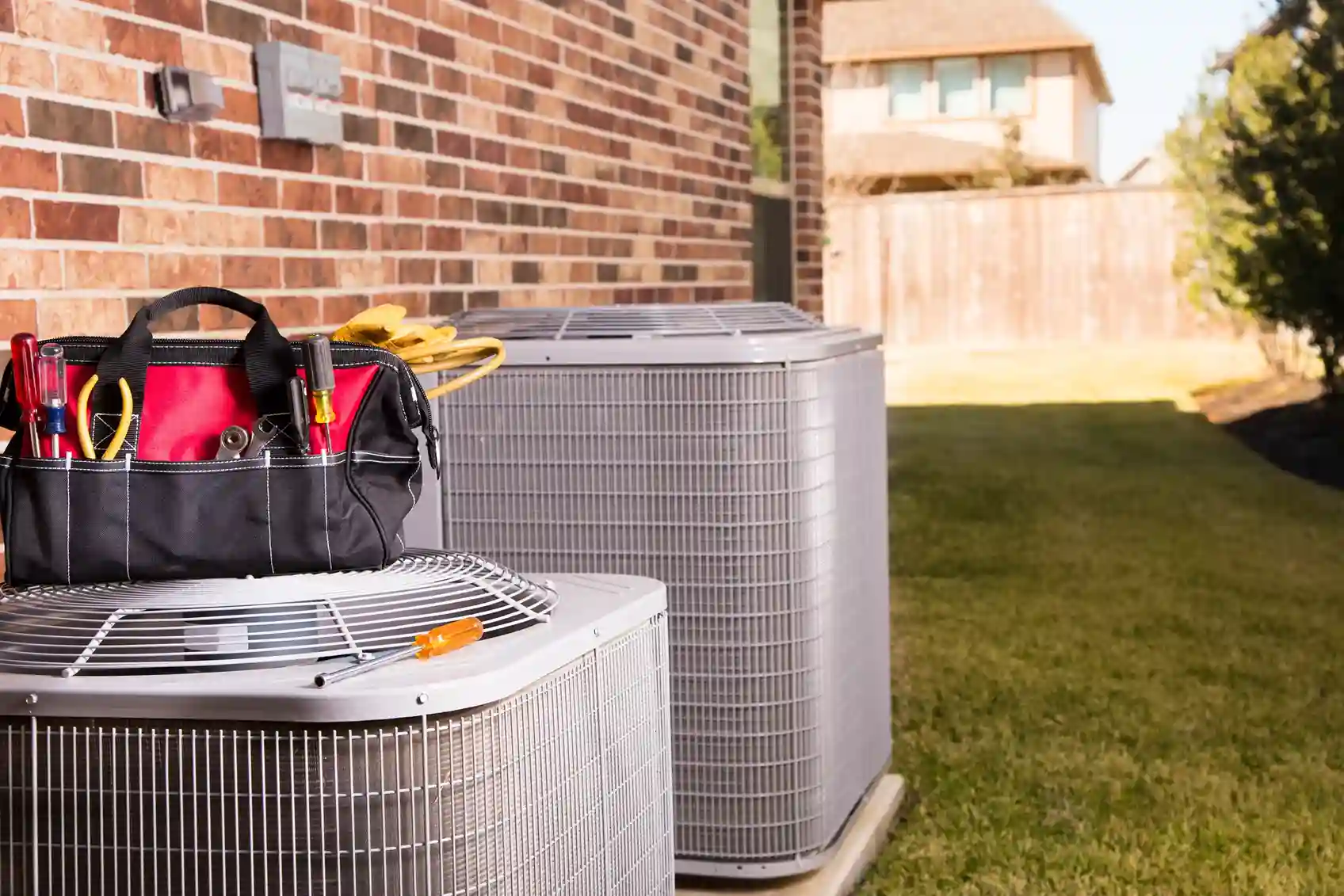
Your outdoor condenser coil relies on unrestricted airflow to release heat. However, desert wind and dust storms deposit a fine layer of silica and alkaline minerals onto the coil's aluminum fins. This accumulation forms an insulating barrier that reduces heat transfer efficiency.
Furthermore, desert dust acts like sandpaper on the moving parts of your system. It penetrates the bearings of the outdoor fan motor and indoor blower motor, leading to friction, squealing noises, and eventual motor seizure.
To mitigate these risks, homeowners must learn how to protect your outdoor AC unit from Antelope Valley wind and dust through physical barriers and proper placement.
Thermal Cycling, Metal Fatigue, and the "Paperclip Effect"
High desert communities like Lancaster and Acton experience dramatic daily temperature swings, often shifting 30 to 40 degrees between day and night. This rapid transition causes the metal components in your AC — particularly the copper refrigerant lines and aluminum coils — to expand and contract rapidly.
Think of this like bending a metal paperclip back and forth. Over time, this constant thermal cycling causes metal fatigue, leading to micro-cracks at brazed joints and copper elbows. These micro-cracks eventually develop into refrigerant leaks, which reduce cooling capacity and force the compressor to run even longer to compensate.
The Impact of Wind-Driven Dust on Filters and Airflow
High winds in communities like Rosamond and Quartz Hill carry massive amounts of fine desert dust. When your system is running, it pulls this dust directly into your return vents.
If your air filter is dirty, this dust bypasses the filter and coats the indoor evaporator coil. When dust mixes with the natural condensation on the cold evaporator coil, it creates a thick, muddy sludge.
This sludge restricts airflow, spikes static pressure, and forces the blower motor to work much harder to move air. This restriction is like trying to breathe through a straw while running a marathon, placing immense strain on your entire system.
Desert-Rated Engineering: SEER Ratings vs. Real-World Performance
When shopping for a new air conditioner, many homeowners focus solely on the Seasonal Energy Efficiency Ratio (SEER or SEER2) rating. While a high SEER2 rating indicates excellent efficiency under standard testing conditions, those tests are performed at an outdoor temperature of 82°F.
In the real-world conditions of a 115°F Antelope Valley summer, a standard 16 SEER unit may perform closer to an 11 or 12 SEER system. To ensure your system can survive the desert heat, look for these specific engineering features:
- T3 High-Ambient Rating: Systems with a T3 rating are specifically engineered and tested to operate efficiently at ambient temperatures up to 125°F without tripping their thermal overloads.
- Variable-Speed Compressors: Unlike standard single-stage compressors that turn on and off at full blast, variable-speed compressors ramp up and down gradually. This avoids the high-amperage start-stop cycles that cause rapid component wear during heat waves.
- Micro-Channel or All-Aluminum Coils: Traditional copper-tube, aluminum-fin coils are highly susceptible to galvanic corrosion in dusty, dry environments. All-aluminum micro-channel coils offer superior heat transfer and resist the chemical corrosion caused by alkaline desert dust.
- Oversized Condenser Coils: Premium desert-rated systems often feature larger cabinet sizes with oversized condenser coils, providing more surface area to reject heat even when ambient temperatures are extreme.
Proven Maintenance Strategies to Extend Desert AC Longevity
In mild climates, skipping an annual AC service might only result in a slight drop in efficiency. In the high desert, neglecting your system can lead to a catastrophic breakdown during the hottest week of the year.
To maximize your system's lifespan, look at the benefits of regular AC maintenance as a necessary investment rather than an optional chore. Implementing these essential AC maintenance tips will help you keep your system running smoothly.
The 30-Day Filter Rule and Coil Rinsing
While standard filter packaging often claims they last for 90 days, desert dust loads require a more aggressive schedule. You should inspect your air filters every 30 days during the peak cooling season.
For high desert homes, MERV 8 to 11 filters offer the ideal balance between dust capture and unrestricted airflow. Avoid MERV 13 or higher filters unless your system's ductwork has been specifically designed for them, as they can restrict airflow in thin high-desert air.
Additionally, make it a habit to gently rinse your outdoor condenser coil with a garden hose after major windstorms. Always turn off the power to the unit first, and never use a pressure washer, which can easily bend the delicate aluminum fins and permanently block airflow.
Bi-Annual Professional Tune-Ups and Calibration
Because of the heavy workload placed on desert systems, a single annual checkup is rarely enough. Most high desert homes benefit from bi-annual professional servicing — once in the spring to prepare for the summer heat, and once in the fall to assess and repair any wear sustained during peak operation. Knowing how often should you service your air conditioner in a desert climate is key to preventing unexpected mid-summer failures.
During a professional tune-up, our technicians will:
- Test capacitors for capacitance loss (capacitors are highly vulnerable to heat, as cabinet temperatures can hit 150°F, vaporizing their internal dielectric fluid).
- Check refrigerant levels to prevent compressor overheating.
- Tighten all electrical connections to counter the loosening effects of thermal expansion and contraction.
- Clean and lubricate motor bearings to prevent abrasive wear.
For more detailed strategies on maximizing performance, review our AC system lifespan optimization tips and learn how to boost your AC's lifespan.
Repair vs. Replacement: Navigating the Decision in Arid Climates
As your system ages, you will eventually face the decision of whether to repair a broken component or replace the entire system. In desert climates, this decision often comes down to the age of the system, the frequency of breakdowns, and overall efficiency.
If your system is nearing the end of its typical desert lifespan (10 to 15 years) and requires frequent service calls, investing in a modern, high-efficiency replacement is often the more practical long-term choice. On the other hand, if a relatively young system experiences a minor component failure, a quick repair is usually the best path forward.
In some cases, restoring AC efficiency with timely repair is the most practical choice, but an aging system on its last legs will continue to suffer from high energy bills and frequent breakdowns.
Frequently Asked Questions About Desert AC Lifespan
Does shading my outdoor AC unit actually help extend its life?
Yes, shading your outdoor unit can reduce the immediate ambient temperature around the coils by 10°F to 15°F, which lowers the thermal load on your compressor. However, you must ensure that any shading structure (such as a trellis or awning) keeps at least 24 inches of clear space on all sides and at least 4 feet of clearance above the unit. If you block the airflow, you will trap hot air around the condenser, causing it to overheat and fail even faster.
How does high altitude and low humidity affect AC efficiency?
High desert communities like Lake Hughes and Acton sit at higher elevations where the air is thinner. Thinner air has less density, meaning your indoor blower motor must work harder and run longer to move the same volume of air.
Additionally, low humidity causes rubber seals, grommets, and fan belts to dry out, crack, and fail prematurely. This dry environment makes regular lubrication and component inspections crucial.
What is the average lifespan of an AC unit in the Antelope Valley?
In the Antelope Valley, a well-maintained, high-quality air conditioner typically lasts 10 to 15 years. Without consistent maintenance, filter changes, and professional tune-ups, that lifespan can easily drop to 8 to 10 years due to the extreme combination of summer heat waves and abrasive desert dust.
Conclusion
The high desert climate of the Antelope Valley is undeniably tough on residential cooling systems. Between triple-digit summer temperatures and wind-driven silica dust, your air conditioner faces a continuous physical challenge.
However, by staying proactive with monthly filter checks, rinsing your outdoor coils, and scheduling professional bi-annual tune-ups, you can protect your investment and keep your home comfortable for years to come.
At Affordable Air and Heating, we have been family-owned and operated since 1996. We serve Lancaster, Palmdale, Santa Clarita, Rosamond, Acton, and the surrounding communities with honest, high-quality HVAC services. We focus on providing energy-efficient solutions and flexible financing options to keep your home comfortable without breaking your budget.
I'm looking to upgrade my home's cooling. Who in Antelope Acres specializes in energy-efficient systems? Contact us today to schedule your system evaluation or maintenance tune-up!