The Hidden Threat Looming Above Your Ceiling
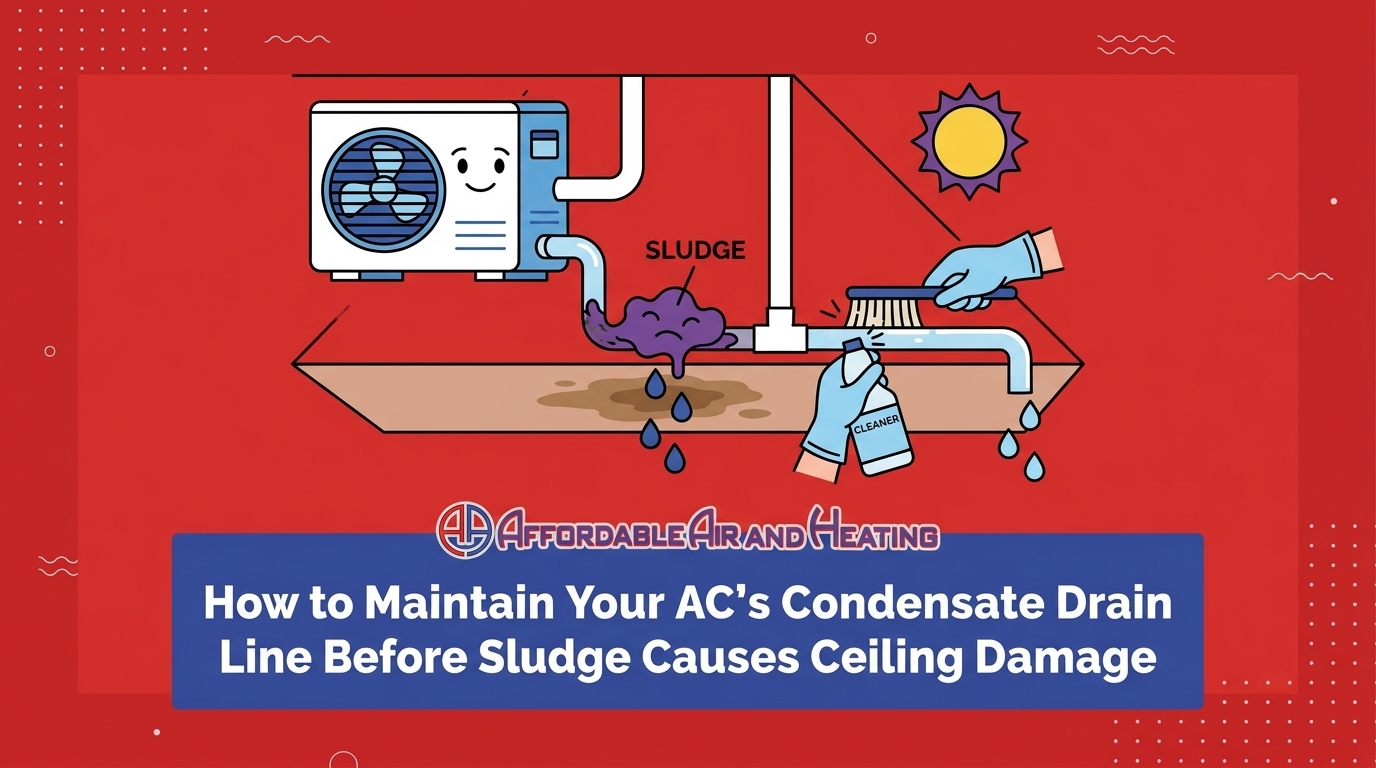
A strange brown water stain is expanding across your hallway drywall, but it hasn't rained in weeks. You might assume you have a roofing issue, but there is a much more common culprit lurking right above you in the attic. Learning how to maintain your AC's condensate drain line is the absolute best way to prevent this exact scenario. Your air conditioning system does more than just push cold air into your rooms; it actively pulls moisture out of your indoor air. During peak operation, a typical residential central air conditioner produces anywhere from 5 to 20 gallons of condensation every single day.
All that water has to go somewhere. It collects in a drain pan beneath your indoor evaporator coil and travels through a narrow PVC pipe to the outside of your home. When that pipe flows freely, you never even think about it. However, when months of non-stop cooling lead to a silent but destructive blockage, that pan overflows directly onto your ceiling. Catching a sluggish drain line early is the critical decision point that prevents catastrophic water damage.
The simple solution: You do not need expensive chemicals to keep this system clear. A simple, safe DIY vinegar flush is the ultimate preventative measure. If you are already dealing with an overflow and need professional help, exploring comprehensive HVAC services is your next best step to protect your property.
How High-Desert Dust Creates Destructive Sludge
There is a persistent myth that drain line clogs only happen in humid, swampy climates where algae grows rampant. While biological growth is a factor everywhere, the mechanics of a clogged line look very different depending on where you live. In the high desert, we deal with a unique set of environmental challenges that turn a simple water drip into a serious plumbing blockage.
The Reality of Lancaster CA Weather
In our local climate, triple-digit heatwaves are the norm, not the exception. This extreme heat requires non-stop AC operation just to keep your living space bearable. Because the system runs continuously, it creates a constant, heavy flow of condensation. At the same time, dry, dusty winds are a staple of the region. Fine blowing desert dust is incredibly pervasive. Even with high-quality air filters in place, microscopic dust particles inevitably bypass the filter media and settle onto the cold, wet evaporator coil.
The Sludge Formation Process
When this fine, powdery dust washes off the coil and drips into the drain pan, it mixes with the standing condensation. Instead of forming a light algae bloom, it creates a thick, heavy, mud-like sludge. This dense material moves very slowly. As it creeps into the narrow PVC drain line, it begins to coat the interior walls, hardening slightly whenever the system cycles off. Over time, this buildup restricts the flow of water entirely. If you are looking to reduce the amount of dust entering your system in the first place, upgrading your indoor air quality solutions can significantly cut down on this sludge formation.
The Accumulation Peak: Why Drain Lines Fail Now
Drain lines rarely clog on the first hot day of the year. Instead, blockages are the result of a slow, cumulative effect. If you have been running your air conditioner heavily since early spring, your drain pan has been collecting dust, pet dander, and moisture for months. By the time we reach August late-summer, that debris has had ample time to settle, thicken, and solidify.
A typical pattern we see in local homes involves homeowners completely ignoring their HVAC system as long as cold air is coming out of the vents. They assume everything is fine until water suddenly breaches the ceiling drywall. August late-summer is the absolute peak season for these sudden attic pan overflows. The system is being pushed to its absolute limit, generating maximum condensation just as the sludge barrier reaches its thickest point.
Proactive maintenance is vital right now. Waiting for the system to fail means waiting for property damage to occur. Taking a few minutes to address your condensate line before the peak heat of late summer sets in can save you from a massive headache and extensive drywall repairs.
Early Warning Signs of a Sluggish Condensate System
Your air conditioner will usually give you a few subtle hints that the drain line is struggling before a full-blown emergency occurs. Knowing what to look for allows you to intervene while the blockage is only partial. Watch for these common symptoms in your Lancaster CA home:
• Musty or moldy odors: If you notice a damp, dirty sock smell coming from your air vents the moment the AC turns on, there is likely standing water stagnating in your drain pan.
• Standing water in the secondary pan: If your indoor air handler is accessible in the attic or a hallway closet, take a look beneath it. There is a secondary metal or plastic pan designed to catch overflows. If you see water pooling there, your primary line is already clogged.
• Water spots or bubbling paint: Keep an eye on the ceiling directly beneath your indoor AC unit. Even a faint, light brown ring or slightly bubbling drywall texture indicates moisture is escaping the pan.
• Unexpected system shutdowns: Many modern air conditioners are equipped with a safety float switch inside the drain pan. If the water level rises too high, this switch automatically cuts power to the entire system to prevent flooding. If your thermostat goes blank or the system refuses to turn on, a clogged line is a highly likely culprit.
Step-by-Step: How to Maintain Your AC's Condensate Drain Line Safely
We believe in empowering homeowners with honest, value-driven tips. You do not need to call a technician for basic preventative upkeep. Performing a routine vinegar flush is a completely free habit that keeps your system running smoothly. Here is how to maintain your AC's condensate drain line safely and effectively.
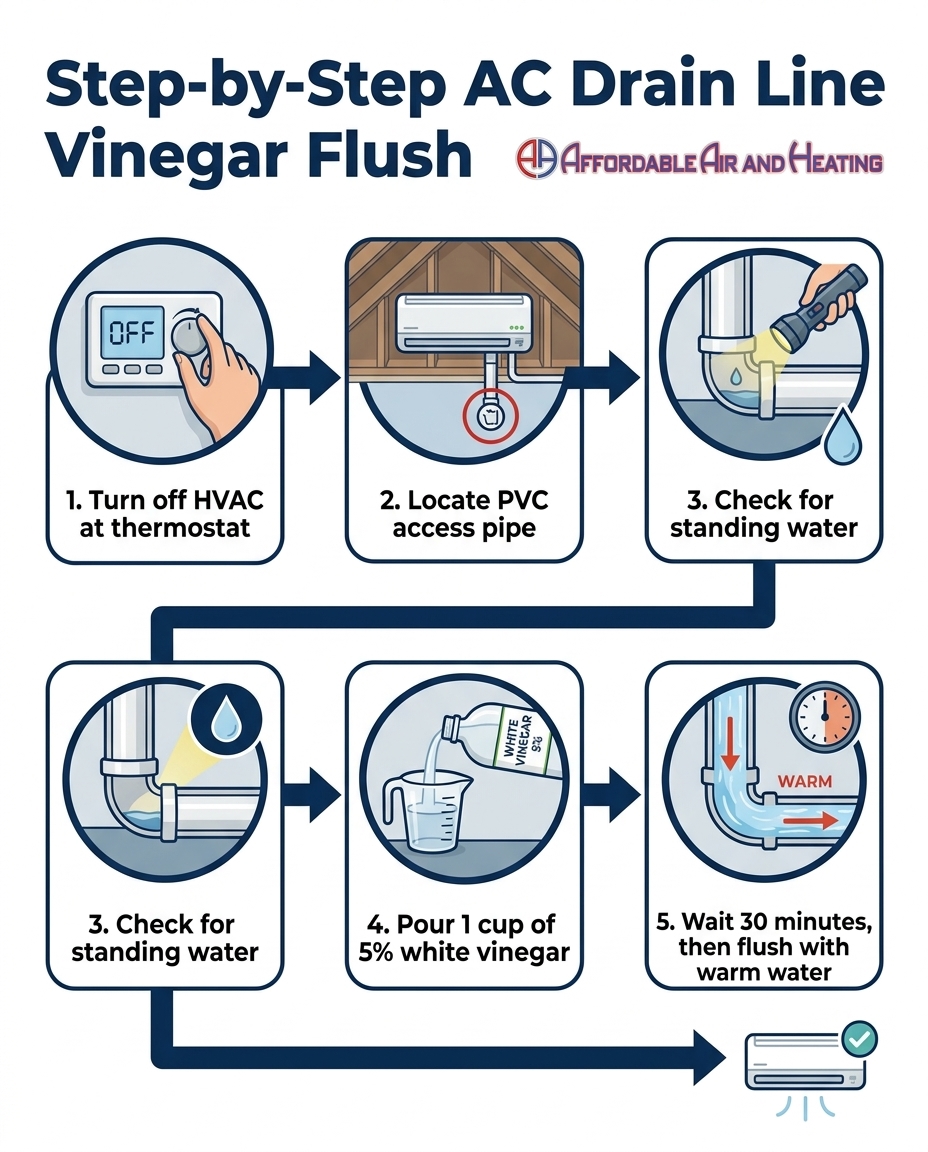
1. Turn off the HVAC system at the thermostat. Safety always comes first. Switch your thermostat to the "Off" position to ensure the unit does not power on while you are working near the indoor air handler.
2. Locate the condensate drain line access pipe. Go to your indoor unit (often in the attic, garage, or a utility closet). Look for a white PVC pipe extending from the unit. It should have a vertical section with a removable cap. This is your access point.
3. Inspect for standing water. Remove the cap and look inside the pipe with a flashlight. If the pipe is completely backed up with water to the very top, do not add more liquid. A fully blocked line requires a different approach. If the pipe is relatively clear, proceed to the next step.
4. Slowly pour one cup of standard white household vinegar. Using regular 5% acetic acid white vinegar, slowly pour one cup directly into the access pipe. Vinegar is mildly acidic, making it perfect for dissolving dust sludge and neutralizing odors safely.
5. Wait 30 minutes, then flush with warm water. Let the vinegar sit in the line to break down the buildup. After half an hour, slowly pour a cup of warm (not boiling) water down the same pipe to flush the loosened debris outside. Replace the cap securely.
The Great Debate: Why Vinegar Beats Bleach for AC Maintenance
If you search for DIY drain line cleaning tips, you will undoubtedly find older guides recommending bleach. While bleach is highly effective at killing algae, it is not the right tool for modern HVAC maintenance. Standard white vinegar is a much safer, smarter choice for your Lancaster CA home.
Bleach is a harsh, highly corrosive chemical. Over time, pouring bleach down your condensate line will degrade the PVC piping and eat away at the PVC cement holding the joints together. This can lead to hidden leaks inside your walls. Furthermore, the strong fumes from bleach can easily be pulled into your ductwork and circulated throughout your living spaces, causing respiratory irritation.
• White Vinegar (5%) — Effectiveness on Sludge: Excellent at breaking down dirt and sludge. — Impact on PVC Pipes: Completely safe; non-corrosive to plastics. — Safety & Fumes: Safe; mild odor dissipates quickly.
• Chlorine Bleach — Effectiveness on Sludge: Kills algae, but struggles with thick dust sludge. — Impact on PVC Pipes: Corrosive; degrades PVC cement over time. — Safety & Fumes: Toxic fumes can enter the home's ductwork.
Vinegar offers the perfect balance. It is acidic enough to break down the dense sludge we see in our region, but gentle enough to leave your plumbing completely intact.
When DIY Isn't Enough: Clearing a Fully Backed-Up Line
It is important to establish the boundary between safe homeowner maintenance and a job that requires professional intervention. A vinegar flush is a preventative measure. It will not clear a line that is already completely blocked by hardened sludge. If you pour vinegar into a backed-up pipe, you will simply add to the overflow.
When a line is entirely clogged, professionals use specialized tools to safely remove the blockage without damaging the system. This often involves using heavy-duty wet/dry vacuums with custom attachments at the outdoor termination point to suck the clog out, or using regulated, pressurized clearing devices to push the sludge through. Attempting to dismantle PVC plumbing yourself or accessing the internal electrical panels to bypass a safety switch is dangerous and should never be attempted without proper licensing.
Sometimes, a sudden shutdown isn't just a simple clog. A failing fan motor, for example, can also stop the system from cooling. If you find your vents blowing warm air or the system refuses to run entirely, a professional diagnosis is the safest route to get your home comfortable again.
Frequently Asked Questions About AC Drain Lines
How often should I pour vinegar down my AC drain line?
During peak cooling months, performing a vinegar flush every 30 to 60 days is ideal. In Lancaster CA, where the system runs constantly throughout the summer, a monthly flush is highly recommended. Routine flushing prevents sludge buildup before it can cause a complete blockage.
What happens if my AC drain line is clogged?
Condensation backs up into the drain pan, which will eventually overflow if not addressed. This leads to ceiling water damage, saturated drywall, and potential mold growth. Additionally, an overflowing pan often triggers a safety float switch that shuts down the entire AC system to prevent further flooding.
Where is the AC condensate drain line located?
The access point is typically a white PVC pipe located near the indoor air handler, which is usually found in the attic, a utility closet, or the garage. The termination point is usually outside near the condenser unit, where you can see water dripping onto the ground while the AC is running.
Can I use bleach to clean my AC drain line?
It is not recommended. Bleach is a harsh chemical that can degrade PVC pipes and the cement holding the fittings together over time. Vinegar is a much safer, non-corrosive alternative that effectively breaks down sludge without risking damage to your plumbing or introducing toxic fumes into your ductwork.
Can a clogged drain line stop my AC from cooling?
Yes, it absolutely can. Many modern systems are equipped with a float switch inside the drain pan. If the pan fills with water due to a clog, the switch automatically cuts power to the unit to prevent indoor flooding, stopping the cooling process immediately.
Protect Your Home with Proactive AC Care
Understanding how to maintain your AC's condensate drain line is one of the most valuable skills a homeowner can learn. A simple cup of vinegar applied routinely during the August late-summer heat can save you from extensive drywall repairs and frustrating system breakdowns. We are committed to empowering our community with honest, practical DIY knowledge that keeps your home safe and comfortable.
However, if your system is already struggling to keep up with the heat, or if you are dealing with a stubborn clog that a vinegar flush cannot fix, do not wait for the problem to escalate. Schedule comprehensive air conditioning maintenance and repair to ensure your system operates efficiently and safely all season long.