Facing a Warm AC in the Late Summer Heat
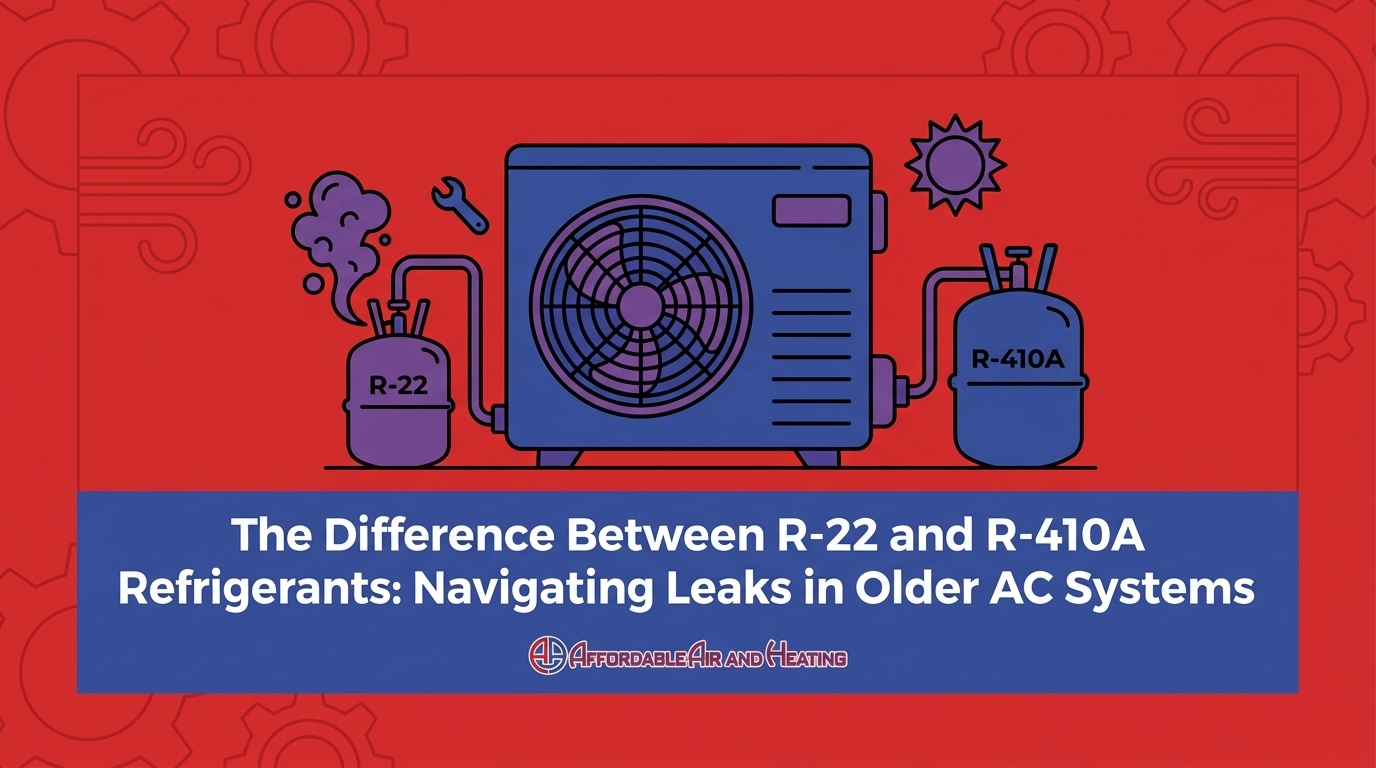
Your older air conditioner is running constantly, but the vents are only blowing mildly cool—or even warm—air. Understanding the difference between R-22 and R-410A refrigerants becomes critical when you are relying on an aging system during the peak of the season. That strange hissing noise or sudden drop in cooling performance usually points to a refrigerant leak, which presents a significant hurdle for pre-2010 AC systems that rely on outdated chemistry. If you are struggling with a malfunctioning system, exploring professional Lancaster HVAC services is the first step toward restoring your home's comfort.
Dealing with a warm house is frustrating enough, but the situation becomes far more complicated when a technician diagnoses a leak in an older unit. For decades, the industry standard was a refrigerant known as R-22. However, regulatory changes have completely shifted how the HVAC industry maintains and repairs these older units. Today, homeowners face a difficult decision point: invest heavily in a scarce resource to limp through the rest of the season, or upgrade to a modern system designed for current standards.
The Reality of Aging Equipment
Air conditioners are closed-loop systems. They do not consume refrigerant like a car consumes gasoline. If your system is low on freon, it means there is a physical hole, crack, or failing seal somewhere in the copper lines or evaporator coil. In a modern system, repairing the leak and recharging the unit is a standard procedure. But for pre-2010 AC systems, that same leak triggers a cascade of difficult choices driven by severe supply shortages.
During a period of late summer (August) high-desert cooling demand, the urgency to get the air conditioning back online often pushes homeowners toward a quick fix. Unfortunately, patching an old system is no longer a simple or inexpensive task. Navigating this dilemma requires a clear, neutral understanding of what is happening inside your equipment and why the rules of HVAC repair have fundamentally changed over the last decade.
Understanding the R-22 Phase-Out and Scarcity
To understand why repairing an older air conditioner has become so challenging, you have to look at the regulatory history of refrigerants. On January 1, 2020, the Environmental Protection Agency (EPA) officially banned the production and import of R-22 refrigerant in the United States. This mandate was the final step in a multi-decade phase-out plan aimed at eliminating ozone-depleting substances from consumer appliances.
Because no new R-22 is being manufactured or imported, the only available supply comes from stockpiles created before the ban or from reclaimed refrigerant recovered from decommissioned older units. This extreme scarcity has drastically altered the landscape of air conditioning repair and replacement. When a resource is no longer produced but is still needed by millions of aging units across the country, securing that resource becomes increasingly difficult.
The Shift to Reclaimed Supplies
It is important to note that operating an older system is not illegal. The EPA does not require homeowners to replace a functioning R-22 air conditioner. However, the moment that system requires servicing for a leak, you are subjected to the realities of a depleted supply chain. Technicians must rely on reclaimed refrigerant, which has been carefully extracted from old systems, filtered, and purified to meet industry standards.
This process is highly regulated. HVAC professionals must meticulously track their usage and recovery of these older chemicals. For the homeowner, this means that a simple "top-off" is no longer a standard maintenance item. It is a major repair utilizing a highly restricted chemical. As the years pass and more pre-2010 AC systems are finally retired, the pool of available reclaimed refrigerant continues to shrink, making the prospect of maintaining these older units less viable with every passing season.
R-22 vs. R-410A: A Direct Mechanical Comparison
The transition away from older refrigerants was not just a chemical change; it required a complete mechanical redesign of residential air conditioning systems. R-410A, the modern standard that replaced R-22, operates under entirely different physical properties. Understanding these differences highlights exactly why the two generations of equipment are so vastly different in their construction and performance.
One of the most significant differences lies in operating pressure. Modern refrigerants operate at significantly higher pressures than their predecessors. To handle this intense pressure, systems built for R-410A require thicker copper tubing, more robust compressor components, and reinforced coils. If you were to examine the internal components of pre-2010 AC systems side-by-side with modern units, the physical bulk and durability of the newer coils would be immediately apparent.
Differences in Lubrication and Efficiency
Beyond pressure, the two systems utilize entirely different types of oil to keep the compressor lubricated. Older systems use a mineral oil that circulates smoothly with R-22. Modern systems require a synthetic Polyolester (POE) oil. These oils are completely incompatible; mixing them creates a thick, acidic sludge that will rapidly destroy a compressor motor.
Additionally, modern refrigerants have a much higher heat absorption rate. They are capable of absorbing and releasing heat more efficiently as they cycle between liquid and gas phases. This chemical efficiency translates directly into electrical efficiency, allowing modern units to cool a home using significantly less electricity than older models.
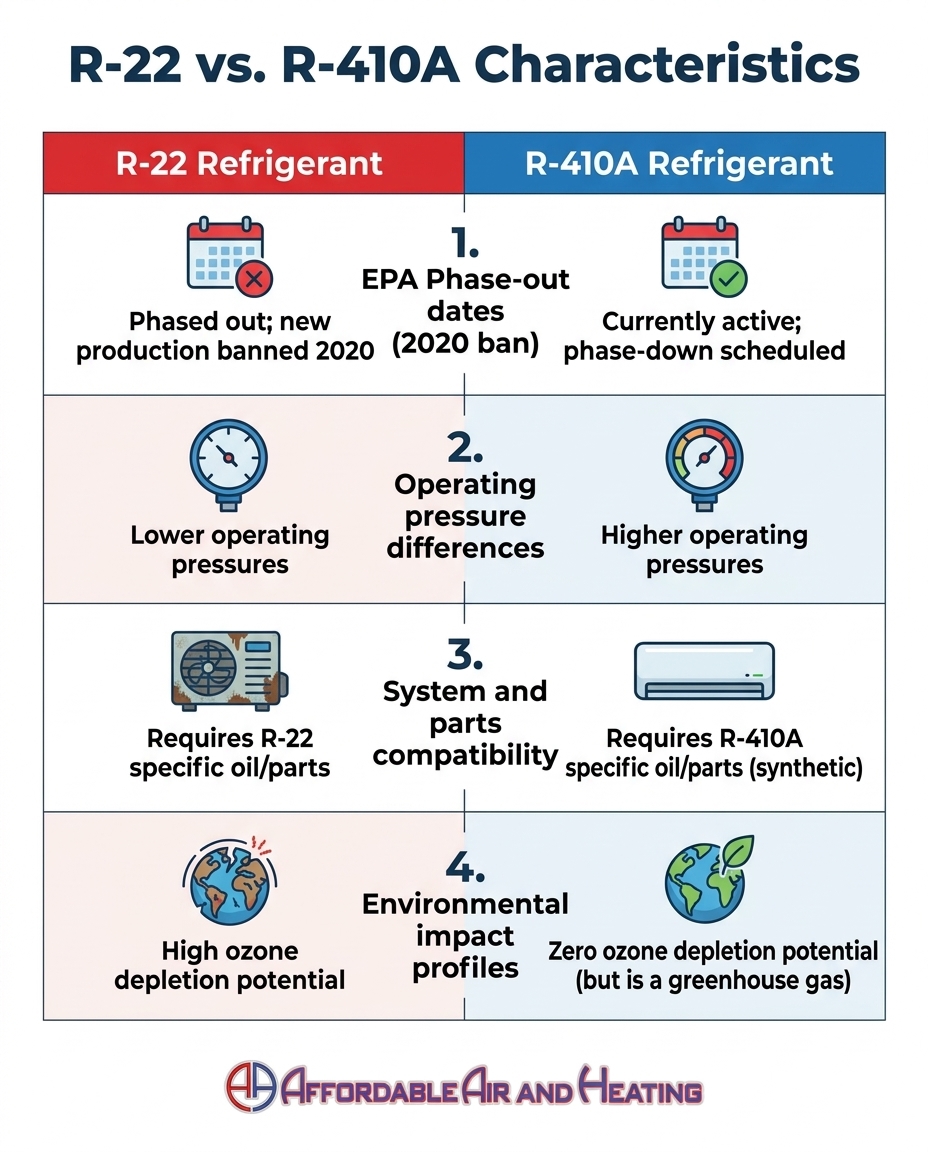
Mechanical Comparison Breakdown:
• Environmental Impact — Older Systems (R-22): Contains ozone-depleting hydrochlorofluorocarbons (HCFCs). — Modern Systems (R-410A): Ozone-safe hydrofluorocarbons (HFCs).
• Operating Pressure — Older Systems (R-22): Lower pressure; utilizes thinner copper tubing and standard coils. — Modern Systems (R-410A): High pressure; requires thick-walled copper and reinforced coils.
• Compressor Lubrication — Older Systems (R-22): Mineral oil. — Modern Systems (R-410A): Synthetic Polyolester (POE) oil.
• Heat Absorption — Older Systems (R-22): Lower efficiency; requires more energy to transfer heat. — Modern Systems (R-410A): High efficiency; transfers heat rapidly, lowering electricity usage.
• Availability — Older Systems (R-22): Phased out in 2020; relies entirely on scarce reclaimed supply. — Modern Systems (R-410A): Widely available industry standard.
The Strain of Low Refrigerant on Older Compressors
When an air conditioner loses refrigerant, the impact goes far beyond just a warm house. Refrigerant does not merely cool the air blowing through your vents; it is also directly responsible for cooling the compressor motor itself. The compressor is the heart of your HVAC system, an expensive and hard-working motor located in the outdoor unit. As cool refrigerant gas returns from the indoor coil, it flows over the compressor windings, extracting heat and preventing the motor from burning out.
With Lancaster's extreme high desert triple-digit summer temperatures, the outdoor unit is already fighting an uphill battle against the ambient heat. When a leak occurs and the refrigerant charge drops, the compressor loses its primary source of cooling. At the same time, the thermostat registers that the house is too warm, forcing the system to run continuously without a break.
The Domino Effect of a Freon Leak
This continuous operation under immense thermal stress creates a dangerous domino effect. The lack of proper refrigerant flow also means the mineral oil is not circulating back to the compressor efficiently. The motor begins to run hot and dry, compounding mechanical wear on the internal bearings and valves. Operating an undercharged unit during peak demand drastically increases the risk of catastrophic compressor failure.
Furthermore, an undercharged system cannot meet its original efficiency standards. The unit will consume massive amounts of electricity as it runs non-stop, attempting to achieve a temperature it is physically incapable of reaching. You end up paying inflated utility bills for a system that is actively destroying itself.
Why You Cannot Simply Mix or Swap Refrigerants
A frequent question from homeowners dealing with an aging, leaking unit is whether they can simply put modern refrigerant into their older system to bypass the scarcity issue. The short answer is absolutely not. The two refrigerants are strictly incompatible, and attempting to mix them or swap them will result in immediate, irreversible damage to the equipment.
As established earlier, modern refrigerants operate at much higher pressures. If you were to force a high-pressure chemical into a system designed for lower pressure, the thin-walled copper coils would rupture almost instantly. Even if the coils somehow held, the chemical incompatibility between the mineral oil in the old system and the modern refrigerant would cause the compressor to seize up.
The Myth of the "Drop-In" Fix
You may also hear about "drop-in" replacement refrigerants marketed as alternatives for pre-2010 AC systems. While these chemicals exist, the term "drop-in" is highly misleading. Using these alternatives often results in a significant loss of cooling capacity, meaning your system will struggle even more during a heatwave. Furthermore, transitioning a system to an alternative chemical requires recovering the old freon, flushing the lines, changing out specific valves, and replacing the oil—a labor-intensive process that rarely justifies the investment on a unit that is already past its expected lifespan.
It is also crucial to understand that handling, recovering, and recharging any type of refrigerant requires specific EPA 608 certification. This is never a do-it-yourself project. The pressures involved are dangerous, and venting refrigerants into the atmosphere is a severe environmental violation. For a deeper understanding of why patching these old systems is often a losing battle, you can review why we never recommend patching a leaking freon coil.
Repair vs. Replace: Making an Informed Decision
When a technician confirms a leak in an obsolete system, you are immediately faced with a difficult financial decision. Do you pay for a scarce resource to get the unit running again, or do you put those funds toward a modern replacement? Making an informed choice requires looking past the immediate discomfort of a warm house and evaluating the long-term viability of the equipment.
Affordable Air and Heating provides honest, mechanical breakdowns of repair vs. replace realities without high-pressure sales tactics, allowing homeowners to make informed choices based on data rather than urgency. When evaluating your next steps, consider the overall condition of the unit. Air conditioners generally have a lifespan of 12 to 15 years. If your system was manufactured before 2010, it has already exceeded its expected mechanical life.
Calculating the True Cost of Keeping an Older Unit
Patching a leak in an old coil is often a temporary fix. Because the metal degrades over time, fixing one hole today does not prevent another from forming next month. This leads to the trap of throwing good money after bad—paying repeatedly for diagnostics, patches, and scarce chemicals on a system that will inevitably need to be replaced anyway.
Factors to evaluate when deciding your next steps:
• Age of the equipment: Systems over 15 years old are highly susceptible to secondary part failures (motors, capacitors, contactors) even after a leak is fixed.
• Frequency of leaks: If this is not the first time the system has been low on charge, the structural integrity of the coil is compromised.
• Efficiency gains: Modern high-efficiency heat pumps and AC units use significantly less electricity, offsetting a portion of the installation cost through lower monthly utility bills.
• Available incentives: Utility rebate programs such as Home Performance Plus (for SCE customers) may help with qualifying upgrades, and GoGreen financing can make a modern system more accessible. Ask us which programs are currently open.
Investing in a new system provides reliable, warrantied cooling that operates at modern safety and efficiency standards, eliminating the constant worry of when the next expensive leak will occur.
Finding the Right Solution for Your Cooling Needs
Navigating a major HVAC issue during the hottest part of the year is inherently stressful, but understanding the difference between these refrigerants empowers you to make better household investments. The shift away from older chemicals was a massive industry change, and the resulting scarcity is a mechanical reality, not a sales tactic. When an older R-22 system develops a leak, the right next step is rarely a quick patch.
A clear, neutral explanation of the phase-out reality helps clarify the repair versus replace dilemma. You do not have to settle for a system that constantly struggles to keep up, nor should you feel pressured into a decision without understanding the underlying mechanics. By seeking a professional, transparent assessment of your current system, you can confidently determine whether it is time to retire your aging unit and step into the reliability of modern cooling technology.
Frequently Asked Questions
How do I know if my older AC uses R-22 or R-410A?
You can usually determine your system's refrigerant type by checking the manufacturer's data plate located on the outdoor condenser unit. This metal or heavy-duty sticker lists the model number, serial number, and the specific chemical required for the system. If the unit was manufactured before 2010, it is highly likely that it relies on the older, phased-out standard. If the label is unreadable, a certified technician can identify the system type by checking the operating pressures and equipment specifications.
Why can't I just use R-410A in my existing system?
Modern refrigerants operate at significantly higher pressures than older systems were built to handle. Pumping a high-pressure chemical into an older unit will cause the thin-walled copper coils to rupture and immediately destroy the compressor. Additionally, the synthetic oils used in modern systems are completely incompatible with the mineral oils used in older units, meaning mixing them will create a damaging sludge inside the lines.
Why is topping off an older AC no longer recommended?
Topping off is no longer recommended because the EPA banned the production and import of older ozone-depleting refrigerants in 2020, making the remaining supply incredibly scarce. When a system needs a top-off, it means there is an active leak that must be found and repaired, which is difficult on aging, degraded coils. Continuously adding a highly restricted, expensive chemical to a leaking system is a poor long-term investment compared to upgrading to modern equipment.
What happens if my older air conditioner has a leak?
If your older system develops a leak, it will lose its ability to cool your home and will run continuously as it tries to reach the target temperature. This lack of refrigerant also starves the compressor of its necessary cooling and oil circulation, leading to severe overheating and mechanical wear. Operating a leaking unit in high heat drastically increases the risk of complete, catastrophic compressor failure.
Are there generic energy rebates for upgrading an older R-22 system?
Sometimes. Utility rebate programs such as Home Performance Plus (for SCE customers) may apply to qualifying upgrades, and GoGreen financing is available for qualifying energy-efficiency work. Because these programs change frequently, ask your HVAC provider which ones are currently open for your specific upgrade.