Your Seasonal Home Maintenance Checklist: Safely Navigating the October Heating Startup
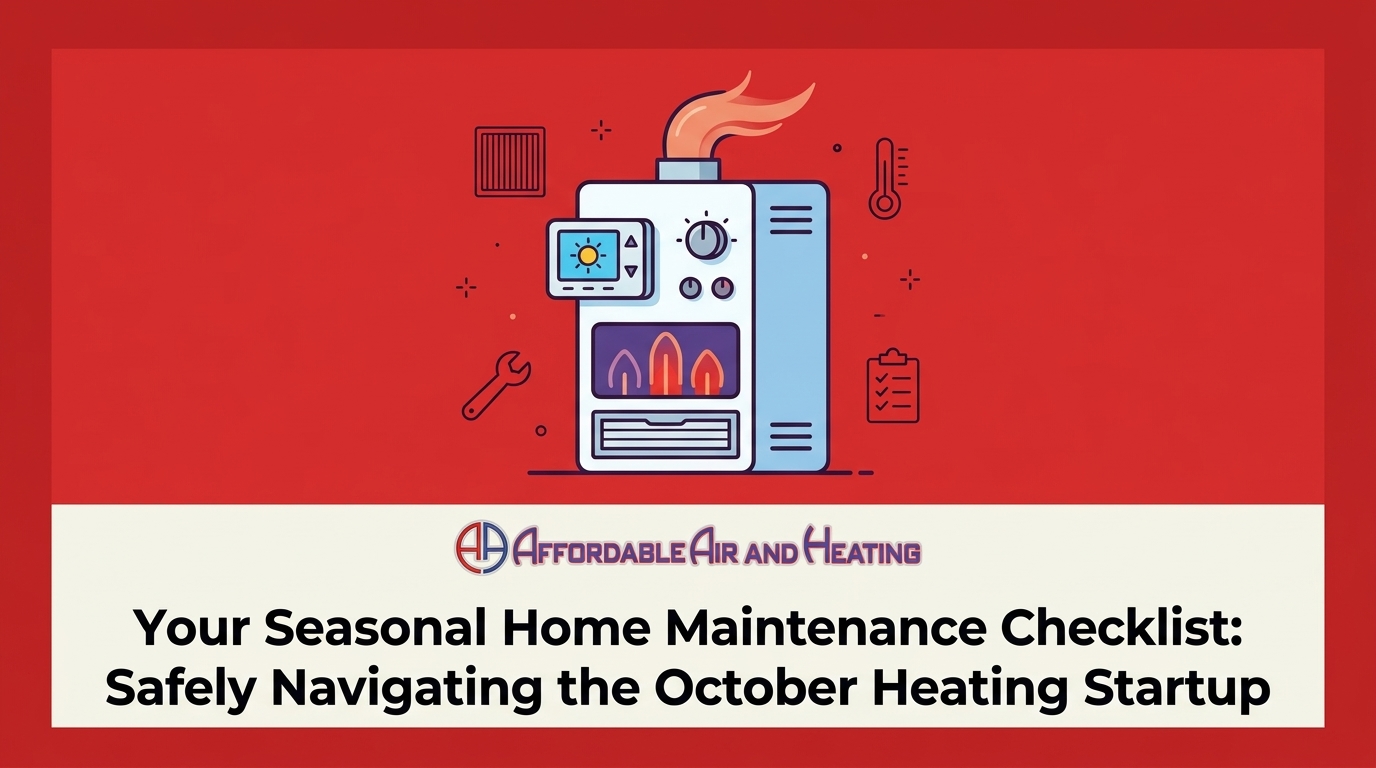


Transitioning Your HVAC System for the First Fall Freeze
When drafting your seasonal home maintenance checklist, preparing your heating system for its first run of the year should be at the very top. You rely on your air conditioner heavily through the summer, but as overnight temperatures begin to drop, that dormant furnace suddenly becomes your most critical appliance. Turning on a heating system for the first cold night after it has sat idle for months often brings a wave of anxiety. You might hear strange clanks, smell unfamiliar odors, or wonder if the unit will actually ignite when you adjust the thermostat.
This transition requires a massive mechanical shift. Your system must pivot from cooling your home to generating and distributing heat safely. For comprehensive support during this crucial window, professional HVAC Services ensure your system is ready for the sudden shift in weather.
In a high desert geography like Lancaster, this transition is particularly extreme. Your climate control system must rapidly pivot from handling triple-digit summer heat to battling near-freezing fall nights. The metal components inside your furnace expand and contract drastically during these temperature swings. Because of this, a targeted seasonal approach is necessary. Generic home upkeep is great, but your heating system requires specific attention. While some minor startup quirks are perfectly normal, other symptoms require immediate professional attention to keep your home safe.
Decoding the First Startup: Dust Burn-Off vs. Mechanical Hazards
One of the most common concerns during a mid-fall / October heating startup is a distinct burning smell coming from the vents. When your furnace sits unused all summer, dust, pet dander, and airborne particles naturally settle on the internal heat exchanger and heating elements. The moment those components heat up for the first time in months, that accumulated debris incinerates.
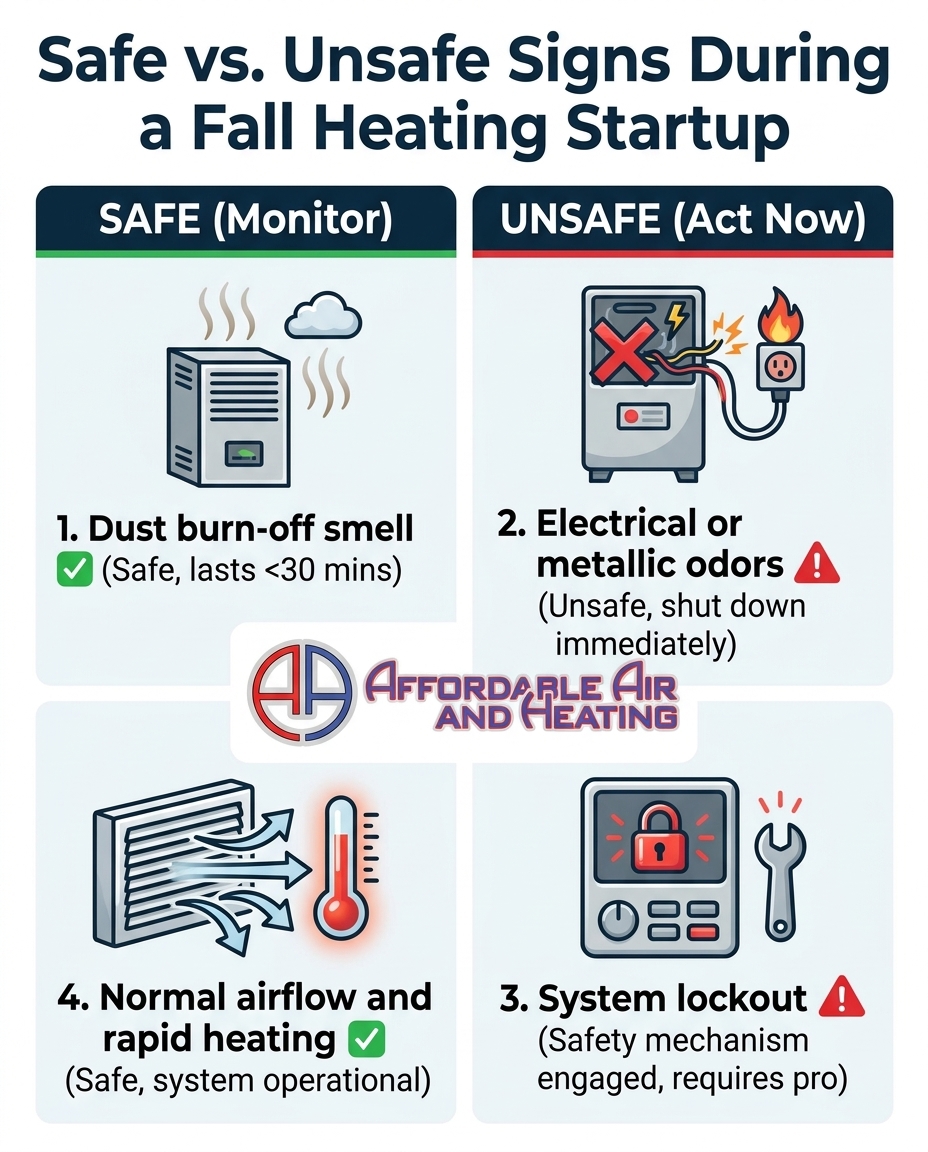
This process is known as dust burn-off. It typically produces a smell similar to burning hair or scorched dust. While it can be alarming, this odor is usually harmless and should completely dissipate within 15 to 30 minutes of continuous operation. Opening a few windows to let the house air out is usually all that is required.
However, not all odors are safe. It is vital to recognize the warning signs of a severe mechanical hazard. If you detect the sharp, acrid smell of burning plastic, melting wire insulation, or a persistent metallic odor, this is not dust. These smells indicate an electrical failure, an overheating blower motor, or a failing capacitor. If you smell rotten eggs, that indicates a natural gas leak. In any of these hazardous scenarios, you must turn off the system immediately at the thermostat and contact a professional.
• Musty, scorched dust smell — Likely Cause: Summer dust settling on the heat exchanger — Required Action: Safe: Allow 15-30 minutes to dissipate.
• Acrid, melting plastic smell — Likely Cause: Overheating electrical wires or failing motor — Required Action: Unsafe: Shut off system immediately and call a pro.
• Rotten egg odor — Likely Cause: Natural gas leak near the combustion chamber — Required Action: Unsafe: Evacuate, shut off gas, call emergency services.
• Persistent metallic grinding — Likely Cause: Failing blower motor bearings — Required Action: Unsafe: Shut down to prevent catastrophic motor failure.
Understanding Furnace Lockouts and Built-In Safety Mechanisms
Sometimes, you turn the thermostat to "heat," you hear the system click, and then... nothing happens. Or the system attempts to start, runs for a few seconds, and shuts down completely. This is commonly known as a furnace lockout. A lockout is not a random mechanical glitch; it is a highly sensitive, built-in safety mechanism designed to protect your home from catastrophic failure.
Modern heating systems are controlled by a central computer board that monitors a series of safety sensors. If any sensor detects an unsafe condition during the mid-fall / October heating startup, the board will deliberately cut power to the ignition sequence. This prevents unburned gas from pooling in your home and stops electrical components from melting.
Common Triggers for a Furnace Lockout:
1. Ignition Failure: If the igniter is cracked, dirty, or failing to spark, the system will not allow the gas valve to open.
2. Tripped Flame Sensors: The flame sensor detects whether a fire has actually caught. If the sensor is coated in carbon buildup, it cannot detect the flame and will shut the gas off within seconds to prevent a leak.
3. Severe Airflow Restrictions: A clogged filter or blocked vent can cause the heat exchanger to overheat. High-limit switches detect this dangerous temperature spike and force a shutdown.
If your system enters a lockout state, do not attempt to bypass it or repeatedly hit the reset button. Forcing a locked-out furnace to run can cause severe mechanical damage, crack the heat exchanger, or create a fire hazard. The safest response is to leave the unit off and schedule a diagnostic visit.
Essential Items on Your Seasonal Home Maintenance Checklist
While internal diagnostics require specialized training, there are several vital tasks homeowners can and should perform. Completing these checklist items before the first heavy freeze hits Lancaster ensures your system has the best possible baseline for efficient operation.
• Inspect and Replace HVAC Air Filters: A dirty filter forces your blower motor to work twice as hard, increasing energy consumption and the risk of overheating. Replace your filter before the first heating run, and check it monthly throughout the winter.
• Test Smoke and Carbon Monoxide Detectors: Combustion heating systems produce carbon monoxide. While safely vented outdoors, any crack in the heat exchanger can allow this gas into your home. Ensure every detector has fresh batteries and responds to the test button.
• Check Window Drafts and Seal Leaks: Your furnace cannot keep up if the heat is immediately escaping through poorly sealed windows. Check weatherstripping and apply fresh caulk to drafts to ease the load on your HVAC system.
• Ensure Vents Are Unblocked: Walk through every room and confirm that rugs, heavy furniture, or curtains are not covering the supply and return vents. Restricted airflow creates pressure imbalances that strain the ductwork.
• Clear Outdoor Unit Debris: If you use a heat pump, visually inspect the outdoor condenser. Clear away fallen leaves, overgrown branches, and fall debris to ensure unobstructed airflow around the coils.
Why Licensed Professionalism Matters for Heating Safety
There is a distinct line between seasonal upkeep and technical repair. Knowing exactly where that line is protects your property, your safety, and your equipment warranty. While swapping a filter or clearing leaves are safe homeowner tasks, opening the furnace cabinet to bypass a lockout or adjust gas pressure crosses into dangerous territory.
Working with high-voltage electrical components and combustible natural gas requires rigorous training. Unlicensed tampering with a heating system can easily lead to crossed wires, cracked heat exchangers, or unnoticed gas leaks. Furthermore, most modern HVAC manufacturers explicitly state that any internal repairs performed by unlicensed individuals will immediately void the equipment warranty.
This is why licensed and insured professionalism is the ultimate safeguard for homeowners navigating complex HVAC issues. A reputable technician operates with transparent practices, taking the time to explain exactly what failed and why. This expert explainer approach empowers you to make informed decisions about your home. If you are ever unsure about the credentials of the person working on your equipment, it is wise to learn How to Tell if Your AC Contractor is Actually Licensed and Insured before allowing them to dismantle your furnace during a mid-fall / October heating startup.
Thermostat Troubleshooting Before the Cold Arrives
The thermostat is the brain of your climate control system. If it fails, even the most pristine furnace will refuse to turn on. Troubleshooting this interface is a critical pre-winter check that should be done well before the first freeze arrives. Start by switching the interface from cooling mode to heating mode and raising the temperature a few degrees above the current room ambient temperature. You should hear a click, followed shortly by the sound of the furnace engaging.
Common issues include blank screens, unresponsive touch interfaces, or miscalibrated temperature readings. Often, a blank screen simply requires fresh batteries. However, if the screen is hardwired and blank, it usually indicates a tripped breaker or a blown fuse on the furnace control board. Miscalibrated readings—where the room feels like 65 degrees but the screen reads 72—can cause the system to short-cycle or fail to heat the home entirely.
Prompt attention to a failing thermostat can prevent a total system freeze-out later in the season. The value of fast, knowledgeable dispatch cannot be overstated when this interface fails unexpectedly. One local homeowner experienced a sudden thermostat failure on a Sunday right as the mid-fall / October heating startup season was beginning. A technician was dispatched for a same-day emergency response, quickly diagnosed the faulty interface, and had the thermostat fully repaired and the system operational in about twenty minutes. Addressing these communication errors early keeps your home comfortable when the weather turns.
Addressing Sudden Heating Failures During Extreme Drops
Even with a rigorous seasonal home maintenance checklist, aging equipment can suddenly give out. It is important to prepare for worst-case scenarios where the system completely fails during a severe cold snap. In the high desert of Lancaster, overnight temperatures can plummet rapidly, triggering severe freeze warnings. When a unit fails under these conditions, restoring heat becomes an urgent safety priority.
Signs an Aging Unit Requires Full Replacement:
If your furnace is over 15 years old, requires frequent expensive repairs, or completely fails to ignite despite professional intervention, it may be beyond seasonal maintenance. Strange rattling noises, a yellow burner flame instead of a crisp blue one, and uneven heating across different rooms are all indicators that the internal components are deteriorating.
The logistics of an emergency heating replacement require a highly organized approach. A professional team must assess the broken unit, perform a load calculation to ensure the new system is sized correctly for your square footage, safely remove the old equipment, and navigate the installation of new electrical and gas connections.
During a recent severe winter freeze warning, one local homeowner's heating system stopped working entirely. A professional team quickly assessed the broken unit, provided a clear quote for a full replacement, assisted the homeowner with navigating financing options, and safely installed a new HVAC unit to restore proper heating. Knowing that professional teams can handle complex logistics swiftly provides immense peace of mind when facing an unexpected breakdown.
Building Confidence Through Proven Local Expertise
Inviting a technician into your home requires a high level of trust. That trust is built through transparent communication, consistent service standards, and a track record of reliable results. When you are dealing with the stress of a failing furnace, you need a partner who will answer the phone, arrive on time, and treat your property with respect.
Real customer satisfaction and transparent practices serve as the foundation of earning top reviews in the Lancaster community. Reading authentic experiences from neighbors who have faced similar seasonal HVAC transitions helps build confidence. You want to know that the team handling your equipment has a proven history of diagnosing complex issues accurately and offering honest solutions without high-pressure sales tactics.
A track record of prompt, polite, and effective service provides absolute peace of mind during emergencies. Connecting the completion of your seasonal checklist with the confidence of having a trusted local partner on standby ensures you are never left in the cold. To see how consistent communication impacts the service experience, reading Customer Testimonials can provide valuable insight into the level of care you should expect.
Frequently Asked Questions About Fall Heating Startups
Why does my heater smell like burning when I turn it on for winter?
During a mid-fall / October heating startup, a burning smell is almost always caused by dust burn-off. Dust and debris settle on the heat exchanger over the summer months while the unit is off. The initial heat incinerates this dust, creating a temporary odor. However, if the smell resembles electrical burning or lasts longer than 30 minutes, you should shut the system down immediately and call a professional.
What should I check before turning my heat on?
Before initiating your heating system, always replace the air filter to ensure proper airflow. Walk through your home to verify that all supply and return vents are open and unobstructed by furniture or rugs. Test your carbon monoxide detectors to ensure they are functioning correctly, and clear any fallen leaves or debris from around your outdoor unit.
Why is my furnace locked out?
A furnace lockout is a built-in safety feature, not a random glitch. It is triggered by the system's control board when it detects a hazard, such as an ignition failure, a dirty flame sensor, or poor airflow causing the unit to overheat. Because it involves critical safety sensors, a lockout requires a licensed professional to diagnose and reset safely.
How long does the burning smell last when you turn on the heater?
The harmless dust burn-off smell typically dissipates within 15 to 30 minutes of continuous operation. Opening a window can help clear the initial odor from your home more quickly. If the smell persists beyond this timeframe, or if it suddenly changes to a sharp, metallic, or plastic odor, it indicates a mechanical issue that needs immediate attention.
Can I perform a full heating tune-up myself?
Basic tasks like filter changes, vent clearing, and detector testing are perfectly safe for homeowners. However, internal component checks, gas line inspections, and electrical diagnostics require a licensed professional. DIY attempts on internal combustion components can easily void manufacturer warranties and create severe safety hazards in your home.
Ensure a Warm, Safe Winter with Expert Heating Support
Distinguishing between normal startup quirks and actual mechanical hazards is the most important part of your mid-fall / October heating startup. A brief burning smell is usually just dust, but persistent odors, strange noises, and system lockouts are clear signals that your furnace needs professional attention. Completing your seasonal home maintenance checklist sets a strong foundation for winter comfort, ensuring your filters are clean and your airflow is unrestricted.
Because your HVAC system functions as a single unit year-round, addressing furnace issues now is just as critical as managing your Air Conditioning Repair and Installation needs in the summer. If any warning signs arise during that crucial first startup, scheduling a professional inspection guarantees your home remains safe, efficient, and consistently warm all season long.