Decoding the Yellow Burner Flame: What Incomplete Combustion Reveals About Your Heating System


The First Cold Frost: Why Your Furnace Flame Color Matters
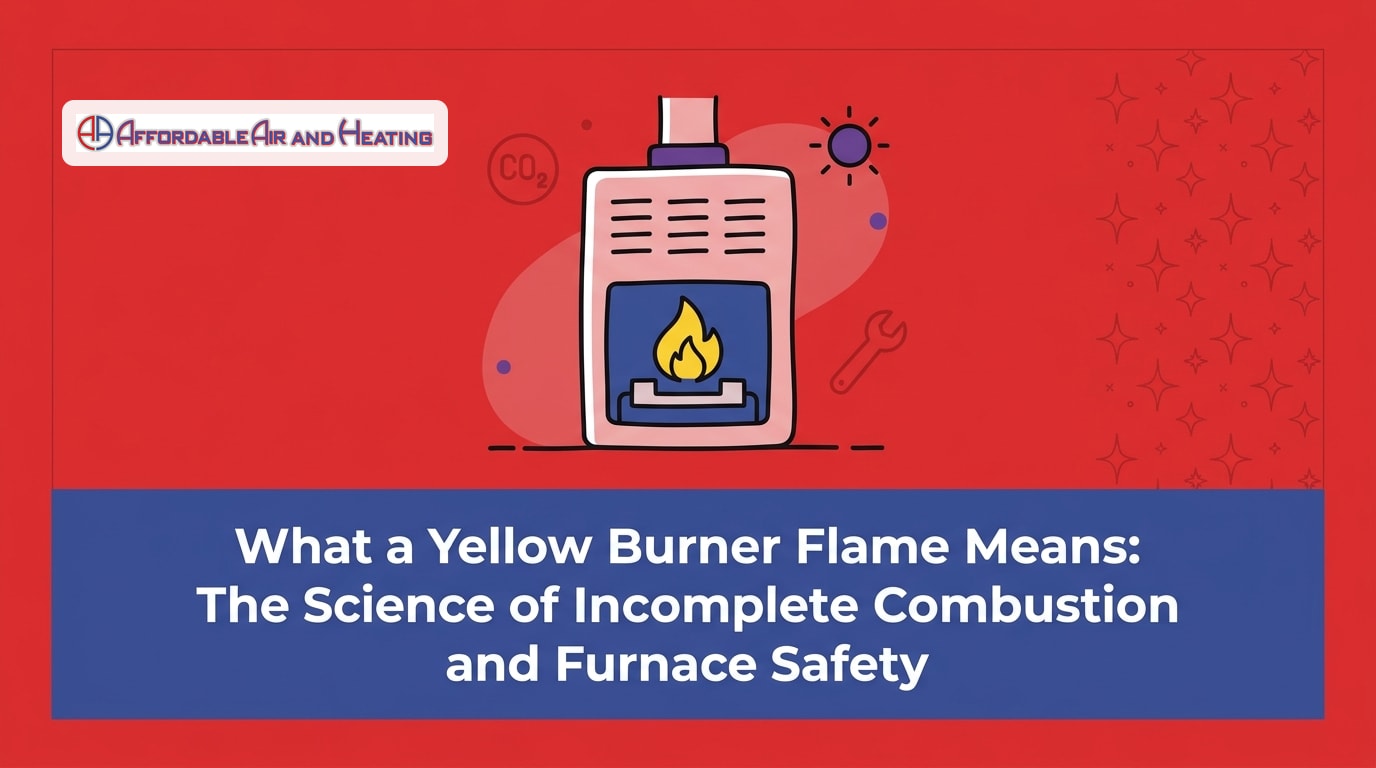
When the November heating startup arrives and you turn on your thermostat for the first cold night of the season, understanding exactly what a yellow burner flame means can be the difference between a safe home and a hidden hazard. At Affordable Air and Heating, our team fields dozens of calls every late fall from Lancaster homeowners concerned about their system's behavior after months of sitting completely idle. Firing up the furnace is a familiar pre-winter ritual, and most expect to hear the familiar click of the ignition followed by the steady roar of the burners. However, peering into the burner compartment and seeing a lazy, flickering yellow flame instead of a sharp, steady blue one immediately introduces a critical concrete problem.
This visual anomaly forces a central decision point: you must determine if this altered flame color is a harmless seasonal quirk that will resolve itself, or a dangerous combustion issue that requires an immediate system shutdown. Flame color is not just an aesthetic feature of your heating equipment; it is a direct, scientific indicator of system health, fuel efficiency, and household safety. Ignoring a persistent change in how your burners operate can allow hidden dangers to escalate rapidly. If you are unsure whether your system is operating safely, exploring professional HVAC services is the best first step to protect your home and ensure your equipment is ready for the winter months.
The Science of Safe Heating: Why a Furnace Flame Must Be Blue
To understand why a yellow flame is a warning sign, it is necessary to first understand the foundational science of complete combustion. Residential furnaces burn natural gas, which consists primarily of methane. For this fuel to burn efficiently and safely, it requires a highly specific ratio of gas to oxygen. When this precise mixture is achieved, the furnace operates at peak safety and performance.
The Chemistry of Complete Combustion
Complete combustion occurs when the natural gas is burned entirely. In a perfectly calibrated furnace, the chemical reaction between the fuel and the oxygen produces only two byproducts: harmless water vapor and carbon dioxide. Both of these byproducts are safely vented out of your home through the flue pipe or exhaust system. Proper airflow is the critical ingredient here; the combustion chamber must continuously draw in enough fresh air to ensure every molecule of gas is completely consumed by the fire. If the oxygen supply drops, the chemical reaction breaks down, leading to incomplete combustion.
Visual Indicators of a Healthy Burner
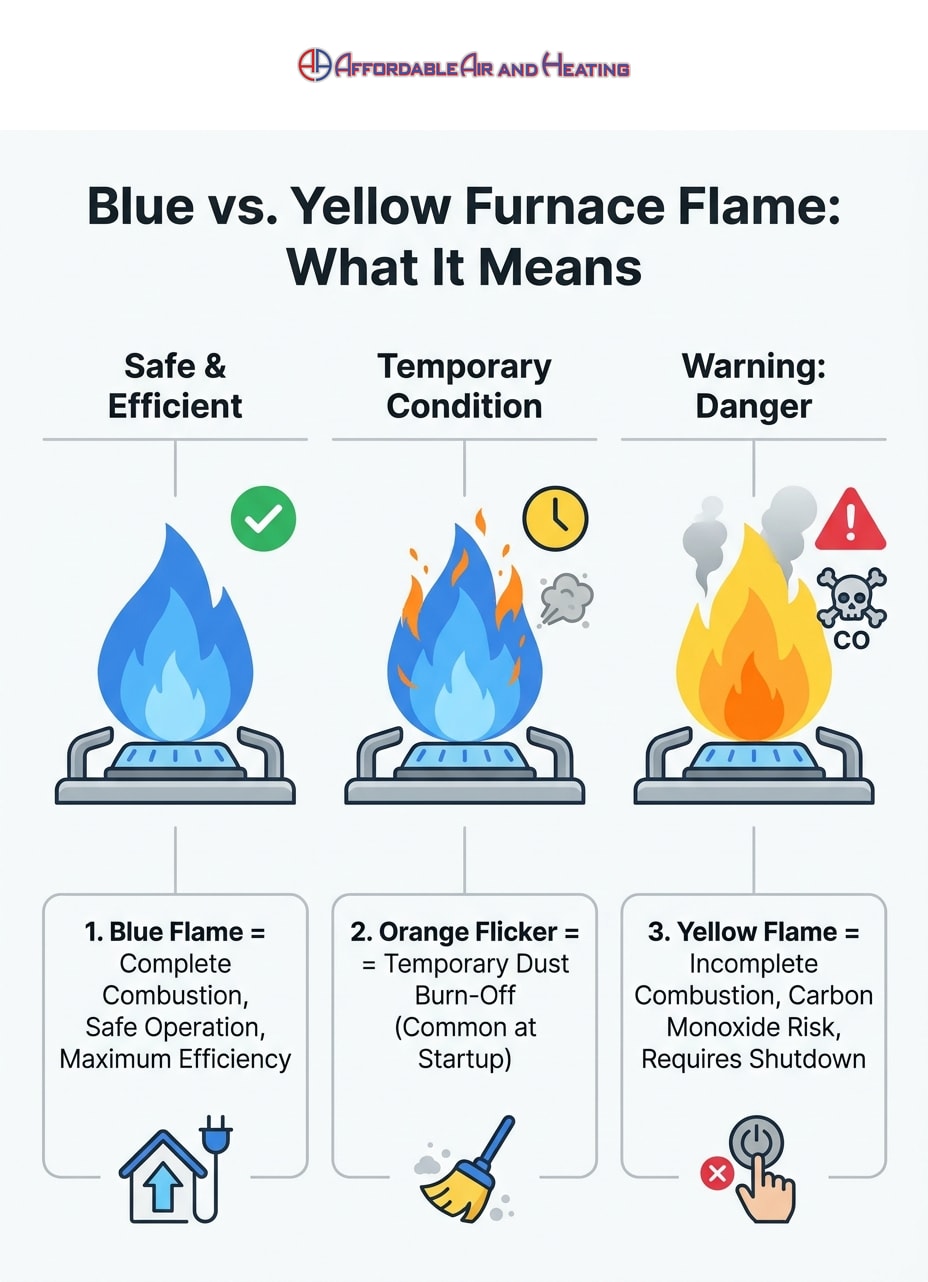
The visual characteristics of complete combustion are unmistakable. A healthy furnace flame is a crisp, roaring blue. If you look closely at a properly functioning burner, you will see a lighter, almost translucent blue inner triangle surrounded by a darker blue outer cone. The flame should feel steady and forceful, not wavering or dancing lazily. You might occasionally notice tiny, brief flecks of orange sparking within the blue—this is typically just microscopic household dust passing through the flame and incinerating. However, the foundational base and the vast majority of the flame must remain a sharp blue. When a system fails to maintain this perfect ratio and the flame loses its blue integrity, it requires professional heating repair to restore the correct fuel and oxygen balance.
Temporary Orange Flickers vs. Persistent Yellow Flames
Not every departure from a pure blue flame means your furnace is failing. It is vital to distinguish between a harmless, temporary seasonal burn-off and a systemic combustion failure that threatens your home.
The High Desert Dust Phenomenon
In the Lancaster and Antelope Valley high desert, environmental factors play a massive role in how a furnace behaves during its initial startup. In our years of servicing local HVAC systems, the Affordable Air and Heating team has seen firsthand how these units often sit completely dormant for over six months, typically from May through October. During this prolonged off-season, fine desert dust, pet dander, and airborne particulates settle directly onto the burner ribbons and inside the combustion chamber. When the thermostat calls for heat on that first cold November night, the ignition sequence incinerates half a year's worth of accumulated dust all at once. Burning dust naturally creates an orange or yellowish hue in the flame.
Identifying True Incomplete Combustion
To determine whether you are seeing harmless dust or a dangerous mechanical issue, technicians rely on the "5-minute rule." If the furnace fires up with orange or yellow flickers but settles into a sharp, steady blue flame after three to five minutes, the system was likely just clearing off seasonal debris. However, a persistent, lazy, entirely yellow flame that wavers and does not resolve is a definitive sign of true incomplete combustion. A persistent yellow flame indicates that the system is starved of oxygen and is no longer operating safely. You may also notice secondary warning signs, such as black soot accumulating around the burner compartment or a distinct, acrid smell near the unit.
• Flame Color — Temporary Dust Burn-Off: Blue base with orange/yellow sparks — Persistent Incomplete Combustion: Solid yellow or orange throughout
• Flame Movement — Temporary Dust Burn-Off: Steady and forceful — Persistent Incomplete Combustion: Lazy, wavering, and dancing
• Duration — Temporary Dust Burn-Off: Resolves within 3 to 5 minutes — Persistent Incomplete Combustion: Persists as long as the furnace runs
• Secondary Signs — Temporary Dust Burn-Off: None; clean burner area — Persistent Incomplete Combustion: Black soot, streaking, or unusual odors
• Safety Action — Temporary Dust Burn-Off: Monitor for a few minutes — Persistent Incomplete Combustion: Shut down system immediately
The Hidden Danger of Incomplete Combustion: Carbon Monoxide
The primary reason a persistent yellow flame is treated as an emergency is the direct threat of carbon monoxide (CO) production. When a furnace operates normally with a blue flame, it vents harmless byproducts. When incomplete combustion takes over, the chemical reaction changes drastically, introducing severe safety risks to the household.
How Incomplete Combustion Produces CO
The science behind this danger is straightforward but severe. When the combustion chamber is starved of oxygen, the carbon in the natural gas cannot convert fully into carbon dioxide. Instead, this unburned fuel transforms into carbon monoxide and black soot. Carbon monoxide is a highly toxic, colorless, odorless, and tasteless gas. Because it cannot be detected by human senses, it can easily spill out of the combustion chamber and circulate through your ductwork into the living spaces of your home without any obvious physical warning.
The Crucial Role of CO Detectors
Exposure to carbon monoxide is incredibly dangerous, causing symptoms that mimic the flu, including headaches, dizziness, nausea, and confusion. Prolonged exposure can be fatal. Because running a furnace with a persistent yellow flame is an immediate hazard, early detection is absolutely critical. We maintain a strict safety-first approach, insisting that every home has functional carbon monoxide detectors installed near sleeping areas and on every level of the house. If you observe a yellow flame, you should immediately test your CO detectors to ensure they are active. Protecting your family from these invisible threats is a vital part of maintaining safe indoor air quality throughout the heavy winter heating season.
What Causes a Furnace to Burn Yellow?
Understanding the mechanical failures that lead to incomplete combustion can help you recognize why professional diagnostics are necessary. A furnace relies on precise engineering, and several underlying issues can disrupt the fuel-to-air ratio.
1. Dirt, Debris, and Airflow Restrictions: The most common culprit behind a yellow flame is neglected maintenance. Over time, the tiny orifices that deliver gas to the burners can become clogged with severe dust buildup, spider webs, or rust. When these pathways are restricted, the gas does not mix properly with the incoming air. Similarly, if the combustion air intake pipes (especially on high-efficiency furnaces) are blocked by debris, snow, or bird nests, the fire is physically starved of the oxygen it needs to burn blue.
2. Improper Gas Pressure: If the gas valve is malfunctioning and delivering fuel at a pressure that is too high or too low for the burners to handle, the resulting flame will be disproportionate and inefficient, often burning yellow and producing excess soot.
3. Structural Failures in the Heating System: A much more severe cause of a yellow flame is a compromised structural component, specifically the heat exchanger. The heat exchanger separates the toxic combustion gases from the clean air blowing into your home. If this metal shield develops a fissure, the high-pressure air from the blower motor can push directly into the combustion chamber. This sudden rush of air disrupts the draft, pushes the flame around, and turns it yellow. This specific failure is one of the most dangerous symptoms of a cracked heat exchanger, requiring immediate, specialized diagnostic testing to confirm.
Immediate Steps to Take When You Notice a Yellow Flame
If you have observed your furnace for a few minutes and the flame remains a lazy, dancing yellow, you must prioritize safety over comfort. Taking the correct immediate actions can prevent carbon monoxide from accumulating in your home.
Safely Shutting Down the System
The very first step is to immediately turn off the furnace at the thermostat. Switch the system from "Heat" to "Off." This instantly stops the call for gas and halts the combustion process. Do not wait to see if the problem corrects itself later in the day, and do not attempt to run the furnace in short bursts to keep the house warm. If your carbon monoxide alarm has sounded, or if anyone in the home is feeling unusually fatigued or dizzy, evacuate the house, leave the doors open to ventilate the area, and contact emergency services.
Under no circumstances should you attempt any DIY repairs to resolve a yellow flame. Do not attempt to dismantle the burner assembly, scrub the burner ribbons with wire brushes, or adjust the gas valve manually. Tampering with gas delivery components without specialized training can easily worsen gas leaks, damage delicate sensors, or drastically increase carbon monoxide production.
Why Diagnostics Require Professional Intervention
Resolving incomplete combustion requires specialized tools that go far beyond standard household toolboxes. Professional technicians utilize calibrated combustion analyzers to measure the exact parts-per-million of carbon monoxide and oxygen in the exhaust flue. They use digital manometers to precisely measure and adjust the incoming gas pressure. Only trained experts can safely calibrate the fuel-to-air ratios and verify that the heat exchanger is structurally sound. If you live in the Lancaster service area, reaching out to certified technicians—like our experienced crew at Affordable Air and Heating—ensures your system is evaluated with the proper diagnostic tools before the unit is ever turned back on.
Frequently Asked Questions About Furnace Flame Colors
Is a yellow flame on a furnace dangerous?
Yes, a persistent yellow flame on a gas furnace is highly dangerous. It is a direct visual indicator of incomplete combustion, meaning the system is not receiving enough oxygen to burn the natural gas fully. This inefficient burning process produces carbon monoxide, a toxic and potentially deadly gas, instead of harmless water vapor and carbon dioxide. If your flame is entirely yellow and lazy, the system should be shut down immediately.
Why is my furnace flame orange instead of blue?
An orange flame is usually caused by airborne particulates burning up in the combustion chamber. In many cases, especially during the first startup of the fall season, this is simply household dust, pet dander, or high-desert dirt incinerating on the burners. If the orange flickers disappear after a few minutes and the flame returns to a solid blue, it was just a harmless dust burn-off. If it remains orange or yellow, it indicates a mechanical airflow restriction.
What does incomplete combustion look like?
Incomplete combustion visually presents as a lazy, wavering, entirely yellow or deep orange flame that lacks a defined inner cone. Unlike a healthy blue flame, which is crisp and roars steadily, an oxygen-starved flame dances weakly across the burners. You may also see secondary visual evidence of incomplete combustion in the form of black soot streaks accumulating on the metal casing directly above or around the burner compartment.
Can I run my furnace with a yellow flame?
No, you should never continue to operate a furnace that has a persistent yellow flame. Running the system in this condition actively generates carbon monoxide, which can spill out of the combustion chamber and circulate through your home's ductwork. Shut the furnace off at the main thermostat immediately and leave it off until a licensed professional has diagnosed and corrected the underlying oxygen or fuel restriction.
How long does dust take to burn off a furnace?
Seasonal dust typically takes only three to five minutes to burn off completely once the furnace ignites for the first time. During this brief window, you may notice an unusual burning smell and see orange flickers in the burner flames. Once the accumulated debris is incinerated, the flame should settle back into a sharp, steady blue base. If the discoloration or odor lasts longer than a single heating cycle, it points to a deeper mechanical issue rather than simple dust.
Ensure Your Home's Safety with Professional Diagnostics
While a brief orange flicker on a cold November night might just be harmless seasonal dust clearing out of the system, a persistent yellow flame is a definitive warning sign that cannot be ignored. Incomplete combustion directly compromises the safety of your household by introducing the risk of carbon monoxide exposure. Knowing the strict boundary of when to shut the unit off is your best defense against heating hazards. As the deep winter freeze approaches, prioritize your family's safety by having any flame discoloration expertly inspected. Relying on professional diagnostics ensures your furnace will run cleanly, efficiently, and safely all season long. At Affordable Air and Heating, we've spent years helping our neighbors prepare their homes for the holidays, and we are ready to ensure your heating system provides reliable, worry-free warmth throughout the winter.