Zoned Heating vs. Space Heaters: The True Cost of Warming an Add-On Room


The Myth of the Cheap Fix: Heating Your Extra Space Before Winter Hits
When weighing Zoned Heating vs. Space Heaters: The True Cost of Warming an Add-On Room often surprises homeowners who assume a cheap plug-in device is the most economical way to banish the chill. Closing vents in unused rooms doesn't save energy, and relying on a small metal box to heat a large addition rarely works out the way you hope. It is easy to look at a portable heater at the hardware store and think you have solved your comfort problems for the season. However, that initial purchase price hides a steep operational cost and significant safety hazards.
As November pre-winter temperature drops begin to settle in, our team at Affordable Air and Heating often sees homeowners scrambling for quick solutions to keep their extended living spaces comfortable. This sudden chill often prompts a rush to plug in temporary heaters, completely overlooking the long-term impact on their electrical panels and monthly utility bills. The reality we share with our customers is that temporary heating methods come with hidden costs that go far beyond the checkout counter.
Before you commit to running a portable unit all season, it is critical to understand the stark differences in safety, efficiency, and performance. Upgrading to reliable home heating through a professional ductless mini-split installation offers a permanent, safe solution that completely eliminates the hazards of overloaded circuits.
The Hidden Electrical Strain of Plug-In Heaters
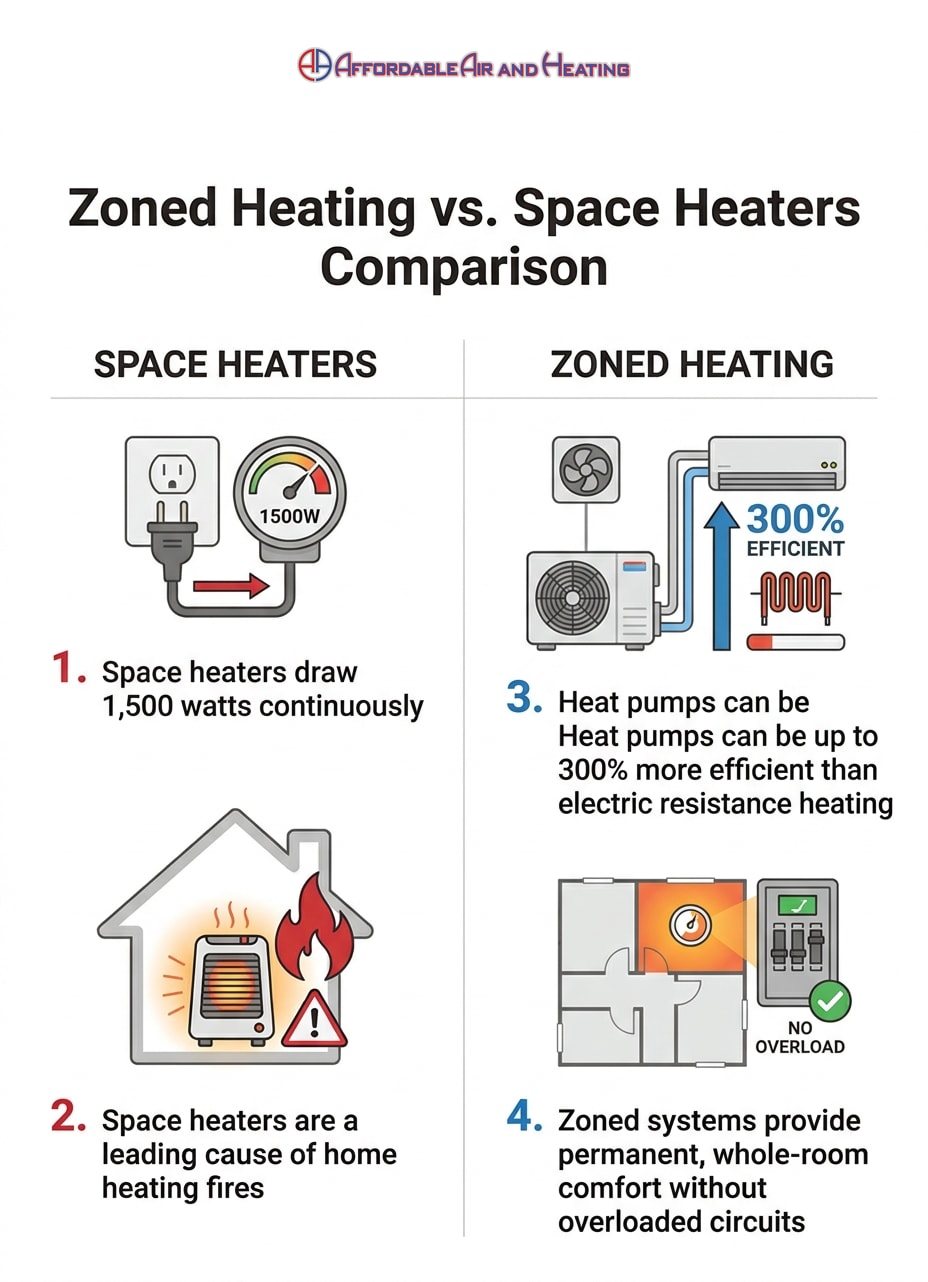
The problem with portable heat: The most significant hidden cost of a portable heater is what it does to your home's electrical system. Most standard residential outlets operate on a 15-amp circuit, which can safely handle about 1,800 watts of total power. A typical space heater draws 1,500 watts continuously while running on its highest setting. This leaves a mere 300 watts for everything else on that circuit.
The cause of the overload: If you plug a heater into a wall outlet, it is rarely the only device drawing power from that breaker. If someone turns on a television, a desktop computer, or even a vacuum cleaner in the same room, the circuit is immediately pushed past its absolute limit. This constant electrical strain causes breakers to trip repeatedly, plunging the room into darkness and creating a frustrating daily chore just to stay warm.
The permanent solution: Contrast this chaotic electrical load with a professionally installed zoned system. A dedicated mini-split operates on its own dedicated circuit wired directly to your main electrical panel. This means it never competes with your home electronics, lighting, or appliances, completely eliminating the annoyance and danger of constantly tripped breakers.
Why Converted Spaces Are Especially Vulnerable
In our years of servicing Lancaster CA add-on rooms and converted garages, we have noticed electrical limitations become even more pronounced in these spaces. Many of these rooms were originally designed for minimal power usage—perhaps a garage door opener and a single overhead light. When these areas are enclosed and repurposed into bedrooms, home offices, or family rooms, the original wiring is rarely upgraded to support heavy, continuous electrical heating loads.
• Warm outlets or switch plates: If the plastic around your outlet feels warm to the touch while the heater is running, the wiring is struggling to handle the electrical current.
• Flickering lights: When the heater cycles on and your room lights dim momentarily, your circuit is experiencing a dangerous voltage drop.
• Tripped breakers: A breaker that trips frequently is doing its job to prevent a fire, but it is also signaling that your electrical demand far exceeds the room's capacity.
Fire Safety and the Risks of Continuous Operation
The harsh reality of heating fires: Relying on portable heaters as a primary heat source introduces severe safety hazards into your home. According to the National Fire Protection Association (NFPA), space heaters account for a significant portion of home heating fires and the vast majority of heating-related fatalities. These devices are designed for temporary, supervised use—not for keeping a room warm around the clock.
The danger of freezing nights: During freezing High Desert nights, homeowners often leave portable heaters running continuously while they sleep. This is incredibly dangerous. Portable units have exposed heating elements that reach extreme temperatures. If a blanket, curtain, or piece of clothing falls too close to the unit, it can ignite in a matter of minutes. Furthermore, continuous operation in poorly insulated spaces drastically reduces the heater's lifespan, increasing the likelihood of internal electrical malfunctions.
The safety of permanent zoning: Proper zoned heating provides permanent, unattended safety. Because the heating components are safely housed inside a wall-mounted or ceiling-mounted air handler and a sealed outdoor compressor, there are no exposed red-hot coils inside your living space. You can set your thermostat and go to sleep with complete peace of mind, knowing your home is safe from the fire risks associated with temporary heating methods.
As November pre-winter temperature drops force your heating systems to work harder, prioritizing safety becomes paramount. A permanent system is designed to run continuously without overheating, degrading, or putting your property at risk.
Energy Efficiency: Electric Resistance vs. Heat Pump Technology
To truly understand the cost of heating your extra space, you have to look at how different systems consume energy. Space heaters rely on a process called electric resistance. This means they generate heat by forcing electricity through a highly resistant metal wire. The efficiency ratio for this process is exactly 1:1. For every single unit of electrical energy the heater consumes, it produces exactly one unit of heat. There is no multiplication of energy, meaning your utility meter spins rapidly the entire time the unit is on.
In stark contrast, ductless mini-splits utilize advanced heat pump technology. Instead of generating heat from scratch, heat pumps extract ambient heat from the outdoor air—even in freezing temperatures—and move it inside your home. Because they are moving heat rather than creating it, energy-efficient heat pumps can be up to 300% more efficient than electric resistance heating. For every unit of electricity a heat pump uses, it can deliver up to three units of heat into your living space.
This massive difference in efficiency is a common topic during our service calls. It explains why heating Lancaster CA add-on rooms and converted garages with portable units results in shocking winter utility bills. Over the course of a single winter, the energy waste from a portable heater can easily eclipse its cheap purchase price.
• Heating Method — Space Heaters (Electric Resistance): Generates heat via hot metal coils — Zoned Mini-Split (Heat Pump): Transfers existing heat from outdoors
• Energy Efficiency — Space Heaters (Electric Resistance): 1:1 ratio (100% efficient, but high draw) — Zoned Mini-Split (Heat Pump): Up to 300% efficient energy transfer
• Circuit Load — Space Heaters (Electric Resistance): Shares standard 15-amp wall outlets — Zoned Mini-Split (Heat Pump): Operates on a safe, dedicated circuit
• Safety Profile — Space Heaters (Electric Resistance): Exposed elements, high fire risk — Zoned Mini-Split (Heat Pump): No exposed elements, safe for sleep
• Long-Term Cost — Space Heaters (Electric Resistance): High monthly utility bills — Zoned Mini-Split (Heat Pump): Significantly lower monthly operating costs
Beyond Temperature: Consistent Comfort and Air Quality
The "hot spot" phenomenon: If you have ever used a portable heater, you are likely familiar with the hot spot effect. If you sit directly in front of the unit, you are sweltering. But if you walk to the other side of the room, you are freezing. Portable units lack the blower capacity to circulate conditioned air throughout a large space. They simply dump heat into one concentrated area, leaving the rest of the room cold and uninviting.
Wall-to-wall consistency: Zoned heating systems are engineered for comprehensive air distribution. The indoor air handler is strategically placed to ensure even, wall-to-wall temperature control. The system continuously monitors the room's climate and adjusts its output to maintain a steady temperature, completely eliminating the frustrating hot-and-cold zones that plague portable heating methods.
Breathing easier: Comfort is not just about temperature; it is also about the air you breathe. Most portable heaters do nothing to improve indoor air quality. In fact, they often stir up dust or emit a burning smell as dust settles on their hot coils. Zoned mini-splits actively filter the air as they condition it. They capture dust, pet dander, and airborne allergens, returning clean, fresh air to your living space. Understanding how ductless mini-splits use coolant to transfer heat reveals why these systems operate so smoothly without the sudden, dusty blasts of hot air associated with older heating methods.
Eliminating Cold Zones in Drafty Rooms
As local HVAC professionals, we know Lancaster CA add-on rooms and converted garages are notoriously difficult to keep comfortable because they often lack the robust insulation found in the main house. They have exterior walls on multiple sides and sometimes sit on uninsulated concrete slabs.
1. Proper airflow design: A professional zoned system utilizes motorized louvers and powerful, variable-speed fans to push warm air across the entire room, reaching every drafty corner.
2. Continuous circulation: Instead of blasting heat and shutting off, modern heat pumps run at lower speeds continuously, preventing cold air from settling near the floor.
3. Targeted comfort: You maintain precise control over the exact temperature of that specific room, without affecting the thermostat settings in the rest of your house.
Long-Term Property Value and Return on Investment
Moving past the temporary band-aid: It is important to view your home's heating strategy through the lens of property value. A portable heater is a temporary, disposable band-aid. It does nothing to improve your home, and it will eventually burn out and end up in a landfill. Upgrading to a permanent zoned heating system is a legitimate home improvement that adds tangible value to your property. If you ever decide to sell your home, a fully conditioned, professionally heated add-on room is a major selling point for potential buyers.
Maximizing your investment: The initial investment in a permanent system is offset by long-term financial benefits. Because heat pump technology is incredibly energy-efficient, upgrading can significantly lower your monthly utility bills compared to running electric resistance heaters. Furthermore, federal tax credits and various generic energy rebates may apply to qualifying high-efficiency heat pump installations, improving your overall return on investment. Always consult with your tax professional or local utility provider to see what incentives are available in your area.
Breaking the replacement cycle: When you rely on portable units for Lancaster CA add-on rooms and converted garages, you enter a frustrating cycle of buying, breaking, and replacing cheap heaters every few seasons. A pattern we see often is homeowners finally breaking this cycle with a professionally installed mini-split built to last for over a decade with proper maintenance. For homeowners concerned about the initial upgrade, exploring flexible HVAC financing makes achieving permanent comfort highly accessible, allowing you to pay for the system over time while enjoying the energy savings immediately.
Upfront Flat-Rate Pricing vs. Unpredictable Energy Bills
The illusion of a cheap purchase: The biggest trap of temporary heating is the illusion of savings. You might spend very little at the hardware store, but that "cheap" upfront cost is quickly eclipsed by skyrocketing monthly energy bills. When a portable heater runs continuously, it drains power at an alarming rate. By the end of the winter, you may have paid the utility company far more than the heater is actually worth.
The power of predictability: Upgrading to a permanent system flips this dynamic. Working with a company that provides upfront flat-rate pricing means you know exactly what your professional, permanent installation will cost before any work begins. There are no hidden fees, no surprise hourly charges, and no guessing games. This transparency contrasts sharply with the unpredictable utility spikes caused by inefficient space heaters.
Protecting your home and family: Ultimately, investing in a safe, dedicated HVAC zone protects both your home's electrical system and your family's safety. As November pre-winter temperature drops remind us that cold weather is inevitable, making the decision to install a permanent solution ensures you are ready. Emphasizing safe, reliable home heating with upfront flat-rate pricing gives you the confidence to upgrade, contrasting the professional safety of a dedicated HVAC zone against the severe electrical fire risks of space heaters.
Frequently Asked Questions About Heating Add-On Rooms
Is it cheaper to use space heaters or central heat?
Central heat is generally far more cost-effective for heating multiple areas or running continuously. If you only need to warm a small, enclosed space for 30 minutes, a portable unit might use less total energy for that brief window. However, for consistent daily comfort, central systems and dedicated heat pumps operate at much higher efficiency, making them significantly cheaper to run over an entire winter.
Are mini splits better than space heaters for an addition?
Yes, mini-splits are vastly superior for permanent room additions. They provide even, wall-to-wall temperature control, operate on dedicated electrical circuits to prevent tripped breakers, and pose no fire risks. Because they use heat pump technology, they also consume a fraction of the electricity required by portable electric resistance heaters.
Do space heaters use a lot of electricity?
Yes, portable heaters consume a massive amount of electricity relative to their size. A standard unit draws 1,500 watts continuously, which maximizes the capacity of a standard 15-amp household circuit. Running one for several hours a day will result in a noticeable and often steep increase in your monthly electrical bill.
What is the safest way to heat an add-on room?
Our team recommends installing a permanent, dedicated heating zone, such as a ductless mini-split. These systems are hardwired to your main electrical panel, removing the risk of overloaded wall outlets. Additionally, all heating components are safely enclosed, eliminating the severe fire hazards associated with the exposed coils of portable units.
Do space heaters use more electricity than a mini split?
Yes, they use significantly more electricity to produce the same amount of heat. Because portable units rely on electric resistance, they operate at a 1:1 efficiency ratio. A mini-split heat pump gathers ambient heat from the outside air, allowing it to operate at up to 300% efficiency, drastically reducing overall electricity consumption.
How do freezing desert nights impact the lifespan of a space heater?
Extreme cold forces portable units to run continuously without cycling off, which they are not designed to do. This constant operation degrades the internal heating elements and wears out the small blower motors quickly. As a result, units used in freezing conditions often fail prematurely and become greater fire risks as their components degrade.
Can a zoned heat pump adequately warm a fully converted garage?
Absolutely. A properly sized zoned heat pump is engineered to handle the specific heating load of large, drafty spaces like converted garages. By calculating the square footage and insulation levels, a professional can install a system that delivers powerful, consistent warmth to every corner of the garage, regardless of the outdoor temperature.
Secure Your Home's Safety and Comfort Before Winter Arrives
While picking up a portable heater might feel like a quick win against the cold, the long-term reality is far less comforting. These temporary devices drain your electricity, overload your home's circuits, and introduce serious fire hazards into your living space. The true cost of warming an add-on room with temporary fixes is measured in high utility bills, tripped breakers, and compromised safety.
As November pre-winter temperature drops signal the arrival of the cold season, now is the time to secure your home. A permanent zoned system delivers unparalleled safety, even heating, and vastly superior energy efficiency. Do not wait until the first hard freeze forces you to rely on dangerous temporary heating. Schedule a consultation today to explore reliable home heating options and transform your extra space into the most comfortable room in the house.