What Is Air Duct Cleaning and Is It Worth It in a Desert Climate?
What is air duct cleaning and is it worth it in a desert climate like the Antelope Valley? Here's the short answer:
Air duct cleaning is the professional removal of dust, debris, allergens, and contaminants from your home's HVAC ductwork, registers, and system components using specialized equipment like high-powered vacuums and rotary brushes.
Is it worth it in a desert climate?
- Yes — desert regions like Lancaster, CA face uniquely harsh conditions that accelerate dust buildup inside ductwork far faster than in average climates
- Dust storms, high particulate matter, and near-constant HVAC use push more debris into your system year-round
- Most desert homeowners benefit from cleaning every 2–4 years, compared to the national baseline of 3–5 years
- It's especially worthwhile if you have pets, allergies, recently completed renovations, or notice dust returning quickly after cleaning
- The EPA recommends cleaning when you see visible mold, evidence of pests, or excessive debris — conditions that occur more frequently in arid environments
If you live in the Antelope Valley, you already know that dust is not a seasonal problem — it's a daily reality. Between desert windstorms, fine particulate matter, and summers that push your HVAC system to run almost without stopping, the inside of your ductwork takes a serious beating. That buildup doesn't just sit still. Every time your system kicks on, it circulates whatever has collected in those ducts straight into your living space. For middle-aged homeowners trying to stay comfortable through extreme summer heat and cut down on energy costs, understanding what's happening inside your ductwork is a practical first step toward better indoor air and a more efficient system.
To understand whether this service is right for your home, we have to look at what the process actually involves. A comprehensive cleaning isn't just about sticking a household vacuum hose down your vents. A true, professional-grade cleaning targets the entire forced-air system. This includes the supply and return ducts, registers, grilles, diffusers, heating and cooling coils, condensate drip pans, and the fan motor housing.
During a standard service, professional technicians will seal your system and place it under powerful negative pressure using a specialized HEPA-filtered vacuum collection system. While the vacuum pulls air through the system, mechanical agitation tools—such as rotary brushes and air whips—are guided through the ductwork to dislodge stubborn, caked-on desert dust. This "source-removal" method ensures that all the dislodged particulate is captured safely in the containment unit, rather than being blown back out into your living room. There are massive, long-term Air Duct Cleaning Benefits that come from resetting your system this way, especially when you are fighting the relentless sands of Southern California’s high desert.
The Unique Challenges of Arid Environments on HVAC Systems
Living in desert communities like Palmdale, Lancaster, or Rosamond means dealing with environmental factors that homeowners in milder, wetter climates never have to worry about. The combination of intense windstorms, seasonal haboobs, and low relative humidity creates a perfect storm for your heating and cooling system.
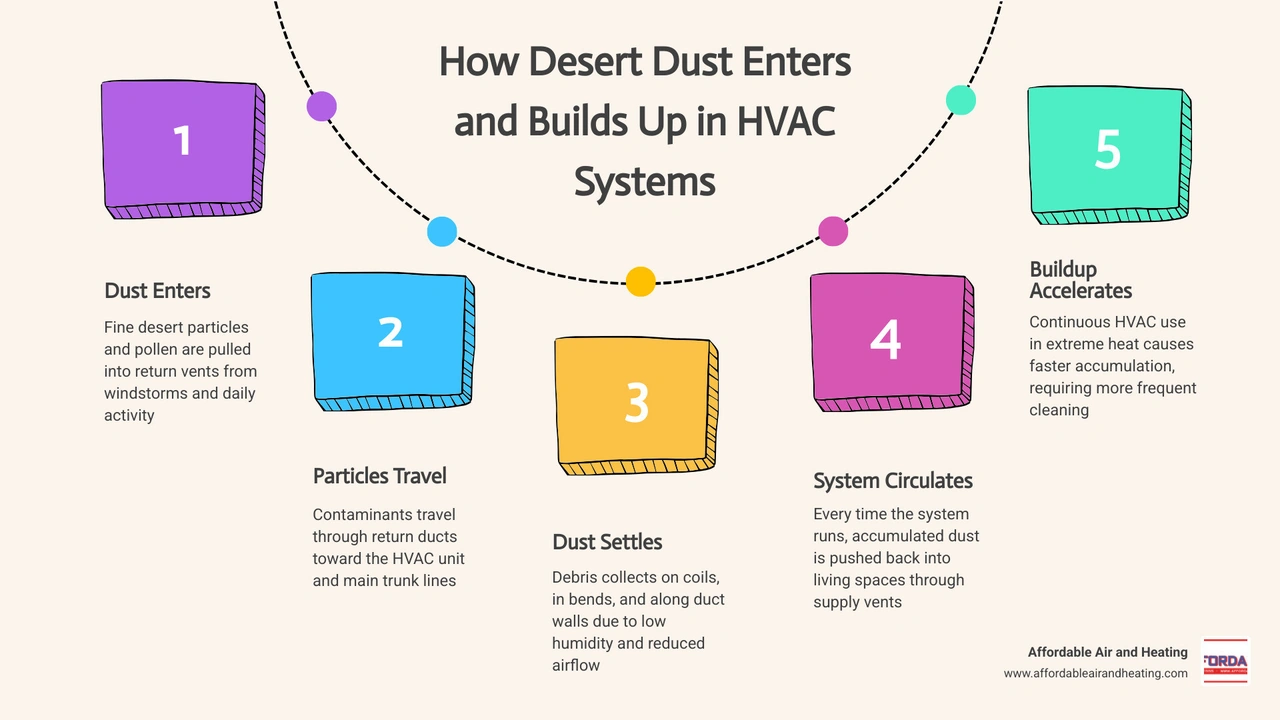
In a humid climate, moisture in the air naturally helps weigh down dust and pollen particles, causing them to settle onto the ground outdoors. In our dry desert air, however, these lightweight particulates remain suspended in the atmosphere much longer. This means every time a door opens, or when wind forces its way through the tiny gaps around your windows, fine silica dust and desert pollen find their way inside.
Once indoors, this dust is drawn directly into your return vents. Because our summers require our air conditioners to run almost continuously, your HVAC system acts as a giant recirculating pump. Over time, the fine dust particles blanket the interior of your metal or fiberglass ductwork.
Furthermore, during our late-summer monsoon season, brief spikes in outdoor humidity can make the interior surfaces of your ducts slightly tacky. This moisture, however temporary, causes dry dust to adhere to the duct walls, forming a stubborn, layered crust that simple air filters cannot prevent. This layer of grime doesn't just reduce air quality; it also acts as an insulating blanket on your system's components. Understanding How Desert Dust Affects Mini Split Filter and Coil Performance reveals just how quickly fine particulate can degrade system performance and wear down critical moving parts.
Understanding What Is Air Duct Cleaning and Is It Worth It in a Desert Climate for Allergy Sufferers
If you or your family members struggle with respiratory issues, the state of your ductwork is incredibly important. The EPA warns that indoor air can be two to five times more polluted than outdoor air, and dirty ductwork is a primary contributor to this statistic.
The average home collects roughly 40 pounds of dust, dirt, and allergens each year. In the dry Antelope Valley, that number can easily climb higher. When this volume of debris settles in your ducts, it becomes a breeding ground for micro-irritants. While dust mites are typically associated with humid areas, the EPA notes that indoor levels of dust mites are frequently higher than outdoor levels, even in dry climates, because they thrive in the microclimates of our beds, carpets, and dust-filled HVAC systems where human skin cells are abundant.
When your HVAC system cycles on, it sends a burst of these accumulated allergens directly into your breathing zone. If you find yourself sneezing, dealing with dry eyes, or experiencing asthma flare-ups that seem to magically improve when you leave the house, your ducts may be overdue for a reset. Combining professional duct cleaning with other proactive steps, like the ones outlined in our guide on 12 Tips to Improve Air Quality at Home, can dramatically reduce the allergen load in your household and help you breathe easier year-round.
Evaluating What Is Air Duct Cleaning and Is It Worth It in a Desert Climate for Energy Efficiency
Beyond health, there is a major financial incentive to keeping your ductwork clean in a hot, arid climate. In cities like Santa Clarita and Lancaster, summer utility bills can skyrocket. Your air conditioner's efficiency relies heavily on unrestricted, smooth airflow.
When heavy layers of desert dust line the interior of your ducts, it creates friction. This "particle loading" narrows the pathways through which air must travel, forcing your blower motor to work harder to push air into your rooms. Additionally, if dust bypasses your filter and coats the evaporator coil, it creates an insulating barrier that prevents the refrigerant from absorbing heat efficiently.
The U.S. Department of Energy estimates that 25 to 40 percent of the energy used for heating and cooling is wasted due to system inefficiencies, with clogged ductwork and dirty coils serving as leading culprits. By clearing away these obstructions, you restore optimal airflow, reduce the runtime of your AC unit, and directly lower your monthly utility costs. To get a clearer picture of how clean components protect your wallet, explore our breakdown of Indoor Air Quality HVAC Efficiency.
Signs Your Desert Home Needs Immediate Duct Cleaning
Because air ducts are hidden behind walls and ceiling drywall, it can be easy to adopt an "out of sight, out of mind" mentality. However, your home will drop several clear hints when the dust buildup has reached a critical point.
Keep an eye out for these common warning signs:
- The "One-Day" Dust Layer: If you thoroughly polish your furniture, only to notice a fine layer of gray or tan dust reappearing within 24 hours, your system is likely recirculating dust from the ductwork.
- Visible Debris on Vent Covers: Dark, dusty shadows or actual clumps of debris clinging to your supply registers are clear signs that the air passing through them is heavily contaminated.
- Musty or Stale Odors: If you notice a dusty, stale, or slightly musty smell the moment your AC blower kicks on, there is likely organic matter or deep dust accumulation inside the dark recesses of your system.
- Uneven Airflow: If some rooms feel warmer than others, or if the air coming from certain vents feels weak, a heavy accumulation of debris or a collapsed, dust-laden flexible duct could be restricting the air.
- Worsening Allergies at Home: If family members experience unexplained congestion, coughing, or dry throats that seem to peak when spending long periods indoors.
To help you distinguish between routine household dust and a more severe desert-specific issue, we’ve put together this quick comparison table:
| Dust Indicator | Normal Household Accumulation | Severe Desert Buildup (Needs Attention) |
|---|---|---|
| Vent Appearance | Light, dry dust on the outer slats of the register. | Thick, dark, or fibrous crust clinging to the vent and surrounding ceiling. |
| Filter Lifespan | Graying of filter every 2–3 months in shoulder seasons. | Filter completely black, clogged, or collapsing under upstream dust within 4–6 weeks. |
| Odors | Brief, neutral air smell upon system startup. | Stale, earthy, or burnt-dust smell that lingers for several minutes after the cycle starts. |
| Airflow | Consistent, quiet airflow throughout all rooms. | Whispering or whistling sounds from vents, accompanied by weak airflow in distant rooms. |
If you are experiencing any of these issues, investing in a professional cleaning can restore your peace of mind and significantly improve your Home Comfort with Expert Air Duct Cleaning.
Professional vs. DIY Duct Cleaning in the Antelope Valley
With so many handy DIY tutorials online, it’s natural to wonder if you can tackle duct cleaning yourself using a shop vac and a long brush. While we love a good weekend home project, duct cleaning is one task that is best left to licensed professionals.
Household vacuum cleaners—even high-end shop vacuums—lack the static lift and air volume (measured in Cubic Feet per Minute, or CFM) required to clean residential ductwork properly. When you insert a brush or a vacuum hose into a vent without establishing a powerful negative pressure zone, you will inevitably dislodge dust without capturing it. That loosened dust will simply travel deeper into your system or blow out into your rooms the next time the system turns on, making your indoor air quality significantly worse.
Furthermore, many homes in Castaic, Acton, and Palmdale utilize flexible ductwork—which consists of a thin plastic liner wrapped around a wire coil and insulated with fiberglass. These ducts are incredibly easy to puncture or tear with rigid DIY brushes. A tear in your ductwork allows cool air to escape into your attic or crawlspace while drawing hot, dusty, unconditioned air directly into your home.
Professional technicians utilize specialized truck-mounted or high-powered portable HEPA vacuums that exhaust completely outside or through medical-grade filters. We use calibrated rotary brushes designed specifically for different duct materials, ensuring a thorough clean without risking structural damage. This professional care is a core component of preserving your system, as detailed in our guide on the Benefits of Regular HVAC Maintenance.
Frequently Asked Questions About Desert Duct Maintenance
Navigating indoor air quality can be confusing. To help you make the best decision for your home, we’ve gathered answers to some of the most common questions we receive from local homeowners. If you are trying to weigh your options, you can also read our guide on Understanding the Differences Between Different IAQ Options.
How often should air ducts be cleaned in a desert climate?
While the National Air Duct Cleaners Association (NADCA) recommends a baseline of every 3 to 5 years for standard climates, our local desert conditions often compress this timeline. For homes in dusty areas like Lancaster, Quartz Hill, and Rosamond, we generally recommend having your air ducts inspected and cleaned every 2 to 3 years.
If you have shedding pets, family members with severe asthma, or live near active construction or unpaved desert roads, you may benefit from biennial or even annual cleanings. Additionally, if we experience a particularly severe season of windstorms or haboobs, scheduling a quick visual inspection of your return air plenum is always a smart preventative habit.
What are the risks of skipping duct cleaning in hot, dry regions?
Neglecting your ductwork in an arid climate can lead to a domino effect of system issues. First, the accumulated dust acts as an insulative layer on your AC's evaporator coil. This forces the compressor to run longer and hotter to cool your home, which dramatically increases the risk of premature system failure. Replacing an entire HVAC system can cost thousands of dollars; keeping the system clean is a fraction of that cost and extends the lifespan of your unit.
Second, the restriction of airflow puts continuous strain on your blower motor, leading to higher utility bills and uneven cooling. Lastly, skipping this maintenance means your family will continue to breathe recirculated dust, pollen, and pet dander. For a complete list of ways to protect your system from these risks, check out the comprehensive HVAC Services for Your Home.
How do I choose a reputable duct cleaning service in Lancaster?
Because air duct cleaning is a service you cannot easily see, it occasionally attracts unscrupulous "blow-and-go" operators. These companies often advertise incredibly low prices (like $49 whole-house specials) to get their foot in the door, only to use scare tactics to upsell you on unnecessary mold remediation or chemical treatments once they arrive.
To protect yourself, always look for the following when choosing a service provider:
- Proper Licensing and Insurance: Ensure the company holds an active California C-20 warm-air heating, ventilating, and air-conditioning license.
- NADCA Standards: Ask if they follow the National Air Duct Cleaners Association standards for source removal.
- A Thorough Inspection Process: Reputable companies will inspect your system first and explain exactly what they find before starting any work.
- Before-and-After Proof: A legitimate technician will gladly show you photos or video of the inside of your ducts to prove the quality of their work.
Conclusion
At the end of the day, keeping your home comfortable and healthy in a desert climate requires a proactive approach. The unique combination of blowing sand, low humidity, and heavy summer cooling loads makes your ductwork a magnet for airborne debris. While a light amount of household dust is normal, the heavy particulate buildup common to the Antelope Valley can quickly impact your health, your comfort, and your monthly energy bills.
If you are ready to rid your home of accumulated desert dust and restore your HVAC system to peak efficiency, we are here to help. Affordable Air and Heating has been proudly family-owned and operated since 1996. We serve communities across the region—including Lancaster, Palmdale, Santa Clarita, Saugus, Stevenson Ranch, and Valencia—with affordable prices, energy-efficient solutions, and flexible financing options designed to fit your family's budget.
Don't let dusty air vents compromise your home's comfort. Schedule Air Duct Cleaning in Lancaster, CA with our experienced team today, and take the first step toward a cleaner, healthier, and more efficient home.