Why Your Thermostat Lies to You During a High Desert Winter
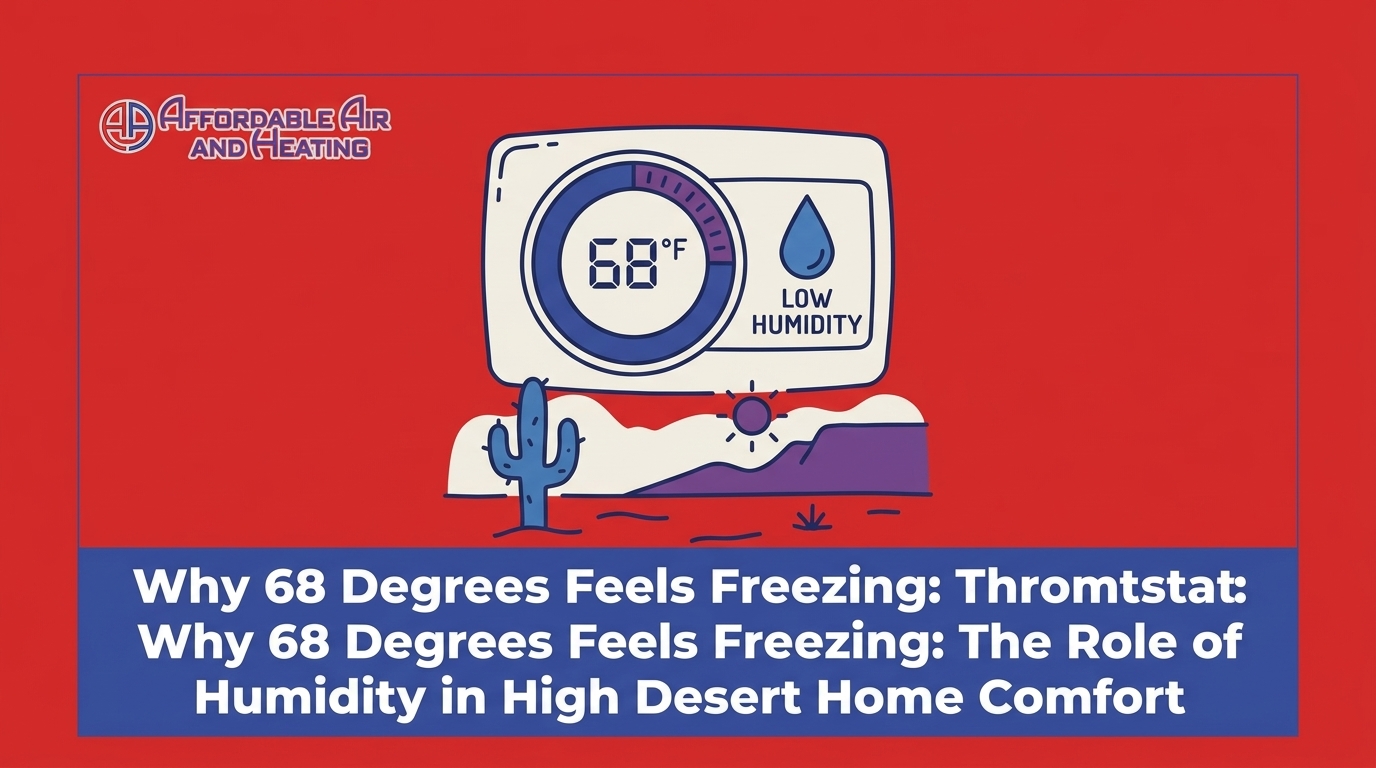
When evaluating The Role of Humidity in High Desert Home Comfort, one surprising statistic stands out to our team at Affordable Air and Heating: nearly 80% of winter comfort complaints in arid climates trace back to a lack of moisture, not a lack of heat. You set your thermostat to what should be a perfectly cozy 68 degrees, but you are still shivering on the couch. Your heating system is running constantly, blowing warm air into the room, yet the house retains a persistent, biting chill. This frustrating disconnect happens because temperature is only half of the human comfort equation. The missing variable—and the true culprit behind your winter discomfort—is ambient moisture.
Most homeowners assume that if they feel cold, the only logical solution is to turn up the heat. However, relying solely on your furnace to solve a moisture problem is a losing battle. To truly fix the issue, you need comprehensive HVAC services that address the specific atmospheric conditions inside your living space. When you understand why a 68 degrees perceived temperature feels vastly different in a dry room compared to a properly balanced room, you face an important decision point: continue cranking up the heat and overworking your equipment, or address the root cause with proper moisture management.
Signs Your Thermostat Reading Doesn't Match Your Reality:
• The persistent chill: You feel cold even when the ambient room temperature is reading 70 degrees or higher.
• Drafty sensations: You notice a "breeze" or cooling sensation on your skin when walking through the house, even with all windows and doors sealed shut.
• Restless heating cycles: Your furnace turns on and off rapidly, attempting to satisfy a thermostat that never seems to make the room actually feel warm.
• Lingering cold spots: Certain rooms feel distinctly colder than others, despite having open vents and adequate airflow.
The Thermodynamics of Dry Air and Evaporative Cooling
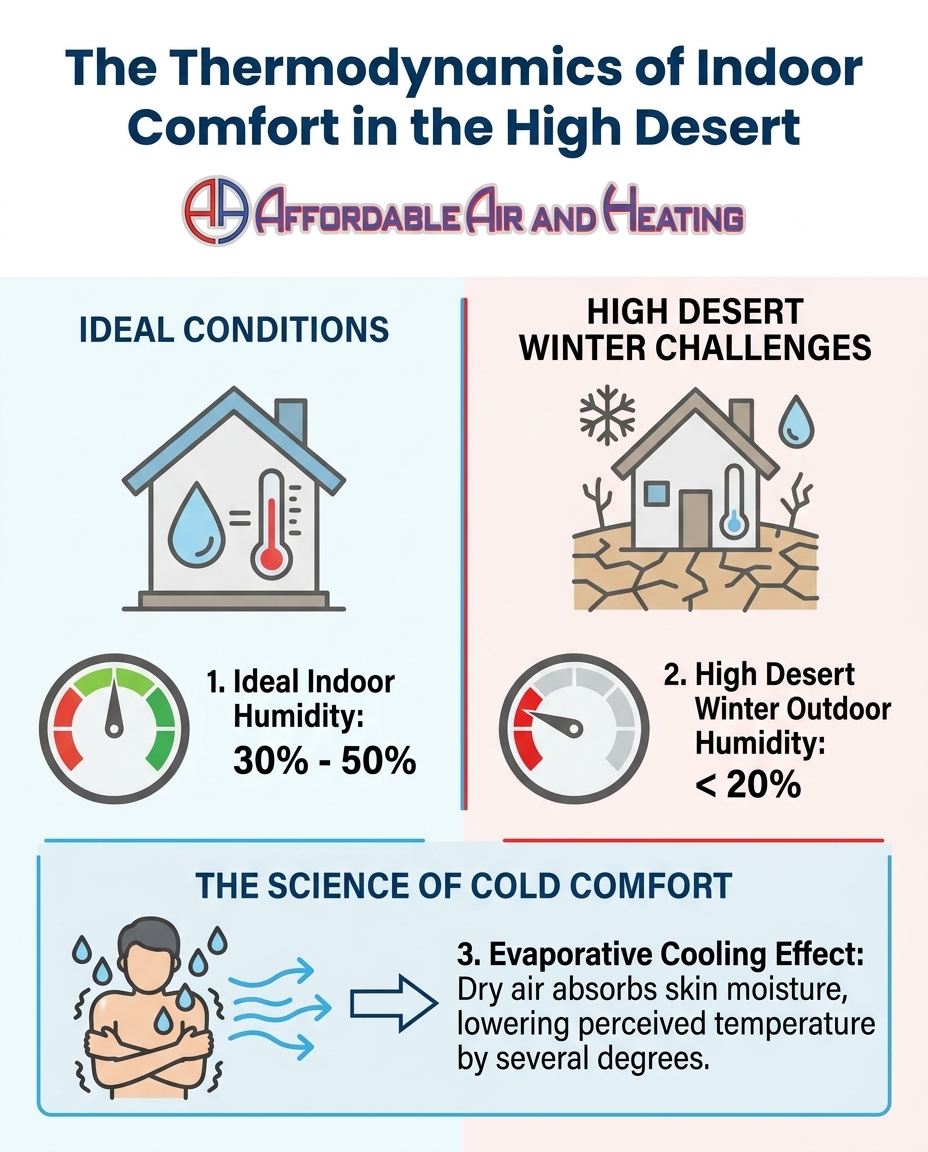
To understand why your home feels so cold, we have to look at the science of thermodynamics and human biology. The Environmental Protection Agency (EPA) and the American Society of Heating, Refrigerating and Air-Conditioning Engineers (ASHRAE) maintain strict standards for indoor environments. They recommend keeping indoor relative humidity between 30% and 50% for optimal health, structural integrity, and human comfort. When your home drops below that 30% threshold, a physical phenomenon known as evaporative cooling takes over.
Evaporative cooling is the exact same mechanism your body uses to cool down when you sweat during a summer workout. Dry air acts like a sponge, rapidly absorbing moisture from any available source—including your skin, your eyes, and your respiratory tract. As this moisture evaporates off your skin and into the dry room, it draws thermal energy away from your body. This rapid evaporation creates a distinct, physical chilling effect. It is the primary reason why dry air feels significantly colder than humid air at the exact same temperature setting.
The problem: The air in your home is so dry that it is actively stealing heat from your body. The cause: A lack of ambient water vapor to slow down the evaporation process on your skin. The solution: Reintroducing controlled moisture into the air so your body retains its natural heat.
How Moisture Retains Heat
Water vapor is an exceptional conductor and retainer of thermal energy—far better than dry air. When there is adequate moisture in your indoor environment, those microscopic water droplets hold onto the heat produced by your furnace, keeping the ambient air warmer for longer periods. Furthermore, this ambient moisture acts as an invisible, insulating blanket for your body. It slows down the rate of evaporation from your skin, preventing rapid heat loss. When you achieve that ideal 30% to 50% humidity range, a 68 degrees perceived temperature actually feels like a warm, comfortable 68 degrees.
How the Antelope Valley Climate Strips Moisture from Your Home
When most people think of winter humidity problems, they picture freezing snowstorms and blizzards. However, the Lancaster High Desert experiences a unique and extreme form of dry cold. Our region is defined by arid conditions year-round, but winter brings a specific set of challenges. Outdoor relative humidity can easily plummet below 20% in the Antelope Valley during the colder months.
The extreme dry cold of the High Desert strips ambient moisture from the air, making standard indoor heating temperatures feel significantly colder than they actually are. When your furnace pulls this already-parched outdoor air inside and heats it up, a physical reaction occurs. Heating cold air expands its capacity to hold moisture. Because the air was already dry to begin with, heating it causes the relative humidity to drop even further. Essentially, your heating system turns your home into a giant dehydrator.
In our years of keeping Lancaster families comfortable, the technicians at Affordable Air and Heating have learned that standard textbook HVAC advice doesn't always apply here. True comfort requires tailoring solutions specifically for our unique climate. A furnace that works perfectly in coastal California will struggle to keep you comfortable in the High Desert if it isn't paired with a proper moisture management strategy.
The High Desert Moisture Deficit
To illustrate how drastically our local climate affects your indoor air, consider the relationship between outdoor temperature and indoor relative humidity. The colder it gets outside, the drier it gets inside.
• Mild Fall Day (60°F) — Outdoor Humidity: 30% — Resulting Indoor Humidity (When Heated to 70°F): Approx. 25% — Impact on Comfort: Slightly dry, minor skin irritation.
• Chilly Winter Day (45°F) — Outdoor Humidity: 20% — Resulting Indoor Humidity (When Heated to 70°F): Approx. 15% — Impact on Comfort: Noticeable chill, static shocks, dry eyes.
• Freezing Night (30°F) — Outdoor Humidity: 15% — Resulting Indoor Humidity (When Heated to 70°F): Below 10% — Impact on Comfort: Severe evaporative cooling, thermostat feels inaccurate.
The Hidden Costs of Cranking Up the Furnace
When the evaporative cooling effect takes hold and a 68 degrees perceived temperature feels freezing, the immediate reaction is to walk over to the thermostat and bump it up to 72, 74, or even 76 degrees. While this might provide a temporary burst of warmth, it creates a vicious cycle that ultimately damages your equipment and drains your wallet.
The problem: Constantly raising the thermostat to combat the chilling effect of dry air overworks your heating equipment. The cause: The furnace is forced to run longer, more frequent cycles to achieve a temperature that the dry air simply cannot sustain. The solution: Upgrading your heating systems with integrated moisture control to reduce the mechanical burden on your furnace. (Keep in mind that high-efficiency upgrades may also qualify for generally applicable energy rebates or tax credits—we always advise homeowners to verify current programs with their utility provider or a tax professional.)
This cycle of overcompensation leads to significantly higher energy consumption and bloated utility bills. More importantly, it accelerates wear and tear on critical furnace components. Motors overheat, heat exchangers stress, and electrical relays burn out under the constant demand. This isn't just a theoretical risk. During a severe freeze warning last winter, our technicians responded to a local homeowner whose heat stopped working entirely after a week of heavy use. Because the system was overworked trying to combat the deep chill, a relay failed, ultimately requiring a complete HVAC system replacement just to restore heat during the coldest week in recent memory.
The Mechanical Toll of Overheating
When you force your furnace to compensate for a lack of humidity, you subject it to several damaging conditions:
• Short Cycling: The system turns on and off rapidly, which consumes massive amounts of energy and wears out the ignition system.
• Blower Motor Strain: The motor runs continuously, leading to overheating and premature failure.
• Filter Clogging: Increased runtime means more air cycles through the filter, clogging it faster and restricting critical airflow.
• Heat Exchanger Stress: Constant expansion and contraction from prolonged heating cycles can lead to microscopic cracks in the heat exchanger—a serious safety hazard.
Whole-Home Humidifiers: An Efficiency Upgrade, Not a Luxury
When faced with dry indoor air, many homeowners purchase small, portable humidifiers for their bedrooms. While these units can provide localized relief for a few hours, they are vastly underpowered for the realities of the Lancaster High Desert. Portable units require constant refilling, regular cleaning to prevent mold, and they only treat the air in their immediate vicinity. Walk out of the bedroom, and you are immediately back in the dehydrator.
Because of this common frustration, our team consistently recommends a whole-home mechanical humidifier as the superior solution. Unlike portable units, a whole-home system integrates directly into your existing HVAC ductwork and connects directly to your home's water supply. As your furnace runs, the humidifier introduces a precise, metered amount of water vapor into the heated air before it is distributed throughout the house. This ensures a consistent, perfectly balanced 30% to 50% moisture level in every single room.
There are numerous reasons to install and use a humidifier, but the most compelling is energy efficiency. When your home reaches the proper humidity level, the evaporative cooling effect stops. You can comfortably lower your thermostat by several degrees while actually feeling warmer. The Department of Energy notes that lowering your thermostat by just a few degrees can yield significant savings on your heating bills over the course of a winter.
Comparing Humidification Strategies
Understanding the difference in scale and effectiveness is crucial when deciding how to protect your home from dry winter air.
• Coverage Area — Portable Bedroom Humidifier: Single room (typically 100-300 sq ft) — Whole-Home Humidifier: Entire house (all rooms with ductwork)
• Maintenance — Portable Bedroom Humidifier: Daily refilling, weekly deep cleaning — Whole-Home Humidifier: Annual filter/pad replacement
• Control — Portable Bedroom Humidifier: Manual dials, often inaccurate — Whole-Home Humidifier: Integrated digital humidistat
• Efficiency Impact — Portable Bedroom Humidifier: Negligible — Whole-Home Humidifier: Allows for lower thermostat settings, saving energy
Beyond Temperature: Comprehensive Indoor Air Quality
While achieving a comfortable perceived temperature is the primary goal, the benefits of balancing your home's humidity extend far beyond the thermostat. The Lancaster High Desert climate is notoriously harsh on both the human body and the physical structure of a home. Addressing moisture is a critical component of comprehensive indoor air quality.
The physical discomforts of severely dry air are well documented. When indoor humidity drops below 30%, you are likely to experience dry, itchy skin, irritated nasal passages, and a scratchy throat. Dry mucous membranes are less effective at trapping airborne viruses and bacteria, which can increase your susceptibility to winter colds. Furthermore, dry air creates an environment highly conducive to static electricity, turning a simple walk across the carpet into a painful shock.
Your home's structure also suffers in a dehydrated environment. Hardwood floors, wooden furniture, musical instruments, and even the framing of your house require a certain level of ambient moisture to maintain their integrity. When the air is too dry, wood shrinks, splinters, and cracks. Proper moisture balance works hand-in-hand with advanced air purification systems to create a truly healthy indoor environment. While purification removes contaminants, humidification ensures the air is physically comfortable and safe to breathe.
The Synergy of Moisture and Filtration
A truly optimized HVAC system uses multiple strategies working in harmony:
• Moisture Control: Prevents the air from becoming a respiratory irritant and protects wooden structures.
• High-Efficiency Filtration: Captures the dust and dander that dry air tends to kick up and keep suspended.
• Air Purification: Neutralizes biological contaminants that thrive when human immune defenses (like nasal moisture) are compromised by dry air.
Why September is the Critical Window for IAQ Upgrades
Timing is everything when it comes to preparing your home for the winter months. The early fall pre-heating transition is the most critical window for making HVAC upgrades. In the High Desert, early fall is a period of sharp contrasts. While daytime temperatures might still feel relatively mild, nighttime temperatures begin to drop sharply as September progresses. This rapid cooling signals the impending shift to constant furnace use.
At Affordable Air and Heating, we always advise that the absolute best time to address indoor air quality and moisture control is right now, before your heating system is forced to run around the clock. Waiting until the first major freeze to realize your home is uncomfortably dry means you will be scrambling for a solution while your furnace is already taking on mechanical stress. Proactive installation ensures your home is fully prepared for the extreme dry cold ahead.
Preparing for the Temperature Drop
Taking action during the fall transition provides several distinct advantages:
• System Readiness: Your humidifier is installed, tested, and integrated before the furnace is under heavy load.
• Immediate Comfort: As soon as the first cold front hits, your home will maintain a perfectly balanced, warm environment.
• Preventative Protection: You protect your hardwood floors and furniture from the initial shock of rapid dehydration that occurs when the furnace kicks on for the first time.
Take Control of Your Winter Comfort Before the Cold Sets In
Living in the desert means accepting that heat alone will not solve your winter comfort issues. As we transition into the colder months, remember that the evaporative cooling effect of dry air is actively fighting against your furnace. Balancing your indoor humidity is the scientifically proven way to make your home feel warmer, operate more efficiently, and protect your family's health.
Do not wait for the deep winter chill to reveal the weaknesses in your home's comfort strategy. The early fall pre-heating transition is your opportunity to get ahead of the weather. By integrating a whole-home humidifier, you can stop fighting with your thermostat and start enjoying true, consistent warmth. We encourage you to consult with our local experts to evaluate your home's specific moisture and heating needs, and explore comprehensive indoor air quality solutions before the cold truly sets in.
Frequently Asked Questions
Why does my house feel cold at 70 degrees in winter?
Your house feels cold at 70 degrees because the indoor air is excessively dry, causing moisture to evaporate rapidly from your skin. This process, known as evaporative cooling, draws body heat away from you, making the perceived temperature feel several degrees colder than the thermostat reading. Introducing proper humidity will stop this chilling effect and make 70 degrees feel genuinely warm.
Does a humidifier make a room feel warmer?
Yes, a humidifier makes a room feel significantly warmer by slowing down the evaporation of moisture from your skin. Water vapor also holds thermal energy more effectively than dry air, meaning the heat produced by your furnace stays in the room longer. By maintaining 30% to 50% humidity, you can often lower your thermostat while maintaining the same level of perceived warmth.
What is the ideal indoor humidity in the desert?
The ideal indoor humidity in a desert climate should be maintained between 30% and 50%. This range is recommended by the EPA and ASHRAE to optimize human comfort, protect wooden structures in the home, and prevent the rapid spread of airborne viruses. Achieving this in the High Desert almost always requires a whole-home mechanical humidifier during the winter.
Do I need a humidifier in Lancaster if it rarely snows?
Yes, you absolutely need a humidifier in Lancaster because the region experiences extreme dry cold, regardless of snowfall. Outdoor humidity can drop below 20%, and when that air is brought inside and heated, the relative humidity plummets even further. This turns your home into a dehydrator, making a humidifier essential for comfort and furnace efficiency.
Can I just use a portable humidifier in my bedroom instead of a whole-home system?
While a portable humidifier can provide temporary relief in a small, enclosed space, it cannot protect your entire home or improve your HVAC system's efficiency. Portable units require constant refilling and cleaning, and the moment you leave the bedroom, you are exposed to the dry, chilling air again. A whole-home system integrates with your ductwork to provide consistent, maintenance-friendly moisture to every room automatically.