Why Your Furnace Igniter Glows But the Burners Won't Light


Facing a Cold Night: When the Furnace Igniter Glows but There's No Heat
You turn up the thermostat as the evening chill sets in, expecting a rush of warm air, but you are left wondering why your furnace igniter glows but the burners won't light. The blower fan might be running, pushing cold air through your vents, while the system struggles to start. When you go down to the unit and look through the small sight glass on the front panel, you can clearly see the bright orange glow from the hot surface igniter. You hear the clicks and the hum of the motors, but the familiar "whoosh" of flames never happens. During November early winter cold snaps in the high desert, a sudden lack of heat transitions very quickly from a minor household annoyance to an immediate comfort and safety issue. At Affordable Air and Heating, our team fields countless calls from Lancaster homeowners experiencing this exact scenario right as they prepare their homes for the holiday season.
When you need fast, reliable HVAC services, reaching out for professional heating service is the safest way to restore your home's warmth.
This specific combination of symptoms—a glowing igniter with no flame—is actually a very precise diagnostic clue. It tells a heating technician exactly where the system is failing. Your furnace operates in a strict, step-by-step sequence designed to keep your home safe. When the igniter glows, it proves that the electrical side of your heating system is functioning correctly. The failure lies entirely in the next crucial step: the delivery of fuel. In our experience, understanding this divide helps you communicate clearly with our dispatchers and ensures your system gets the exact repair it needs.
What That Bright Orange Glow Actually Means for Your Furnace
To understand why your furnace is failing to produce heat, it helps to understand the steps it takes to start up. Modern heating systems do not use a constantly burning pilot light. Instead, they use a highly choreographed sequence of operations to ensure that gas is only released when it is absolutely safe to do so. Seeing that bright orange glow from the hot surface igniter is actually good news, as our technicians know it immediately rules out several expensive electrical components.
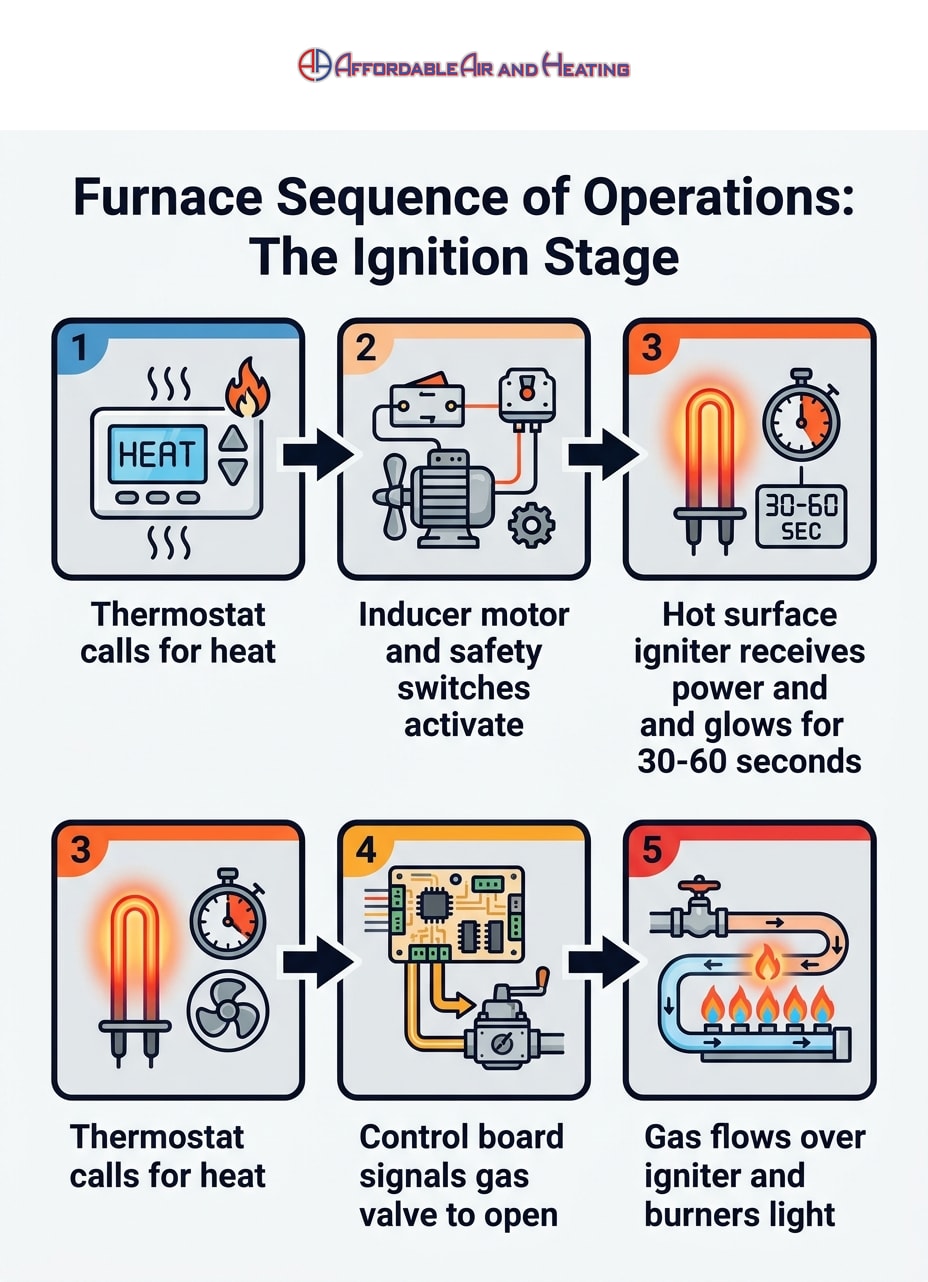
Here is exactly what happens inside your system before the flames ever appear:
1. The Call for Heat: Your thermostat detects that the room temperature has dropped below your set point and sends a low-voltage electrical signal to the furnace control board.
2. The Safety Sweep: The control board activates the draft inducer motor. This small fan pulls air through the heat exchanger and pushes it out the exhaust flue, clearing out any leftover gases from the previous heating cycle.
3. The Pressure Check: As the inducer motor runs, it creates a negative pressure draft. A safety device called a pressure switch detects this draft. If the venting is clear and safe, the switch closes, telling the control board to proceed.
4. The Igniter Warms Up: Only after all these safety checks pass does the control board send high voltage to the hot surface igniter. The igniter begins to heat up, eventually producing that bright orange glow from the hot surface igniter that you see through the sight glass.
5. The Waiting Game: The system waits for a specific duration—usually 30 to 60 seconds—to ensure the igniter is hot enough to combust fuel instantly.
Because you can see the igniter glowing, you instantly know that your thermostat, control board, inducer motor, and pressure switches are all working perfectly. The electrical sequence is flawless. The problem is isolated entirely to the introduction of gas.
The Critical Handoff: Where the Ignition Sequence Fails
Think of your furnace's startup sequence as a relay race. The electrical components run the first leg of the race, successfully completing their safety checks and heating up the igniter. The critical handoff occurs when the electrical system passes the baton to the fuel delivery system. If the baton is dropped, the race ends immediately. In your furnace, if the fuel delivery fails, the control board shuts down the entire process to prevent unburned gas from pooling in your home.
The timing of the handoff: Once the bright orange glow from the hot surface igniter reaches peak temperature, the control board sends a precise electrical voltage (usually 24 volts) to the gas valve. This signal commands the valve to open its internal solenoids, releasing natural gas or propane into the burner manifold. The gas flows out of tiny brass nozzles, mixes with air, and hits the glowing hot igniter, resulting in a smooth, controlled ignition.
When the handoff fails: If the burners do not light, it means the fuel never reached the heat source. The furnace will typically try this ignition sequence two or three times. When it repeatedly fails, the control board goes into a "hard lockout" mode, shutting down the system and flashing an error code to protect your home. This lack of fuel delivery almost always points to one of two primary suspects: a failing gas valve or physically blocked burner orifices.
Culprit 1: A Faulty or Failing Gas Valve
The gas valve is the ultimate gatekeeper for your heating system. It sits on the gas line just inside the furnace cabinet, and its sole responsibility is to open and close on command, regulating the exact amount of fuel that enters the burners. When November early winter cold snaps in the high desert hit, your furnace cycles on and off dozens of times a day, putting significant wear and tear on this vital component. In our years of keeping Lancaster homes warm, the team at Affordable Air and Heating has found that gas valve wear-and-tear is a leading cause of ignition failure just as the heavy heating season begins.
If the gas valve fails, the fuel is stopped dead in its tracks. Even though the igniter is glowing brightly, there is nothing for it to ignite. Gas valve failures generally fall into two categories, both of which require professional diagnosis and replacement.
Electrical vs. Mechanical Valve Failures
A gas valve can fail electrically, meaning it cannot process the signal to open, or mechanically, meaning it receives the signal but physically cannot move its internal parts. Professional technicians use specialized multimeters to determine exactly which type of failure has occurred.
• Electrical Failure — What Happens Inside the Valve: The internal solenoid coil burns out or shorts. The valve never receives the 24-volt signal from the control board to open. — Professional Diagnostic Action: A technician measures the voltage at the valve terminals during the ignition sequence to verify the board is sending power.
• Mechanical Failure — What Happens Inside the Valve: The valve receives the correct electrical signal, but the internal diaphragm or spring mechanism is stuck closed due to age, wear, or debris. — Professional Diagnostic Action: If voltage is present but no gas flows, the technician confirms a mechanical failure. The entire valve assembly must be replaced.
Because gas valves are sealed, precision-calibrated safety devices, they cannot be repaired or rebuilt in the field. If a valve is sticking or failing to open, the only safe and code-compliant solution is a complete replacement by a licensed professional.
Culprit 2: Blocked Burner Orifices Preventing Fuel Flow
If the gas valve is opening correctly, the secondary reason for a lack of ignition is a physical blockage in the path of the fuel. Once the gas passes through the valve, it enters a manifold pipe. Attached to this manifold are small brass fittings called burner orifices. These orifices have precisely drilled holes that direct the gas into the burner tubes at the exact angle and pressure needed to hit the heat source.
The summer buildup problem: During the long, idle months of spring and summer, your furnace sits unused. These tiny brass orifices become prime real estate for dust, rust flakes, and insects. Spiders, in particular, are often attracted to the faint smell of the mercaptan chemical added to natural gas. When our Affordable Air and Heating maintenance crews perform pre-winter tune-ups, we frequently find small, dense webs spun directly inside the orifices or the burner tubes.
How blockages stop ignition: Gas flows at a very low pressure. It does not take much to disrupt it. Even a partial blockage—like a single spider web or a flake of rust—can deflect the stream of gas away from the igniter. So, you will see the bright orange glow from the hot surface igniter, and you might even hear the quiet click of the gas valve opening, but the deflected gas never reaches the heat source to ignite. Routine seasonal maintenance usually prevents this issue, as technicians thoroughly clean the burners and orifices before the heavy heating season begins.
Misdiagnosis: Ignition Failure vs. a Dirty Flame Sensor
One of the most common mistakes homeowners make when researching furnace problems is confusing an ignition failure with a flame sensor failure. While both issues result in a cold house, they occur at entirely different stages of the heating cycle. Using the correct terminology when calling for repairs can save time and prevent a "parts-cannon" approach to diagnostics.
A flame sensor is a thin metal rod that sits on the opposite side of the burner assembly from the igniter. Its job is to prove that a flame actually exists after the gas has ignited. If the sensor is coated in carbon buildup, it cannot detect the fire, and the control board shuts the gas valve off for safety.
• Visual Symptom — Failure to Ignite (Gas Valve / Orifice): The igniter glows, but absolutely no flames ever appear. — Failure to Stay Lit (Flame Sensor): The igniter glows, the burners light up with blue flames, but then shut off after 3 to 5 seconds.
• Core Problem — Failure to Ignite (Gas Valve / Orifice): Fuel is not reaching the heat source. — Failure to Stay Lit (Flame Sensor): Fuel is burning, but the system cannot "see" the fire.
• The Fix — Failure to Ignite (Gas Valve / Orifice): Requires diagnosing the gas valve, manifold, or orifices. — Failure to Stay Lit (Flame Sensor): Requires cleaning or replacing the flame sensor rod.
If you never see a flame at all, the flame sensor is not the culprit. A dirty sensor will never prevent the burners from lighting initially. If your system lights briefly and then dies, you may want to read more about dealing with a dirty flame sensor in your gas furnace. But if you only see the bright orange glow from the hot surface igniter and nothing else, you are dealing with a fuel delivery failure.
Why Gas Delivery Diagnostics Require Professional Expertise
When dealing with the electrical components of a furnace, the primary risk is an electrical shock. When dealing with the fuel delivery system, the risks escalate dramatically. Natural gas and propane are highly combustible, and improper handling of gas valves or manifolds can lead to severe fire hazards, gas leaks, and carbon monoxide exposure.
The dangers of DIY gas work: You should never attempt to tap, strike, or force a gas valve open with a wrench or hammer. This is a common, dangerous internet myth. Striking a gas valve can permanently damage the internal seals, causing a slow gas leak into your home. Furthermore, diagnosing a gas valve requires measuring gas pressure in inches of water column, which requires specialized tools like a digital manometer.
The value of professional diagnostics: When November early winter cold snaps in the high desert threaten your family's comfort, you need a lasting, safe solution. A licensed technician brings the specialized tools required to safely measure gas pressure, test electrical continuity, and inspect the burner assembly. At Affordable Air and Heating, we are committed to providing safe, trusted diagnostics and upfront explanations of repair costs. We believe in replacing only what is actually broken—we will never push to replace an igniter that is already glowing brightly when the real issue is a stuck valve. Additionally, if your system is older and facing major gas delivery failures, we can advise you on replacement options, as federal tax credits or utility incentive programs may apply to qualifying high-efficiency installations. Whether you are in the heart of town or in one of our many service areas in Lancaster and the Antelope Valley, our professional expertise ensures your system is restored to safe, factory-specification operation.
Frequently Asked Questions About Furnace Ignition Failures
Why is my furnace igniter glowing but no flame?
When the igniter glows but no flame appears, it means the electrical safety sequence is working, but fuel is not reaching the heat source. This is almost always caused by a failing gas valve that won't open, or a physical blockage (like dirt or spider webs) in the burner orifices. The bright orange glow from the hot surface igniter proves the control board is functioning, isolating the issue to the gas delivery stage.
How do I know if my furnace gas valve is bad?
A bad gas valve typically reveals itself when the furnace completes all its safety checks, the igniter glows, but no gas is released to start the fire. A licensed technician confirms a bad valve by using a multimeter to check if the valve is receiving the correct 24-volt signal from the control board. If the voltage is present but the valve refuses to open, the mechanical components inside have failed, and the valve must be replaced.
Will a dirty flame sensor stop a furnace from igniting?
No, a dirty flame sensor will not stop a furnace from igniting initially. The flame sensor only comes into play after the gas has ignited. If the sensor is dirty, the burners will light successfully for about three to five seconds, and then shut off abruptly because the sensor cannot detect the heat. If you never see a flame at all, the sensor is not the problem.
Why does my furnace igniter glow then go out?
The furnace igniter is designed to glow for a specific window of time, usually 30 to 60 seconds, to reach the optimal temperature for combustion. If the gas valve fails to open during this window, the control board will shut off power to the igniter as a safety precaution. The igniter cools down and goes dark, and the furnace will typically wait a few minutes before trying the cycle again.
Can I manually open a furnace gas valve if it's stuck?
Absolutely not. Furnace gas valves are sealed, electronically controlled safety devices that cannot be manually bypassed, forced, or tapped open. Attempting to manually manipulate a stuck gas valve can break the internal seals, leading to a highly dangerous gas leak in your home. A stuck valve must always be replaced by a licensed professional.
How long should the hot surface igniter glow before the burners light?
In a standard sequence of operations, the hot surface igniter will receive power and glow for roughly 30 to 60 seconds. Once it reaches peak temperature, the control board sends the signal to open the gas valve, at which point the burners should light almost instantly. If a minute passes with a bright orange glow from the hot surface igniter and no flames, the ignition cycle has failed.
Restore Your Home's Heat Safely and Efficiently
A glowing igniter without a flame is a clear, undeniable sign that your furnace is struggling with a fuel delivery blockage or a gas valve failure. While it can be frustrating to see the system come so close to starting only to fail at the last second, knowing what this symptom means puts you ahead of the game. It proves your electrical safety systems are intact, but it also signals that a professional is required to handle the combustible side of the repair.
When November early winter cold snaps in the high desert arrive, you cannot afford to wait out a failing heating system. Don't risk your family's safety by tampering with gas lines or valves. Instead, contact our heating technicians for transparent, accurate diagnostics. The Affordable Air and Heating team will pinpoint exactly why your furnace igniter glows but the burners won't light, ensuring your home is restored to safe, reliable comfort before the temperatures drop any further.