Why Does My Heater Smell Like Burning? Common Homeowner Questions Answered for Fall Startup



Why That First Chilly Night Heating Cycle Causes Sudden Alarm
Are you wondering why your house suddenly smells like a campfire the moment you turn on your heater for the season? When that mid-fall heating startup produces a strong burning odor, getting your common homeowner questions answered is the first step toward figuring out if your system is safe. You are not alone in this panic. Every autumn, our team at Affordable Air and Heating receives countless calls from homeowners who experience a sudden jolt of anxiety when they switch their thermostat from "cool" to "heat" and are immediately greeted by an alarming, smoky scent coming through the vents.
To help you navigate this stressful moment, relying on our professional HVAC services can provide the clarity you need to keep your household safe and comfortable.
The psychology of the startup scare: The anxiety usually hits at the worst possible time. After a warm October day, the sun goes down, the house gets chilly, and you bump up the thermostat before bed. Suddenly, instead of warm, comforting air, your home fills with a harsh smell. Your immediate thought is often the worst-case scenario: is the furnace catching fire? This concrete problem forces an immediate decision point. You have to determine right then and there whether the odor is simply harmless dust burning off the internal components, or if it is a critical safety issue that requires you to evacuate the house.
Understanding the mechanics: A heating system sits dormant for months during the spring and summer. While your air conditioner is running, the furnace components are inactive, quietly collecting airborne particles. When you finally demand heat, those components get extremely hot very quickly. Understanding this normal system behavior is the key to preventing unnecessary panic. By learning exactly what happens inside that metal cabinet during a mid-fall heating startup, you can confidently distinguish between a routine seasonal quirk and a genuine mechanical emergency.
The 15-to-30 Minute Rule: Understanding Normal Dust Burn-Off
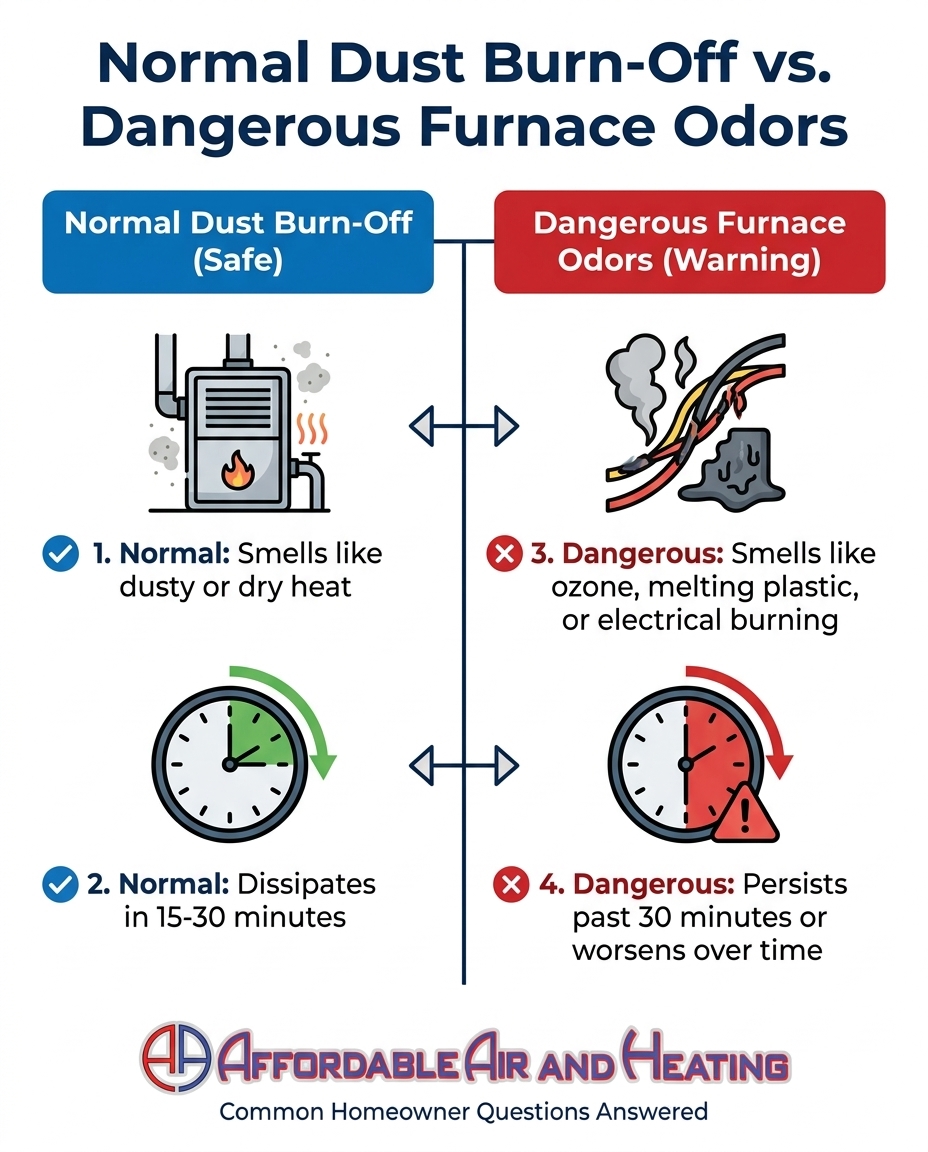
When you detect a burning smell during the first heating cycle of the year, the most likely culprit is harmless dust. However, there is a very strict timeframe for this phenomenon. Industry standards dictate that this specific odor should be temporary, with the odor dissipating within 15 to 30 minutes of the system reaching its operating temperature. Here is a step-by-step look at what our technicians actually see happening behind your walls.
1. The Dormant Accumulation Phase: Throughout the summer, your HVAC system's blower motor circulates air through the ductwork. Even with a high-quality air filter in place, microscopic particles of household dust, pet dander, lint, and skin cells manage to bypass the filter and settle directly onto the cold heat exchanger.
2. The Sudden Ignition: When the thermostat calls for heat, the burners ignite (or the heating elements engage). The heat exchanger rapidly climbs to temperatures that can exceed 400 degrees Fahrenheit.
3. The Combustion of Particles: The settled dust and debris cannot withstand these high temperatures. They instantly singe and combust. Because the blower motor is pushing air over this newly heated surface, the smell of that singed dust is carried directly into your living spaces.
4. The Dissipation Window: Once the accumulated layer of dust has burned away, the smell will stop. This entire process is strictly bound by the 15-to-30 minute rule. If the system continues to run, the air should smell clean and neutral before an hour has passed.
The Science of Settled Dust on Heat Exchangers
Months of dormancy allow a surprising volume of particles to accumulate on the internal surfaces of your heating equipment. The heat exchanger is designed to transfer thermal energy safely into the air stream without mixing combustion gases into your breathing air. Because it is a large, metallic surface area, it acts like a magnet for settling debris when it is cold.
The high ignition temperatures required to warm your house cause the immediate, harmless combustion of these particles. It is a physical certainty: if there is dust on a surface that suddenly reaches several hundred degrees, it will burn. This scientific reality is why the mid-fall heating startup almost always produces a distinct, dry, dusty odor. To manage this brief period, we highly recommend opening a few windows and turning on ceiling fans to encourage proper ventilation while the harmless dust clears out.
Red Flags: When a Furnace Odor Requires Immediate Shutdown
While the 15-to-30 minute rule covers normal dust burn-off, our team frequently responds to calls where specific scents indicate a dangerous mechanical or electrical failure. If the odor you detect does not smell like dry, dusty heat, or if you notice the odor dissipating within 15 to 30 minutes is simply not happening, you must take immediate action. Ignoring these warning signs can lead to severe equipment damage or compromise your home's safety.
The critical warning signs checklist:
• The smell of melting plastic: This acrid, chemical scent usually indicates that a wire casing is melting, a foreign object has fallen into the ductwork, or a capacitor is failing. This is never a normal part of startup.
• The scent of electrical ozone: Often described as a sharp, metallic, or "chlorine-like" smell, ozone indicates an overheating blower motor, a seized bearing, or sparking electrical connections.
• The smell of rotten eggs or sulfur: This is a definitive sign of a natural gas leak. Gas companies add a chemical called mercaptan to natural gas specifically so you can smell a leak.
• Smoke visibly entering the room: Dust burn-off creates a smell, but it should never create visible smoke coming from your vents.
• Odors persisting beyond 30 minutes: If the burning dust smell continues for hours, it means the system is continuously burning something it shouldn't, such as a severely clogged air filter that has been sucked into the blower compartment.
If you experience any of these red flags, we always advise our customers to execute immediate safety instructions. First, go to your thermostat and switch the system to the "off" position. Second, locate your home's main electrical panel and flip the breaker dedicated to the furnace to cut all power. Finally, if you smell gas, evacuate the home immediately and contact your utility provider. Compromised breathing air from persistent odors affects home safety, which is why exploring our indoor air quality solutions is crucial once the immediate mechanical danger has been resolved by our professionals.
• Dust Burn-Off — Common Description: Dry, dusty, slightly smoky — Expected Duration: 15 to 30 minutes — Required Action: Ventilate home; monitor closely
• Electrical / Ozone — Common Description: Sharp, metallic, chemical — Expected Duration: Persistent while running — Required Action: Shut off breaker; call technician
• Melting Plastic — Common Description: Acrid, toxic, harsh — Expected Duration: Worsens as unit runs — Required Action: Shut off breaker; call technician
• Gas / Sulfur — Common Description: Rotten eggs, skunk-like — Expected Duration: Lingers even when off — Required Action: Evacuate; call gas company
Protecting Your Home: The Importance of Safe, Trusted Diagnostics
When a mid-fall heating startup goes wrong and those red flags appear, you are placed in a highly vulnerable position. It is cold outside, your house is dropping in temperature by the hour, and your primary source of heat is malfunctioning. This is exactly the kind of high-pressure situation where we see homeowners most at risk of making panic-driven decisions or falling victim to unnecessary upsells from unscrupulous contractors.
The value of honest evaluation: Proper diagnostics isolate the root cause without automatically jumping to full system replacements. A failing blower motor capacitor might smell exactly like a dying system, but one is a simple component swap while the other is a major renovation. This is where finding safe, trusted diagnostics backed by positive customer reviews and licensed expertise becomes your strongest shield. Our thorough technicians use multimeters to check voltage, inspect the heat exchanger for hairline cracks with specialized cameras, and evaluate the electrical draw of the motors to pinpoint the exact failure.
Verifying credentials before the inspection: Before allowing anyone to inspect your compromised heating system, you must verify their credentials. Ensure they carry active state licenses and proper insurance. Connect honest diagnostics to long-term system safety and performance; a contractor who takes the time to explain why a wire melted, rather than just telling you it did, is demonstrating the transparency required for a long-term service relationship. If you are facing a persistent burning smell, scheduling our professional heating diagnostics is the only way to restore your peace of mind safely.
What Our Affordable Heating and Air Reviews Reveal About Emergency Response
Reading through past customer experiences is one of the most effective ways to gauge how a company handles total system failures versus minor repairs. When you are sitting in a cold house worried about an electrical smell, you need a contractor who responds with urgency and integrity. Specific mentions of "honest diagnostics" in our affordable heating and air reviews are strong indicators of reliability. These reviews show you exactly how our team performs under pressure.
Real-world resilience: For example, a typical pattern we see in local reviews involves homeowners facing unexpected total system failures right when the weather shifts. One homeowner returned from a fall vacation to discover their thirty-year-old HVAC unit had completely died, leaving them with a freezing house and a massive disruption. Rather than facing a drawn-out, stressful process, they received a competitive quote immediately and benefited from a full system replacement in a single day. This kind of documented efficiency proves that our team has the logistical capability to handle emergencies without exploiting the customer's vulnerability.
Protecting against panic: Verifying these reviews protects you from panic-driven decisions during sudden breakdowns. When you see a proven track record of our technicians properly identifying electrical issues versus simple dust burn-off, you know you are hiring a licensed and insured HVAC contractor who values long-term trust over a quick sale. A solid review profile acts as a resume for emergency response, demonstrating that we consistently deliver safe, trusted diagnostics when our community needs us most.
Preparing Your High-Desert Home for Sudden Temperature Drops
Having maintained HVAC systems across the region for years, our team knows firsthand that the geographic realities of our area play a massive role in how your heating system behaves. Lancaster's high desert climate causes sharp nighttime temperature drops in mid-fall, meaning furnaces are often turned on suddenly at night when a burning smell is most alarming. The rapid diurnal temperature shifts characteristic of the high desert create a unique stress on residential HVAC systems.
The high-desert transition: Warm October days can easily reach into the upper 70s or 80s, lulling you into a false sense of security. But as soon as the sun dips below the horizon, the lack of humidity in the desert air allows all that radiant heat to escape into the atmosphere. The temperature plummets rapidly, quickly transitioning to chilly nights that demand immediate and reliable furnace use. Your heating system goes from completely idle to running at maximum capacity in a matter of hours.
Taking proactive steps: To avoid the midnight panic of a burning smell, we always recommend proactive maintenance before the first major freeze arrives. Do not wait for the first freezing night to test your system. Pick a mild Saturday morning in early October to turn on the heat for the first time. Open the windows, let the dust burn off for 15 to 30 minutes, and monitor the system while you are fully awake and alert. Scheduling inspections with us for your home in Lancaster and surrounding service areas before emergency conditions occur ensures that any failing components are replaced before you are shivering in the dark.
Frequently Asked Questions About Furnace Odors and Safety
Why does my heater smell like it's burning?
Your heater smells like it is burning because dust and debris settle on the heat exchanger during the off-season. When you turn the system on for the first time in months, the internal components rapidly heat up to several hundred degrees. Turning the heater on combusts this settled dust, creating a temporary, dry burning odor that circulates through your vents. This is a normal physical reaction to the mid-fall heating startup and is generally no cause for alarm.
How long does the burning smell last when turning on the heater?
The burning smell normally dissipates within 15 to 30 minutes of the system reaching its operating temperature. As the accumulated dust burns away, the air being pushed through your ductwork will gradually return to a neutral scent. If the odor lasts longer than this strict window, it requires professional attention. A persistent smell indicates that the system is continually burning something, such as a clogged filter or a failing electrical component.
Is it normal for a furnace to smell like burning dust?
Yes, it is completely normal for a furnace to smell like burning dust for the first one or two cycles of the season. It is a harmless byproduct of the system reaching its necessary operating temperature after a long period of dormancy. Even the cleanest homes will experience this, as microscopic particles constantly circulate and settle inside the HVAC cabinet. As long as the smell is strictly dusty and temporary, your system is functioning as designed.
How do I know if my heater smell is dangerous?
You can identify a dangerous heater smell by paying close attention to the specific type of odor. Electrical, metallic, or melting plastic smells are not normal and point to serious internal malfunctions. Additionally, odors accompanied by strange noises, such as grinding or squealing, or visible smoke coming from your registers indicate immediate danger. If you detect any of these signs instead of a simple dusty scent, shut the unit down immediately.
Should I turn off my furnace if it smells like burning plastic?
Yes, immediately shut off the system at the thermostat and the breaker if you smell burning plastic. A plastic odor strongly suggests that electrical wiring insulation is melting or a critical component is severely overheating, creating a significant fire hazard. Do not turn the system back on to "test" it. Call our licensed professionals for trusted diagnostics to isolate and repair the electrical fault safely before restoring power.
Secure Your Peace of Mind Before the Freezing Nights Arrive
Understanding the difference between normal dust burn-off and dangerous electrical odors is the key to managing your mid-fall heating startup without panic. While a brief, 15-to-30 minute dusty smell is completely standard, acrid plastic or persistent ozone scents demand immediate action. Relying on trusted, well-reviewed experts ensures your home remains safe and efficient all season long. If you have any doubts about your system's performance, schedule a professional inspection with Affordable Air and Heating today to ensure you have a reassuring explanation and a safe, reliable heating system before the freezing nights arrive.