The Invisible Threat Hiding in Your Furnace This Fall
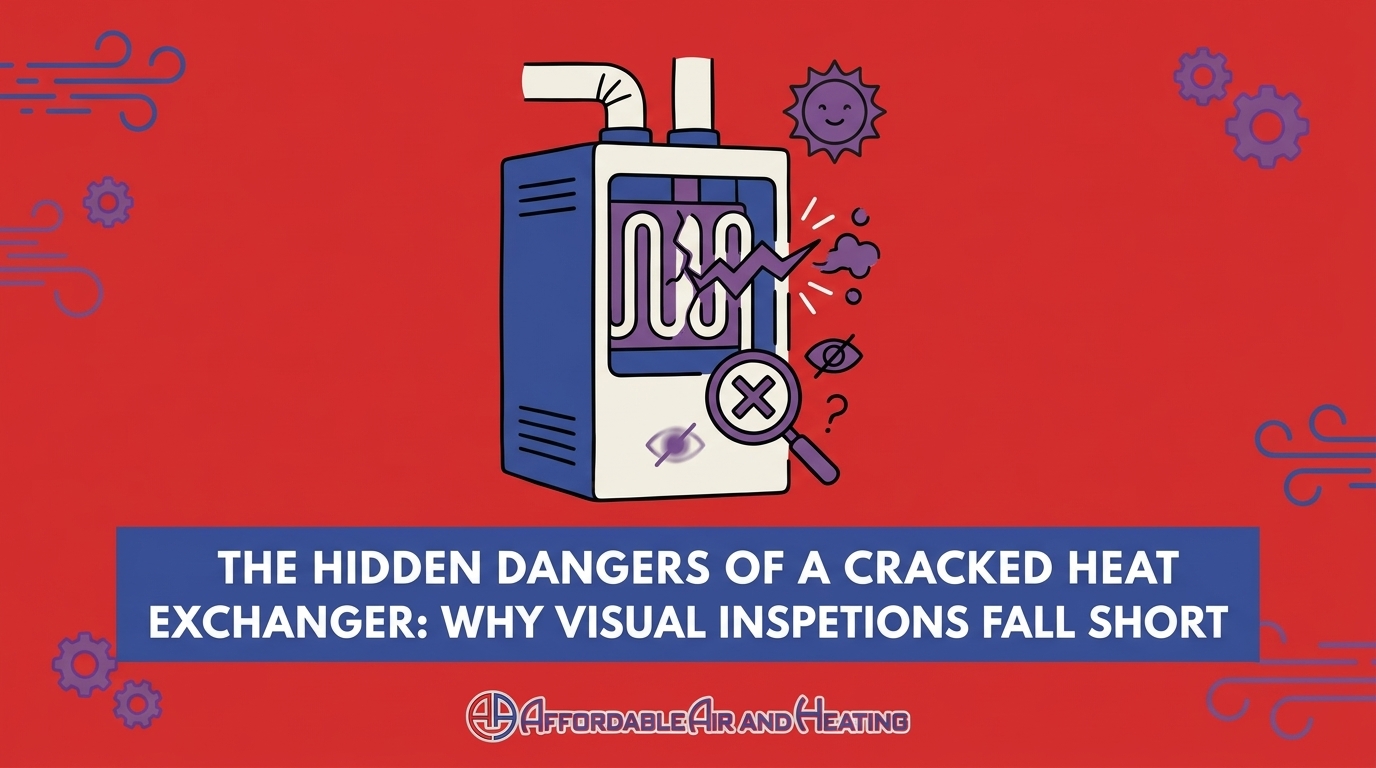
You turn on your thermostat for the first time this fall, hear the familiar ignition sequence, and assume your home is ready for winter. But the hidden dangers of a cracked heat exchanger rarely announce themselves with strange noises or immediate breakdowns. Deep inside the metal housing of your furnace lies a critical component responsible for keeping toxic combustion gases completely separate from the clean, breathable air circulating through your living spaces. When this component develops microscopic fractures, that protective barrier is compromised.
As we enter the September pre-heating season, addressing potential structural failures in older furnaces becomes a time-sensitive priority for our team at Affordable Air and Heating. Homeowners are often faced with a critical decision: relying on a basic, visual-only flashlight check, or investing in scientific, data-driven diagnostic testing. Because the most dangerous fractures are completely invisible to the naked eye, understanding how and why these metal components fail is essential for protecting your home.
Whether you are evaluating aging HVAC systems or looking to schedule professional heating services, understanding the science behind furnace safety is the first step.
The Mechanics of Metal Fatigue in Extreme Climates
To understand why heat exchangers fail, it is helpful to look at the physical demands placed on the equipment. A gas furnace generates intense heat by burning fuel inside a sealed metal chamber—the heat exchanger. The air from your home is then blown over the outside of this hot metal, warming up before returning to your rooms. The metal itself serves as an absolute wall between the toxic fire inside and the clean air outside.
In our years of serving the Lancaster high desert, we have seen firsthand how local furnaces face a unique and demanding environment. The climate is characterized by extreme diurnal temperature shifts—freezing winter nights rapidly giving way to warmer, sun-baked days. These drastic swings force local heating equipment to cycle on and off much more frequently than units in milder coastal areas. Every single time the burner ignites, the metal of the heat exchanger rapidly heats up and expands. When the cycle ends, the metal cools and contracts.
The life expectancy of a typical gas furnace is roughly 15 to 20 years. As the equipment ages past this window, the risk of structural failure increases exponentially. A system more than 30 years old has endured decades of thermal stress, and eventually a full, professional replacement is needed. Operating a furnace of that age is a gamble, as the metal has endured tens of thousands of expansion cycles.
Thermal Stress and Expansion Cycles
The physical science of metal fatigue is straightforward but relentless. Constant expansion and contraction eventually cause the metal to lose its elasticity.
• Microscopic stress points: The tight curves and welded seams of the heat exchanger bear the brunt of the thermal stress.
• Hairline fractures: Over decades, the weakened metal develops microscopic cracks that are essentially invisible when the furnace is turned off.
• Active expansion: When the burners ignite and the metal heats up, these tiny fractures expand and open wide, creating a breach in the system's protective barrier.
Carbon Monoxide: The Silent Invader of Your Home's Airstream
When a heat exchanger cracks, the most immediate life-safety threat is carbon monoxide (CO) exposure. Carbon monoxide is a highly toxic byproduct of incomplete combustion. It is completely colorless, odorless, and tasteless, making it impossible to detect without specialized equipment. If you are concerned about indoor air quality, understanding how this gas infiltrates your home is paramount.
The physical symptoms of low-level carbon monoxide exposure are dangerously subtle. Homeowners often experience mild headaches, unexplained fatigue, dizziness, or nausea. Because these symptoms closely mimic the common cold or seasonal flu—which peak at the exact same time of year that furnaces are running—families often fail to realize their air supply is contaminated until the situation becomes severe.
Our team frequently hears homeowners assume their standard ceiling-mounted carbon monoxide detector will keep them safe. While these alarms are critical last lines of defense, waiting for one to trigger is a dangerous strategy. Standard retail CO alarms are specifically calibrated to prevent nuisance tripping, meaning they often require a high concentration of gas over a sustained period before sounding. Low-level, chronic leaks from a cracked heat exchanger can poison an environment long before a basic alarm ever goes off.
How Harmful Gases Enter Your Ductwork
The mechanics of a leak rely on the pressure differences inside your furnace cabinet.
The pressure differential: The blower compartment pushes air over the heat exchanger with significant force, creating positive pressure. Meanwhile, the combustion chamber operates under different draft pressures. When the metal heats up and the crack expands, the changing pressures can cause the burner flames to waver, and toxic combustion gases can be pulled or pushed into the clean air stream flowing through your ductwork.
Warning Signs: What Homeowners Can Observe (and What They Miss)
While the most severe cracks can remain entirely hidden, a failing heat exchanger will sometimes produce physical or olfactory clues. We recommend homeowners routinely monitor their utility areas for these symptoms, especially if the furnace is aging. If you notice any of these signs—or if your vents are blowing warm air inconsistently—it is time for a professional evaluation.
1. Yellow or dancing burner flames: A healthy gas furnace should produce a steady, crisp blue flame. If the flames are burning yellow, orange, or appear to be dancing and flickering wildly when the blower fan kicks on, it often indicates that air from the blower is pushing through a crack in the heat exchanger and disrupting the combustion process.
2. Unexplained soot buildup: Incomplete combustion produces black soot. If you notice a dusty, black residue accumulating around the furnace cabinet, on the front panels, or near your supply registers, it is a strong indicator that the system is not venting properly.
3. Strange, chemical odors: While carbon monoxide itself has no smell, the other byproducts of incomplete combustion do. A failing heat exchanger will sometimes produce a sharp, acrid odor similar to formaldehyde or metallic exhaust.
4. Corrosion or rust on the exterior: Excessive rust on the outer casing of the furnace or near the draft inducer can indicate moisture issues related to poor venting, which often correlates with internal metal degradation.
The critical caveat: The absence of these warning signs does not guarantee a safe furnace. The most dangerous, microscopic fractures often present absolutely zero visible symptoms to the homeowner.
The Dangerous Limitations of a Standard Visual Inspection
A common misconception we encounter in the field is that a standard fall "tune-up" automatically guarantees a flawless heat exchanger. In reality, basic maintenance often relies solely on a visual inspection, which is inherently flawed when it comes to detecting microscopic metal fatigue.
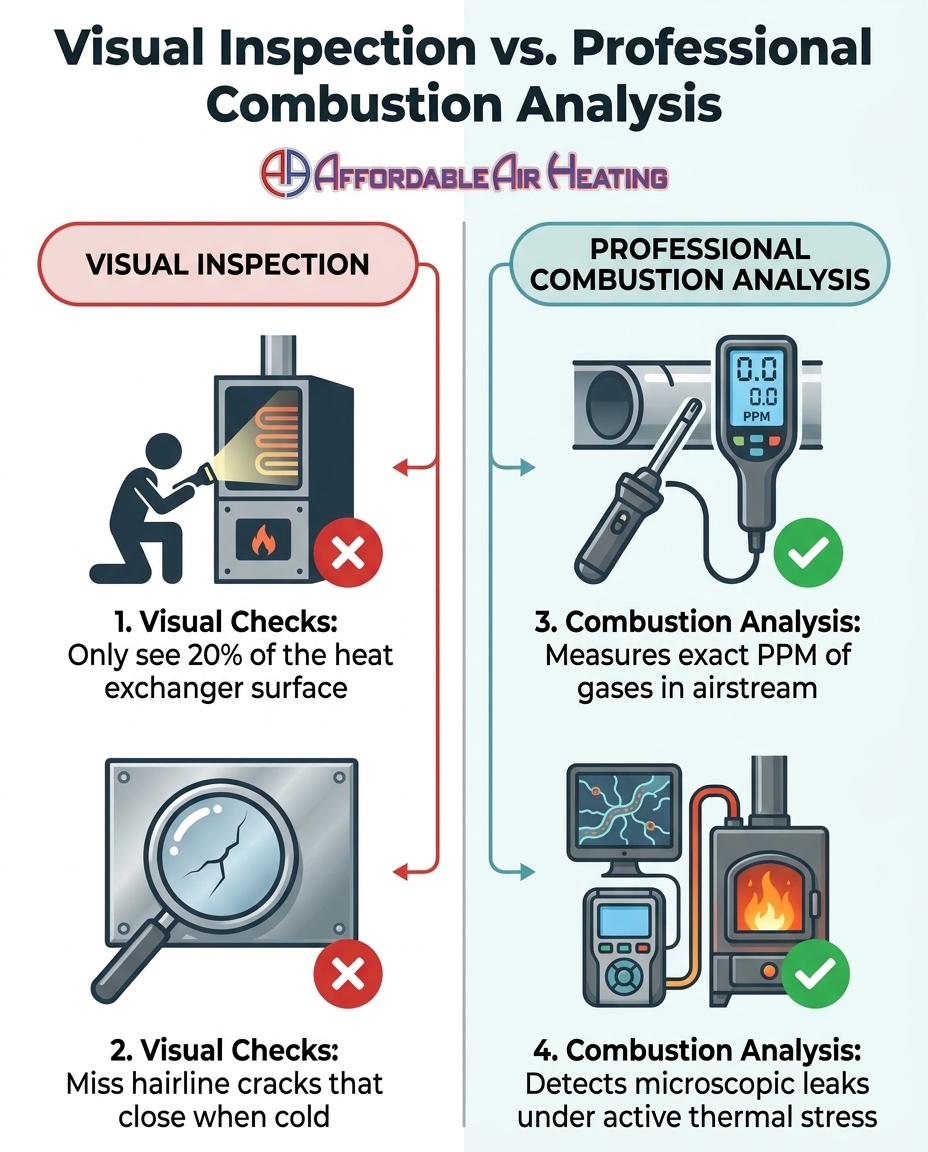
The geometry of a modern furnace makes a thorough visual check nearly impossible. A heat exchanger is a complex series of serpentine tubes or large clamshell chambers buried deep inside the furnace cabinet. Even with an inspection mirror and a high-powered flashlight, a technician can only see roughly 20% to 30% of the total surface area. The tight bends, the back panels, and the secondary heat exchangers are entirely inaccessible to the human eye without completely dismantling the furnace.
Furthermore, metal behaves differently at room temperature. When the furnace is turned off and the metal is cold, hairline fractures close up so tightly that they become practically invisible, seamlessly blending into the natural grain and soot of the metal. A technician could shine a flashlight directly onto a cold crack and never see it. Relying strictly on this method offers a false sense of security and ignores the life-safety imperative of modern diagnostics.
The Science of Safety: Professional Combustion Analysis
Because visual inspections fall short, Affordable Air and Heating relies on professional combustion analysis as our standard for true safety verification. This advanced diagnostic expertise is the only scientifically sound method for detecting microscopic leaks, and it serves as a non-negotiable step for ensuring true peace of mind in older homes.
Professional combustion analysis involves using highly calibrated, digital diagnostic tools to sample the air directly inside the exhaust flue and the supply airstream while the furnace is actively running. Rather than looking for a physical crack, our technicians test the chemical composition of the air to see if combustion gases are escaping their designated containment zones.
By measuring the exact combustion analysis PPM levels (parts per million) of oxygen, carbon monoxide, and stack temperatures under active thermal stress, we can definitively prove whether a heat exchanger is compromised. If the metal is cracked, the digital analyzer will detect the anomaly the moment the furnace reaches its operating temperature and the fracture expands.
Reading the Data: How We Detect Invisible Leaks
The process is precise and leaves no room for guesswork.
• Flashlight / Visual Check — What It Measures: Surface-level rust, large visible holes, soot buildup. — Effectiveness on Hidden Cracks: Low. Cannot see closed cracks or access the rear of the chamber.
• Ambient Air Testing — What It Measures: General room air quality near the furnace cabinet. — Effectiveness on Hidden Cracks: Moderate. Only detects gas if it is aggressively leaking into the utility room.
• Professional Combustion Analysis — What It Measures: Exact PPM of gases in the exhaust flue and supply ducts during active heating. — Effectiveness on Hidden Cracks: High. Detects microscopic leaks that only open under extreme thermal stress.
The baseline comparison: Technicians establish a baseline ambient air reading before the furnace turns on. Once the system is running at full capacity, they compare the active readings to the baseline. Any unexplained spike in carbon monoxide or sudden drop in oxygen indicates a breach in the heat exchanger.
Preparing Older Furnaces Before the Deep Freeze
Entering the winter season with an untested, aging furnace is a significant risk. Beyond the severe health hazards of carbon monoxide exposure, a compromised heat exchanger often leads to catastrophic system failure right when you need heating the most.
A severe cold snap forces an older system to run continuously, pushing aging components past their breaking point. A bad relay alongside deeper structural wear can mean a full replacement is the right way to restore safe, reliable heat. (If an upgrade is necessary, ask us which utility rebate programs are currently open, such as Home Performance Plus for SCE customers.) Waiting for a breakdown during freezing weather leaves families vulnerable and scrambling for immediate solutions.
By scheduling advanced diagnostic testing early in the fall, you allow ample time to review your options if a crack is discovered. Early detection prevents both the silent threat of carbon monoxide exposure and the sudden, freezing reality of an emergency no-heat situation.
Frequently Asked Questions About Heat Exchanger Safety
How do you know if your heat exchanger is cracked?
The most definitive way to know if your heat exchanger is cracked is through professional combustion analysis, which measures the chemical makeup of your airstream. While you might occasionally notice yellow burner flames, soot buildup, or strange chemical odors, these visible signs are not always present. Microscopic hairline fractures often require digital diagnostic tools to detect.
Why is a cracked heat exchanger dangerous?
A cracked heat exchanger is dangerous because it breaks the seal between the toxic combustion process and your home's breathable air. When the metal cracks, harmful gases like carbon monoxide can leak directly into your ductwork and be distributed into your living spaces. Prolonged exposure to these gases can cause severe illness or be fatal.
Can a visual inspection find a cracked heat exchanger?
A visual inspection can only find large, obvious cracks on the accessible front portions of the heat exchanger. Because a technician can only see a small fraction of the metal's surface area, and because hairline fractures shrink and hide when the metal is cold, basic visual checks routinely miss dangerous structural failures.
Will a carbon monoxide detector catch a cracked heat exchanger?
A carbon monoxide detector will sound an alarm if gas concentrations reach a specific, sustained threshold, but it should never be your primary diagnostic tool. Standard retail alarms are designed to prevent nuisance tripping, meaning low-level, chronic leaks from a cracked heat exchanger can go completely undetected for weeks or months. Proactive testing is required for true safety.
Can a cracked heat exchanger be repaired?
A cracked heat exchanger cannot be safely patched, welded, or repaired with sealant. Because the metal undergoes extreme thermal expansion and contraction with every heating cycle, any attempted repair will quickly fail under the stress. The only safe solution is to replace the entire heat exchanger component or upgrade the furnace entirely.
How long does a typical furnace heat exchanger last?
A typical gas furnace heat exchanger is designed to last between 15 and 20 years under normal operating conditions. However, lack of maintenance, poor airflow, and extreme climate conditions that cause rapid cycling can significantly shorten this lifespan. Units older than 20 years should be rigorously tested every fall.
Ensure Your Home's Safety This Heating Season
Your family's safety should never rely on guesswork or a quick flashlight check. Understanding the mechanics of metal fatigue and the invisible nature of carbon monoxide leaks empowers you to make informed decisions about your home's heating infrastructure. When you prioritize advanced, scientific testing over basic visual inspections, you gain a clear understanding of your equipment's true condition.
As the temperatures begin to drop, take the proactive step to verify the structural integrity of your furnace. Scheduling a comprehensive evaluation backed by professional combustion analysis provides the ultimate peace of mind, ensuring your home remains warm, efficient, and thoroughly protected all winter long.