When a Blank Screen Hides a Deeper Furnace Problem
You wake up shivering on a freezing late-fall morning, check the hallway wall, and find a blank thermostat screen or unresponsive interface. At Affordable Air and Heating, our team has seen this exact scenario play out countless times as Lancaster homeowners prepare for winter. Your first instinct is probably to grab your car keys and head to the hardware store for a replacement, but understanding how a bad inducer motor mimics a broken thermostat can save you a frustrating, unnecessary trip. When the house is cold and the screen is dark, it is incredibly easy to assume the wall unit has simply failed overnight.
Before you start tearing wires out of the wall, it helps to understand how modern HVAC systems are interconnected. An electrical symptom at the wall often indicates a mechanical safety issue deep inside the unit itself, which is why professional heating services are often the safest route for an accurate diagnosis.
The Illusion of the Dead Thermostat
Modern heating equipment is highly sophisticated and heavily reliant on a network of internal safety switches. The thermostat on your wall is essentially just a remote control for a much larger, more complex machine. When the main control board inside the furnace detects a critical failure—such as an inability to safely vent dangerous combustion gases—it takes immediate action to protect your home.
Often, this protective action involves cutting the 24-volt power supply that runs up the wall to your thermostat. Suddenly, your smart thermostat goes offline, or your digital screen goes completely blank. The problem isn't that the thermostat broke; the problem is that the furnace intentionally pulled the plug on it. Recognizing this distinction is the first step in resolving a sudden heating failure without wasting time and money on parts you do not need.
Why Homeowners Blame the Thermostat First
It is entirely natural to blame the thermostat when the heat stops working. For most homeowners, the thermostat is the only visible, interactive part of the entire heating system. You adjust the temperature, you set the schedule, and you read the display. Because you interact with it daily, it becomes the immediate suspect when things go wrong.
When that familiar interface goes dark, the logical—but often incorrect—assumption is a dead battery or a broken internal sensor. In our experience, this assumption frequently leads to what our technicians call the "parts cannon" approach. We regularly see well-meaning homeowners assume the wall unit is fried, drive to the store, purchase a new one, spend an hour wiring it up, and then stare in frustration when the new screen either remains blank or the furnace still refuses to ignite.
Symptom vs. Root Cause
Basic troubleshooting is always a good idea, but it is vital to know where to draw the line. Checking and replacing standard AA or AAA batteries in your thermostat is perfectly fine. However, assuming the internal furnace wiring is faulty and attempting to bypass it should never be a DIY project.
• Blank digital screen — What You Might Assume: The thermostat is completely broken. — What Is Actually Happening: The furnace control board cut 24v power due to a safety lockout.
• System says "Heating" but no warm air — What You Might Assume: The thermostat is failing to send the signal. — What Is Actually Happening: The furnace received the signal but aborted the cycle due to a failed inducer motor.
• New batteries don't fix the blank screen — What You Might Assume: The wall unit has a short circuit. — What Is Actually Happening: A blown fuse on the furnace control board stopped power delivery.
The takeaway: If a simple battery swap does not bring your thermostat back to life, the issue is almost certainly hiding inside the furnace cabinet, not inside the plastic box on your wall.
The Furnace Sequence of Operations: Where the Inducer Motor Fits In
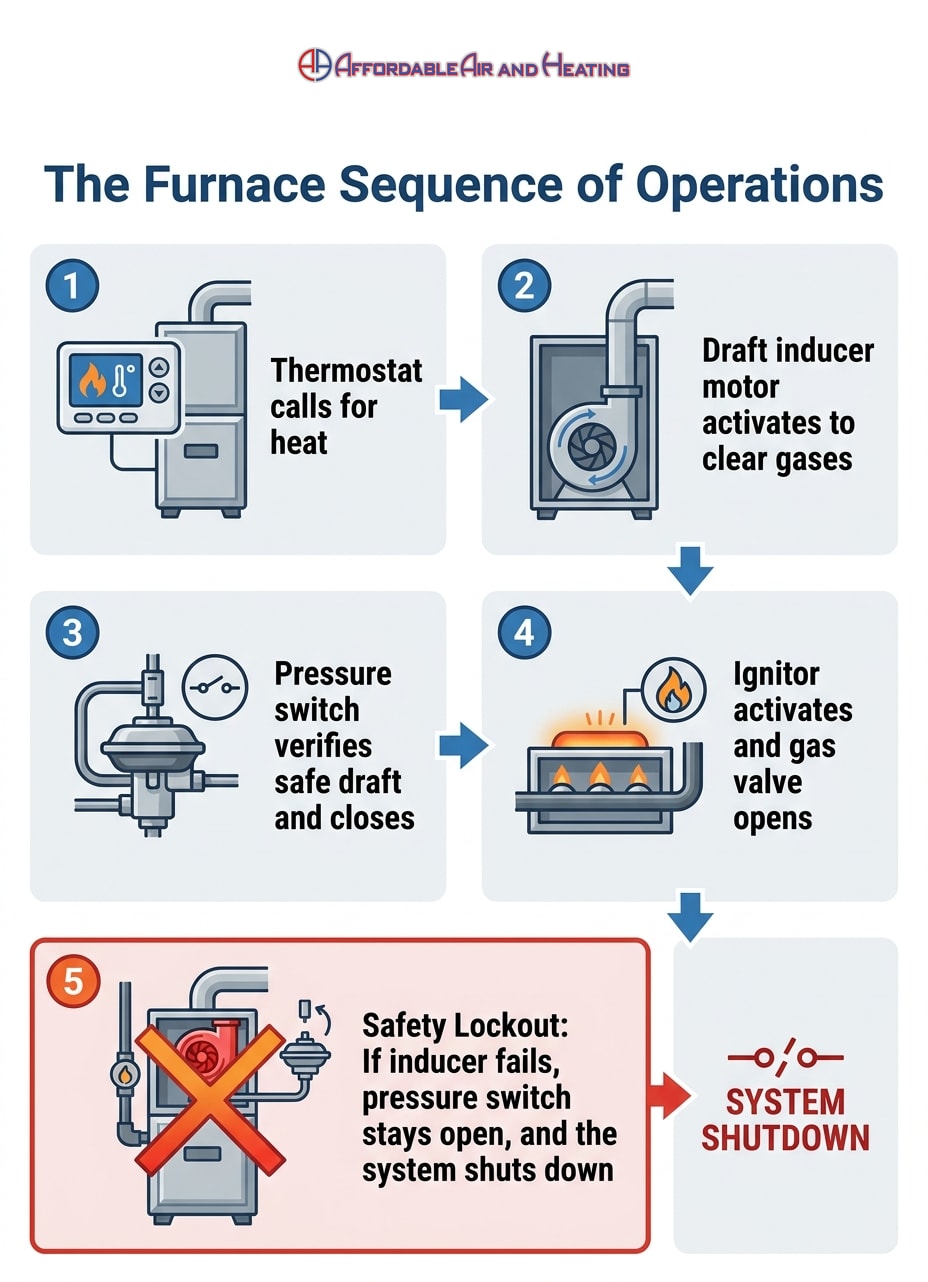
To understand why your thermostat went blank, you have to understand how your furnace decides to turn on. Gas furnaces do not just ignite a flame the moment you turn up the heat. They follow a strict, unchangeable checklist called the sequence of operations. When temperatures plummet overnight in the Lancaster high desert, reliable furnace operation isn't just about comfort—it is essential. That reliability hinges on this exact sequence.
The draft inducer motor plays the starring role in the very first step of this process. This small but powerful fan is responsible for pulling a draft through the heat exchanger, clearing out any residual, dangerous combustion gases (like carbon monoxide) before the burners are ever allowed to ignite. If this motor fails to spin up, the entire heating process is intentionally halted.
The Step-by-Step Heating Cycle
1. The Call for Heat: The temperature drops, and the thermostat sends a voltage signal to the furnace control board requesting heat.
2. The Inducer Motor Activates: Before anything else happens, the control board sends power to the draft inducer motor. You can usually hear this as a low humming or whirring sound starting up.
3. The Pressure Switch Verifies Draft: As the inducer motor spins, it creates negative pressure. A safety device called a pressure switch senses this suction. If the suction is strong enough, a small diaphragm inside the switch closes an electrical circuit.
4. Ignition Sequence Begins: Only after the pressure switch closes does the control board allow the ignitor to glow and the gas valve to open.
5. Blower Motor Engages: Once the burners are lit and the heat exchanger warms up, the main blower fan pushes the warm air through your vents.
If step two fails because the inducer motor is seized, burnt out, or obstructed, step three can never happen. The sequence is broken, and the furnace goes into defense mode.
How a Failing Inducer Motor Triggers a Safety Lockout
The connection between a mechanical motor failure and a blank electrical screen comes down to the furnace's internal logic. The pressure switch acts as the ultimate safety checkpoint for the inducer motor. It is essentially asking, "Is it safe to light a fire inside this metal box?" If the inducer motor is failing, the answer is no.
The Problem: The Motor Fails to Pull a Draft
Inducer motors endure a lot of wear and tear. Over time, their bearings can wear out, their electrical windings can degrade, or physical blockages (like a bird's nest in the flue pipe) can stop the fan wheel from spinning. When the thermostat calls for heat, the control board sends power to the inducer, but the motor either hums without spinning or fails to turn on entirely. Because there is no draft being created, the pressure switch remains wide open.
The Cause: The Control Board Detects a Fault
The furnace control board is programmed to wait a specific amount of time for the pressure switch to close. If that time limit expires and the switch is still open, the board recognizes a critical safety fault. It knows that igniting the gas burners without a working exhaust draft would cause carbon monoxide to spill directly into your living space. To prevent this, the board immediately aborts the ignition sequence.
The Solution: The Hard Lockout Phase
After a few failed attempts to start the cycle, the furnace enters a state called a "hard lockout." During a hard lockout, the control board shuts down all heating operations completely. To ensure the homeowner realizes there is a major problem, the board will often cut the 24-volt power supply that runs to the thermostat.
This is the core mimicry: the wall unit goes blank, making it appear broken, when in reality, the furnace has intentionally turned it off to keep you safe. So, before you try to troubleshoot your thermostat by replacing it, you must consider that a hard lockout has severed its power supply at the source.
The Danger of Misdiagnosis During a Cold Snap
Assuming a thermostat is broken when the inducer motor has actually failed is more than just a minor inconvenience; it can lead to severe comfort and safety issues. When the heating system fails right as winter approaches, time is of the essence. A misdiagnosis wastes precious hours while the temperature inside your home continues to plummet.
During November pre-winter cold snaps in the high desert, our emergency service calls frequently start with homeowners who spent two hours driving to the store, reading thermostat wiring diagrams, and installing a new unit, only to discover the screen is still blank. While you are focused on the wall unit, the house is continuing to lose heat, bringing you closer to freezing indoor temperatures and the risk of burst water pipes.
The Risks of DIY Electrical Testing
The frustration of a newly installed, still-blank thermostat often pushes homeowners to dig deeper into the furnace itself. This is where a simple misunderstanding becomes dangerous. Attempting DIY electrical testing on furnace control boards or bypassing internal safety switches is highly hazardous.
Bypassing a pressure switch to force the furnace to turn on with a dead inducer motor is a recipe for disaster. It removes the only safeguard preventing toxic exhaust gases from flooding your home. When the house is freezing, the pressure to find a quick fix is high, but compromising the sequence of operations is never the answer. Accurate, professional diagnosis is the only safe way to restore heat.
Signs Your Furnace Issue Is Mechanical, Not Electrical
If you are staring at a blank thermostat screen or an unresponsive interface, how can you tell if the wall unit is actually dead, or if the furnace is hiding a mechanical failure? There are several actionable clues you can look and listen for without ever touching a wire or opening a sealed electrical panel.
By paying attention to how the furnace behaves when you attempt to turn it on, you can gather vital information to pass along to a technician. Here is what to look for:
• Listen for the initial click: If you turn the thermostat to "Heat" and hear a faint click from the wall unit, followed by a click or a faint hum from the furnace room that stops after a few seconds, the thermostat successfully sent the signal. The furnace tried to start but failed mechanically.
• Check for flashing diagnostic lights: Most modern furnace control boards have a small LED light that flashes a diagnostic code when there is a problem. You can often see this light through a small clear plastic window on the lower blower door panel of the furnace. If you see a blinking red or amber light, the furnace is in a lockout state.
• Note any strange noises: Think back to the days leading up to the failure. Did you hear a loud grinding, squealing, or rattling noise coming from the furnace when it started up? These are classic signs of failing inducer motor bearings.
• Watch the sequence: If the furnace starts, the small inducer fan spins up, but everything shuts down before you hear the "whoosh" of the gas burners, the sequence of operations is failing at the pressure switch checkpoint.
If any of these mechanical signs are present, it is time to schedule a diagnostic visit rather than buying electrical parts. A blank screen accompanied by a flashing furnace light is a guarantee that a new thermostat will not solve your problem.
Why Accurate Diagnostics Matter for Your Heating System
When a furnace enters a safety lockout and mimics a dead thermostat, guesswork is the most expensive tool in your toolbox. The sequence of operations involves high-voltage motors, low-voltage control circuits, and sensitive pneumatic safety switches. Pinpointing exactly which component failed requires specialized tools and training.
HVAC technicians do not guess; they use multimeters to trace the exact path of the voltage from the control board to the inducer motor. They use manometers to measure the precise negative pressure (draft) the inducer is creating to see if it meets the pressure switch's requirements. This data-backed approach contrasts sharply with the DIY method of replacing parts until something works.
The Value of Local Expertise
A proper diagnosis prevents you from paying for unnecessary parts like new thermostats, extra wiring, or the wrong furnace components. Furthermore, our team is intimately familiar with the specific heating demands of our local service area. Having serviced Lancaster for years, we know exactly how the high desert climate stresses heating equipment and which components are most likely to fail during a sudden temperature drop.
Affordable Air and Heating provides safe, trusted diagnostics without hidden fees, ensuring homeowners don't pay for unnecessary thermostat replacements. By understanding the sequence of operations—from the inducer motor to the pressure switch—you can skip the frustrating hardware store trip. Having a professional accurately identify the root cause ensures your heating system is restored safely, efficiently, and correctly the very first time.
Frequently Asked Questions
Why did my furnace shut off and lock out my thermostat?
Your furnace shuts off and locks out the thermostat to protect your home from an unsafe operating condition. If an internal component like the inducer motor fails, the control board initiates a hard lockout to prevent gas ignition, which often involves cutting power to the wall unit.
What does a draft inducer motor do?
A draft inducer motor is a small exhaust fan that clears dangerous combustion gases out of the furnace heat exchanger. It runs before the gas burners ignite to ensure that carbon monoxide and other byproducts are safely vented outside your home.
Why is my thermostat unresponsive when the heater is turned on?
Your thermostat may be unresponsive because the furnace's internal safety switches have tripped and cut its power supply. While it could be dead batteries, an unresponsive screen during a heating cycle frequently points to a blown furnace fuse or a system lockout.
Can a bad inducer motor stop the furnace from turning on?
Yes, a bad inducer motor will completely stop the furnace from turning on. Because it is the very first step in the heating sequence, its failure prevents the pressure switch from closing, which stops the gas valve from opening.
What happens when a furnace pressure switch stays open?
When a furnace pressure switch stays open, the control board assumes there is no safe exhaust draft being created. It will refuse to ignite the burners and will eventually shut the entire system down in a safety lockout.
How can I tell if the thermostat or furnace control board is bad?
You can often tell by looking for a flashing diagnostic LED light on the furnace control board. If the furnace board is flashing an error code while the thermostat is blank, the board is actively protecting the system, meaning the thermostat itself is likely fine.