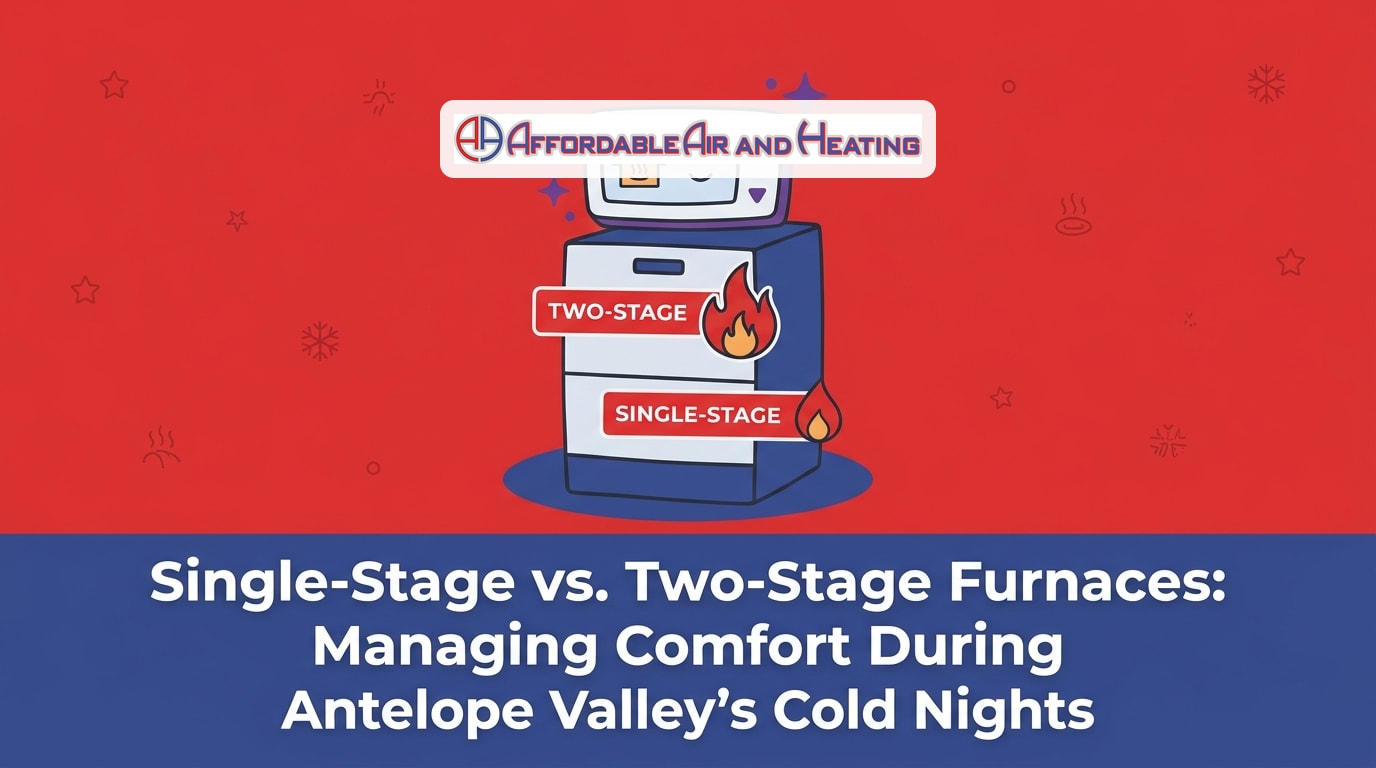
Single-Stage vs. Two-Stage Furnaces: Managing Comfort During Antelope Valley's Cold Nights


Why High Desert Nights Demand Better Heating Solutions
Comparing Single-Stage vs. Two-Stage Furnaces: Managing Comfort During Antelope Valley's Cold Nights requires understanding exactly how your home loses heat the moment the sun goes down. Your thermostat might say it is perfectly warm inside during the late afternoon, but as soon as evening arrives, a sudden, biting chill takes over your living room. In our years of keeping local families warm, our team at Affordable Air and Heating has seen firsthand how these severe temperature swings create a harsh reality for residents in the high desert. When you are preparing your home for winter, deciding between traditional heating technology and an upgraded system is one of the most important choices you will make.
To understand what HVAC system options will work best for your home, you have to look at our specific climate. In Lancaster and the surrounding areas, we sit at an elevation of over 2,300 feet. This geography creates a phenomenon known as diurnal temperature variation. Because the high desert lacks humidity and heavy cloud cover to trap heat, daytime warmth escapes into the atmosphere rapidly after sunset. It is incredibly common to see temperatures crash 30 to 40 degrees in just a few hours during late fall and November pre-winter weather.
This rapid temperature drop puts immense stress on your heating system. Your home's exterior walls, windows, and roof cool down much faster than the air inside your living room. As that cold penetrates the house, it creates localized cold spots, usually near exterior walls or large windows. A standard furnace often struggles to keep up with this dynamic environment, leading to a home that feels stuffy in the hallway but freezing in the bedroom. To ensure reliable comfort before the deep winter freeze hits, you need a system designed to handle fast, extreme temperature shifts.
The 'All-or-Nothing' Flaw of Traditional Single-Stage Furnaces
For decades, the standard in home heating has been the single-stage furnace. To understand why these units struggle in the high desert, you need to look at how their internal mechanics operate. A single-stage furnace has exactly one operational speed: 100 percent capacity. When your thermostat detects that the house has dropped below your target temperature, it sends a signal to the furnace. The furnace opens its gas valve all the way, fires up the burners to maximum heat, and blows hot air into your home until the thermostat is satisfied.
The short-cycling problem: This "all-or-nothing" approach creates significant issues during the early evening in the Antelope Valley. When the sun first goes down, the outside temperature drops quickly, but it is not yet freezing. Your home only needs a little bit of heat to maintain a comfortable baseline. However, a single-stage furnace still blasts 100 percent of its capacity. It heats the house rapidly, satisfies the thermostat in just a few minutes, and shuts down abruptly. Our technicians frequently see this rapid on-and-off process, called short-cycling, drive up energy bills and cause premature wear for Lancaster homeowners.
The yo-yo effect on your comfort: Because the furnace shuts off so quickly, the hot air never gets a chance to circulate fully through every room. The system blasts you with intense heat, turns off, and then allows the rapid radiational cooling of the desert night to pull the heat right back out of your home. Ten minutes later, the furnace fires up at 100 percent capacity again. This blast-and-stop cycle leads to noticeable indoor temperature yo-yoing. One minute you are throwing off your sweater, and the next minute you are shivering.
If you are struggling with managing uneven temperatures in your home, a single-stage furnace is often the primary culprit. The unit simply cannot adapt its output to match the changing conditions outside. It treats a mild 50-degree evening exactly the same as a frigid 20-degree night, resulting in wasted energy, increased wear and tear on the system components, and a home that never quite feels comfortable.
How Two-Stage Furnaces Adapt to Rapid Temperature Drops
A two-stage furnace solves the all-or-nothing problem by utilizing a specialized gas valve and advanced blower technology. Instead of only having one gear, this system can operate at two distinct levels of heat output. The first stage typically runs at roughly 60 to 65 percent of the furnace's total capacity, while the second stage delivers the full 100 percent capacity. This dual-capacity operation is perfectly suited for managing the rapid temperature drops we see in Lancaster.
Here is exactly how a two-stage system adapts to our unique desert evening timeline:
1. Sensing the initial evening chill: As the sun sets and the temperature begins its rapid 30-degree descent, your home starts to lose heat. The thermostat signals the furnace to turn on.
2. Running on Stage 1 (Low Capacity): Instead of blasting the house with maximum heat, the furnace turns on its lower, 65-percent capacity setting. It provides a gentle, continuous stream of warm air that perfectly matches the mild heat loss of the early evening.
3. Preventing the yo-yo effect: Because the furnace is running at a lower capacity, it runs for a longer period of time. This prevents the house from cooling down too quickly and eliminates the constant starting and stopping that causes temperature swings.
4. Ramping up to Stage 2 (High Capacity): When the extreme early morning low hits around 3 AM and the temperature drops near freezing, Stage 1 may no longer be enough to keep the house warm. The furnace automatically detects this and shifts into Stage 2, utilizing 100 percent capacity to combat the deep freeze.
Beyond simply keeping the temperature steady, this operational style offers significant secondary benefits. Because the furnace runs in longer, gentler cycles on its lower setting, the air in your home circulates through your HVAC filter much more frequently. This constant circulation pulls more dust, pet dander, and allergens out of the air, significantly improving your indoor air quality. Additionally, you will notice a massive reduction in system noise. Since the furnace rarely needs to run at full blast, you will not hear that loud, disruptive "whoosh" of air every time the system kicks on.
Side-by-Side Comparison: Single-Stage vs. Two-Stage Systems
When you are deciding between these two technologies, it helps to see exactly how they stack up against one another. While a traditional system might seem appealing due to a lower upfront cost, the long-term benefits of an adaptable system often outweigh the initial investment, especially in a climate that demands heavy heating usage during the winter months.
The following table breaks down the core differences between the two systems so you can weigh your options based on your specific comfort priorities.
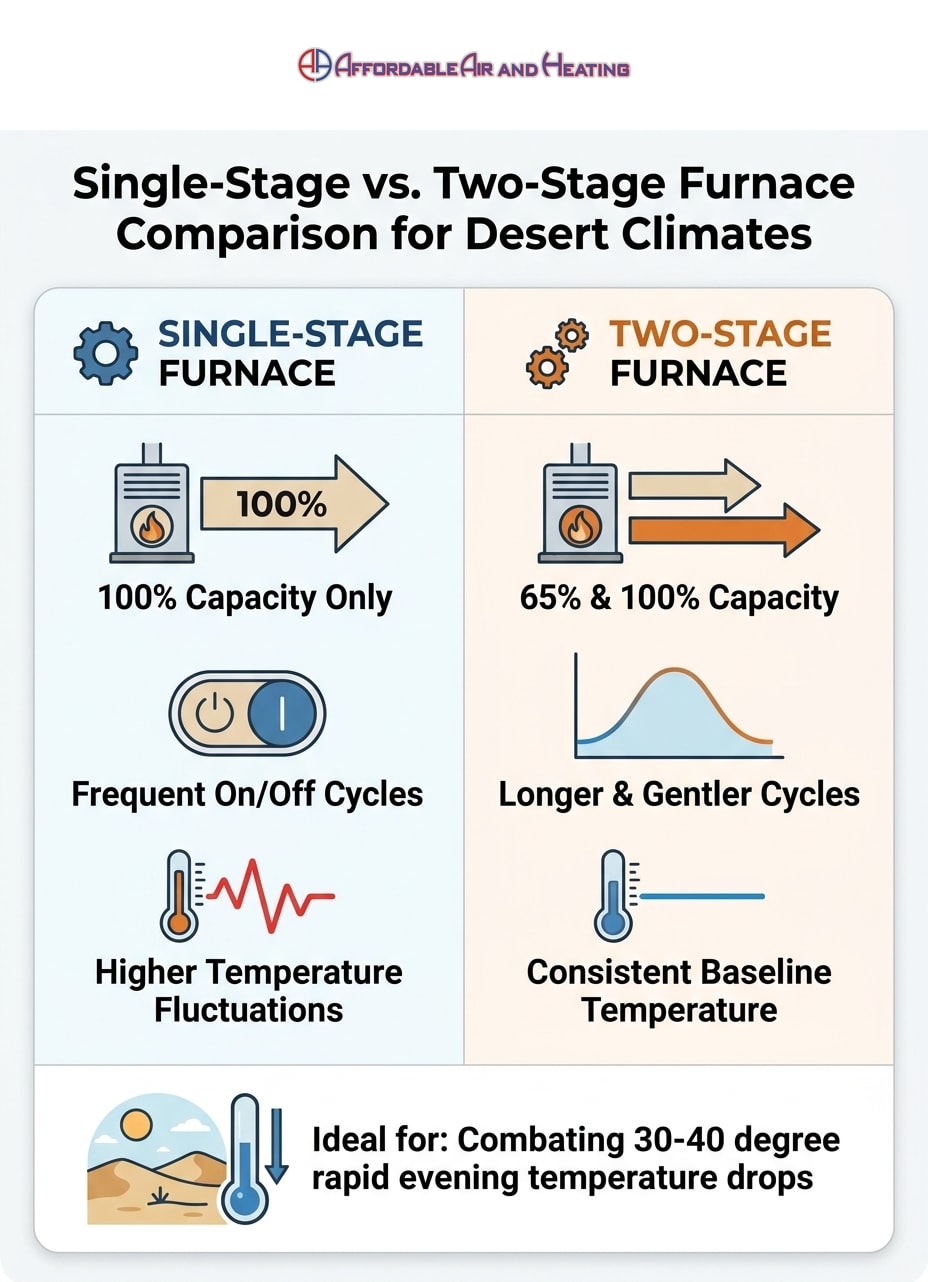
• Heating Capacity — Single-Stage Furnace: Operates exclusively at 100% capacity. — Two-Stage Furnace: Operates at 60-65% (Stage 1) and 100% (Stage 2).
• Cycle Length — Single-Stage Furnace: Short, frequent on-and-off cycles. — Two-Stage Furnace: Longer, continuous, and gentler cycles.
• Temperature Consistency — Single-Stage Furnace: High fluctuation; creates a yo-yo effect. — Two-Stage Furnace: Even, consistent baseline temperature.
• Operational Noise — Single-Stage Furnace: Loud startup and high airflow noise. — Two-Stage Furnace: Quiet operation, mostly running on low speed.
• Air Filtration — Single-Stage Furnace: Basic filtration due to short run times. — Two-Stage Furnace: Superior filtration due to constant air circulation.
• Ideal Use Case — Single-Stage Furnace: Mild climates with stable winter temperatures. — Two-Stage Furnace: Climates with rapid, extreme temperature drops.
Why Honest Load Calculations Matter More Than the Furnace Type
Even the most advanced, high-efficiency two-stage furnace will fail to keep you comfortable if it is not sized correctly for your home. This is where a critical process called a Manual J load calculation comes into play. A load calculation is a scientific assessment of how much heating and cooling your specific home requires. It takes into account your exact square footage, the quality of your insulation, the number and type of windows you have, the orientation of your house to the sun, and the condition of your ductwork.
The danger of oversizing: A common, unfortunate practice in the HVAC industry is oversizing furnaces "just to be safe." Some contractors will simply look at the square footage of your home and guess the size, or they will install a larger unit assuming bigger is always better. In the high desert, an oversized furnace is a disaster. If you install an oversized two-stage furnace, its lowest setting (Stage 1) will still produce too much heat for your home. It will heat the house too fast and shut off prematurely. By oversizing the unit, you completely ruin the efficiency and comfort benefits of the two-stage system, effectively turning it back into a short-cycling single-stage furnace.
At Affordable Air and Heating, our installation crews have spent years correcting improperly sized systems across the Antelope Valley. We believe in doing the job right the first time. We are committed to performing honest load calculations to ensure homeowners get the exact right system without being oversold on equipment they do not need. When you reach out to professional heating services, you should expect exact measurements, not guesswork.
This commitment to honest, rapid assessment is a core part of how we operate year-round. For example, one Lancaster homeowner reached out to us on a Thursday afternoon when their AC unit broke down unexpectedly. Because we prioritize accurate diagnostics and transparent options, our technician arrived within a few hours to assess the situation. By the very next day, the new unit was delivered and installed, fully restoring their comfort. We apply that exact same level of precision and speed when sizing and installing your winter heating system.
Navigating Your Furnace Upgrade in the Antelope Valley
When an old heating unit starts showing signs of failure—such as strange rattling noises, frequent cycling, or a sudden spike in your energy bills—it is critical to act quickly. The worst time to replace a furnace is in the middle of a November pre-winter freeze when your system completely breaks down. By proactively exploring your options during the late fall, you give yourself the time to make an informed decision without the pressure of a freezing house.
A pattern we see often during late fall maintenance visits is that waiting too long can leave you in a tough spot. One local customer experienced this firsthand when their 32-year-old HVAC unit finally died during an extremely cold freeze warning week. Our team quickly responded to assess the old, failing system and provided clear replacement options. We coordinated the necessary arrangements and safely installed a brand new Goodman HVAC unit—even utilizing a crane to complete the job safely. Because we acted fast, their heat was restored and has been working amazingly well ever since. However, avoiding an emergency breakdown altogether is always our recommended route.
Managing the investment: Modernizing a heating system is a significant investment in your home's infrastructure. Fortunately, there are accessible ways to manage the cost of upgrading to a highly efficient two-stage system. Depending on the efficiency rating (AFUE) of the furnace you choose, general energy rebates or federal tax credits may apply to your installation. We always advise our customers to check current availability with their utility providers or a tax professional to take advantage of these programs.
Additionally, exploring financing options for new furnaces can make a two-stage upgrade highly manageable. With transparent pricing and flexible financing plans, you are empowered to choose the best comfort level for your family's budget, rather than settling for outdated technology simply due to upfront costs.
Frequently Asked Questions About Furnace Staging in Desert Climates
If you live in one of our Antelope Valley service areas, you likely have specific questions about how these systems perform in our unique high desert environment. Here are the most common questions homeowners ask us when deciding between single and two-stage heating.
Why is my house cold even when the furnace is on?
This usually happens because a single-stage furnace suffers from short-cycling. The furnace blasts hot air and quickly satisfies the thermostat located in the hallway, causing the system to shut off before that heat ever reaches the furthest rooms in the house. Furthermore, the rapid outdoor temperature drops in the desert often outpace the single-stage cycle, meaning the heat is pulled out of your home faster than the short bursts of warm air can replace it.
Is a two-stage furnace worth it in a desert climate?
Yes, we highly recommend it because extreme nighttime temperature swings require adaptable heating. In the early evening, the low stage handles the initial chill efficiently without overheating the house. When the deep freeze sets in during the early morning hours, the high stage takes over to maintain your comfort, making it perfectly suited for high desert weather patterns.
How does a two-stage furnace fix uneven heating?
A two-stage furnace fixes uneven heating by running for longer periods on its lower setting. These longer run times allow the warm air to mix thoroughly throughout the entire house, reaching back bedrooms and corners that usually stay cold. This continuous, gentle circulation completely eliminates the hot-and-cold blast effect associated with traditional furnaces.
Does a two-stage furnace run constantly?
No, a two-stage furnace does not run constantly, but it does run in longer, gentler cycles than a standard unit. While it might seem counterintuitive, running longer on a lower capacity actually uses less energy than a single-stage furnace that is constantly starting up and shutting down at full blast.
How much more efficient is a 2-stage furnace?
The exact efficiency depends on the system's specific AFUE (Annual Fuel Utilization Efficiency) rating, but the operational efficiency of a two-stage unit is inherently higher. Because it rarely needs to use 100 percent of its capacity, it burns less fuel during mild evening weather. It also significantly reduces the fuel waste associated with the frequent start-ups of single-stage units.
Make the Right Heating Choice for Your Lancaster Home
Managing the intense high desert cold requires more than just a box that produces heat; it requires the right equipment matched perfectly to the unique layout and heat loss of your home. A two-stage system provides the adaptability needed to combat fast temperature drops, but a single-stage system can still be effective if properly sized and installed. Ultimately, whether you choose single or two-stage, professional installation and accurate load calculations are the true keys to long-lasting comfort.
Do not wait until the first major freeze leaves you shivering in your living room. Schedule a thorough inspection and a professional load calculation today to discuss your options. By taking action now, you can ensure that navigating Single-Stage vs. Two-Stage Furnaces: Managing Comfort During Antelope Valley's Cold Nights becomes a stress-free experience, leaving your home perfectly warm all winter long.
Customer Testimonials