Why Ceiling Height and Sun Exposure Are the Two Most Overlooked AC Sizing Factors
Yes, does ceiling height and sun exposure affect what size ac you need — and the answer is a clear yes. Both factors can significantly increase the cooling load in your home, meaning a unit sized purely on square footage alone will likely fall short.
Here is a quick breakdown:
FactorImpact on AC SizingCeiling height above 8 ftAdd 10–20% more BTUs per extra footWest-facing windowsAdd 15–20% more BTUsSouth-facing windowsAdd ~10% more BTUsPoor insulation (R-3 vs R-13)Can increase cooling load by ~30%Sun-exposed roofRaises heat gain significantly, especially in hot climatesShaded or well-insulated roomMay reduce BTU needs by ~10%
Most homeowners start with the standard rule of thumb: roughly 20 BTUs of cooling capacity for every square foot of living space. That works well enough for a standard room with 8-foot ceilings and average sun exposure. But once you add vaulted ceilings, large west-facing windows, or a roof baking under direct sun — as is common across Antelope Valley — that simple formula stops being accurate.
Think about it this way: square footage measures the floor. But your air conditioner has to cool the entire volume of air in the room — floor to ceiling. A room with 10-foot ceilings holds 25% more air than the same room with 8-foot ceilings. That extra air volume has to be cooled, and it takes more energy to do it. Layer on top of that the intense solar heat gain from afternoon sun pouring through west-facing windows, and the gap between what your AC can handle and what your home actually needs can grow fast.
Getting this wrong in either direction — too small or too large — creates real problems. An undersized unit runs constantly and never quite keeps up. An oversized unit short-cycles, leaving your home humid and uncomfortable even when the temperature seems right.
This guide breaks down exactly how both ceiling height and sun exposure change your AC sizing math, what adjustments to make, and when to call in a professional for a proper load calculation.

Does Ceiling Height and Sun Exposure Affect What Size AC You Need?
When we talk about cooling capacity, we are measuring how much heat an air conditioner can remove from a space in one hour. This is measured in British Thermal Units (BTUs). While square footage gives us a flat surface area, it doesn't account for the three-dimensional reality of your home. If you have ever wondered why your gorgeous vaulted living room in Palmdale or Santa Clarita feels warmer than your cozy den, the answer lies in air volume and solar gain.
Solar gain is the increase in temperature caused by the sun's rays hitting your roof and windows. In the Antelope Valley, where outdoor temperatures can easily soar to 45°C (113°F) during our peak summer months, solar gain isn't just a minor detail—it's a primary driver of your cooling needs. Heat transfer through the building envelope (your walls, roof, and glass) accelerates when the sun is beating down, forcing your AC to work much harder.
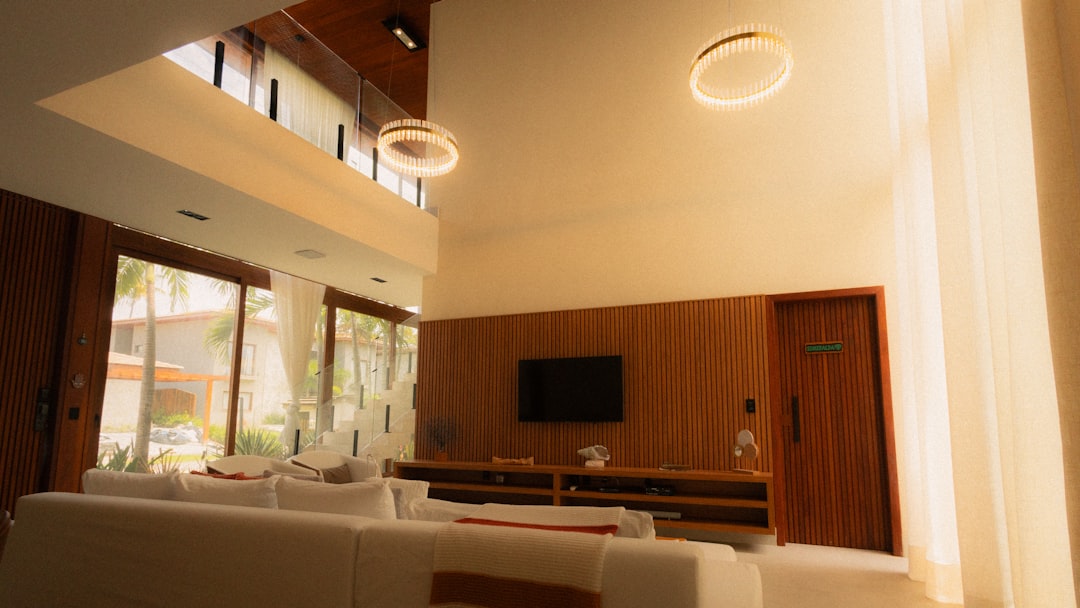
How High Ceilings Impact the Efficiency of Your Air Conditioning is a topic we discuss frequently with our clients because it directly affects their monthly energy bills and long-term comfort. A high ceiling creates a larger "bucket" of air that needs to be treated. If that bucket is also being heated by the sun, you need a larger "chiller" to keep up.
Why Ceiling Height and Sun Exposure Affect What Size AC You Need in Antelope Valley
In regions like Lancaster and Santa Clarita, the climate is unforgiving. We deal with high sensible heat—the heat you can feel on your skin—and intense radiation. When a room has high ceilings, you aren't just cooling 200 square feet; you might be cooling 2,400 cubic feet of air (if the ceiling is 12 feet high) instead of the standard 1,600 cubic feet (with an 8-foot ceiling).
Heat stratification is another major player. Since warm air naturally rises, it forms a thick layer of heat near the ceiling. In a room with high ceilings, this hot air stays trapped above the living level. However, as that heat builds up, it radiates back down and puts a massive thermal load on your AC system. If your system is sized for a flat 8-foot ceiling, it won't have the "tonnage" (cooling power) to overcome this constant downward pressure of heat.
Calculating the Impact of Sun Exposure on Your AC Sizing
Window orientation is one of the most critical variables in a professional load calculation. Not all windows are created equal:
- West-facing windows: These are the most taxing. They catch the intense afternoon sun when the outdoor temperature is already at its peak. This can require a 15–20% increase in BTU capacity for that specific room.
- South-facing windows: These receive consistent sunlight throughout the day. While not as aggressive as the afternoon west-facing sun, they still typically require a 10% BTU boost.
- North and East windows: These have a lower impact, but still contribute to the overall heat load.
If your home features large expanses of glass without Low-E coating, the sun exposure can effectively turn your living room into a greenhouse. Even if the square footage suggests a 1.5-ton unit, the afternoon solar spikes might push your actual requirement closer to 2 tons to maintain a steady 72°F when it's 110°F outside in Acton or Rosamond.
Beyond Square Footage: Adjusting BTUs for High Ceilings
To understand how to adjust your math, we have to look at the volume multiplier. The "20 BTUs per square foot" rule assumes an 8-foot ceiling. For every foot of ceiling height beyond that, the cooling load requirements typically rise by 10% to 15%.
BTU Comparison Table for Ceiling Heights
Room Size (Sq Ft)8ft Ceiling (Base)10ft Ceiling (+25% Vol)12ft Ceiling (+50% Vol)3006,000 BTUs7,500 BTUs9,000 BTUs4008,000 BTUs10,000 BTUs12,000 BTUs60012,000 BTUs (1 Ton)15,000 BTUs (1.25 Ton)18,000 BTUs (1.5 Ton)1,50036,000 BTUs (3 Ton)45,000 BTUs (3.75 Ton)54,000 BTUs (4.5 Ton)
As you can see, a 1,500 square foot home in Valencia with 10-foot ceilings needs nearly a full ton more cooling than the same size home with 8-foot ceilings. If you ignore this, your system will be chronically undersized. For a deeper look at these basics, check out our Guide to BTUs and What Size AC You Need.
The Consequences of Improper Sizing in Tall Rooms
Installing an undersized AC in a high-ceiling home is a recipe for frustration. The unit will run non-stop, struggling to reach the setpoint on your thermostat. This leads to:
- Compressor Strain: Constant operation wears out the most expensive part of your AC.
- High Energy Bills: An AC that never turns off is an AC that is draining your bank account.
- Uneven Cooling: You might find that the floor is cool, but at eye level, it remains uncomfortably warm.
Conversely, an oversized AC is just as bad. If you "guess high" and put a 5-ton unit in a space that only needs 3.5 tons, you’ll experience short cycling. This is when the AC turns on, blasts the room with cold air, and shuts off before it can remove the humidity. In places like Santa Clarita, where it can get sticky, you’ll end up with a home that is "cold and clammy" instead of crisp and comfortable.
Effective Room Volume vs. Floor Area
To get the sizing right, we look at the L×W×H formula (Length x Width x Height). This gives us the cubic volume.
- Vaulted Ceilings: If your ceiling slopes, we calculate the average height. For example, if it starts at 8 feet and peaks at 12 feet, we use 10 feet as the multiplier.
- Cathedral Peaks: These often create pockets of stagnant, hot air. Proper air mixing is required to ensure the AC can actually "reach" that air.
- Thermostat Placement: In rooms with high ceilings, where you place the thermostat is vital. If it's placed too low, it might turn off while the rest of the room is still hot. If it's near a sun-exposed window, it might run the AC forever.
Professional Load Factors: Manual J and Insulation Quality
While rules of thumb are helpful for a ballpark estimate, we always recommend a professional Manual J load calculation. This is the industry standard for determining the exact BTU needs of a specific home.
How Insulation and Windows Modify Your Cooling Load
Your home's "building envelope" acts as the barrier between the 110-degree Antelope Valley sun and your cool interior. Insulation is measured in R-values, which represent thermal resistance.
- Insulation impact: A difference in R-value can change energy use by roughly 3% for every R-1 increment. Moving from poor insulation (R-3) to modern standards (R-13 or higher) can reduce your cooling load by up to 30%.
- Double-pane windows: Upgrading to double-pane Low-E windows can cut solar gain from sun exposure by as much as 30%.
- Air Leakage: Even a perfectly sized AC will struggle if cool air is escaping through leaky ductwork or poor seals around windows and doors.
Why Manual J is Superior to Rules of Thumb
A Manual J calculation doesn't just look at square footage. It accounts for:
- Local Climate Data: Using specific design temperatures for Lancaster or Palmdale.
- Orientation: Which way the house faces (North vs. South).
- Occupancy: How many people live in the home (each person adds about 500 BTUs of heat).
- Appliances: Electronics and kitchen appliances contribute to the internal heat load.
- Ductwork Design: Ensuring the air can actually get to where it needs to go.
Precision sizing ensures your system runs for the optimal amount of time to dehumidify the air and maintain a steady temperature without wasting electricity.
Strategies to Improve Efficiency in Sunny or High-Ceiling Spaces
If you already have high ceilings or large windows, you don't necessarily have to replace your entire AC system to stay comfortable. There are several ways to mitigate the thermal load.
Leveraging Variable-Speed Technology and Zoning
For homes with open floor plans and varying ceiling heights, variable-speed technology (often called inverter compressors) is a game-changer. Unlike standard units that are either "on" or "off," variable-speed units can ramp up or down to match the exact cooling demand. This allows them to run at a lower, more efficient speed for longer periods, which is perfect for maintaining temperature stability in large, high-volume rooms.
Zoning systems are another excellent solution. By using dampers inside your ductwork, we can direct more cooling to the sun-exposed living room during the afternoon and shift that capacity to the bedrooms at night. This prevents you from having to over-cool the entire house just to make one "problem room" comfortable.
Simple Home Modifications to Reduce AC Load
- Ceiling Fans: Ensure your fans are rotating counterclockwise in the summer. This creates a wind-chill effect that can make you feel up to 4 degrees cooler, allowing you to raise the thermostat and save on energy costs.
- Thermal Curtains and Window Films: These are cost-effective ways to block solar radiation before it enters your home.
- Attic Insulation and Radiant Barriers: Since much of your sun exposure comes through the roof, a radiant barrier in the attic can reflect heat away from your living space.
- Landscaping: Planting shade trees on the west side of your home can naturally reduce the solar load on your windows.
Frequently Asked Questions about AC Sizing
How many extra BTUs are needed for every foot of ceiling height above 8 feet?
As a general rule, you should increase your BTU capacity by 10% to 15% for every foot of ceiling height above the standard 8 feet. For example, if a 400-square-foot room with 8-foot ceilings needs 8,000 BTUs, that same room with 10-foot ceilings would likely require 10,000 BTUs to account for the 25% increase in air volume.
How much does a west-facing window increase the required AC tonnage?
West-facing windows are responsible for the highest solar heat gain in the afternoon. Depending on the size of the glass and whether it has Low-E coating, you may need to add 15% to 20% more BTUs to that specific zone. In many Antelope Valley homes, a large expanse of west-facing glass can increase the total cooling load by half a ton (6,000 BTUs) or more.
What are the risks of installing an oversized AC unit in a sun-exposed room?
The biggest risk is short cycling. Because the unit is too powerful, it cools the air very quickly and shuts off before it can complete a full dehumidification cycle. This results in high indoor humidity, increased wear and tear on the compressor, and higher energy bills due to the frequent "starting" of the motor, which consumes the most power.
Conclusion
Determining the right AC size is about more than just floor space. In our unique California desert climate, factors like does ceiling height and sun exposure affect what size ac you need are the difference between a home that is truly comfortable and one that is a constant struggle to cool.
At Affordable Air and Heating, we have been serving the Antelope Valley since 1996. We understand the specific challenges of cooling homes in Palmdale, Lancaster, and Santa Clarita. Whether you are dealing with a vaulted "great room" that stays hot or you're planning a new installation, our team is here to provide precision sizing and energy-efficient solutions tailored to your home's unique design.