Why Knowing AC Contactor Failure Symptoms and What Causes It Could Save Your Cooling System
Understanding ac contactor failure symptoms and what causes it could be the difference between a quick, affordable fix and a full compressor replacement. In fact, research shows that 68% of compressor failures trace back to a single overlooked component — the AC contactor. For homeowners in the Antelope Valley, where summer temperatures routinely push past 100°F, a failing contactor isn't just an inconvenience. It's a system emergency.
Here's a quick overview of the most common AC contactor failure symptoms and their causes:
SymptomLikely CauseAC won't turn onOpen circuit, failed coil, or burnt contactsSystem runs non-stopWelded (stuck-closed) contactsHumming or buzzing noisesWeak magnetic coil or voltage instabilityChattering or rapid clickingVoltage fluctuations or loose connectionsWarm air despite unit runningPartial contact failure bypassing compressorVisible burn marks or pittingElectrical arcing and heat damage
The AC contactor is a small electromechanical switch inside your outdoor condenser unit. Its job is simple but critical: when your thermostat calls for cooling, the contactor closes to send power to the compressor and condenser fan. When the target temperature is reached, it opens to cut that power. It does this dozens of times a day — and over time, that constant switching takes a toll.
When the contactor starts to fail, the symptoms can appear suddenly and escalate fast. Burnt contacts that go unaddressed for just 30 days are linked to compressor failure in 72% of cases. That's an expensive outcome from a part that costs a fraction of what a new compressor does.
Below, we walk through the 6 most common warning signs your contactor is failing, what's causing each one, and what you should do about it.

Understanding the AC Contactor Failure Symptoms and What Causes It
To understand why your air conditioner is acting up, we first need to look at the "heart" of the electrical system: the electromechanical relay known as the contactor. Think of the contactor as a heavy-duty gatekeeper. While your thermostat works on low voltage (usually 24 volts), your compressor and condenser fan require high voltage (240 volts) to run. The contactor is the bridge that allows that low-voltage signal to "pull in" a magnetic coil, closing the gate and allowing the high-voltage power to flow.
In our neck of the woods—from the high desert of Lancaster and Palmdale to the canyons of Santa Clarita—our HVAC systems work harder than almost anywhere else in California. This constant cycling, combined with the intense Antelope Valley heat, accelerates the wear and tear on these electrical components. Before you assume the worst, it is often helpful to perform some AC Troubleshooting Before Calling a Pro, as many issues that look like a dead compressor are actually just a $50 part that has reached the end of its life.
However, ignoring the signs is dangerous. Statistics show that 68% of compressor failures are directly linked to contactor issues. When the contactor fails to provide a clean, steady flow of electricity, the compressor (the most expensive part of your AC) begins to overheat and eventually burns out.
6 Warning Signs Your AC Contactor is Failing
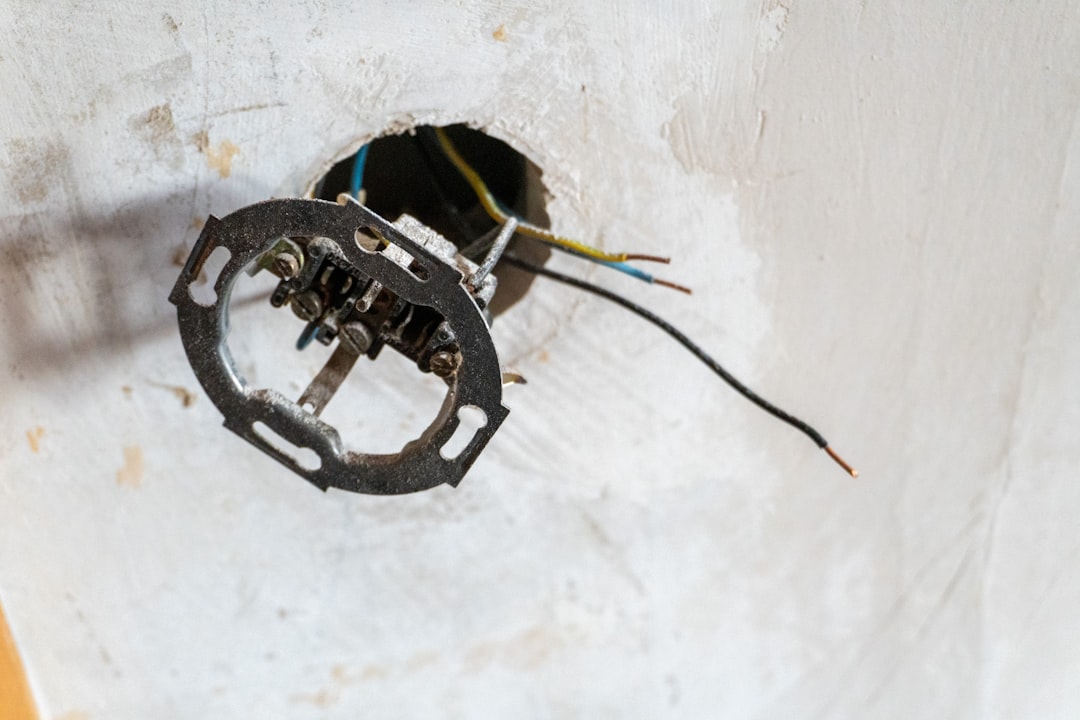
Recognizing a failing contactor early can save you from a hot house and a massive repair bill. Because the contactor is an electromechanical device, its failure symptoms are usually audible or visible if you know where to look.
FeatureHealthy ContactorFailing ContactorSoundSingle "click" on startupLoud humming, buzzing, or chatteringAppearanceClean, smooth silver contactsPitted, charred, or melted surfacesOperationStarts and stops with thermostatStays stuck on or refuses to click inAir TempConsistent cold airIntermittent cooling or warm air
If you notice any of the following HVAC Signs You Need Expert Help, it's time to shut down the system and give us a call.
1. Unusual Humming or Buzzing Noises
If your outdoor unit sounds like a swarm of angry bees, the contactor's magnetic coil is likely the culprit. When the thermostat sends a signal, electricity flows through a copper coil inside the contactor, creating a magnetic field that pulls the contacts shut.
If this coil is weakened by age or damaged by a voltage spike, it may struggle to hold the contacts in place. This struggle creates a 60-cycle hum or a loud buzzing sound. Sometimes, this noise is amplified by loose panel bolts or vibrations within the condenser cabinet. While a slight hum is normal for electrical equipment, a noise loud enough to hear from inside the house is a red flag. For more on sound-related issues, check out our guide on AC Fan Problems & Solutions.
2. Chattering or Rapid Clicking Sounds
A "chattering" contactor sounds like a machine gun firing rapidly. This happens when the contactor is rapidly opening and closing because it can't maintain a solid electrical connection. This is often caused by:
- Voltage Fluctuations: If the power coming into your home in Santa Clarita or Rosamond is unstable, the coil may "drop out" and "pull in" repeatedly.
- Weak Pull-In: A degrading coil lacks the strength to snap the contacts shut and keep them there.
- Debris: Small pebbles, sticks, or even dried-up insects can get stuck between the armature and the core, preventing a flush connection.
This chattering is incredibly destructive. Every time those contacts bounce, they create a tiny electrical arc (a spark) that reaches temperatures over 3,000°F, literally melting the metal surfaces. If your unit is clicking but won't stay on, see our AC Won't Turn On Solutions Santa Clarita page for more help.
3. The AC Unit Won't Turn On
This is the most common call we get during a Lancaster summer. You lower the thermostat, you hear the indoor blower kick on, but the outdoor unit remains silent.
When a contactor coil burns out completely, it creates an "open circuit." No matter how much the thermostat "calls" for cooling, the magnetic gate won't move. However, before blaming the contactor, it’s wise to rule out other issues. Sometimes the problem is as simple as a dead battery in the wall unit; you can find tips for this in our AC Thermostat Troubleshooting in Lancaster guide. If the thermostat and capacitors are fine, the contactor is almost certainly the "dead link" in your power chain.
4. The System Runs Continuously
On the flip side, a contactor can fail by getting "stuck" in the closed position. This is known as "welding." Because the electrical arcing mentioned earlier creates so much heat, the silver-cadmium contacts can actually melt together.
When this happens, the compressor and outdoor fan will continue to run even after your home has reached the desired temperature. You might notice the house getting uncomfortably cold, or you might just see a massive spike in your energy bill. This is a serious safety risk and can lead to the evaporator coil freezing over or the compressor failing from overwork. If your unit won't stop, you may need to Fix AC Short Cycling Lancaster or address a welded contactor immediately.
5. Visible Pitting, Charring, or Burnt Contacts
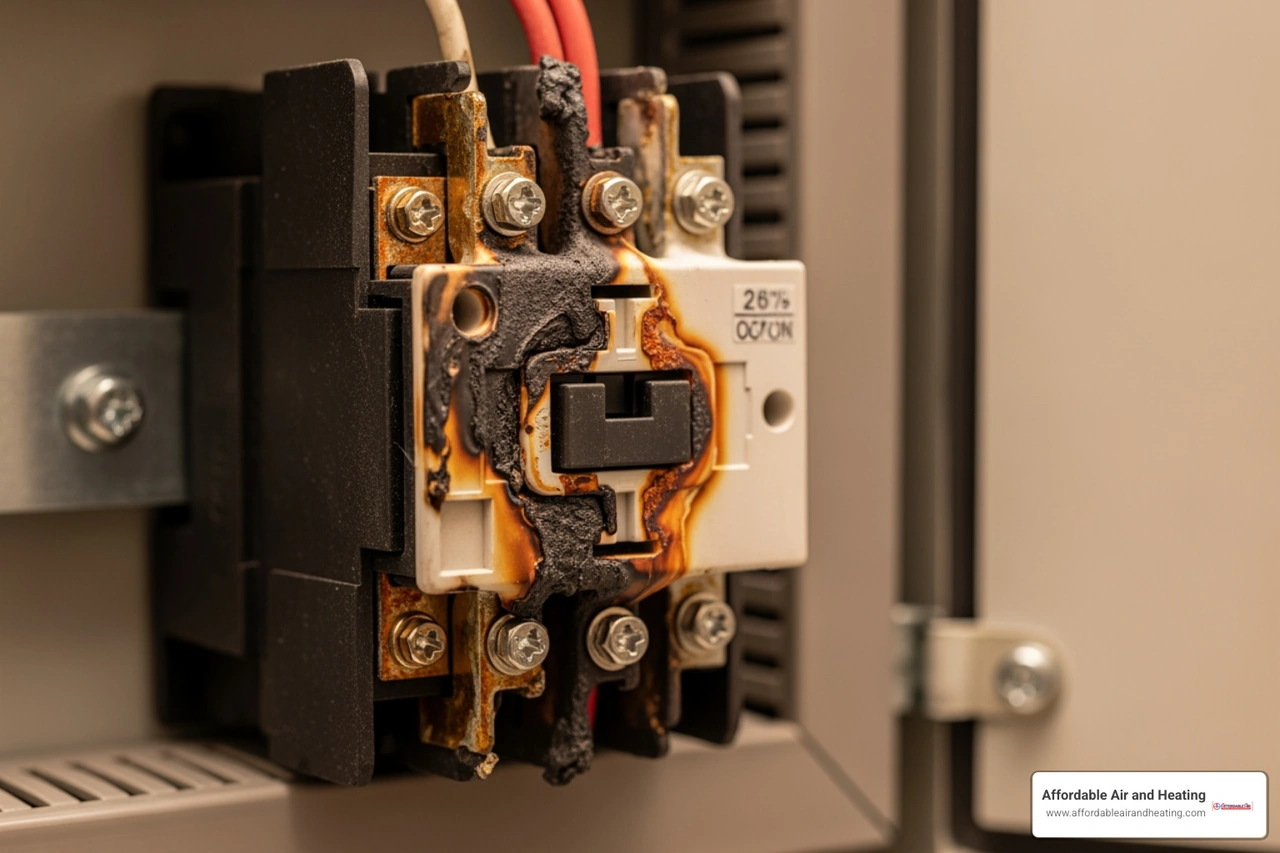
If you were to look inside the contactor, a failing one often looks like it’s been in a small fire. Over years of use, the thousands of "starts" create "pitting"—tiny craters on the metal surface.
As these pits grow, they create resistance. Resistance creates heat. Eventually, you’ll see black carbon deposits (charring) or even melted plastic around the terminals. Once pitting covers more than 50% of the contact surface, the part is a "ticking time bomb." This resistance prevents the full amount of electricity from reaching the compressor, which is a leading reason for an AC Not Cooling Properly Palmdale.
6. Blowing Warm Air Despite the Unit Running
Sometimes a contactor fails "partially." It might have enough strength to pull in the fan motor, but the contacts for the compressor are so charred that they aren't passing enough current to start the motor.
In this scenario, you’ll hear the outdoor fan spinning, but the compressor—the part that actually cools the air—is sitting idle. The result is air that feels "room temperature" or slightly warm blowing from your vents. While this can also be a sign of a leak, it’s often an electrical failure. You can learn how to Detect Refrigerant Leaks AC Units to rule that out, but a technician should always check the contactor first.
Primary Causes of Electrical and Mechanical Failure
Now that we know the symptoms, we have to ask: what causes ac contactor failure? It’s rarely just one thing, but rather a combination of environmental and electrical factors.
- Antelope Valley Heat & Overwork: In places like Palmdale and Acton, AC units cycle much more frequently than in coastal areas. This mechanical wear and tear eventually wears down the springs and contacts.
- Electrical Surges & Voltage Spikes: A sudden surge from a summer thunderstorm or a grid fluctuation can "cook" the delicate copper windings in the contactor coil.
- Dirt, Dust, and Insects: This is a big one for us in the high desert. Dust and sand can get into the mechanical tracks of the contactor, causing it to jam. Even worse, ants and spiders are attracted to the electromagnetic field. We’ve seen many contactors fail because a single ant got squashed between the contacts, preventing a connection.
- Moisture and Corrosion: While we live in a dry climate, morning dew or a nearby sprinkler can cause the terminals to rust. If you've had issues with moisture, you might also want to check What to Do If You Notice Mold Growth on Your AC Unit.
- Age: Most contactors are rated for about 100,000 cycles. Depending on how you use your AC, that could be 5 years or 15 years.
The risks of ignoring these causes are high. Faulty contacts contribute to roughly 15-20% of all HVAC-related electrical fires according to the NFPA. Furthermore, if you ignore charred contacts, there is a 72% chance your compressor will fail within just 30 days.
Troubleshooting and Preventive Maintenance
The best way to deal with contactor failure is to catch it before it happens. This is why we emphasize the importance of an AC Tune-Up Maintenance in Canyon Country CA. During a professional tune-up, we don't just look at the filters; we deep-dive into the electrical cabinet.
We also check how the contactor interacts with other parts of the system, such as ensuring How the Thermostatic Expansion Valve Works in a Cooling System to maintain proper pressure, which reduces the load on the compressor and the contactor alike.
Identifying AC Contactor Failure Symptoms and What Causes It During Inspection
When we arrive for a service call in Valencia or Saugus, our technicians follow a strict safety and diagnostic protocol:
- Visual Inspection: We look for "pitting," silver-melt, or "blackening" of the contact points.
- Multimeter Testing: We measure the resistance of the coil. If the multimeter shows "OL" (Open Line), the coil is dead. We also check the voltage drop across the contacts; a drop of more than 10% indicates the part needs immediate replacement.
- Mechanical Test: With the power off, we manually depress the contactor to ensure it moves smoothly without sticking.
- Tightening Terminals: Heat causes metal to expand and contract, which can loosen wire connections over time. We ensure every lug is torqued to spec to prevent arcing.
Common Questions Regarding AC Contactor Failure Symptoms and What Causes It
Can a bad contactor damage my compressor?Absolutely. If the contactor provides "dirty" power or chatters, it causes the compressor motor to overheat. This breaks down the internal insulation and eventually leads to a "grounded" compressor, which usually requires a full system replacement.
How often should I have my contactor inspected?In the Antelope Valley, we recommend a professional inspection at least once a year—ideally in the spring before the triple-digit heat hits. If you live in a particularly dusty area like Antelope Acres, twice a year is even better.
Can I replace an AC contactor myself?While the part itself is relatively inexpensive, we strongly advise against DIY replacement. AC units hold a massive electrical charge, even when the breaker is off (thanks to the capacitors). One wrong move can lead to severe electrical shock or a fire. Plus, using the wrong "amp-rated" contactor can destroy your fan motor or compressor instantly.
Conclusion
Your AC contactor might be small, but it carries the heavy burden of keeping your home cool during our fierce California summers. By staying alert for humming noises, clicking sounds, and visible wear, you can stop a minor electrical glitch from turning into a major mechanical disaster.
At Affordable Air and Heating, we’ve been family-owned and operated since 1996. We understand the specific challenges that homeowners in Santa Clarita, Lancaster, and Palmdale face. Our goal is always to provide energy-efficient, affordable solutions that keep your family comfortable without breaking the bank. Don't let a $50 part take down your entire cooling system this summer.
If you suspect your AC is struggling, don't wait for the "burnout." Schedule your professional air conditioning service today and let our expert team ensure your system is safe, efficient, and ready for the heat!