Why Is Your Antelope Valley Summer Electric Bill So High?
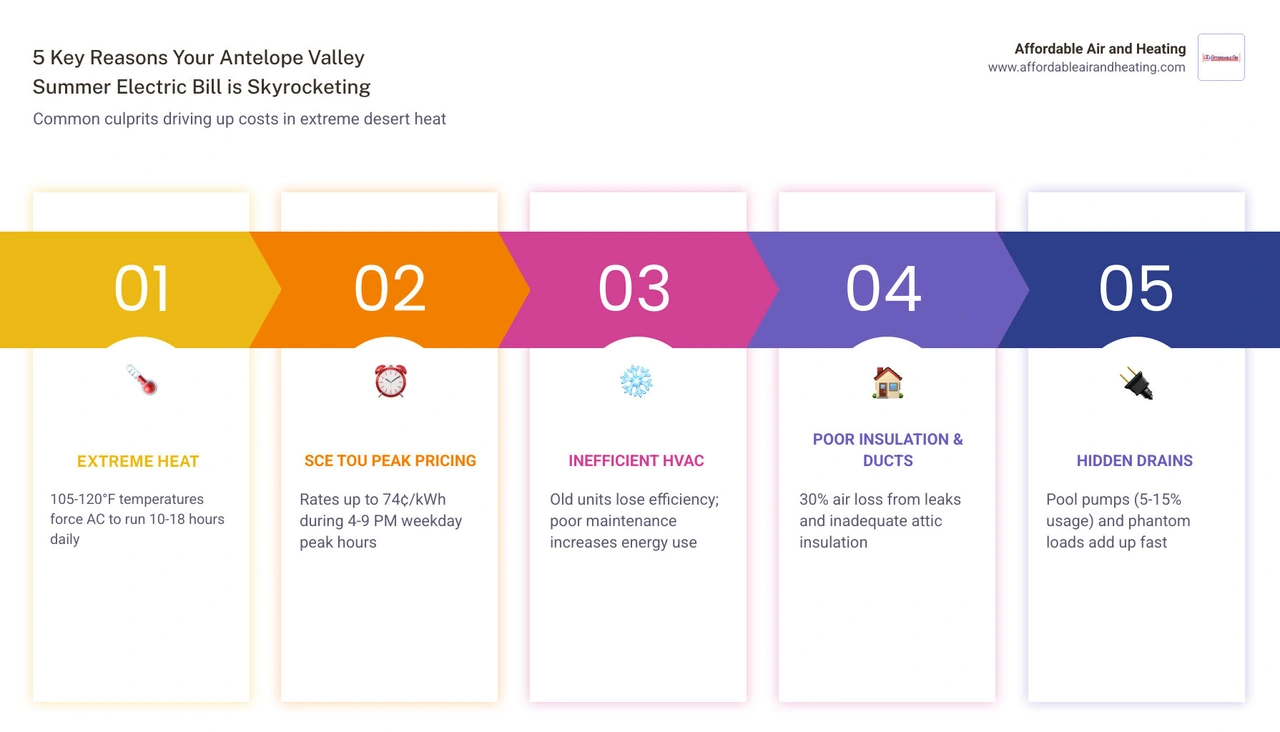
If you're wondering why is my electric bill so high in an antelope valley summer, you're far from alone. Here's a quick breakdown of the most common reasons:
Top reasons your Antelope Valley summer electric bill is sky-high:
- Extreme heat - Triple-digit temperatures force your AC to run 10 or more hours a day
- SCE Time-of-Use (TOU) pricing - Peak rates during afternoon and evening hours multiply your costs fast
- Inefficient HVAC systems - Older or poorly maintained AC units work harder and use more energy
- Poor home insulation and duct leaks - Conditioned air escapes before it ever cools your home
- Pool pumps and phantom loads - Hidden energy drains quietly add up on your bill every day
- Ongoing SCE rate increases - SCE has raised rates multiple times since 2020
- No assistance programs enrolled - Many qualifying households miss out on significant discounts
Antelope Valley summers are brutal. Temperatures regularly push past 105°F, and during excessive heat warnings, your air conditioner doesn't get a break. When that kind of heat combines with Southern California Edison's rate structure, the results can be shocking.
Real Antelope Valley residents have reported bills that jumped by hundreds of dollars in a single month. One KTLA viewer from the area saw her bill hit $900 — leaving her struggling to afford groceries. Others reported bills ranging from $600 to over $1,100 in peak summer months. These aren't outliers. They're what happens when desert heat meets high electricity rates.
The good news is that most of the causes are identifiable — and many are fixable.
Why is my electric bill so high in an antelope valley summer?
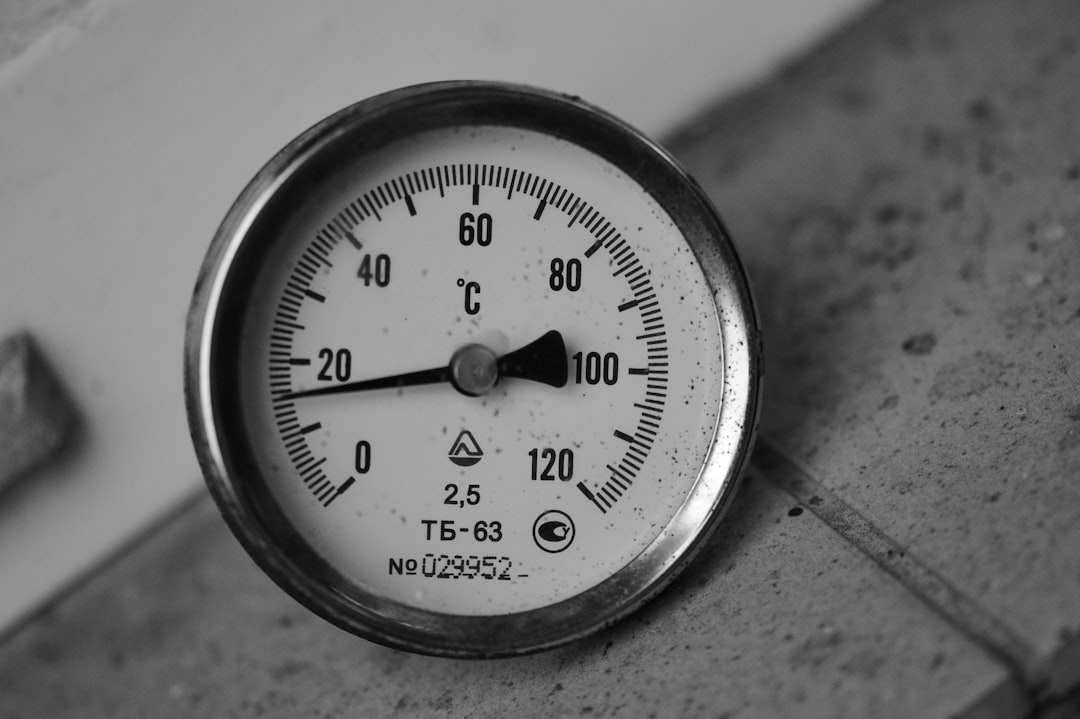
The primary culprit is the sheer intensity of our desert climate. In cities like Palmdale and Lancaster, 105-120°F heat isn't just a "hot day"—it’s a sustained environmental challenge for your home. When excessive heat warnings are issued for days on end, your home absorbs an incredible amount of thermal energy.
This creates a massive "cooling load." In these conditions, air conditioners often run for 10 to 18 hours daily just to maintain a livable temperature. In fact, in desert regions similar to the Antelope Valley, air conditioning typically accounts for 50% to 75% of a home's total energy usage during the peak of summer. If your AC is not cooling properly in Palmdale, it may run 24/7 without ever hitting the setpoint, leading to a catastrophic spike in your kilowatt-hour (kWh) consumption.
Why is my electric bill so high in an antelope valley summer when using AC?
Even if you set your thermostat to a reasonable 78 degrees, your bill can still skyrocket if the system isn't operating at peak efficiency. Small issues become big financial drains when the unit runs all day. For example, a clogged air filter restricts airflow, forcing the blower motor to work harder and stay on longer.
Regular maintenance is the best defense against this. We often find that an AC tune-up in Canyon Country can identify minor refrigerant leaks or electrical issues before they cause your bill to double. When you detect AC issues early, you prevent the system from "slugging" through the heat and wasting electricity.
Why is my electric bill so high in an antelope valley summer on a TOU plan?
It’s not just how much energy you use, but when you use it. Southern California Edison (SCE) has transitioned most residential customers to Time-of-Use (TOU) plans. On these plans, electricity is significantly more expensive during "peak" hours—typically 4–9 PM or 5–8 PM on weekdays.
Unfortunately, this is exactly when the Antelope Valley heat is at its most oppressive and when families come home to cook, do laundry, and turn down the AC. If you aren't actively shifting your heavy energy usage to morning or late-night hours, you are paying a massive premium for every minute your AC runs in the late afternoon. Learning ways to reduce your monthly utility bills often starts with mastering this timing.
Understanding SCE Time-of-Use (TOU) Rates in 2026
As of May 2026, navigating your SCE bill requires understanding the current rate landscape. While SCE implemented a minor average rate decrease in January 2026 (bringing the average residential rate to approximately 34.5¢/kWh), this "average" is deceptive. During summer peak windows, you could be paying as much as 74¢/kWh.
Rate Period (Summer Weekdays)Estimated SCE Rate (per kWh)Peak (4 PM – 9 PM)58¢ – 74¢Off-Peak (All other times)24¢ – 31¢
Note: Rates are based on 2026 SCE advisory data and vary by specific plan.
The "Climate Credit" applied in April and October helps slightly, but it doesn't offset the daily penalty of running a high-tonnage AC unit during a July heatwave. This is why many residents find that they need to plan for a new AC installation in Palmdale that features a higher SEER2 rating, which can handle the heat using far less raw wattage.
Inefficient HVAC Systems and Poor Home Insulation
If your air conditioner is more than 12–15 years old, it is likely costing you hundreds of dollars in "efficiency tax" every summer. Older units lose roughly 20-30% of their original efficiency over their lifespan due to wear and tear. Knowing how long your HVAC system will last is key to financial planning; in the desert, systems age faster because they work harder.
When you're deciding when to get a new AC system installed, consider that modern units are designed for the current high-rate environment. If you find yourself constantly calling for repairs, it might be time for an AC replacement. Continuing to patch up a "zombie" unit often results in higher total costs than simply upgrading to a high-efficiency model.
Beyond the machine itself, your home's "envelope" plays a huge role.
- Duct Leakage: In many Antelope Valley homes, leaky ducts in the attic can lose up to 30% of your conditioned air before it reaches your living room. You're essentially paying to cool your attic.
- Insulation: If your attic insulation has settled or is insufficient, the 140°F heat in your attic will radiate through the ceiling. This is especially problematic in homes with high ceilings. High ceilings impact AC efficiency because they create a larger volume of air to cool, making any insulation deficiency much more obvious on your bill.
- Windows: Single-pane windows act like heaters in the summer. Solar heat gain through west-facing glass can raise room temperatures by 10 degrees in a single hour.
Investing in regular HVAC maintenance can help identify these "invisible" thieves, but sometimes the only solution is knowing when your AC needs replacement and upgrading to a system that can fight back against poor insulation.
Hidden Energy Drainers: Pool Pumps and Phantom Loads
In Lancaster and Palmdale, a backyard pool is a lifesaver, but the equipment can account for 5% to 15% of your total energy bill. Older, single-speed pool pumps are notorious energy hogs. If you run your pool filter during peak TOU hours (4–9 PM), you are paying the highest possible price to move that water. Switching to a variable-speed pump and scheduling filtration for the early morning can save significant money.
Then there are "phantom loads"—the energy used by electronics in standby mode. While $5 here and there doesn't seem like much, the combined "vampire load" of computers, kitchen appliances, and entertainment centers can add $100–$200 to your annual costs. Smart plugs can help cut power to these devices automatically.
Lastly, don't forget the heat generated inside your home. Incandescent light bulbs are essentially small heaters. Switching to LEDs reduces the heat your AC has to fight. And while it's tempting to try and save money by opening windows at night, in the high desert, the outdoor temperature often stays above 80°F until long after midnight, which can actually bring more humidity and dust into your system. This leads to issues like clogged drains and water leaks or loud, straining noises from your AC as it struggles to recover the next morning.
Assistance Programs and Long-Term Savings Solutions
If you are struggling to keep up with skyrocketing bills, there are several California programs designed to help:
- CARE (California Alternative Rates for Energy): Provides a 20-35% discount on electric bills for income-qualified households.
- FERA (Family Electric Rate Assistance): Offers an 18% discount for larger households that slightly exceed CARE income limits.
- Medical Baseline: If someone in your home has a medical condition requiring electrically powered equipment (including AC for certain conditions), you can receive a larger baseline of energy at the lowest available rate.
- ESA (Energy Savings Assistance): Provides no-cost weatherization services, which may include attic insulation or even HVAC upgrades for qualified residents.
For long-term relief, many Antelope Valley homeowners are looking toward solar panels and battery storage. Under the current NEM 3.0 rules, export credits for solar are lower, which makes battery storage essential. By storing solar energy during the day and using it during the 4–9 PM peak window, you can avoid the 74¢/kWh "penalty" hours entirely.
Smart thermostats are another high-ROI upgrade. They allow you to "pre-cool" your home at 2 PM when rates are lower, so the AC doesn't have to work as hard when the peak pricing kicks in at 4 PM. This prevents the system from overworking, which is a common cause of why an AC won't turn on in Santa Clarita or why an AC might freeze up due to restricted airflow during a heatwave.
Frequently Asked Questions about Antelope Valley Electric Bills
What are the peak hours for SCE in the summer?
For most residential customers on TOU plans, peak hours are 4 PM to 9 PM or 5 PM to 8 PM on weekdays. During these windows, the price per kilowatt-hour is at its highest because the grid is under maximum stress. Shifting activities like laundry, dishwashing, and heavy cooling to "off-peak" hours (before 4 PM or after 9 PM) is the fastest way to see a lower bill.
Can I switch from a Time-of-Use plan to a tiered rate plan?
Yes, SCE typically allows customers to switch rate plans once every 12 months. A tiered rate plan (standard billing) doesn't care when you use power, only how much you use in total. For households that cannot avoid using the AC in the late afternoon (such as those with seniors or young children at home), a tiered plan might provide more billing stability, though the "Tier 2" rates for high usage can still be expensive. Use the SCE rate comparison tool on their website to see which plan would have cost you less based on your last 12 months of data.
Why did my bill increase even though I used less electricity?
This is a common frustration. It usually happens because of "fixed" rate hikes. SCE has raised rates significantly to cover wildfire mitigation costs, grid hardening, and infrastructure upgrades. Additionally, if you reduced your usage but did so during off-peak hours while continuing to use power during peak TOU windows, the higher cost-per-unit could still result in a higher total bill. Transmission costs and state-mandated renewable energy investments also play a role in the rising "base" cost of electricity in California.
Conclusion
The Antelope Valley summer is an endurance test for both your home and your wallet. Between the record-breaking triple-digit heat and the complex TOU rate structures from Southern California Edison, it’s no wonder so many residents are shocked when they open their summer utility statements.
At Affordable Air and Heating, we’ve been family-owned since 1996, and we understand the unique challenges of living in Palmdale, Lancaster, and the surrounding Santa Clarita Valley. Whether you need a precision tune-up to squeeze more efficiency out of your current unit or you're ready to explore energy-efficient replacements that qualify for financing, we are here to help you take control of your comfort and your costs.
Don't let the next heatwave catch you off guard. Contact our experts for professional air conditioning services today and start saving on your monthly utilities.