Why Desert Maintenance Is Critical for Your Mini Split
Knowing how to maintain a ductless mini split in a hot dusty desert climate can mean the difference between a system that lasts 15-20 years and one that fails prematurely — and in the Antelope Valley, where summer temperatures routinely push past 100°F, that knowledge matters more than almost anywhere else. Desert air carries fine silica particles and mineral dust that clog filters, coat coils, and grind away at components far faster than in milder climates. Without the right maintenance routine, your mini split works harder, uses more energy, and wears out sooner.
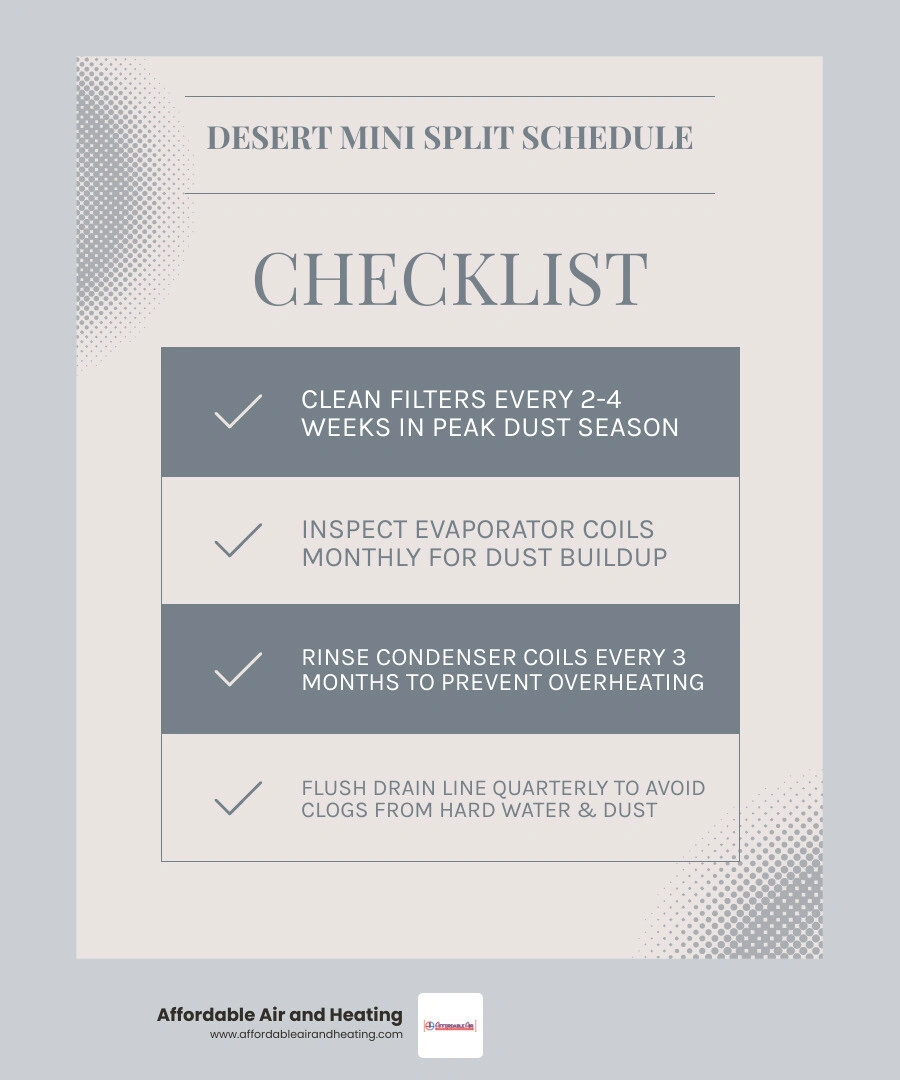
Here is a quick overview of the core maintenance tasks desert homeowners need to stay on top of:
| Task | Desert Frequency | Why It Matters |
|---|---|---|
| Clean or replace filters | Every 2-4 weeks (peak season) | Dust clogs filters faster than in other climates |
| Clean indoor evaporator coils | Monthly inspection, clean as needed | Dust buildup reduces heat transfer and cooling output |
| Rinse outdoor condenser coils | Every 3 months | Prevents compressor overheating in extreme heat |
| Flush condensate drain line | Quarterly | Hard water and dust cause clogs |
| Clear debris around outdoor unit | After every dust storm | Maintains proper airflow |
| Professional tune-up | Once or twice per year | Refrigerant, electrical, and efficiency checks |
The stakes are real. A dirty filter alone restricts airflow enough to raise energy consumption noticeably, and in triple-digit desert heat, a strained compressor can fail when you need cooling most. Preventative maintenance can reduce emergency service calls by up to 70% — a significant benefit for any Antelope Valley household running their mini split hard through a long, brutal summer.
The sections below walk you through every step of a desert-optimized maintenance routine, from filter cleaning to monsoon prep to knowing when it is time to call a professional.
Living in places like Lancaster or Palmdale means your HVAC system faces unique geological enemies. Unlike the soft, organic dust found in humid regions, desert dust is largely composed of tiny, sharp silica particles. These abrasive fragments don't just sit on surfaces; they act like sandpaper on moving parts and create an insulating blanket on your coils.
When dust coats the evaporator coil (the indoor part) or the condenser coil (the outdoor part), it interferes with heat transfer. Your refrigerant can’t dump heat outside or soak up heat inside effectively. This leads to longer run times, higher electricity bills, and eventually, compressor strain. Following Ductless AC Maintenance Best Practices is the only way to ensure these abrasive particles don't cut your system's life short.
How to Maintain a Ductless Mini Split in a Hot Dusty Desert Climate: The Filter Routine
In a desert environment, your air filters are your first line of defense, but they are also the first things to fail. While standard advice in other states might suggest cleaning filters every three months, the Antelope Valley demands a much more aggressive schedule. During peak dust season—typically April through June—you should check and clean your mini split filters at least twice monthly.
The Desert Filter Cleaning Process
- Power Down: Always turn off the unit via the remote and the circuit breaker before opening the casing.
- Access the Filters: Lift the front panel of the indoor air handler. You will usually see two mesh screens.
- Vacuum First: Use a handheld vacuum or a brush attachment to remove the heavy layer of desert grit. This prevents the dust from turning into mud when it hits water.
- Wash Gently: Rinse the filters under lukewarm water. If they are particularly greasy (common in kitchen-adjacent units), use a drop of mild dish soap.
- Dry Completely: This is critical. Never put damp filters back into the unit, as this can lead to mold growth. In our dry heat, they should air-dry quickly.
- Reinstall: Slide them back into place and snap the cover shut.
Maintaining these filters is about more than just equipment health; it’s about indoor air quality. Desert residents often suffer from allergies or respiratory issues exacerbated by fine particulates. By keeping your filters clean, you ensure your Mini Split Maintenance Palmdale CA routine is actually protecting your family's lungs. For those with high sensitivity, consider using specialized high-MERV filters designed to trap micro-fine silica dust, though you must ensure your specific model is rated for the increased airflow resistance.
Step-by-Step Guide to Cleaning Indoor and Outdoor Units

Beyond the filters, the units themselves need a deeper cleaning to combat the "sticky" nature of desert dust. In arid regions, dust often mixes with trace amounts of humidity or oils to form a film on the coils.
Cleaning the Indoor Unit (Evaporator)
The indoor unit houses the evaporator coils and the blower fan. If the fan gets weighed down by dust, it won't spin at the correct RPM, leading to poor airflow and "hot spots" in your room.
- Wipe the Exterior: Use a damp microfiber cloth to wipe the louvers and the casing.
- Inspect the Coils: With the filters removed, look at the blue-tinted fins. If you see a grey "fuzz," they need cleaning.
- Use a Soft Brush: Gently brush the fins in a vertical motion. Never brush horizontally, as the fins are delicate and will bend easily.
Cleaning the Outdoor Unit (Condenser)
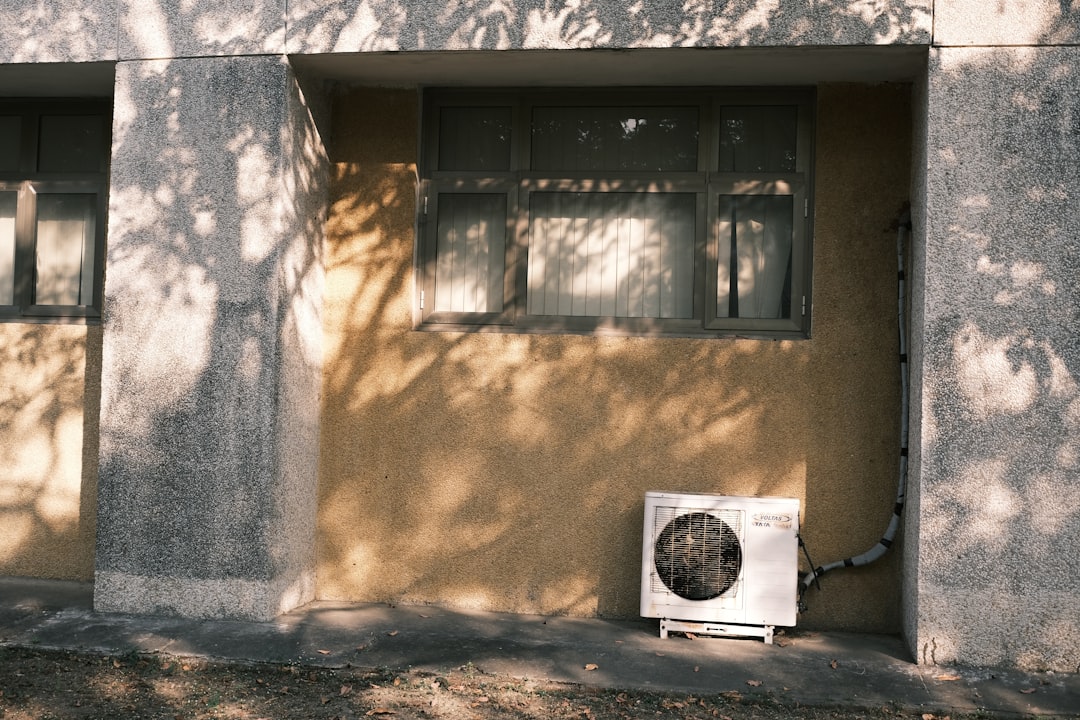
The outdoor unit is the workhorse that bears the brunt of Santa Ana winds and summer heat. It needs at least two feet of clearance from desert scrub, weeds, or storage items to breathe properly.
- Clear Debris: Remove any dried tumbleweeds or sand drifts accumulated around the base.
- Gentle Hosing: Turn off the power at the outdoor disconnect box. Use a garden hose with a gentle spray (no pressure washers!) to rinse the coils from the inside out if possible, or at a downward angle from the outside. This washes away the silica buildup that prevents the unit from shedding heat.
- Straighten Fins: If you notice bent fins from wind-blown debris, use a fin comb to carefully realign them.
For more detailed walkthroughs on keeping your system running in top shape, check out our Mini Split Maintenance Tips Palmdale guide.
Managing Condensate Drains and Hard Water Issues
One of the most overlooked aspects of how to maintain a ductless mini split in a hot dusty desert climate is the drainage system. Mini splits pull moisture out of the air, which then drips into a pan and out a drain line. In the desert, two things happen:
- Dust Mud: Fine dust gets into the drain pan, mixes with water, and creates a thick sludge that clogs the line.
- Mineral Deposits: The Antelope Valley is known for hard water. Over time, mineral scale can build up in the drainage exit.
To prevent water from backing up and leaking down your interior walls, perform a quarterly vinegar flush. Pour about a cup of distilled white vinegar into the condensate pan (located under the filters). The acidity helps break down algae, "dust mud," and mineral deposits. If you already have a clog, a wet/dry vac applied to the exterior end of the drain line can often suck out the obstruction. For a deeper dive into preventing leaks, see our guide on Mini Split Drainage Maintenance Palmdale.
Maximizing Efficiency During Extreme Desert Heat and Monsoons
When the thermometer hits 110°F in Santa Clarita or Lancaster, your mini split is fighting an uphill battle. Most standard units are rated for full capacity up to 115°F. Once it gets hotter, the compressor has to "ramp down" to protect itself from melting, which means you get less cooling exactly when you need it most.
Shading and High-Ambient Ratings
If you haven't installed a system yet, look for "high-ambient" models. These are specifically engineered to maintain their full BTU output even when outdoor temperatures hit 130°F. If you already have a system, providing shade to the outdoor unit can lower the immediate surrounding temperature by several degrees, significantly reducing the workload on the compressor. Just ensure the shading structure (like an awning or lattice) doesn't block the unit's exhaust airflow.
| Feature | Standard Mini Split | High-Ambient Desert Model |
|---|---|---|
| Full Cooling Capacity | Up to 115°F | Up to 130°F |
| Compressor Efficiency | Drops sharply above 105°F | Optimized for 110°F+ |
| Lifespan in Desert | 10-12 years (if neglected) | 15-20 years (with care) |
To save on your utility bills, try to keep your thermostat at a steady 78°F. We know it sounds warm, but in the desert, every degree you raise the thermostat can save you up to 3% on cooling costs. You can find more strategies in our article on how to Maximize Mini Split Efficiency.
How to Maintain a Ductless Mini Split in a Hot Dusty Desert Climate During Monsoon Season
Monsoon season (July through September) brings a double whammy: sudden humidity and violent dust storms. Humidity makes your mini split work harder to "dehumidify" the air before it can actually lower the temperature. Use the "Dry Mode" on your remote during these weeks to prioritize moisture removal without over-cooling the room.
Dust storms (haboobs) can pack the outdoor unit's fins with sand in a matter of minutes. After any significant wind event, inspect the outdoor unit immediately. Additionally, monsoons often bring lightning. We highly recommend installing a dedicated surge protector for your mini split to prevent the sensitive inverter boards from being fried during a desert thunderstorm. If your unit starts acting strange after a storm, you may need to Troubleshoot Mini Split Errors to see if a sensor was triggered or a fuse was blown.
When to Call a Professional for Your Antelope Valley System
While homeowners can handle filters and basic cleaning, some tasks require the specialized tools and training of an HVAC professional. In the Antelope Valley, a professional tune-up once or twice a year is a non-negotiable investment.
A professional technician from Affordable Air and Heating will perform tasks you simply can't do at home, such as:
- Refrigerant Charge Check: Desert heat puts immense pressure on lines. Even a tiny leak can cause the system to freeze up or the compressor to burn out.
- Electrical Tightening: Heat causes wires to expand and contract, which can loosen connections over time, leading to shorts or fires.
- Deep Coil Cleaning: We use specialized, non-acidic foaming cleaners that penetrate deep into the fins to dissolve the silica film that a garden hose can't touch.
- Blower Wheel Cleaning: If the internal fan wheel is caked in dust, it requires disassembly to clean—a job that is very easy to mess up if you aren't trained.
Regular professional care ensures your system reaches that 20-year lifespan goal. If you are in Lancaster, Palmdale, or surrounding areas, our Mini Split Services Lancaster CA are designed specifically for our local climate challenges.
Troubleshooting Common Desert Issues and How to Maintain a Ductless Mini Split in a Hot Dusty Desert Climate
Even with the best care, the desert can be tough on machinery. Here are some common "red flags" to watch out for:
- Short Cycling: If your unit turns on and off every few minutes, it might be overheating due to dirty coils or a failing sensor.
- Coil Freezing: It sounds impossible when it's 105°F outside, but if airflow is restricted (dirty filters) or refrigerant is low, the indoor coils can actually turn into a block of ice.
- Reduced Output: If the air coming out isn't "ice cold," your outdoor unit is likely struggling to shed heat because it's choked with dust.
- Strange Sounds: Grinding or squealing often points to dust getting into the motor bearings. If you hear something off, check out our guide on Troubleshooting Mini Split Noises.
Frequently Asked Questions about Desert Mini Split Care
How often should I clean my filters in a dusty climate?
During the height of the windy season (April-June), you should check them every two weeks. For the rest of the year, once a month is usually sufficient. If you have pets or live near an open desert lot, err on the side of more frequent cleaning.
Can I use a pressure washer to clean my outdoor unit?
No! Never use a pressure washer. The fins on a mini split condenser are extremely thin and fragile. The high pressure will flatten them instantly, permanently blocking airflow and requiring an expensive coil replacement. A standard garden hose with a gentle spray is all you need.
Why is my mini split freezing up when it is 110°F outside?
This is almost always caused by a lack of airflow or a refrigerant leak. When the air can't pass over the coils fast enough (due to a dirty filter or dust-clogged fins), the refrigerant stays too cold and freezes the condensation on the coil. Turn the unit off, let it melt, clean your filters, and call us to check your refrigerant levels.
Conclusion
Maintaining a mini split in the Antelope Valley isn't just about comfort; it's about protecting one of your home's most important investments. By staying diligent with your filter routine, keeping your outdoor unit clear of desert debris, and managing the unique challenges of hard water and monsoon humidity, you can enjoy efficient, reliable cooling even on the hottest July afternoons.
At Affordable Air and Heating, we’ve been family-owned and operated since 1996. We understand the specific grit and heat of the High Desert because we live here too. Whether you need a mid-summer rescue or a preventative tune-up to keep your energy bills low, we are here to help. We serve Acton, Castaic, Lancaster, Palmdale, Santa Clarita, and all surrounding communities with affordable, energy-efficient solutions.
Don't let the desert dust win. Schedule your professional mini split maintenance today and keep your home a cool oasis all year long.