How to Prepare Your Outdoor AC Unit for Winter Inactivity


Approaching the Fall Transition: Protecting Your Condenser the Right Way
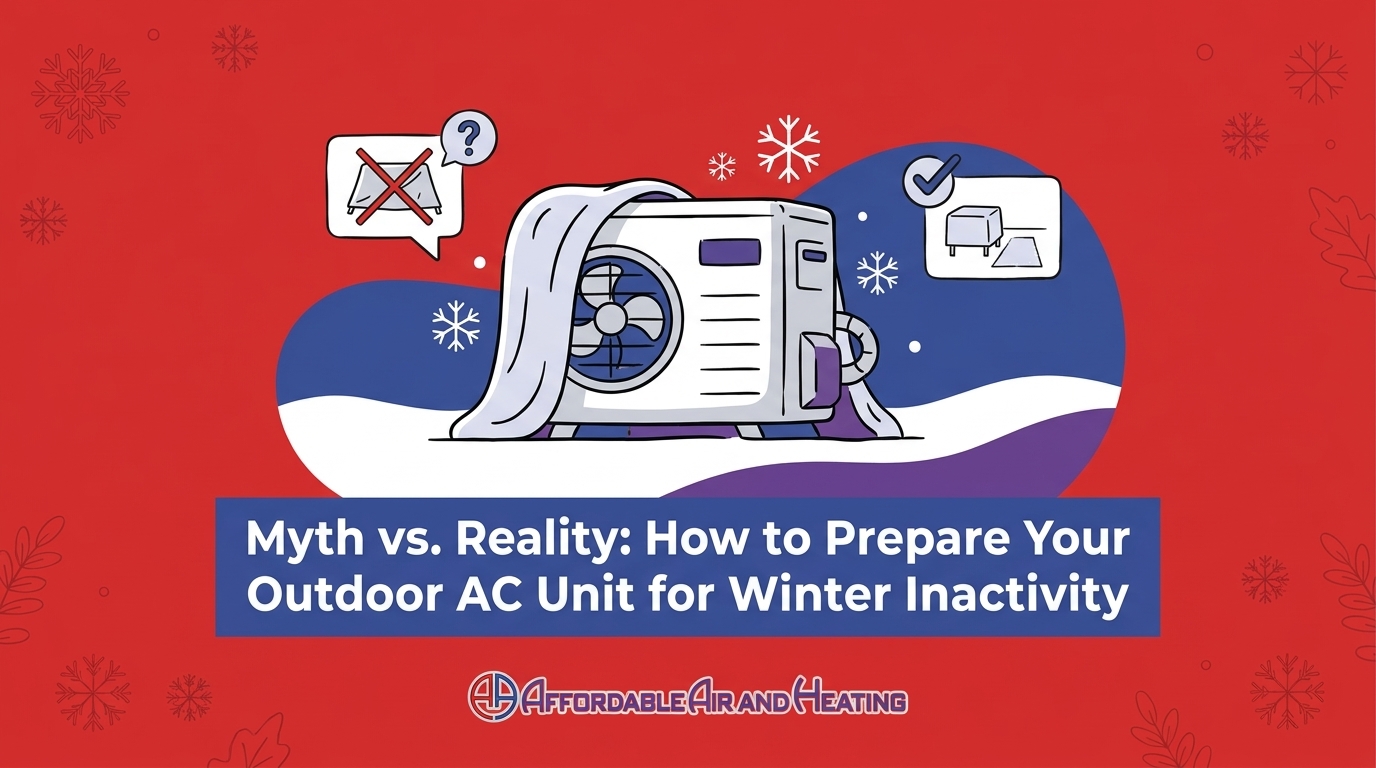
The early fall pre-heating transition is officially here, which means it is time to figure out exactly how to prepare your outdoor AC unit for winter inactivity. At Affordable Air and Heating, we know that as the sweltering summer days fade and cooler weather sets in across the region, your focus naturally shifts toward keeping your home warm. However, before you completely forget about your cooling equipment until next spring, you have a critical decision to make regarding your outdoor condenser. A widespread misconception leads many homeowners to believe they need to tightly bundle up their outdoor equipment against the elements, inadvertently causing severe damage while trying to protect it.
The concrete problem we see homeowners face right now is choosing the correct winterization method. Should you wrap your condenser tightly in a heavy plastic tarp, invest in a specialized breathable cover, or simply leave the metal chassis completely bare? Making the wrong choice during this seasonal shift can lead to extensive internal corrosion, ruined electrical components, and a system that refuses to turn on when the weather warms up again. If you are currently scheduling the final shutdown of your air conditioning system to prepare for reliable winter heating services, understanding the science behind proper equipment protection is the first step toward preventing costly spring repairs.
The Plastic Tarp Trap: Why Tightly Sealing Your Unit Causes Damage
The widespread myth: For decades, generic national home maintenance guides have told homeowners to wrap their outdoor air conditioners in heavy-duty plastic tarps and secure them with bungee cords. The logic seems sound on the surface—if you want to keep rain, snow, and debris out of the machine, you should seal it up tight. However, this advice is heavily skewed toward regions that experience feet of heavy, accumulating snow, and it completely ignores the actual physics of how moisture interacts with metal equipment.
The underlying cause: When you wrap your condenser in a non-breathable plastic tarp, you are essentially creating a miniature greenhouse around your equipment. Ground moisture naturally evaporates and rises. When that moisture hits the impermeable barrier of a plastic tarp, it condenses into water droplets. Because the tarp restricts all natural airflow, this condensation cannot evaporate into the atmosphere. Instead, it remains trapped inside the enclosure, keeping the internal components of your air conditioner in a state of near-100% humidity for months on end.
The damaging solution: This trapped moisture accelerates rust on the internal metal components, including the delicate aluminum fins and copper coils that are vital for heat transfer. Worse yet, the electrical wiring, contactors, and capacitors are forced to sit in a damp environment. In our years of repairing systems across Lancaster and the Antelope Valley high desert, our technicians frequently find that by the time spring arrives, this trapped moisture has caused severe electrical corrosion. When you attempt to turn the system on, these corroded contacts fail, leading to an immediate breakdown. The reality is that tightly sealing your unit causes far more damage than simply leaving it exposed to the open air.
High Desert Weather Patterns: Condensation and Blowing Dust
Our team at Affordable Air and Heating knows firsthand that to understand why proper winterization matters, you have to look at the specific climate challenges we face locally. Generic winterizing advice fails because it assumes winter means heavy, crushing snowpack. In our region, the threats to your idle equipment are entirely different, requiring a highly specialized approach to HVAC protection.
Extreme Diurnal Temperature Swings: The defining characteristic of winter in Lancaster and the Antelope Valley high desert is the massive fluctuation in temperature from day to night. We frequently experience freezing nights followed by surprisingly warm, sunny days. This rapid temperature swing is a nightmare for a tightly covered AC unit. As the sun beats down on a plastic tarp during a 65-degree afternoon, the air inside heats up and absorbs moisture from the soil. When the temperature plummets below freezing overnight, that trapped vapor rapidly condenses and freezes directly onto your condenser coils and electrical panels. This daily freeze-thaw cycle underneath a plastic tarp destroys equipment.
Blowing Desert Dust and Debris: Rather than heavy snow, the primary local threat to your idle condenser is high winds carrying fine desert dust, sand, and tumbleweeds. When a unit sits idle for months, high-velocity winds can force fine particulate matter deep into the coil fins. If the coils are slightly damp from morning dew, this dust turns into a caked-on mud that suffocates the system's airflow once summer returns. Therefore, the goal of winterizing in the high desert isn't to protect the unit from a blizzard—it is to shield the delicate fins from abrasive blowing dust while allowing the equipment to breathe.
Choosing the Right Defense: Breathable Covers vs. Bare Units
We always tell our customers that modern air conditioning condensers are engineered to live outdoors. Their outer cabinets are treated with baked-on powder-coat finishes, and the internal components are designed to withstand rain, UV rays, and moderate wind. Because of this rugged construction, leaving your unit completely bare is often a safer choice than suffocating it in plastic. However, to truly protect your investment from high desert dust, a breathable cover is the optimal solution.
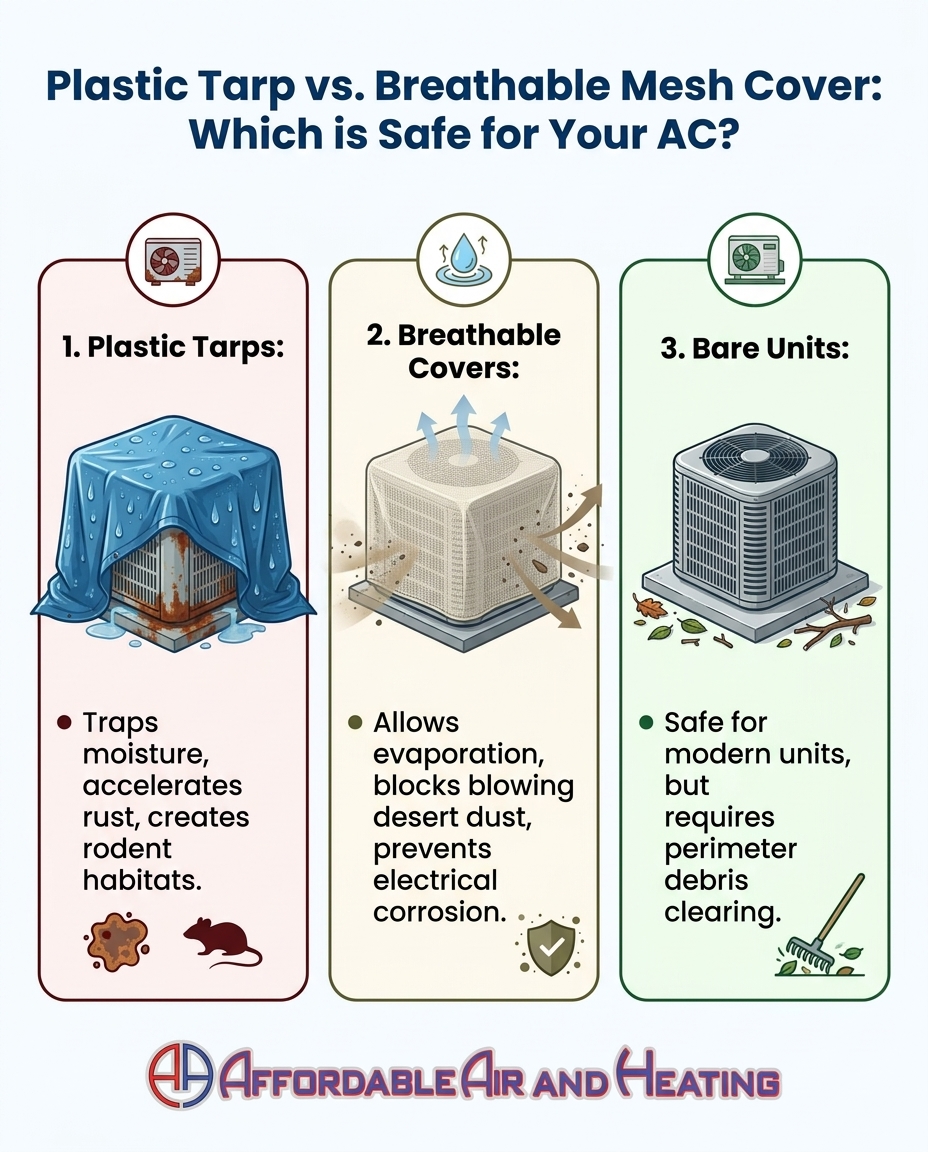
• Plastic Tarp — Airflow & Moisture Control: Traps moisture; creates greenhouse effect; accelerates rust. — Debris Protection: Blocks debris but traps ground moisture inside. — Overall Recommendation: Never Recommended. Causes severe electrical corrosion.
• Bare Unit — Airflow & Moisture Control: Maximum airflow; moisture evaporates immediately. — Debris Protection: Vulnerable to blowing desert dust, tumbleweeds, and leaves. — Overall Recommendation: Acceptable. Safe for the equipment, but requires thorough spring cleaning.
• Breathable Mesh/Canvas — Airflow & Moisture Control: Allows vapor to escape while blocking heavy winds. — Debris Protection: Excellent defense against blowing sand and organic debris. — Overall Recommendation: Highly Recommended. The best balance for high desert climates.
If you choose to cover your unit, our team highly recommends investing in a heavy-duty mesh or breathable canvas cover specifically manufactured for HVAC equipment. These materials allow condensation to evaporate naturally while providing a physical barrier against abrasive sand and wind-blown debris.
When Not to Cover Your Equipment
There is one critical exception to the covering rule: you must accurately identify the type of equipment sitting outside your home. If your outdoor unit is a straight cooling air conditioner, it will sit completely idle all winter, making a breathable cover a great idea. However, if your outdoor equipment is a heat pump, it actively provides your winter warmth. Heat pumps run year-round and require massive amounts of unrestricted airflow to extract ambient heat from the winter air. Covering a heat pump—even with a breathable mesh—will severely restrict its airflow, causing the system to suffocate, freeze over, and fail almost immediately. Never cover any HVAC equipment that operates during the winter months.
Clearing the Perimeter: Defending Against Desert Debris
When our technicians perform fall tune-ups, we always start by securing the perimeter of the unit before evaluating it for a breathable cover. The early fall pre-heating transition is the perfect time to clear away the accumulation of summer before the dormant season begins. Organic debris left against the metal casing acts like a sponge, retaining moisture directly against the equipment and promoting exterior rust.
Follow this checklist to secure the perimeter of your outdoor condenser:
• Remove large organic debris: Pull away any tumbleweeds, dry leaves, twigs, and overgrown grass that have gathered around the base of the unit.
• Establish a clearance zone: Maintain a strict minimum two-foot clearance zone on all sides of the condenser. Trim back any bushes, shrubs, or ornamental grasses that have encroached on this space over the summer.
• Clear the base pan: Look at the very bottom of the unit where it meets the concrete pad. Clear away caked dirt, mud, and decaying leaves that trap moisture against the bottom of the metal chassis.
• Gently wash the exterior fins: Using a standard garden hose with a gentle spray nozzle, wash the exterior aluminum fins to remove accumulated summer dust. Never use a high-pressure washer, as the sheer force will instantly crush and bend the delicate fins, ruining the unit's ability to transfer heat.
• Allow complete drying: If you are applying a breathable cover, wait a full 24 hours after washing the unit to ensure it is completely dry before covering it up.
Preventing Winter Pest Infestations in Idle Equipment
Beyond moisture damage, using the wrong type of cover introduces a secondary, highly destructive danger: pest infestations. In Lancaster and the Antelope Valley high desert, nocturnal temperatures drop rapidly in the winter. Field mice, pack rats, and other local rodents actively seek out dry, protected enclosures to build their winter nests and escape the biting wind.
We've seen it time and time again on winter service calls: when you wrap an air conditioner in a tight plastic tarp, you are unknowingly creating a five-star winter resort for local wildlife. The tarp blocks the wind, the metal chassis provides a secure structure, and the interior stays slightly warmer than the outside air. Once rodents move into your idle AC unit, they cause catastrophic damage. They frequently chew through low-voltage thermostat wires, strip the insulation off high-voltage lines, and pack the electrical contactor box full of nesting materials like dry grass and debris.
When spring arrives and the system is turned on, these chewed wires lead to short circuits, blown fuses, or even electrical fires. By choosing a breathable mesh cover that fits snugly—or by leaving the unit bare and maintaining a clean, debris-free perimeter—you eliminate the sheltered nesting environment, naturally deterring wildlife from settling inside your expensive cooling equipment.
Finalizing Your System's Winter Shutdown and Heating Transition
Once the physical unit is cleaned and properly protected, there are a few final steps to safely finalize your system's winter shutdown. The most important operational step is locating the exterior power disconnect switch—usually housed in a small grey box mounted on the exterior wall near the condenser. By flipping this switch to the "off" position, you cut the power to the outdoor unit. This prevents the air conditioner from accidentally turning on during an unseasonably warm afternoon in January, which could damage the compressor if the unit is covered or if the internal lubricating oils are too cold to function properly. Note: Simply flip the switch or pull the disconnect block; never attempt to open the electrical panel or touch the wiring yourself.
Proper shutdown of the cooling side goes hand-in-hand with ensuring your heating side is fully operational. Ignoring the seasonal transition can leave you incredibly vulnerable when temperatures plummet. One of our customers in Santa Clarita experienced this firsthand during the coldest week of the year under a severe freeze warning. Because their system hadn't been prepped or inspected, their heat completely stopped working at the worst possible time. Our technicians had to brave the freezing conditions to assess the unit, ultimately discovering a bad relay that led to replacing the entire HVAC system to safely restore their heat.
To avoid a similar emergency, we highly recommend scheduling professional fall maintenance. A certified technician will safely clean the internal coils before the unit sits idle for months, verify the electrical components, and seamlessly handle transitioning your HVAC system from cooling to heating season. Catching a failing part in the fall is infinitely better than waking up to a freezing house in the middle of winter.
Closing Out the Season: Ensuring Year-Round Comfort
The early fall pre-heating transition does not have to be complicated, but it must be done correctly to protect your home's most expensive appliance. The short answer to winterizing your AC is simple: ditch the plastic tarp. By utilizing breathable protection, maintaining a clean two-foot perimeter, and cutting the power at the disconnect box, you ensure a safe winter shutdown that prevents moisture damage and deters pests.
If you want the peace of mind that comes with a definitive answer on your system's health, now is the time to act. Don't wait for the first freezing night to find out if your heater works or if your AC was shut down properly. Schedule professional HVAC maintenance with Affordable Air and Heating today to finalize your seasonal transition, protect your outdoor equipment, and ensure reliable, year-round comfort for your home. Additionally, upgrading to a qualifying heat pump or high-efficiency system during this transition period may make you eligible for federal tax credits or local utility incentives—always check with your utility provider or a tax professional for current programs.
Frequently Asked Questions
Should I cover my outside AC unit in the winter?
Our short answer is that you do not strictly need to cover it, but using a breathable cover can be beneficial in high-wind desert climates. Modern AC units are built to withstand rain and cold weather without a cover. However, a breathable mesh or canvas cover helps block abrasive blowing dust and debris from packing into the delicate coil fins while the unit sits idle. You must ensure any cover you use allows moisture to escape freely.
Can I use a tarp to cover my air conditioner?
No, you should never use a standard plastic tarp to cover your air conditioner. Plastic tarps are non-breathable and trap ground moisture inside the unit, creating a humid environment that accelerates rust on metal components. Furthermore, this trapped moisture can cause severe corrosion to the electrical wiring and contactors, often leading to total system failure when you attempt to turn the AC back on in the spring.
What happens if water freezes inside my AC unit?
Modern outdoor condensers are designed to handle natural precipitation, so a small amount of frost or freezing rain on the exterior usually will not harm the equipment. However, if a plastic tarp traps heavy condensation inside the unit that repeatedly freezes and thaws, the expanding ice can slowly damage the delicate aluminum fins and internal coils. Consistent ice buildup inside the cabinet can also strain the fan blades if the unit accidentally turns on.
How do you properly winterize an outside AC unit?
Proper winterization starts by turning off the exterior power disconnect switch to prevent the unit from accidentally turning on during warm winter days. Next, clear all organic debris, weeds, and leaves from a two-foot radius around the condenser. Gently wash the exterior fins with a standard garden hose to remove summer dust, let it dry completely, and optionally apply a breathable mesh cover to protect against blowing winter sand.
Do I need to cover my unit if I live in the high desert?
While not mandatory, covering your unit in the high desert is recommended specifically to guard against high winds that carry fine sand, dust, and tumbleweeds. Unlike snowy regions where moisture is the main concern, the high desert threatens idle equipment with abrasive particulate matter that can clog the coils. A heavy-duty, breathable mesh cover is the ideal solution to block the wind while preventing condensation buildup during freezing nights.
How can I keep mice out of my AC unit during the winter?
The best way to deter mice and rodents is to avoid using tight-fitting plastic tarps, which create a warm, wind-blocking shelter that attracts them. Keep the perimeter completely clear of tall grass, leaves, and brush that rodents use for cover. Leaving the unit bare or using a well-fitted breathable mesh cover makes the interior much less inviting for pests looking for a secure place to build their winter nests.