Winterizing Your Rooftop Package Unit in the High Desert


The Urgent Reality of Late-Fall Rooftop Exposure
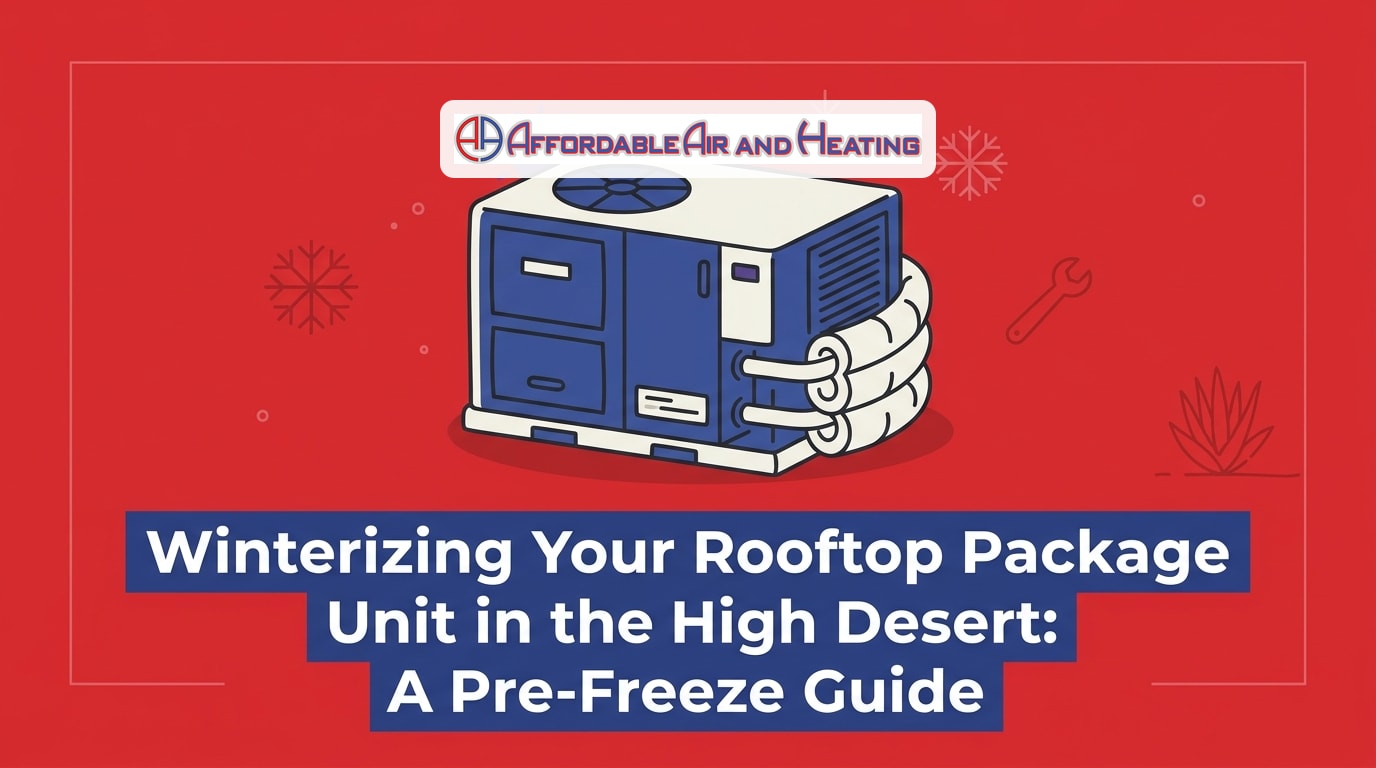
Late November is rapidly approaching, and if you are winterizing your rooftop package unit in the High Desert, the timeline to act is closing fast. At Affordable Air and Heating, we've spent years preparing Lancaster homes for the holiday season, and we know firsthand how autumn weather in this region brings a drastic, often unpredictable shift from mild afternoons to freezing overnight lows. While ground-level heating systems benefit from fences, landscaping, and the natural windbreak of your home's exterior walls, elevated equipment faces a much harsher reality. These units endure 360-degree exposure to high winds, driving rain, and sudden temperature plummets without any structural protection.
Because of this complete exposure, the margin for error is incredibly thin. A minor issue that might go unnoticed on a sheltered ground unit can quickly escalate into a complete system failure when subjected to rooftop conditions. Knowing the difference between safe exterior visual checks you can perform yourself and the dangerous internal maintenance that requires a certified expert is the most important decision you will make before the winter storms arrive. To establish a baseline of safety and efficiency, scheduling professional HVAC services with our team is the most reliable first step.
Preparing now ensures your system provides reliable, uninterrupted heating when those overnight temperatures unexpectedly drop. Waiting until the first frost coats your roof means you are already behind the curve. By taking a proactive approach in late November, you can identify loose panels, clear wind-blown debris, and verify that your system is structurally sound before the harshest weather hits.
Why Rooftop Package Units Face Unique Vulnerabilities
To understand how to protect your equipment, you first need to understand how it differs from a standard residential setup. Our technicians frequently explain to homeowners that traditional split systems keep their most sensitive heating components safely tucked away inside your garage, basement, or utility closet, leaving only the condenser outside. Rooftop package units, however, house every single component—the compressor, the heating elements, the blower motor, and complex electrical boards—inside one exposed metal cabinet sitting high above your living space.
This all-in-one design is incredibly efficient for saving indoor space, but it presents unique mechanical vulnerabilities. The complete elemental exposure means that freezing condensation can form directly on critical external and internal components simultaneously. When the ambient temperature drops, the metal cabinet itself becomes a bridge for the cold.
Furthermore, elevated placement accelerates heat loss. Just as wind chill makes a cold day feel much colder to the human body, sustained winds constantly strip away the residual heat from the unit's exterior. This convective cooling forces the system to work significantly harder during overnight freezes just to maintain its baseline operating temperature.
• Ground-Level Split System — Element Exposure: Partial (Indoor/Outdoor components) — Wind Vulnerability: Low (Sheltered by house/fences) — Freezing Risk: Moderate (Protected from direct wind chill)
• Rooftop Package Unit — Element Exposure: 100% Complete Exposure — Wind Vulnerability: High (Subject to unbroken wind gusts) — Freezing Risk: Severe (360-degree heat loss)
Understanding this mechanical vulnerability is foundational to executing a proper winterization strategy. Because every part of the system is battling the elements, your pre-winter checks must account for the integrity of the cabinet, the seals, and the external hardware that keeps the weather out.
The Threat Cycle: Desert Dust Meets Freezing Rain
The weather patterns in the Lancaster CA High Desert create a specific, compounding threat cycle that is rarely seen in other climates. A pattern our team sees often across the Antelope Valley involves autumn wind gusts exceeding 40 mph, which drive fine sand, dirt, and airborne debris deep into the exterior aluminum fins of your rooftop equipment. On its own, this dust buildup reduces airflow and forces the blower motor to work harder.
The real danger arrives when sudden freezing rain follows a major dust event. The moisture mixes with the accumulated desert dirt, turning it into a thick mud. As the overnight temperatures plummet, this mud hardens and freezes directly onto the coils. This hardened debris acts as insulation in the worst possible way—it traps the cold and prevents the system from absorbing or releasing heat efficiently. The unit will run continuously, driving up your energy bills, while producing very little warm air for your home.
Affordable Air and Heating brings specific local expertise in mitigating the Antelope Valley's unique desert-dust-to-winter-freeze cycle on exposed equipment. We understand exactly how these local weather swings assault rooftop units. Breaking this cycle before the first hard freeze is the only way to prevent sudden mechanical breakdowns during peak heating demand.
If you live in one of our High Desert service areas, you know how quickly the weather can turn. Addressing the dust buildup before the rain arrives ensures your coils remain clean, allowing the system's defrost cycle to manage light frost naturally without battling a layer of frozen mud.
Safe Homeowner Pre-Winter Exterior Checks
While internal maintenance is strictly for licensed technicians, our team recommends several vital exterior checks you can perform safely. If your roof is flat and easily accessible, you can conduct a visual audit. If your roof is pitched or dangerous to walk on, use binoculars from the ground or hire a professional. Never risk a fall to inspect your equipment.
Here is a safe, effective checklist for evaluating your rooftop package units before the freezing weather sets in:
• Visual perimeter inspection: Walk around the base of your home (or the safe areas of a flat roof) and look for large branches, tumbleweeds, or debris that high winds may have blown against the cabinet. Clear anything blocking the airflow.
• Examine the weather stripping: Look closely at the seals where the unit connects to the roof curb. Check these connections visually from a safe distance for obvious signs of dry rot, cracking, or separation that could let freezing water seep into your home.
• Check for missing hardware: Scan the exterior metal panels. Look for missing screws, loose bolts, or vibrating exterior panels. A panel that rattles slightly on a calm day will likely become dislodged during the next major storm.
• Verify proper water drainage: Ensure that the area around the unit's base is clear of leaves and dirt buildup. Water must drain freely away from the equipment to prevent ice from pooling and expanding under the cabinet.
• Inspect ductwork transitions: If any exterior ductwork is visible, check the insulation wrapping. Birds and rodents often tear away this insulation in the fall to build nests, leaving your rooftop heat pump systems vulnerable to massive heat loss before the air even reaches your vents.
Securing Equipment Against 40+ MPH Wind Gusts
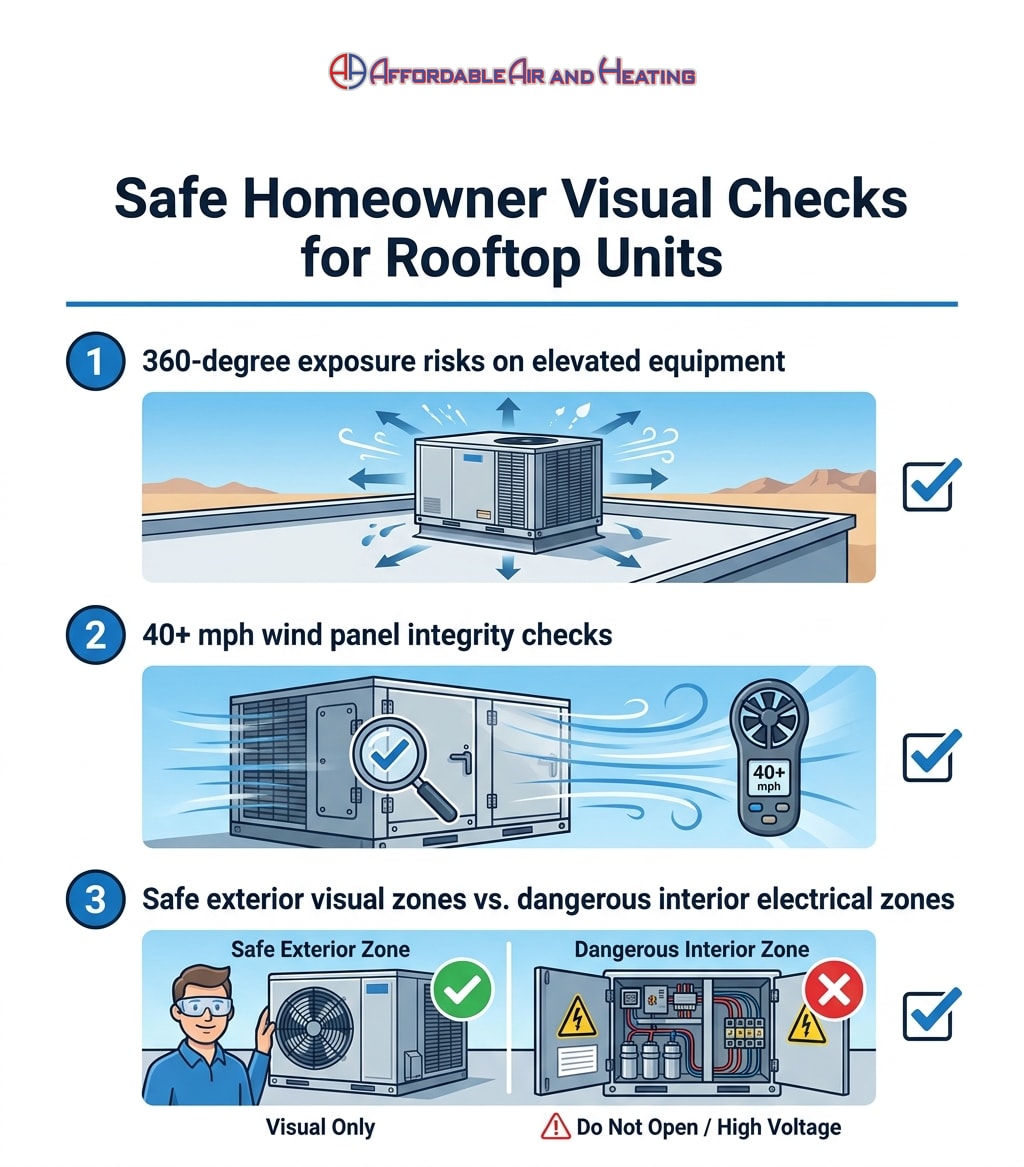
In late November, wind is often a more immediate threat to elevated equipment than the temperature itself. During our pre-winter inspections, we frequently see how high winds create localized pressure zones around a large metal cabinet. As a 40+ mph gust hits the windward side of the unit, it creates a powerful negative pressure vacuum on the leeward side. This aerodynamic effect can literally suck access panels right off the unit if the securing screws are loose or stripped.
Once a panel is compromised, the system's defenses are breached. Freezing rain is then driven horizontally directly into the sensitive electrical compartments. Water in the electrical housing leads to immediate short circuits, blown fuses, and catastrophic heating failures right when you need the system the most. The blower motor and compressor can also suffer severe water damage if exposed to the elements.
A visual audit of panel integrity is a non-negotiable step before winter storm warnings are issued. You should look for gaps between the panels, rust around the screw holes, and any signs that the metal is bowing outward. If a panel looks loose, it must be secured immediately. Do not wait for the wind to test the integrity of your system's outer shell.
The Danger Zone: When to Call a Licensed Professional
There is a hard line between safe homeowner preparation and dangerous DIY interference. We strongly advise that you never attempt to open electrical compartments, remove access panels, or tinker with internal components while on a roof. High winds, combined with potentially icy or wet roof surfaces, present severe fall hazards. Furthermore, rooftop units house high-voltage capacitors that hold a lethal electrical charge long after the power is turned off.
Professional coil cleaning is absolutely required to safely remove the hardened mud and ice we see so often in the Lancaster CA High Desert. Our licensed technicians use specialized, non-corrosive chemical treatments that dissolve the dirt without damaging the delicate aluminum fins. Attempting to scrape the coils yourself with a brush or a pressure washer will bend the fins, permanently destroying the unit's ability to transfer heat.
Beyond cleaning, professionals must verify the internal heating efficiency and safety mechanisms before the system operates under heavy winter loads. This includes checking the amp draw on the blower motor, testing the defrost control board, and ensuring the heat exchanger is free of cracks. If you are interested in how efficiency impacts your home's warmth, understanding furnace AFUE ratings can provide deeper insight into how these internal diagnostics translate to reliable performance.
Internal diagnostics ensure the system is actually converting energy into heat efficiently, rather than just running continuously and driving up your utility bill. A professional tune-up guarantees that all electrical connections are tight, the refrigerant levels are precise, and the system is fully prepared to handle the incoming freeze.
Frequently Asked Questions About Rooftop Unit Winterization
How do I protect my rooftop HVAC unit from high winds?
Ensure all access panels are tightly secured with the correct screws and verify that no hardware is missing or stripped. Because rooftop package units bear the brunt of local windstorms, we recommend scheduling a professional inspection to verify the structural integrity of the mounting hardware and the duct connections. A technician can ensure the unit is properly anchored to the roof curb.
Should I cover my package unit in the winter?
No, covering a heat pump or package unit that runs during the winter will severely damage the system by blocking the airflow required for heating. Even for cooling-only units, covers can trap moisture, accelerate rust, and encourage pest infestations as rodents seek shelter. Always consult a professional before placing any type of cover over your HVAC equipment.
What maintenance does a rooftop unit need before freezing temperatures?
Safe exterior debris removal and visual panel checks should be completed by the homeowner to establish a baseline of defense. Following that, professional internal coil cleaning, electrical connection tightening, and heating cycle verification are required. A licensed technician will also test the defrost cycle to ensure the system can melt away frost during freezing nights.
At what temperature do rooftop units freeze?
Condensation can begin freezing on external coils when ambient temperatures drop below 40 degrees Fahrenheit, especially if the wind chill is high. Properly maintained units have built-in defrost cycles designed to handle this light frost automatically. However, compromised or dirty units may freeze solid, entirely blocking airflow and causing the system to shut down.
Can I safely clean the internal coils on my rooftop unit myself?
No, opening a rooftop unit exposes you to high-voltage components, moving fan blades, and severe fall hazards. Coil cleaning requires specialized, non-corrosive chemicals and professional techniques to avoid bending the delicate aluminum fins. Damaging these fins will permanently reduce your system's efficiency and require expensive repairs.
Ensure Your Heating Reliability Before the Freeze
Safe visual checks are the first step in protecting your elevated equipment from the harsh realities of late November weather. By taking the time to inspect the perimeter, verify panel integrity, and clear away debris, you build the first line of defense against high winds and freezing rain. However, waiting for the first overnight freeze to truly test your system's internal capabilities can result in emergency breakdowns and uncomfortable nights.
You do not have to leave your family's holiday comfort to chance. Explore professional readiness options and secure your winter heating solutions with our team today. A thorough, expert evaluation provides clear, safe, actionable advice on preparing your system, ensuring your home stays consistently warm and safe throughout the winter season without you ever having to cross into dangerous DIY territory. Additionally, if your aging unit needs replacement, remember that federal tax credits and local utility incentive programs may apply to qualifying heat pump installations, so be sure to consult with a tax professional to maximize your savings.