The Role of the Draft Inducer in Safely Venting Combustion Gases


Hearing the Whir but Feeling No Heat: The Start of a Furnace Lockout
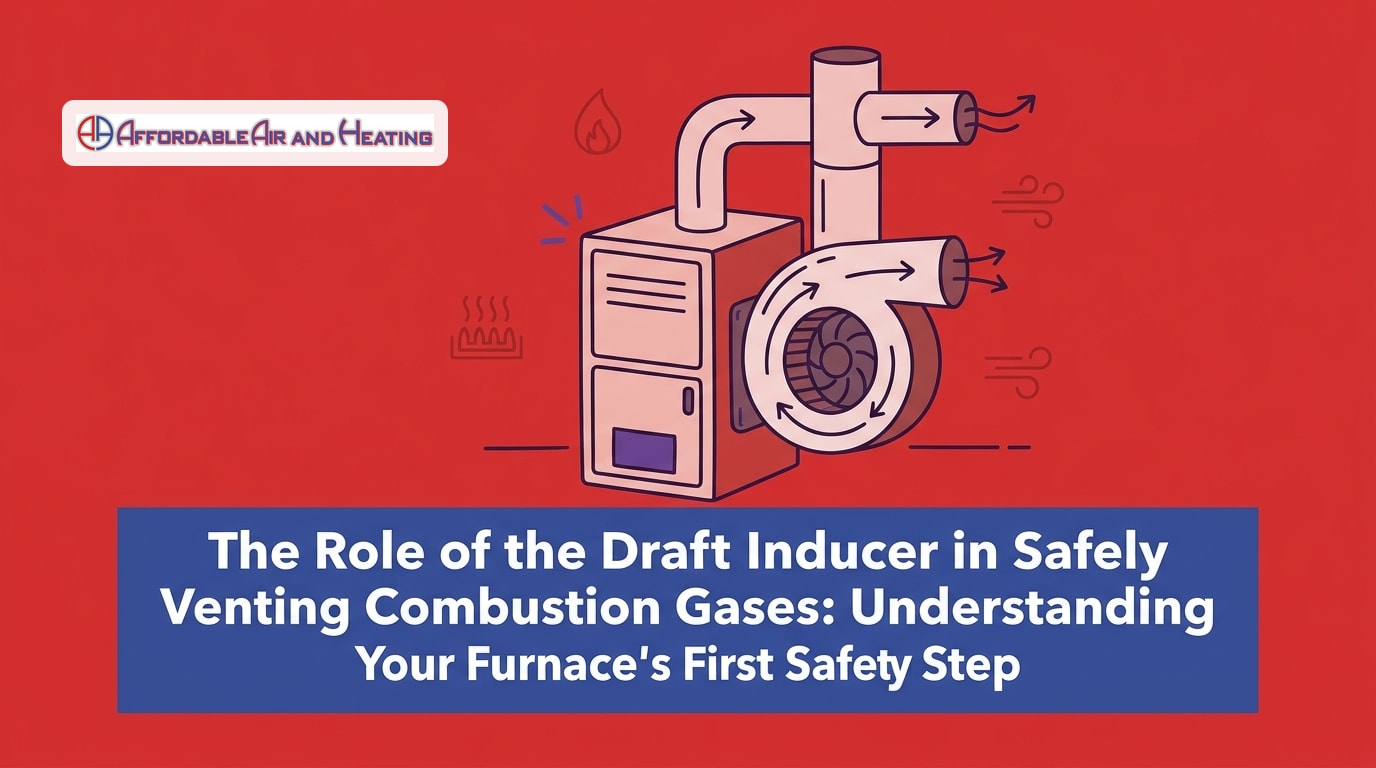
You walk past your thermostat, noticing the house feels unusually chilly. You turn up the temperature, hear the familiar click, and listen as a motor whirs to life inside the utility closet. You wait for the rush of warm air from the vents, but instead, the system abruptly goes silent. The role of the draft inducer in safely venting combustion gases is the exact reason this frustrating shutdown happens, and it is actually the first line of defense in your home's heating system. When a furnace turns on but fails to produce heat, our team at Affordable Air and Heating often finds it is experiencing a safety lockout triggered by this critical component.
As we enter the November pre-winter heating season, we always tell our customers that understanding this initial whirring sound can save you from unexpected mid-winter breakdowns. That first motor you hear is not the main blower fan that pushes warm air into your rooms; it is the draft inducer motor. Its sole job is to prepare the system for safe combustion. If the furnace detects that this motor is failing or that the exhaust pathway is compromised, it will shut down the entire sequence before a single spark is ignited. Attempting to bypass this safety mechanism or repeatedly resetting the system is incredibly dangerous and requires the attention of a licensed technician who provides professional HVAC services to resolve the underlying issue properly.
The 60-Second Purge: Decoding the Furnace Sequence of Operations
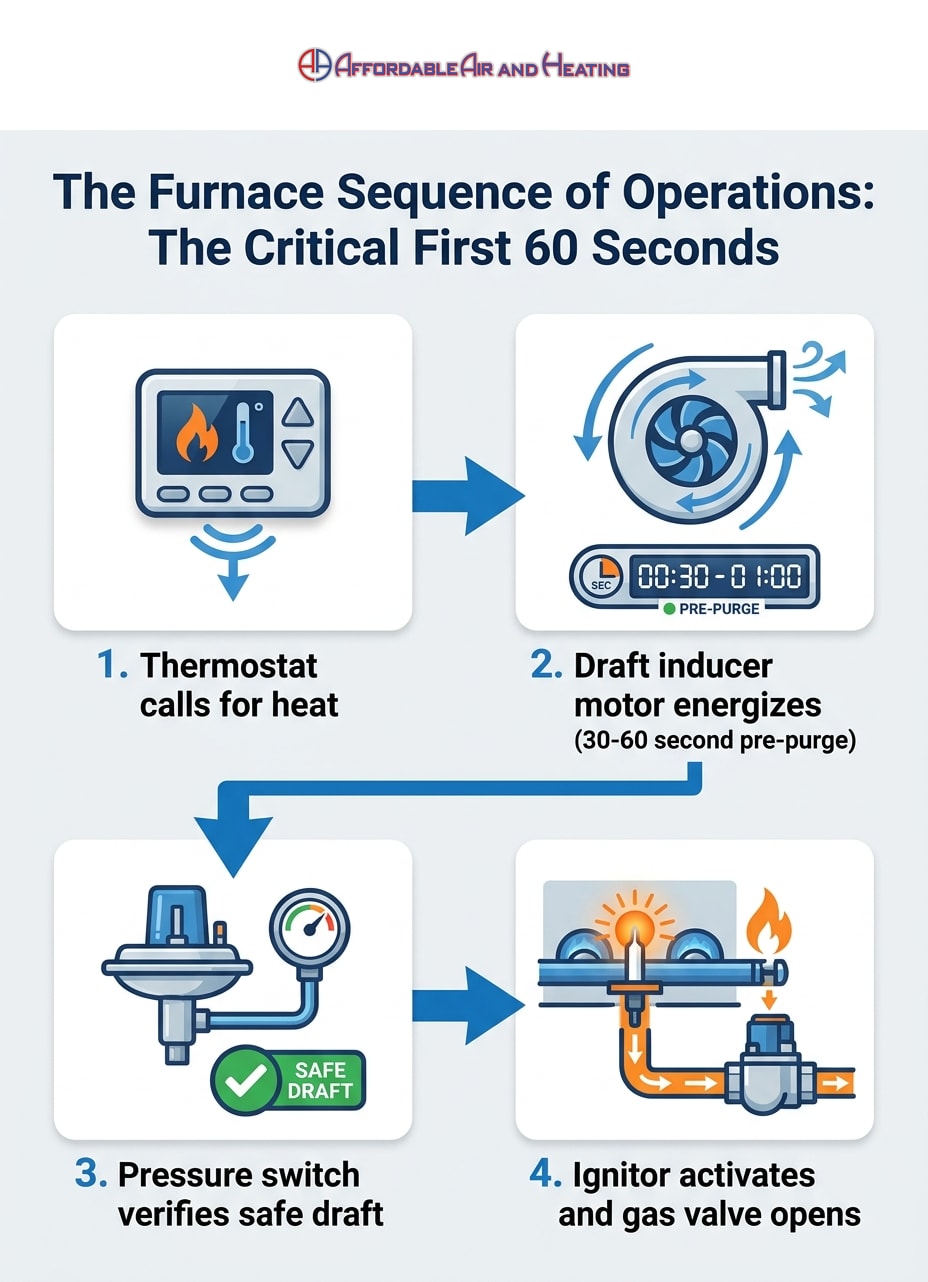
To understand why your furnace locked out, you have to look at the strict sequence of operations programmed into its control board. Modern heating systems do not simply turn on the gas and strike a match. They follow a rigorous, step-by-step checklist to ensure that every safety parameter is met. The draft inducer is the star of the very first step, performing what technicians call the pre-purge.
Having worked on countless heating systems across our service area, our technicians know firsthand that Lancaster CA's freezing overnight temperatures cause frequent, heavy furnace cycling throughout the winter. This means the 60-second purge is a constant, vital process that happens dozens of times a day. If any part of this sequence fails, the furnace will halt operations immediately.
The Initial Call for Heat
1. The thermostat sends the signal: When the indoor temperature drops below your setpoint, the thermostat sends a low-voltage signal to the furnace control board calling for heat.
2. The control board runs a self-check: Before doing anything else, the computerized board verifies that all safety switches are in their normal, open resting state.
3. The draft inducer energizes: The control board sends power to the draft inducer motor. This is the whirring sound you hear. The motor spins up a small fan wheel inside a housing connected to the heat exchanger and the exhaust flue.
4. The pre-purge begins: The inducer must run for 30 to 60 seconds before ignition. This clears the heat exchanger of any lingering, unburned gases from the previous heating cycle, ensuring a clean, safe environment for the upcoming combustion.
The Pressure Switch Handshake
1. Creating negative pressure: As the inducer fan spins, it creates suction (negative pressure) inside the burner box and heat exchanger.
2. Closing the pressure switch: A small rubber hose connects the inducer housing to a safety device called a pressure switch. When the inducer creates enough suction, it physically pulls a diaphragm inside the pressure switch closed.
3. Sending the all-clear: Closing this switch completes an electrical circuit, sending a signal back to the control board that a safe, verified draft has been established.
4. Proceeding to ignition: Only after this "handshake" occurs will the control board activate the ignitor and open the gas valve. If you need heating system repair and maintenance, our technicians will often start by testing this exact interaction.
The Role of the Draft Inducer in Safely Venting Combustion Gases
When natural gas or liquid propane burns to create heat, the process produces several chemical byproducts. The most dangerous of these is carbon monoxide (CO), a completely colorless, odorless, and tasteless gas that can be lethal if allowed to accumulate indoors. The primary function of the draft inducer is to mechanically push these toxic exhaust gases safely out of your home through the flue pipe. Without this forced ventilation, the heavy exhaust gases could stall inside the heat exchanger or spill backward into your living spaces.
In older, standard-efficiency furnaces from decades past, systems relied on "natural draft." Because hot air rises, the hot exhaust gases would naturally float up and out of a vertical metal chimney. However, modern high-efficiency furnaces extract so much heat from the combustion process that the exhaust gases are no longer hot enough to rise on their own. The heat exchangers are also much tighter and more restrictive to maximize heat transfer. Therefore, a mechanical fan—the draft inducer—is absolutely necessary to forcefully pull the exhaust through the restrictive heat exchanger and push it outdoors.
Preventing Carbon Monoxide Buildup
The relationship between the draft inducer and your family's health cannot be overstated. By ensuring a continuous, steady draft during the entire combustion process, the inducer guarantees that toxic fumes never have the opportunity to mix with the clean air being circulated through your home's ductwork. As you evaluate your overall indoor air quality solutions during the November pre-winter heating season, ensuring your venting system is completely sealed and mechanically sound is just as important as changing your air filters.
Key venting responsibilities of the inducer include:
• Overcoming wind resistance: Pushing exhaust gases out of the flue even when strong winter winds are blowing against the exterior vent termination.
• Managing condensation: In high-efficiency condensing furnaces, the inducer helps move moisture-laden exhaust gases toward the drain system before they can pool and cause corrosion.
• Maintaining combustion ratios: By pulling a precise amount of air through the burners, the inducer ensures the gas burns cleanly and efficiently, reducing soot buildup.
Why a Furnace Lockout is Actually Protecting Your Home
It is incredibly frustrating to wake up in a cold house in Lancaster CA, only to find that your furnace is refusing to run. However, we always encourage homeowners to reframe this breakdown: a furnace lockout is not a flaw in the system; it is a life-saving safety mechanism working exactly as intended. If the draft inducer fails to clear the heat exchanger, or if a blocked flue pipe prevents the exhaust from escaping, the pressure switch will detect the lack of draft and immediately cut the power to the gas valve.
This instantaneous shutdown prevents a potentially catastrophic buildup of raw gas or carbon monoxide. The lockout is merely a symptom indicating that a critical safety component has detected an unsafe operating condition.
• The inducer motor runs for 60 seconds, then the furnace shuts down. — What the Furnace is Doing (The Protection): The pressure switch did not detect enough suction, preventing the gas valve from opening into a blocked exhaust pipe.
• The furnace runs for five minutes, then abruptly stops producing heat. — What the Furnace is Doing (The Protection): The draft inducer overheated or the draft was lost mid-cycle, shutting off the gas to prevent carbon monoxide spillage.
• The system clicks at the thermostat, but nothing happens at the furnace. — What the Furnace is Doing (The Protection): The control board has registered too many failed ignition attempts and has locked the system out entirely to prevent explosive gas buildup.
The danger of the reset button: Many homeowners attempt to fix a lockout by repeatedly turning the power switch off and on to reset the control board. While this might force the furnace to try starting again, it forces the system to attempt unsafe ignitions. If the flue is blocked by a bird's nest or the inducer motor is failing, resetting the system bypasses the warning signs and puts your household at risk. Always treat a lockout as a serious safety alert.
Warning Signs Your Inducer Motor is Struggling
Draft inducer motors endure extreme conditions. They sit directly adjacent to the hottest part of the furnace, handling corrosive exhaust gases and running continuously during every single heating cycle. Over time, this intense heat and constant motion take a toll. Fortunately, in our years of diagnosing heating issues at Affordable Air and Heating, we have found that these motors rarely fail silently. If you know what to listen for as you prep your home this November, you can often identify a struggling motor before it causes a complete system lockout.
Unusual Startup Noises
Because the inducer is the first component to turn on, any strange noises heard immediately after the thermostat clicks are usually traced back to this assembly. Pay attention to these specific auditory clues:
• Loud, metallic grinding: This is a classic sign of failing bearings inside the motor assembly. When the bearings dry out or wear down, the metal components grind against each other, creating a harsh noise that often worsens as the motor speeds up.
• High-pitched whining or squealing: This can indicate a lack of lubrication or a motor that is struggling against electrical resistance. It may also point to a worn-out cooling fan attached to the back of the inducer motor.
• Rattling or vibrating: If the inducer wheel (the fan blade inside the housing) becomes unbalanced due to soot buildup, or if the mounting brackets loosen, the entire assembly will vibrate violently against the furnace cabinet.
Immediate Shutdowns After Starting
Another major warning sign is short cycling during the startup sequence. If you observe the furnace sequence and notice that the inducer motor starts, runs for a few seconds, and then shuts down before the main blower fan ever engages, the inducer is likely stalling. When the motor stalls, it loses the necessary RPMs to maintain suction. The pressure switch immediately senses this drop in draft and opens the circuit, aborting the cycle. If you are curious about how motor failures progress, understanding the anatomy of a failing furnace fan motor can provide deeper insight into why these components eventually wear out.
Why Accurate Diagnostics Matter More Than Quick Fixes
When a furnace locks out during the pre-purge phase, it is tempting to search for a quick DIY solution. However, diagnosing a draft inducer or pressure switch issue requires specialized tools and professional training. Because these components are directly responsible for managing explosive gases and toxic exhaust, guesswork is not an option.
When our technicians arrive at your home, we use a digital multimeter to test the electrical draw (amperage) of the inducer motor to see if it is over-amping and overheating. We also use a specialized tool called a manometer to measure the exact negative pressure (measured in inches of water column) being generated inside the inducer housing. This precise measurement tells us whether the issue is a weak motor, a blocked flue pipe, a cracked vacuum hose, or a faulty pressure switch that is failing to read the draft correctly.
Never attempt to bypass safety switches: The most dangerous DIY mistake a homeowner can make is attempting to jump or bypass the pressure switch to force the furnace to run. This directly disables the carbon monoxide protections built into the system. If the flue is blocked, bypassing the switch will force the furnace to pump deadly exhaust directly into your home.
At Affordable Air and Heating, we are committed to safe, trusted diagnostics and upfront explanations, ensuring homeowners in Lancaster CA understand exactly why a safety component needs attention before any work begins. We believe that educating our customers about the sequence of operations empowers them to make safe, informed decisions about their home comfort systems, rather than relying on risky guesswork.
Common Questions About Furnace Venting and Safety
What does a furnace draft inducer do?
The draft inducer is a small motorized fan that turns on at the very beginning of a furnace's heating cycle. Its primary job is to clear the heat exchanger of any lingering gases from the previous cycle. Once combustion begins, it mechanically pulls the toxic exhaust gases through the system and pushes them safely out of the home's flue pipe.
Why is my draft inducer running but there is no heat?
If the inducer motor runs but the furnace does not produce heat, the system is likely stuck in the pre-purge phase. This happens when the pressure switch fails to detect a sufficient draft, preventing the control board from opening the gas valve. Common causes include a failing inducer motor, a blocked exhaust vent, or a clogged condensation drain.
Can a furnace safely run without a draft inducer?
No, modern high-efficiency furnaces cannot operate safely without a functioning draft inducer. The heat exchangers in today's systems are highly restrictive, meaning the exhaust gases will not naturally rise out of the flue on their own. Without the mechanical pull of the inducer, toxic carbon monoxide would spill backward into the furnace cabinet and your home.
How does a furnace vent exhaust gases safely?
A furnace vents exhaust gases by using the draft inducer motor to create negative pressure inside the burner box. This suction pulls the combustion byproducts through the heat exchanger, extracting the heat, and then pushes the remaining toxic gases into a PVC or metal flue pipe that terminates safely outside the home.
What happens if the draft inducer motor fails?
If the draft inducer motor fails entirely, the furnace's internal safety mechanisms will trigger a system lockout. The pressure switch will recognize that no draft is being created, and the control board will refuse to supply electricity to the ignitor or the gas valve, ensuring that no unsafe combustion occurs.
Why does my furnace lock out after 60 seconds?
A lockout after 60 seconds usually indicates a failure during the pre-purge sequence or the ignition phase. The furnace gives the draft inducer about a minute to establish a verified draft and clear the heat exchanger. If the pressure switch does not confirm a safe draft within this window, or if the flame sensor fails to detect a flame shortly after, the system shuts down for your safety.
Ensure Safe Heating Before the Freezing Temperatures Arrive
The draft inducer is truly the unsung hero of your furnace's safety system. It works tirelessly behind the scenes, initiating every single heating cycle and ensuring that dangerous combustion byproducts are kept far away from your family's living spaces. Understanding the role of the draft inducer in safely venting combustion gases helps you recognize that a furnace lockout is not just an inconvenience—it is a critical protective measure.
As the cold weather sets in across Lancaster CA, do not ignore unusual grinding noises during startup or systems that shut down prematurely. Addressing these early warning signs prevents larger, more stressful mid-winter emergencies. Schedule a professional inspection today to ensure your venting systems are clear, your motors are strong, and your home is prepared for safe, reliable heating all season long.