Addressing Wind-Blown Debris in Your Outdoor Heat Pump Cabinet After a Lancaster Gale


The Hidden Aftermath of a High-Desert Gale on Your Heating Equipment
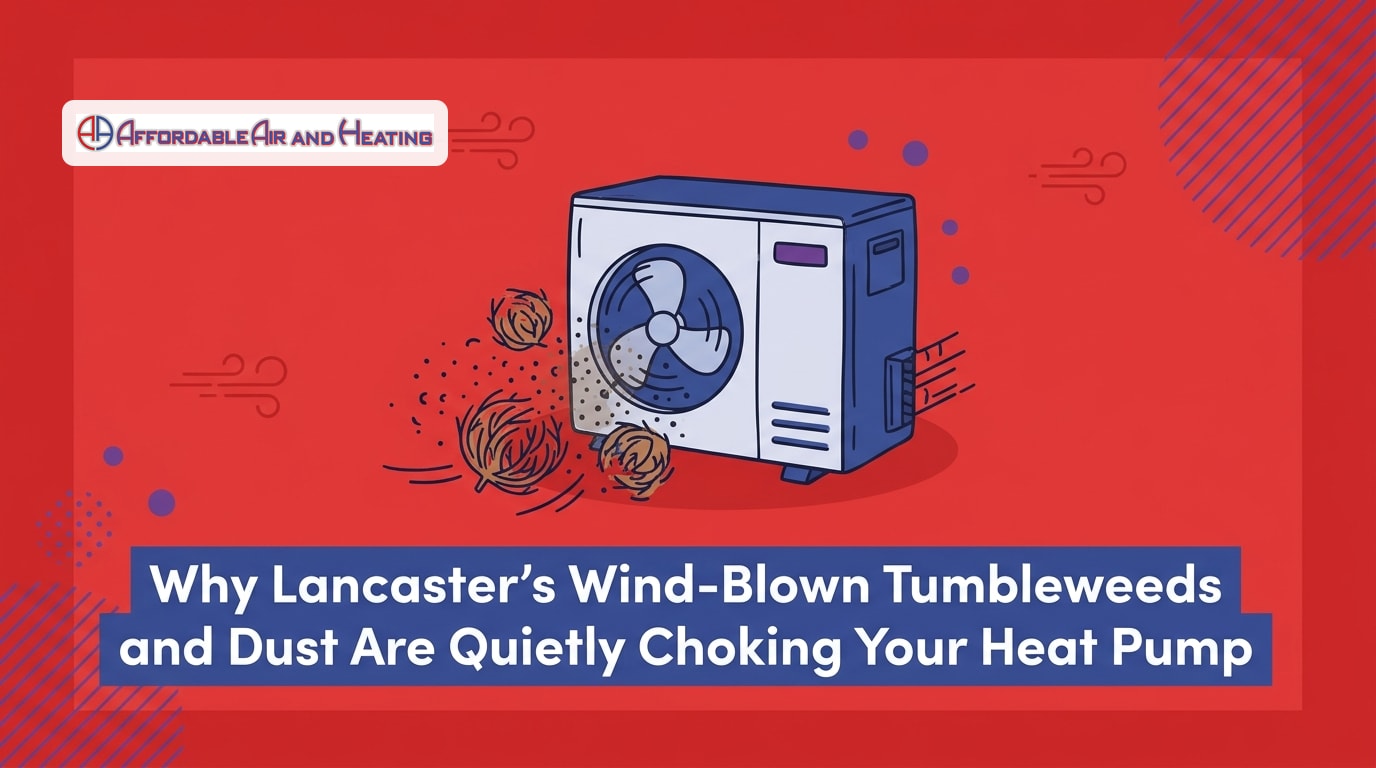
The wind has finally died down, but your yard is littered with tumbleweeds, and your heating equipment is suddenly running non-stop while your house stays cold. Addressing wind-blown debris in your outdoor heat pump cabinet after a Lancaster gale is one of the most frustrating challenges for high-desert homeowners. In our years of restoring comfort to homes across the Antelope Valley, our team at Affordable Air and Heating has seen exactly what these storms leave behind. The fine sand, heavy dust, and rigid Russian thistle (tumbleweeds) don't just pile up against your exterior walls—they pack tightly into the delicate components of your outdoor heating equipment.
This accumulation creates a serious problem just as November heating demands begin. Your heat pump relies on unimpeded airflow to extract ambient heat from the outdoor air and transfer it inside. When the exterior cabinet is choked with desert debris, that vital airflow is entirely cut off. Homeowners in Lancaster and the wider Antelope Valley frequently wake up after a storm to find their equipment suffocating under layers of packed sand and thorny brush. The immediate decision point for any homeowner is knowing exactly what debris is safe to remove yourself, and recognizing when the internal components are compromised and require a professional touch.
Understanding the difference between surface-level clutter and deep mechanical blockages is the first step in protecting your investment. The high-desert environment presents unique challenges for HVAC systems that standard maintenance guides often overlook. Based on the hundreds of post-storm service calls our technicians run every fall, below is a breakdown of how our local weather events differ from typical suburban yard issues.
• Foliage — Typical Suburban Environment: Soft, damp autumn leaves that rest on top of the cabinet grilles. — High-Desert Lancaster Environment: Rigid, thorny tumbleweeds that wedge tightly into the side panels. — Impact on Heat Pump Equipment: Blocks large volumes of air; thorns can physically bend soft aluminum fins.
• Particulates — Typical Suburban Environment: Light pollen or loose topsoil that easily washes away with rain. — High-Desert Lancaster Environment: Fine, abrasive alkaline sand driven by 50+ mph wind gusts. — Impact on Heat Pump Equipment: Penetrates deep into the cabinet, coating internal coils and acting as an insulator.
• Moisture — Typical Suburban Environment: Consistent seasonal rain that naturally rinses exterior surfaces. — High-Desert Lancaster Environment: Dry conditions followed by sudden cold snaps and winter frost. — Impact on Heat Pump Equipment: Turns fine desert dust into a hard, cement-like crust on the coils when condensation forms.
How Wind-Driven Desert Dust Mechanically Impacts Your Heat Pump
There is a massive difference between typical suburban leaf fall and the debris left behind by high-desert windstorms. In a standard suburban setting, leaves gently drift down and rest on top of the unit. In the Antelope Valley, intense fall wind events actively drive fine particulate sand and rigid tumbleweeds horizontally, forcing them deep into the side grilles of your outdoor cabinet. The fan inside your heat pump is designed to pull air inward through these side panels and exhaust it out the top. During a gale, this natural airflow combined with high-velocity wind turns your heat pump into a vacuum for airborne desert debris.
Once inside, this material wreaks havoc on the system's mechanical efficiency. A pattern we often see during our November maintenance visits is that the rigid stems of tumbleweeds can easily slip past the protective outer cage, pressing directly against the fragile aluminum fins that line the interior. More concerning, however, is the fine sand and dirt that gets driven deep into the micro-channels of the coil itself. This is where the true mechanical damage begins, and it is a prime example of the hidden impact of desert dust on your HVAC equipment.
The Insulating Effect of Fine Particulates
To understand why this is so damaging, you have to look at the physics of heat exchange. Your heat pump's outdoor coils are constructed from highly conductive metals—usually copper and aluminum. These coils need to be completely bare to effectively absorb ambient heat from the outside air, even on chilly days. The aluminum fins are spaced mere millimeters apart to maximize the surface area exposed to the air.
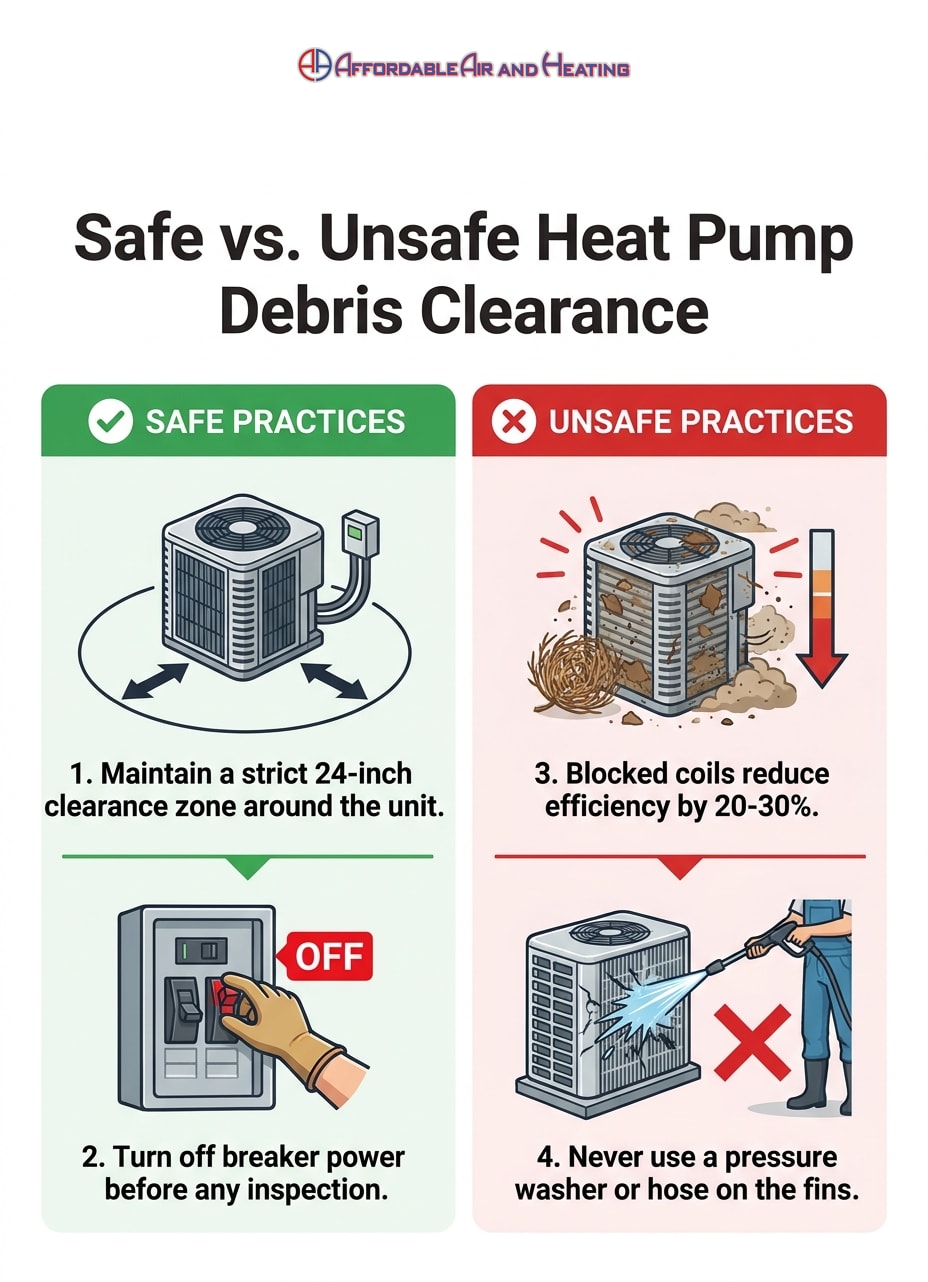
When late fall and November windstorms blast fine dust into the cabinet, that dust settles onto the bare metal. Because dirt and sand are terrible conductors of heat, this layer of grime acts as an unwanted insulating blanket over the coils. The system is suddenly trying to absorb heat through a thick layer of earth. The compressor is forced to work twice as hard, running longer cycles to achieve the same indoor temperature. According to data from the U.S. Department of Energy, blocked condenser coils can reduce a heat pump's energy efficiency by 20% to 30%. That means your system is consuming significantly more electricity while delivering a fraction of the warmth.
The Threat to Your System's Defrost Cycle Before Winter
The mechanical impact of a choked cabinet goes far beyond just higher utility bills. As we move deeper into the season, November brings strong local wind events just as nighttime temperatures plunge into the 30s and 40s. This specific combination of high wind, heavy dust, and plunging temperatures creates a perfect storm that threatens one of your heat pump's most critical functions: the defrost cycle.
During normal winter operation, a heat pump extracts heat from cold outdoor air. Because the refrigerant inside the outdoor coils is colder than the air outside, condensation naturally forms on the metal fins. When the ambient temperature drops near freezing, this condensation turns into a layer of white frost. To prevent the unit from turning into a solid block of ice, the heat pump periodically enters a defrost cycle. It temporarily reverses its operation, sending warm refrigerant back to the outdoor coils to melt the frost away.
However, this delicate cycle relies entirely on proper airflow and clean coils. When the cabinet is packed with tumbleweeds and the coils are insulated by fine desert dust, the defrost cycle cannot function correctly. The restricted airflow prevents the warm refrigerant from effectively melting the ice. The dust acts as a barrier, trapping the cold moisture against the metal. As a result, the frost continues to build up, layer upon layer, until the entire outdoor unit is encased in thick ice.
A failing defrost cycle quickly leads to a completely frozen outdoor unit, which immediately causes reduced heating efficiency and choked airflow. The system will continue to run, straining the compressor to its absolute limits, but it will be entirely unable to extract heat. This mechanical failure directly translates to a sudden, uncomfortable drop in indoor comfort right when you need it most.
Safe Exterior Clearance: Establishing the 24-Inch Rule
When you walk outside after a Lancaster gale and see your heat pump buried in tumbleweeds, your first instinct is likely to start pulling it all apart. While clearing the exterior is necessary, it is critical to establish clear, safe boundaries on what you can handle yourself versus what requires a trained technician. Attempting to dig deep into the cabinet can easily cause permanent damage to the system or result in personal injury.
The U.S. Department of Energy recommends a strict 24-inch rule: outdoor units require a minimum of 24 inches of unobstructed clearance on all sides to maintain proper airflow and heat exchange. Here is how we advise our customers to safely establish that clearance zone after a major wind event:
• Shut off the power first: Never approach a damaged or debris-covered unit while it is energized. Locate the electrical disconnect box mounted on the wall near the heat pump and pull the disconnect block, or turn off the dedicated breaker at your main electrical panel.
• Perform a visual inspection: Walk entirely around the unit. Look for heavy tumbleweed accumulations, large branches, or debris that has blown against the outer grilles.
• Clear the perimeter: Safely pull away whole tumbleweeds, loose twigs, and large exterior debris that are resting against the outside of the cabinet. Rake the ground around the unit to establish the full 24-inch clean zone.
• Keep tools away from the grilles: Explicitly avoid poking sticks, brooms, screwdrivers, or any other tools through the outer grilles to reach debris stuck inside. The aluminum fins inside are incredibly delicate. A rigid tumbleweed stem or a broom handle can easily bend these fins flat, permanently blocking airflow in that section.
• Check the top exhaust: Ensure no large branches or heavy debris have fallen onto the top fan grate, but do not attempt to unbolt or remove the top panel yourself.
Why You Should Never Pressure Wash Your Heat Pump Coils
Once the exterior tumbleweeds are cleared away, you will likely notice the thick layer of fine brown dust coating the metal grilles and internal components. In our experience rescuing struggling heat pumps across Lancaster, a very common—and highly destructive—DIY mistake is the temptation to just "hose out" this fine dust after a high-desert dust storm. While it seems logical to wash away dirt with water, doing this to a heat pump without professional equipment and training will almost certainly cause catastrophic damage to the system.
First, the aluminum fins that surround the coils are paper-thin. They are designed this way to maximize heat transfer, but it makes them highly susceptible to physical pressure. Hitting these fins with a pressure washer, or even a high-pressure nozzle on a standard garden hose, will instantly bend the fins flat. Once the fins are flattened, air can no longer pass through them, permanently destroying the unit's ability to pull in air and exchange heat.
Second, adding uncontrolled amounts of water to fine, alkaline desert sand creates a devastating chemical and physical reaction. The fine dust does not simply wash away; instead, the water mixes with the sand to create a thick, heavy mud. This mud gets pushed even deeper into the center of the coil block. When the unit turns back on and the coils heat up, this mud bakes into a hard, cement-like crust. This crust is nearly impossible to remove without replacing the entire coil assembly.
This is why homeowners should never open the sealed cabinet themselves to attempt interior cleaning. At Affordable Air and Heating, our technicians utilize specialized, low-pressure coil cleaning solvents that safely dissolve desert dust without the need for high-pressure water. We are committed to thorough, safe clean-out procedures that protect your delicate coil fins from damage, ensuring your system is restored to factory specifications rather than ruined by dangerous DIY methods. Attempting to wash the unit yourself will only lead to reduced heating efficiency and choked airflow.
Warning Signs That Desert Dust Has Penetrated the Cabinet
After you have safely cleared the exterior 24-inch perimeter, you must monitor the system closely. Exterior clearance is often not enough if the late fall and November windstorms were severe enough to drive fine particulates deep into the cabinet. Recognizing the symptoms of internal dust penetration early can save you from a complete system breakdown in the middle of a cold night.
If the internal coils are compromised, your heat pump will begin to exhibit specific warning signs. Pay attention to the following auditory, physical, and visual cues that tell our team it is time for professional intervention to protect your indoor air quality and system health:
• Auditory Warning Signs: Listen to the outdoor unit when it kicks on. If the system is running constantly without ever shutting off, it is struggling to reach the target temperature. Additionally, listen for unusual straining noises from the compressor—a loud, buzzing, or grinding hum indicates the motor is working against severe airflow restriction.
• Physical Warning Signs: Pay attention to the air coming from your indoor vents. If you feel only lukewarm or cool air blowing inside despite having the thermostat set high, the outdoor unit is failing to absorb heat. The system is moving air, but the heat transfer process is blocked by a blanket of dust.
• Visual Warning Signs: Walk outside and look closely at the side panels of the heat pump. If you see frost or solid ice rapidly accumulating on the outdoor unit—and that ice does not melt away after a few hours—the defrost cycle has failed. The coils are choked, and the system is freezing itself solid.
When any of these signs appear, the problem has moved beyond a simple yard cleanup. The internal coils are deeply compromised, and the sealed cabinet must be opened by a licensed professional to safely restore airflow.
Frequently Asked Questions About Post-Storm Heat Pump Care
Our technicians are frequently asked how to handle equipment after severe Lancaster winds. Here is what we recommend:
How do you clean debris out of an outdoor heat pump?
The safest way for a homeowner to clean debris is to turn off the power and manually remove loose brush, leaves, and tumbleweeds from the exterior perimeter. Maintain a 24-inch clearance zone around the unit. However, any debris trapped inside the sealed cabinet or packed into the metal fins must be removed by a licensed HVAC technician using specialized tools. Opening the cabinet yourself exposes you to high-voltage components and risks permanent damage to the system.
Can I hose off my heat pump after a dust storm?
No, you should never hose off your heat pump after a high-desert dust storm. Spraying water onto fine Lancaster sand creates a thick mud that gets pushed deeper into the delicate aluminum fins. When this mud dries, it bakes into a hard crust that severely restricts airflow and ruins efficiency. Always rely on professional, low-pressure chemical coil cleaning.
Why is my heat pump struggling to heat after high winds?
High winds drive fine dust and rigid debris deep into the outdoor cabinet, coating the condenser coils. This layer of dirt acts as an insulator, preventing the coils from absorbing ambient heat from the outside air. When the heat pump cannot absorb heat outside, it cannot deliver warmth inside, causing the compressor to run constantly while blowing only lukewarm air.
Does debris affect heat pump efficiency?
Yes, significantly. The U.S. Department of Energy notes that blocked condenser coils can reduce a heat pump's energy efficiency by 20% to 30%. Debris chokes the airflow necessary for heat exchange, forcing the system to consume far more electricity to maintain your indoor temperature, which directly leads to higher monthly utility bills.
What happens if dirt gets into the heat pump cabinet?
When dirt penetrates the cabinet, it coats the coils, strains the fan motor, and disrupts the critical defrost cycle. If the defrost cycle fails, the system cannot melt away natural winter condensation, leading to rapid ice buildup. Eventually, the entire outdoor unit will freeze solid, resulting in a complete loss of heating capability.
Is it safe to pull tumbleweeds out of the heat pump grilles?
It is safe to gently pull away loose tumbleweeds that are resting against the outside of the grilles, provided the power is turned off first. However, we strongly advise against forcefully pulling on stems that are wedged tightly between the metal fins, or poking tools through the safety cage. Doing so can easily bend the fragile aluminum fins, permanently blocking airflow.
Restore Your Heating Reliability Before Winter Hits
Dealing with the aftermath of a severe windstorm can be overwhelming, but taking the right steps immediately can save your heating equipment from unnecessary wear and tear. While clearing exterior tumbleweeds from your 24-inch perimeter is a great and necessary first step, the hidden fine dust packed inside the cabinet is the real efficiency killer. Ignoring this deep-seated debris will inevitably lead to reduced heating efficiency and choked airflow just as the coldest nights of the year arrive.
Don't wait for your system to freeze over or your utility bills to spike. If your equipment has been battered by recent gales, it is time to have our local experts at Affordable Air and Heating safely open the cabinet, dissolve the stubborn desert dust, and restore your system to factory airflow. Protect your comfort and your equipment by scheduling professional heat pump services with our team today, ensuring your home stays reliably warm all winter long.