How Your Home Stays Cool: Understanding What's Inside Your AC System
If you've ever wondered what are the main components of a home air conditioning system, here's a quick answer:
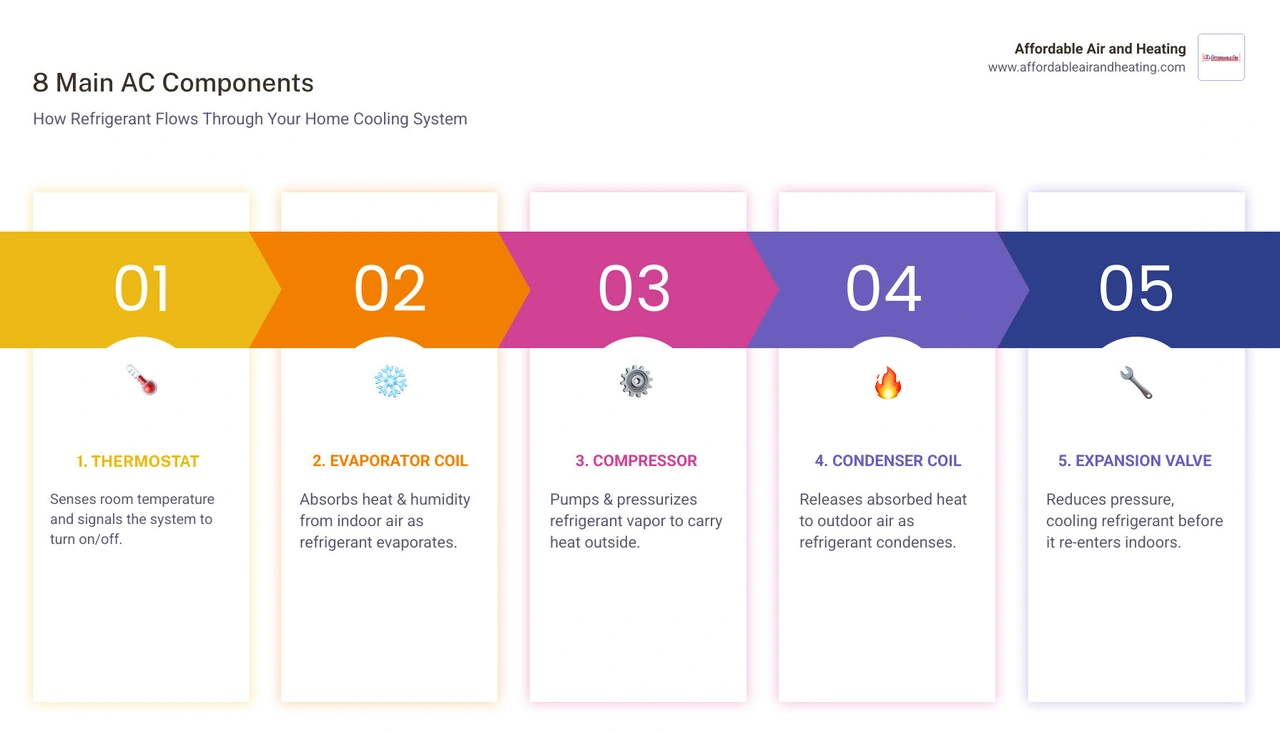
| Component | Role |
|---|---|
| Thermostat | Controls when the system turns on and off |
| Evaporator Coil | Absorbs heat from indoor air |
| Compressor | Pressurizes refrigerant to move heat through the system |
| Condenser Coil | Releases heat to the outdoors |
| Expansion Valve | Regulates refrigerant flow and pressure |
| Blower / Air Handler | Circulates air through your home |
| Ductwork & Vents | Deliver and return conditioned air to each room |
| Refrigerant | The fluid that carries heat from inside to outside |
Most central AC systems — the kind found in the vast majority of American homes — share these same core parts. They work together in a continuous loop: pulling heat out of your indoor air and dumping it outside, leaving your home cooler and more comfortable.
For homeowners in the Antelope Valley, where summer temperatures can push past 110°F, knowing how each part works isn't just interesting — it's practical. When something goes wrong, understanding your system helps you catch problems early, avoid costly breakdowns, and have smarter conversations with your HVAC technician.
This guide walks you through every major component, what it does, and how to keep it running its best.
I'm looking to understand my HVAC. What are the main components of a home air conditioning system?
To understand your cooling setup, it helps to look at the "split system" design. This is the gold standard for residential cooling, found in over 87% of U.S. homes with air conditioning. It’s called a "split" system because it is divided into two main sections: one inside your home and one outside.
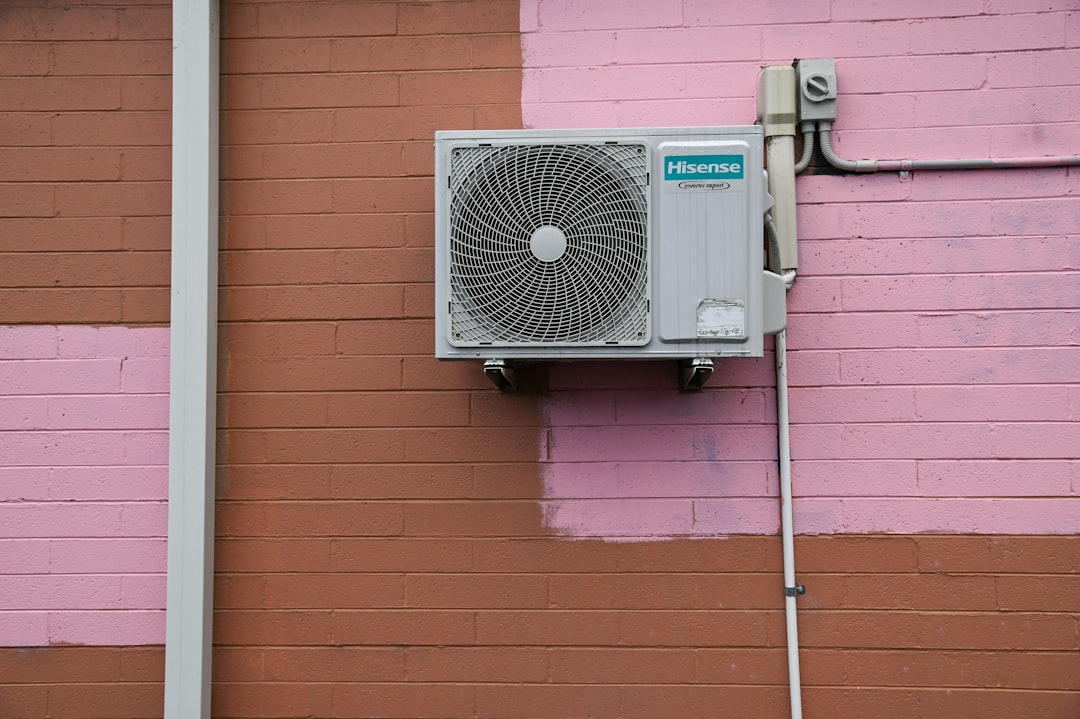
The indoor unit is usually tucked away in a closet, attic, or basement. It houses the evaporator coil and the blower fan. The outdoor unit is that large metal box sitting in your yard or on your side-yard, containing the compressor and the condenser coil. Connecting these two halves are copper refrigerant lines, which act like the "blood vessels" of the system, carrying heat back and forth.
When we perform an Air Conditioning service, we look at how these two halves communicate. If they aren't perfectly matched in size and efficiency, you won't get the SEER2 (Seasonal Energy Efficiency Ratio) rating promised on the box. Understanding Basics of AC Installation is the first step toward ensuring your home stays a sanctuary during a Lancaster heatwave.

The Thermostat: The Brain of the System
Think of the thermostat as the "brain" or the control center. It’s the only part of the system you interact with daily. Its job is simple but critical: it monitors the indoor temperature and signals the rest of the system to turn on or off based on your settings.
In May 2026, we are seeing more homeowners in Santa Clarita and Palmdale switch to smart thermostats. Why? Because they are incredibly efficient. Upgrading from a basic dial or digital model to a programmable or smart thermostat can slash your cooling costs by as much as 10% to 15% each year. These modern devices learn your family’s patterns, automatically adjusting the temperature when you’re at work or asleep.
A common mistake we see is placing the thermostat in a spot that gets direct sunlight or is too close to a cooling vent. This causes "ghost readings," making the system cycle on and off too frequently because it thinks the room is hotter or colder than it actually is.
The Evaporator Coil: Where Cooling Begins
If the thermostat is the brain, the evaporator coil is where the "magic" of cooling happens. Located inside your indoor unit (the air handler), this coil is filled with very cold refrigerant.
As the blower fan pulls warm air from your rooms through the return vents, that air passes over the cold evaporator coil. The refrigerant inside the coil absorbs the heat from the air. Here’s a fun fact: your AC doesn't actually "create" cold; it just removes heat. By the time the air passes through the coil and back into your ductwork, it’s significantly cooler.
The evaporator coil also plays a huge role in dehumidification. As warm, humid air hits the cold coil, moisture condenses into water droplets—much like the outside of a cold soda can on a summer day. This water drips into a drain pan and flows out through a condensate line. If you notice water pooling around your indoor unit, you likely need AC Repair Canyon Country CA to clear a clogged drain line.
The Outdoor Unit: Heat Rejection and Compression
Once the refrigerant has absorbed heat from your living room, it needs a way to get rid of it. This is where the outdoor unit comes into play. It’s designed to live in the elements, protected by an all-weather housing, and its primary goal is to dump that indoor heat into the outside air.
Even when it’s 100°F in Palmdale, the outdoor unit can still release heat because the refrigerant inside is pressurized to be even hotter than the outdoor air. Heat naturally moves from hot to cold, so the "super-heated" gas easily sheds its thermal energy to the outside environment.
Understanding why the compressor is vital among what are the main components of a home air conditioning system
The compressor is often called the "heart" of the AC system, and for good reason. It’s a powerful pump located in the outdoor unit that circulates the refrigerant. Without the compressor, the refrigerant would just sit still, and no heat transfer would occur.
The compressor’s job is to "squeeze" the refrigerant gas, increasing its pressure and temperature. This is vital because the refrigerant must be hotter than the outdoor air to release the heat it gathered from inside.
In recent years, technology has shifted toward variable-speed compressors. Unlike older "on-or-off" designs that run at 100% power or 0%, variable-speed models can adjust their output to match your cooling needs exactly. These systems can slash energy use by 20–40%. If your current unit is over 10-15 years old and making a loud clanking sound, it might be time to look into AC Replacement Canyon Country CA to take advantage of these efficiency gains.
The Condenser Coil: Releasing Heat Outdoors
The condenser coil is the counterpart to the indoor evaporator coil. While the evaporator absorbs heat, the condenser releases it.
As the hot, high-pressure gas from the compressor enters the condenser coil, a large fan (the condenser fan) pulls outdoor air across the coils. This air carries the heat away, causing the refrigerant to cool down and turn back into a liquid state. This phase change—from gas to liquid—is a key part of the refrigeration cycle.
Efficiency is everything here. A layer of dirt just 1/16th of an inch thick on your condenser coil can slash its efficiency by over 20%. In the dusty environment of the Antelope Valley, these coils can get dirty fast. Keeping them clear of weeds, debris, and "cottonwood fuzz" is essential for keeping your AC Installation Lancaster CA running at peak performance.
Refrigerant, Expansion Valves, and Air Distribution
The refrigerant is the "courier" that travels between the indoor and outdoor units. For decades, R-22 (often called Freon) was the standard, but it has been phased out for more environmentally friendly options like R-410A. As of May 2026, the industry is transitioning even further toward refrigerants like R-32 and R-454B, which have a lower Global Warming Potential (GWP).
How the expansion valve regulates what are the main components of a home air conditioning system
The expansion valve is a small but mighty component that sits between the condenser and the evaporator. Think of it like a nozzle on a garden hose. It regulates how much liquid refrigerant enters the evaporator coil.
When the liquid refrigerant passes through the expansion valve, it experiences a sudden drop in pressure. This causes the temperature of the refrigerant to plummet—a phenomenon known as the Joule-Thomson effect. This rapid cooling prepares the refrigerant to head back into the evaporator coil to pick up more heat from your home.
If the expansion valve isn't working correctly, your system might "short cycle" (turn on and off too fast) or the evaporator coil might freeze over. You can learn more about this specific part in our guide on How the Thermostatic Expansion Valve Works in a Cooling System.
Moving the Air: Blower Fans and Ductwork
All the cooling in the world doesn't matter if you can't get that air to your bedroom. The blower fan (located in the air handler) is responsible for the "heavy lifting" of air distribution. It pulls warm air in through the return vents and pushes the newly cooled air out through the supply ducts.
Modern blower motors are often "variable-speed," meaning they can run at lower speeds for longer periods. This provides more consistent temperatures and better air filtration than older motors that just blast air at full speed.
Speaking of ducts, they are often the "silent energy thieves" of a home. It is common for 20% to 30% of the air moving through ducts to be lost to leaks in the attic or crawlspace. This forces your system to work harder and run longer, driving up your bills.
Air filters are also part of this distribution system. They protect the internal components from dust and improve your indoor air quality. We recommend checking your filter every month and replacing it every 30 to 90 days.
| Filter Type | MERV Rating | Best For |
|---|---|---|
| Basic Fiberglass | 1–4 | Protecting the AC unit only; minimal air cleaning |
| Pleated Polyester | 5–8 | Standard home use; catches dust and lint |
| High-Efficiency | 9–12 | Homes with pets or mild allergies; catches mold and dander |
| HEPA/Hospital Grade | 13–16 | Severe allergies or asthma; catches bacteria and smoke |
Maintenance and Troubleshooting for AC Components
Maintenance isn't just about keeping the air cold; it’s about protecting the massive investment you’ve made in your home. A typical central system is designed to handle a massive amount of heat—often between 120,000–240,000 BTU/h—and that puts a lot of stress on the mechanical parts.
Signs of Component Failure
Your AC will usually tell you when a part is struggling. If you listen closely and pay attention to your monthly bills, you can often catch a failing component before it leads to a total system breakdown.
- Strange Noises: Banging or clanking usually means a loose part or a failing compressor. Screeching or squealing often points to a blower motor belt or bearings that are wearing out.
- Weak Airflow: This could be a sign that your blower motor is failing or that your ductwork is severely restricted or leaky.
- Warm Air: If the system is running but the air coming out of the vents is warm, you might have a refrigerant leak or a compressor that isn't engaging.
- Frequent Cycling: If your AC turns on and off every few minutes, it’s "short-cycling." This is often caused by a faulty thermostat, a clogged filter, or an oversized system.
- High Energy Bills: A sudden jump in costs usually means a component (like the condenser coil) is dirty and forcing the system to work twice as hard to reach the same temperature.
If you are seeing these signs frequently, it’s worth asking: When Should You Get a New AC System Installed? Sometimes, repairing an old, inefficient unit costs more in the long run than upgrading to a modern system.
Homeowner Maintenance Tips for May 2026
You don't need a toolbox to keep your AC happy. Here are a few things every Antelope Valley homeowner can do to support what are the main components of a home air conditioning system:
- Clear the Perimeter: Ensure there is at least two feet of clearance around your outdoor unit. Trim back desert shrubs, remove weeds, and make sure no "stuff" (like bikes or garden tools) is leaning against the unit.
- Rinse the Fins: Gently rinse the outdoor condenser coils with a garden hose (don't use a pressure washer!) to remove dust and sand.
- The 90-Day Rule: Change your air filter at least every 90 days. If you have pets or live in a particularly dusty area like Quartz Hill or Antelope Acres, check it every 30 days.
- Check the Drain: Make sure the condensate drain line is flowing freely. A little bit of white vinegar poured down the drain line once a year can help prevent algae growth.
- Professional Tune-Ups: Schedule a professional inspection twice a year—once in the spring for cooling and once in the fall for heating. We check things homeowners can't, like refrigerant levels, electrical connections, and capacitor health.
Frequently Asked Questions about AC Components
What is the most important part of an AC system?
While every part is necessary, the compressor is considered the most vital. It is the "heart" that drives the entire cooling process. If the compressor fails, the system cannot move heat, and replacing it is often the most expensive repair an AC can undergo.
How long do the main components of an AC system last?
On average, a well-maintained central AC system lasts 12 to 15 years. Individual parts vary: capacitors and contactors may last 3 to 5 years, while blower motors and fans usually last 10 to 12 years. Regular maintenance can extend the life of the compressor to the full 15-year mark or beyond.
Why is my AC running but not cooling the house?
This is one of the most common calls we get. The usual suspects are a dirty air filter (restricting airflow), a dirty condenser coil (preventing heat release), or a refrigerant leak. If the air is blowing but it isn't cold, the refrigerant cycle has been interrupted, and you should turn the system off to prevent damage to the compressor.
Conclusion
Understanding what are the main components of a home air conditioning system helps you take control of your home's comfort and energy efficiency. From the "brain" in your thermostat to the "heart" in your compressor, these parts work in harmony to keep the high-desert heat at bay.
At Affordable Air and Heating, we’ve been a family-owned staple in the Antelope Valley since 1996. We know exactly what the heat in Lancaster, Palmdale, and Santa Clarita can do to an AC system. Whether you need a simple tune-up to clean your coils or a full AC Installation Rosamond CA, we are here to provide energy-efficient solutions and flexible financing to keep your family cool.
Don't wait for the next triple-digit heatwave to find out if your components are up to the task. Contact us today for an inspection or to learn more about our Air Conditioning services. We're proud to serve our neighbors across the valley, from Acton to Stevenson Ranch and everywhere in between.