The Reality of AC Lifespan in Extreme Desert Heat
In the Antelope Valley, our air conditioning systems do not enjoy the leisurely life of units installed in milder coastal climates. From Lancaster and Palmdale to the windy stretches of Rosamond and Quartz Hill, our local weather presents a double whammy of relentless summer heat and airborne desert dust. These environmental factors dramatically accelerate the wear and tear on your cooling system.
To put this in perspective, a central air conditioner in a moderate climate might run for 500 to 800 hours a year. In our hot desert climate, that same unit can easily clock 2,500 to 3,000 runtime hours annually. This constant operation means your system experiences three to four times the mechanical wear of an average unit every single year.
Furthermore, desert dust is a silent system killer. Fine sand and dust particles settle deep inside the outdoor condenser coils, acting as an insulating blanket. This prevents the system from releasing heat efficiently, forcing the compressor to work harder and run hotter. Over time, this extra strain leads to premature component failure.
Because of these demanding conditions, the average lifespan of a central air conditioner in a hot desert climate is significantly shorter than the national average. While a system might last 15 to 20 years elsewhere, local homeowners should expect a lifespan closer to 10 to 12 years. If you are wondering how these harsh elements impact your specific system, understanding how does extreme heat and desert dust shorten AC life expectancy is the first step toward making an informed financial decision.
How to Decide If AC Repair Is Worth the Money in a Hot Climate
When your air conditioner breaks down on a triple-digit afternoon in Santa Clarita or Castaic, it is easy to let panic drive your decision-making. However, choosing whether to repair or replace your system should be a rational, math-based decision rather than an emotional one.
To take the guesswork out of the equation, we recommend using two industry-standard financial decision frameworks: the Rule of 5,000 and the 50% Rule. These rules help you compare the immediate cost of a repair against the long-term value of investing in a new, energy-efficient system.
By evaluating your system’s age, its recent repair history, and the specific component that has failed, you can determine if a repair is a smart temporary fix or simply throwing good money after bad. For a comprehensive breakdown of these strategies, you can consult our AC Repair vs Replace Decision Guide.
Using the Rule of 5,000 to Determine If AC Repair Is Worth the Money in a Hot Climate
The Rule of 5,000 is a simple mathematical formula used by HVAC professionals to evaluate the economic feasibility of a repair.
To use this rule, you multiply the age of your air conditioning unit (in years) by the written repair estimate. If the resulting number is less than 5,000, repairing the unit is generally considered a sound investment. If the total exceeds 5,000, your money is better spent on a replacement.
For example, if you have a 4-year-old system in Valencia that requires a moderate repair, multiplying the age by the repair cost will yield a number well under the 5,000 threshold. In this scenario, repairing the unit is highly cost-effective because the system is relatively new and has plenty of remaining service life.
Conversely, if you have a 12-year-old system in Acton facing a major component failure, multiplying that older age by the repair cost will easily push the total past 5,000. In this case, the math clearly indicates that investing in a new system is the smarter financial move, as an older system in a hot climate is highly likely to suffer another major breakdown in the near future.
Applying the 50% Rule: Is AC Repair Worth the Money in a Hot Climate?
The 50% Rule is another straightforward guideline that focuses on the direct relationship between the cost of the repair and the total value of a brand-new system.
Under this framework, if the cost of repairing your current air conditioner exceeds 50% of the price of a complete system replacement, you should opt for the replacement. This rule is particularly relevant when dealing with critical component failures, such as a seized compressor or a severely leaking evaporator coil.
In our extreme climate, paying for a highly expensive repair on an older, out-of-warranty system rarely makes long-term economic sense. Not only are you left with an aging system that operates at a lower efficiency rating, but the remaining older components—such as the fan motor or electrical contactors—will still be prone to failing under the stress of our hot summers. Replacing the unit provides you with a fresh warranty, modern reliability, and immediate peace of mind during peak summer months.
Critical Warning Signs Your Cooling System Is Beyond Saving
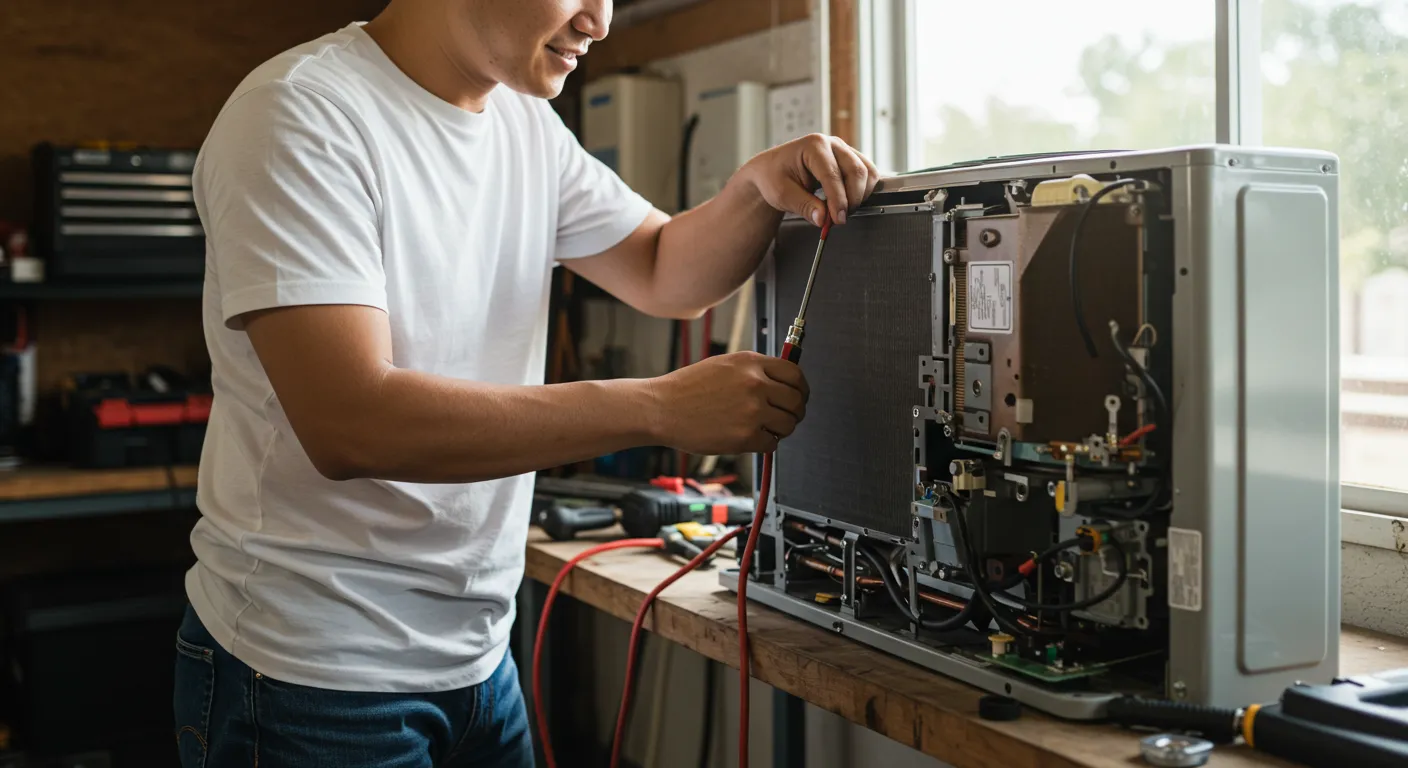
Sometimes, your air conditioner sends clear distress signals long before a total breakdown occurs. Recognizing these warning signs early can save you from an emergency system failure during a heatwave in Canyon Country or Lake Hughes.
Here are the most common indicators that your system is beyond economical repair:
- Frequent Breakdowns: If you have had to call for repairs multiple times over the past two summers, your system is telling you that its components are failing systematically.
- Declining Cooling Performance: If your AC runs constantly but your home still feels warm and humid, the system can no longer keep up with the desert heat.
- Uneven Temperatures: Significant hot and cold spots from room to room often indicate ductwork issues or a system that has lost its capacity to distribute air effectively.
- Strange Noises: Squealing, grinding, or clanking sounds coming from the outdoor unit usually point to a failing compressor or motor.
- Obsolete Refrigerant: Systems manufactured before 2010 typically rely on R-22 refrigerant, which has been phased out due to environmental regulations, making any refrigerant-related repairs incredibly costly.
If your system is exhibiting any of these symptoms, we recommend reviewing our list of Signs You Need AC Repair to see if a simple fix will suffice, or explore When to Consider AC Replacement to prepare for an upgrade.
Energy Efficiency and Long-Term Savings Math
When deciding whether to repair or replace, many homeowners focus solely on the upfront cost of a new unit. However, the real financial story lies in your monthly utility bills. Older air conditioning systems consume significantly more electricity than modern, high-efficiency models.
Air conditioner efficiency is measured by the Seasonal Energy Efficiency Ratio (SEER2). Systems installed a decade ago often have SEER ratings of 10 to 13. Today, modern high-efficiency systems can achieve SEER2 ratings of 18 or higher. Upgrading to an energy-efficient unit can reduce your cooling costs by 20% to 40% immediately.
In hot areas like Lancaster and Palmdale, where the AC runs almost continuously for several months of the year, these monthly savings add up rapidly. A lower-efficiency system essentially wastes energy and inflates your utility bills every single day. Furthermore, modern systems utilize advanced variable-speed technology, allowing them to run at lower, quieter speeds to maintain a consistent temperature and control indoor humidity far better than older single-stage systems.
If your system is running constantly but your home is not reaching the set temperature on your thermostat, it is wise to investigate the root cause. You can learn more about this specific issue by reading our guide on AC Not Cooling But Running: What to Check First.
Steps to Take Before Making Your Final Decision
Before you make a final commitment to a major repair or a complete system replacement, it is essential to gather all the facts. Taking a systematic approach ensures you do not spend money unnecessarily.
First, perform some basic troubleshooting on your own. Sometimes, a system that seems completely dead is simply suffering from a tripped circuit breaker, a clogged air filter, or a thermostat that needs new batteries. You can walk through these initial steps using our guide on AC Troubleshooting Before Calling a Pro.
Second, review your system's maintenance history. A well-maintained system that has received regular annual service is much more likely to benefit from a repair than a unit that has been neglected for years. If you are wondering how to keep your system in peak condition moving forward, check out our article on How Often Should You Service Your Air Conditioner in a Desert Climate.
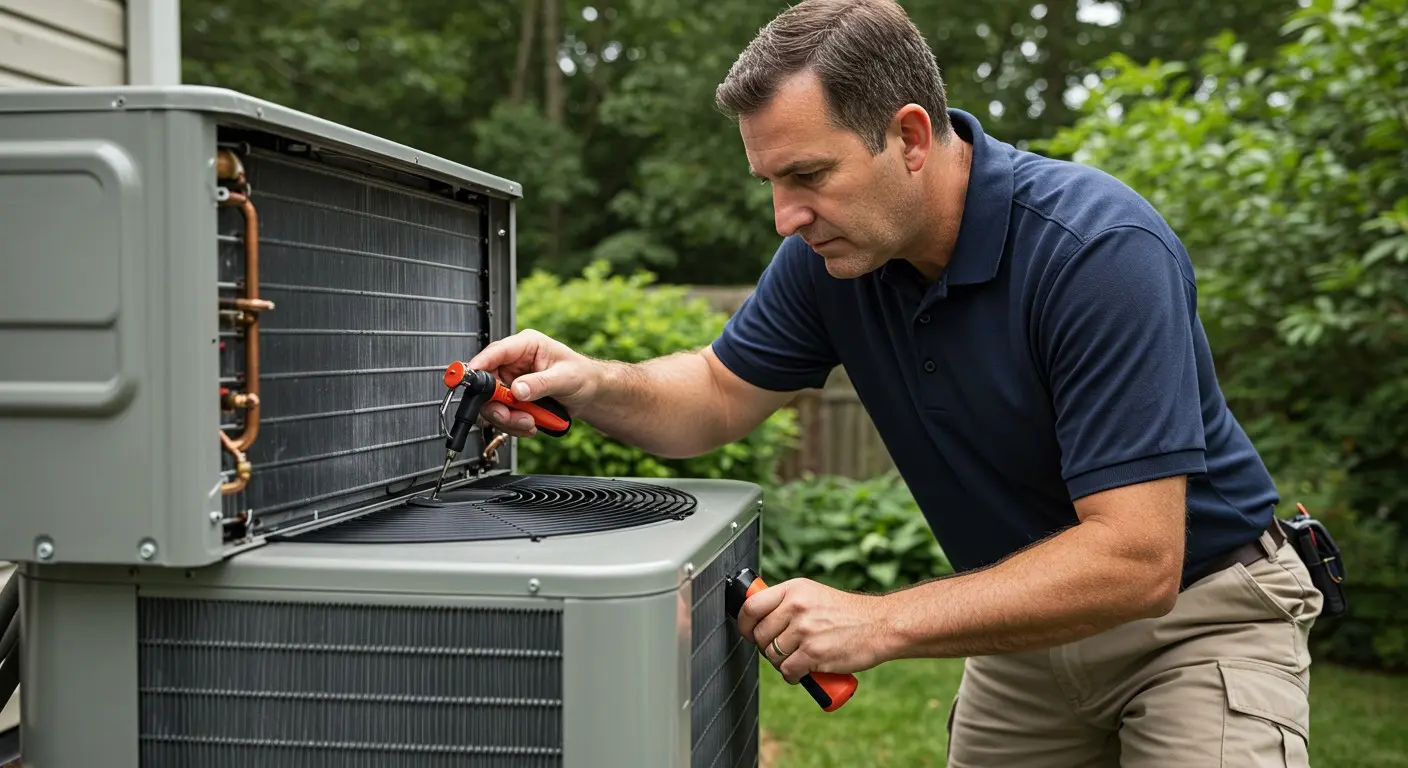
Finally, always obtain a professional diagnostic from a licensed technician. A qualified professional can measure your system's electrical draw, check refrigerant levels, inspect the heat exchanger, and provide you with an accurate, itemized assessment of your system’s health.
Frequently Asked Questions about AC Repair vs. Replacement
Is it worth repairing a 10-year-old AC unit?
In a hot desert climate, a 10-year-old AC unit is entering the final stage of its operational life. Whether it is worth repairing depends entirely on the nature of the breakdown and the system's overall condition.
If the issue is minor—such as a failed capacitor, a worn contactor, or a dirty sensor—and the system has been well-maintained, repairing the unit is usually a sensible choice that can buy you a few more years of comfort. However, if the system requires a major repair, such as a new compressor or evaporator coil, or if it has a history of frequent breakdowns, investing in a replacement is almost always the more cost-effective long-term decision.
What are the signs that an AC compressor is failing?
The compressor is the heart of your air conditioning system. When it begins to fail, you will typically notice several distinct warning signs:
- Loud or Unusual Noises: Clanking, rattling, or screeching sounds when the outdoor unit turns on indicate internal mechanical damage.
- Hard Starting: If the outdoor unit stutters, shakes, or takes several seconds to turn on, the compressor is struggling to start.
- Blowing Warm Air: A failing compressor cannot pump refrigerant effectively, resulting in warm air blowing from your vents.
- Tripped Circuit Breakers: If your AC consistently trips the electrical breaker in your main panel, the compressor may be drawing too much electrical current.
How does outdated R-22 refrigerant affect my repair decision?
R-22 refrigerant has been completely phased out due to federal environmental regulations. Because it is no longer manufactured or imported, the remaining supply of reclaimed R-22 is extremely scarce and highly expensive.
If your older system has a refrigerant leak and uses R-22, repairing the leak and recharging the system is rarely a wise investment. Not only will the recharge itself be costly, but older systems are highly prone to developing additional leaks over time. In this scenario, we strongly recommend replacing the system with a modern unit that uses environmentally friendly, readily available refrigerants.
Conclusion
Deciding whether to repair or replace your air conditioner in a hot desert climate does not have to be an overwhelming process. By applying practical financial rules like the Rule of 5,000 and the 50% Rule, and by looking closely at your system's age and efficiency, you can make a choice that protects both your home's comfort and your family's budget.
At Affordable Air and Heating, we have been family-owned since 1996, proudly serving our neighbors throughout the Antelope Valley, including Palmdale, Lancaster, Santa Clarita, Saugus, and Valencia. We specialize in providing honest assessments, energy-efficient solutions, and dependable service that keeps your home comfortable all year long.
If you are facing an unexpected system replacement, we also offer flexible financing options to make your transition to a new, high-efficiency system as smooth and affordable as possible. To learn more about how we can help, read about How HVAC Financing Makes AC Replacement Affordable in the Antelope Valley or explore our complete range of Affordable Air and Heating Air Conditioning Services today. Let us help you keep your cool, no matter how high the summer temperatures climb!