Why Poor Insulation Makes Your AC Run Constantly in Hot Inland Climates
How poor insulation makes your AC run constantly in hot inland climates comes down to one simple problem: heat pours into your home faster than your AC can remove it.
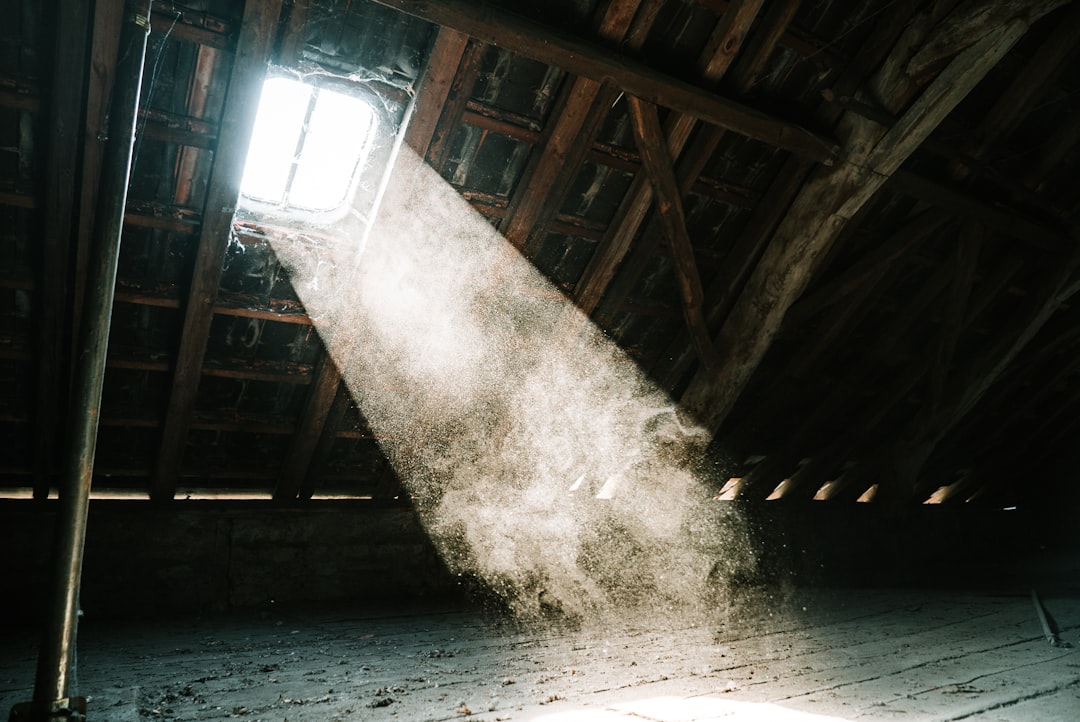
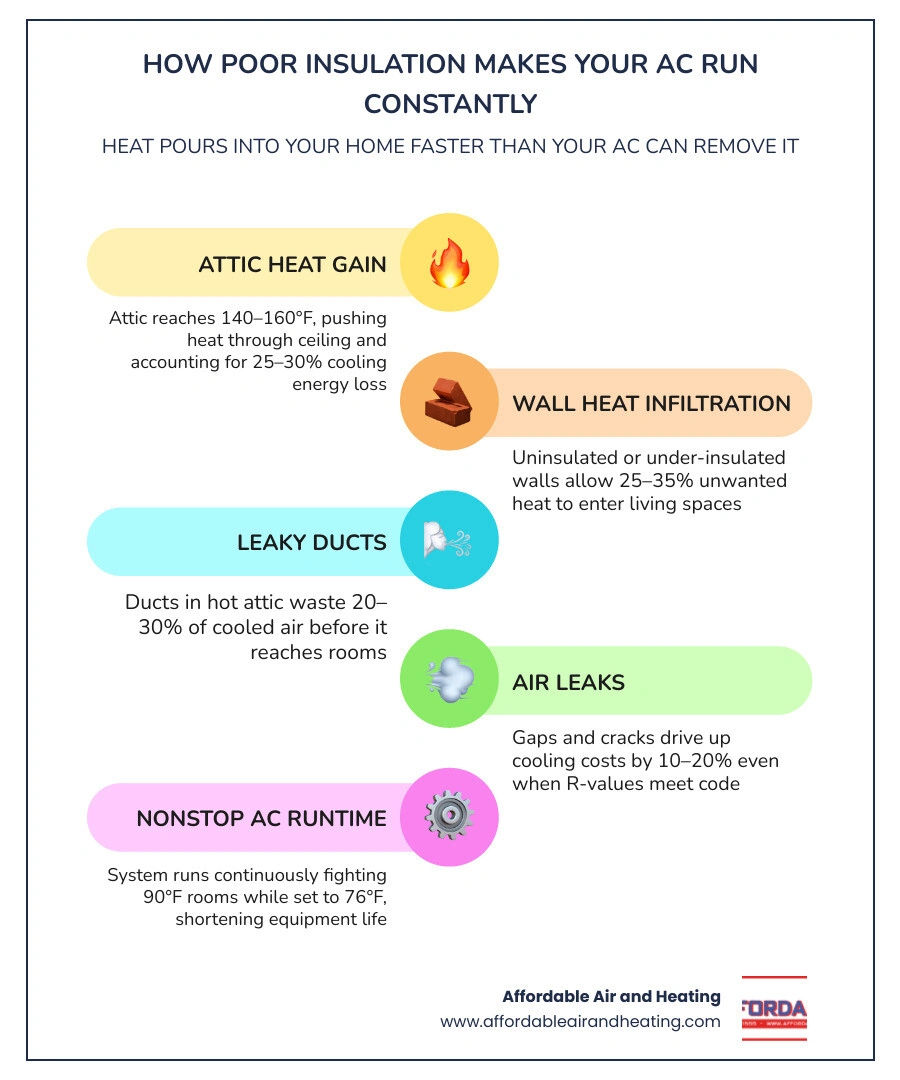
When insulation is thin, settled, or missing, your attic can reach 140–160°F on a summer afternoon. That heat pushes straight down through your ceiling into your living spaces. Your AC kicks on — and never stops, because it's fighting a losing battle against a continuous flood of heat.
Here's a quick breakdown of what's happening:
- Attic heat gain accounts for up to 25–30% of your home's total cooling energy loss
- Uninsulated or under-insulated walls allow another 25–35% of unwanted heat to enter
- Leaky ducts running through that same scorching attic can waste 20–30% of the cool air your system just produced
- Air leaks alone can drive up heating and cooling costs by 10–20%, even when insulation R-values meet code
The result? Your thermostat is set to 76°F, but your rooms feel like 90°F, and your AC runs nonstop trying to close that gap.
For Antelope Valley homeowners, where summer temperatures regularly push past 100°F, this isn't just uncomfortable — it shortens the life of your AC system and drives up energy bills month after month.
Key terms for how poor insulation makes your ac run constantly in hot inland climates:
- ac running constantly in desert heat
- is it normal for ac to run nonstop when temperatures exceed 100 degrees
The Science of Heat Transfer: How Poor Insulation Makes Your AC Run Constantly in Hot Inland Climates
To understand why your air conditioner is working overtime, we have to look at the basic laws of thermodynamics. Heat is naturally greedy; it always moves from an area of higher temperature to an area of lower temperature. In places like Palmdale, Lancaster, and Santa Clarita, the summer sun beats down on your roof and walls, creating a massive temperature difference between the blistering outdoors and your cooled living spaces.
This temperature difference is what HVAC professionals call "Delta T." When the outdoor temperature hits 105°F and you want your living room to stay at a comfortable 72°F, you have a Delta T of 33 degrees. That is a massive hill for any air conditioner to climb.
Your home relies on thermal resistance—measured as "R-value"—to slow down this inevitable heat infiltration. The higher the R-value, the better the material is at resisting heat flow.
When your home has poor insulation, its thermal resistance is incredibly low. Heat easily penetrates your ceilings and walls, rapidly raising the indoor temperature. As a result, your indoor spaces gain heat faster than your AC can physically extract it.
Even if your cooling equipment is in perfect working order, it will struggle to reach your thermostat set point. Instead of cycling off to rest, the system continues running in a desperate attempt to satisfy the thermostat. If you have ever wondered is it normal for ac to run nonstop when temperatures exceed 100 degrees, the answer is that while extreme weather increases demand, an AC running constantly in desert heat is almost always a sign that your home’s thermal envelope has failed.
Attics and Walls: How Heat Infiltration Forces Continuous AC Operation
Your home’s exterior is its first line of defense against the elements. However, two primary areas are incredibly vulnerable to heat infiltration: your attic and your exterior walls.

During peak summer hours in the Antelope Valley, radiant heat from the sun bakes your roof shingles. Without a strong thermal barrier, your attic space transforms into a giant oven, trapping air that can easily climb to 150°F or higher. This intense heat radiates downward through your ceiling drywall directly into your bedrooms and living areas.
At the same time, uninsulated or poorly insulated walls allow heat to seep through your home's sides. This continuous, multi-directional heat invasion forces your air conditioner to run without a break. Understanding how the local environment accelerates this process is key to stopping it, which you can read about in our guide on how the Antelope Valley desert climate affects your AC system.
To see exactly where your home is gaining the most unwanted heat, look at how attics and walls compare:
| Home Feature | Typical Summer Temperature | Percentage of Unwanted Summer Heat Gain | Primary Heat Transfer Method |
|---|---|---|---|
| Uninsulated Attic | 140°F – 160°F | 25% – 30% | Radiant & Conductive |
| Uninsulated Walls | 100°F – 115°F (Surface) | 25% – 35% | Conductive |
Understanding Attic Heat Gain and How Poor Insulation Makes Your AC Run Constantly in Hot Inland Climates
If your attic is insulated with thin, decades-old fiberglass batts or settled blown-in cellulose, it cannot stop the downward march of heat. Over time, traditional loose-fill insulation can settle and lose its loft, drastically reducing its effective R-value.
Furthermore, when insulation does not completely cover your ceiling joists, those wooden beams act as "thermal bridges." Wood conducts heat much faster than insulation material, allowing heat to bypass your insulation altogether. This massive, uninterrupted flow of attic heat is responsible for up to 25–30% of a home's cooling energy loss, forcing your system to work twice as hard to keep your ceilings from radiating heat like a space heater.
How Poor Insulation Makes Your AC Run Constantly in Hot Inland Climates by Trapping Wall Heat
While we often focus on attics, uninsulated walls are just as damaging to your comfort and utility budget. Many homes in Acton, Lancaster, and Rosamond feature stucco walls. Stucco has a high thermal mass, meaning it absorbs a tremendous amount of heat during the day and holds onto it long after the sun goes down.
When your walls lack proper insulation, this stored heat slowly radiates inward into your living spaces during the late afternoon and evening. This is why your home might still feel incredibly hot at 9:00 PM, even when the desert air outside has begun to cool.
This continuous heat radiation contributes to 25–35% of unwanted heat gain, leading to a massive AC bill spikes in summer. If you are tired of opening your utility statements in dread, check out our breakdown on why is my electric bill so high in an Antelope Valley summer to find relief.
The Double Whammy of Duct Leakage in Unconditioned Attic Spaces
If your insulation is poor, your ductwork is likely suffering too. Most residential duct systems are routed through the unconditioned attic space. When your attic is hovering around 150°F, those metal or flexible ducts are sitting directly in the heat.
If your ducts are uninsulated or leaky, you face a double whammy:
- Thermal Loss: The cool air inside your ducts is warmed by the extreme attic heat before it ever reaches your vents, losing 20–30% of its cooling power.
- Air Loss: Leaks and cracks in the duct joints pull dusty, superheated attic air into your system and blow it into your home.
Under California Title 24 energy standards, duct systems must undergo strict duct pressure testing during system installations to ensure leakage is kept to an absolute minimum. When we combine high-performing attic insulation with tightly sealed ducts, we prevent this major energy drain and keep your system running efficiently.
Diagnostic Steps and Upgrades to Stop Constant AC Running
If your air conditioner runs nonstop without cooling your home, you do not have to just accept high bills and sweaty afternoons. There are clear, actionable diagnostic steps and upgrades you can take to reclaim your home's comfort.
A professional home energy audit is the most effective way to pinpoint where your home is losing energy. Using advanced infrared cameras, a technician can see exactly where heat is radiating through your walls and ceiling.
Once the weak spots are identified, combining targeted air sealing with insulation upgrades will dramatically reduce the load on your cooling system. You can learn more about how these thermal barriers protect your HVAC system by reading about energy efficiency with insulation and exploring our expert insulation services.
Additionally, keeping your home properly sealed does more than just lower your bills; it also prevents outdoor dust, allergens, and desert pollen from entering your living spaces. Discover how this upgrade protects your family’s health in our article on how home insulation can enhance IAQ (Indoor Air Quality), and check out these 8 ways to reduce your monthly utility bills.
Checking Your Attic's R-Value and Insulation Levels
If your home was built before the 1990s, there is a very high chance your insulation levels fall short of modern energy standards. Even in homes built more recently, insulation can settle, compress, or become disturbed by cable installers and pests.
As of June 2026, building standards recommend attic insulation levels between R-30 and R-49 for hot inland climates, with desert-fringe communities benefiting from even higher values. To check your own attic:
- Look at the joists: If you can see the wooden floor joists in your attic, your insulation is too thin (likely R-19 or worse).
- Measure the depth: Standard fiberglass batting should be at least 10 to 15 inches deep to achieve a proper R-38 to R-49 rating.
- Check for compression: Compressed or dirty insulation loses its thermal resistance and needs to be replaced or topped off.
Air Sealing and Duct Repair Strategies
Adding insulation without sealing air leaks is like putting on a wool sweater in a windstorm—the air will blow right through it. Tiny gaps around attic hatches, recessed lighting, plumbing stacks, and electrical outlets allow hot air to bypass your insulation entirely. These small leaks can account for 10–20% of your total cooling waste.
By sealing these gaps with expanding foam and caulk, and performing professional duct sealing, you ensure that your cooled air stays inside your living spaces. If your AC has been struggling due to these issues, scheduling an AC efficiency with timely repair visit can get your system back in top shape before the next major heatwave hits.
Frequently Asked Questions About AC Runtime and Insulation
Can insulation ever work against you in a hot cooling climate?
In building science circles, there is an ongoing debate about whether extremely high levels of insulation (above R-30) can trap internal heat gains—like heat from cooking, appliances, and electronics—inside the home during shoulder seasons.
However, in hot desert climates like the Antelope Valley, the outdoor temperatures are so consistently high during the summer that insulation is always your best friend. While night flushing (opening windows to let cool night air in) is popular in milder coastal climates, the extreme daytime heat in our region means that a high R-value thermal barrier is absolutely essential to prevent massive solar heat gain.
How do I know if my constant AC running is caused by poor insulation or a broken AC?
You can perform a simple "Delta T" test to check your system's performance:
- Measure the temperature of the air entering your return vent.
- Measure the temperature of the air blowing out of your supply register.
- The Verdict: If the difference is between 15°F and 20°F, your AC is cooling properly. If your walls and ceilings still feel hot to the touch and your rooms are warm, your home is simply gaining heat faster than your AC can remove it due to poor insulation. If the temperature difference is less than 15°F, your AC may have a mechanical issue, such as a low refrigerant charge or dirty coils.
What R-value is recommended for attics in hot inland climates?
The Department of Energy recommends a minimum of R-38 for attics in hot, dry climates. For extreme desert communities like Lancaster, Palmdale, and Rosamond, upgrading to R-49 or even R-60 provides the ultimate level of thermal protection, ensuring your home remains cool and comfortable even when outdoor temperatures soar past 100°F.
Conclusion
When your home has proper insulation, your air conditioner does not have to fight a non-stop battle against infiltrating heat. By upgrading your attic insulation, sealing hidden air leaks, and ensuring your ductwork is fully sealed, you can finally put an end to constant AC running, protect your equipment from premature wear, and enjoy a comfortable, evenly cooled home.
At Affordable Air and Heating, we have been family-owned since 1996, proudly serving our neighbors throughout the Antelope Valley—including Palmdale, Lancaster, Santa Clarita, Saugus, Valencia, Castaic, Stevenson Ranch, Rosamond, and Acton. We are dedicated to providing affordable, energy-efficient solutions that keep your home comfortable all year long.
Ready to stop your AC from running constantly and start saving on your monthly utility bills? Visit our air conditioning services page today to schedule a professional evaluation and find the perfect, energy-efficient solution for your home!