Why Summer AC Breakdowns Happen — and How to Stop Them Before They Start
Understanding how maintenance plans prevent expensive AC breakdowns in summer starts with one simple truth: most summer failures don't come out of nowhere. They build up quietly over months — a dirty coil here, a weakening capacitor there — until the first scorching day finally pushes a stressed system past its limit.
How maintenance plans prevent expensive AC breakdowns in summer:
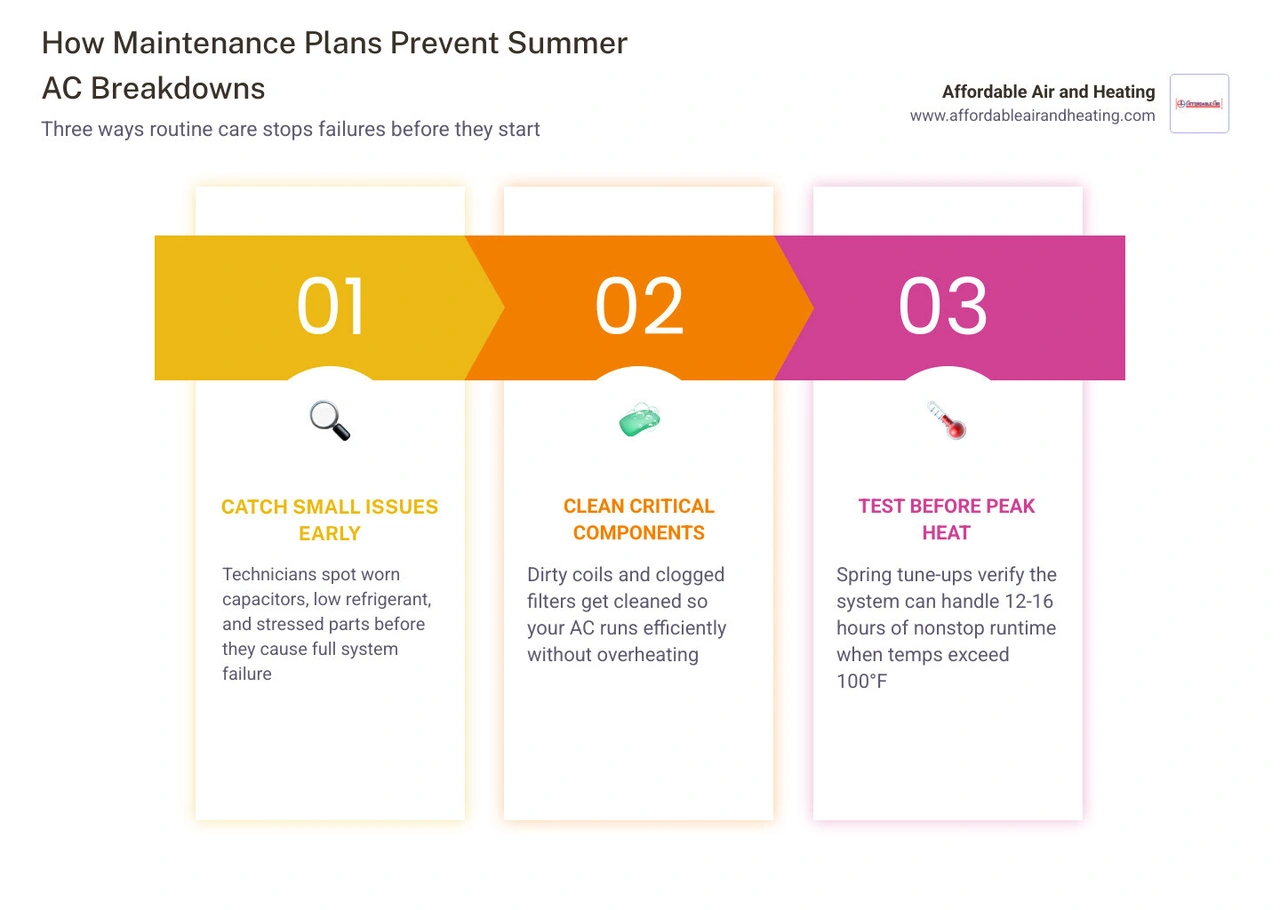
- Catch failing parts early — technicians identify worn capacitors, low refrigerant, and stressed components before they cause a full system failure
- Clean what slows the system down — dirty coils and clogged filters force your AC to work harder, increasing breakdown risk
- Test the system before peak heat arrives — spring tune-ups verify your AC can handle nonstop summer runtime
- Clear condensate drains — preventing water damage and shutdowns caused by blockages
- Tighten electrical connections — loose wiring under heat stress is a leading cause of midsummer failures
- Document service history — keeping your manufacturer warranty valid and your system on record
For Antelope Valley homeowners, this matters more than most. Summers here regularly push temperatures past 100°F, and your AC doesn't get a break. Systems in Palmdale and Lancaster can run 12 to 16 hours a day during peak heat — far more than in milder climates. Without regular care, even a relatively new system can start losing efficiency, running longer, and costing more, all before it eventually breaks down on the hottest day of the year.
The good news is that most summer breakdowns are preventable. Research consistently shows that routine maintenance prevents 70 to 80 percent of common AC failures. A maintenance plan puts that prevention on a schedule, so nothing slips through the cracks.
Why AC Systems Fail So Often During Summer Heatwaves
Summer is when every weakness in an AC system gets exposed. In Antelope Valley, that can mean nonstop runtime for days at a time. When temperatures soar in Palmdale, Lancaster, Santa Clarita, and nearby communities, your system is asked to do its hardest job for the longest stretch of the year.
A unit that seemed "mostly fine" in spring may suddenly struggle in July because heat multiplies existing problems:
- Dirty condenser coils trap heat and make the system work harder
- Clogged filters choke airflow
- Low refrigerant reduces cooling performance and increases compressor strain
- Weak capacitors may fail when the system tries to start over and over
- Loose electrical connections can overheat
- Blower and airflow problems cause uneven cooling and long run times

Why do AC systems commonly break down during summer heatwaves?
Because that is when they are under maximum stress.
Your AC may run almost continuously during a heatwave. That long runtime increases wear on major components, especially the compressor, fan motor, capacitor, and contactor. Small problems that stayed hidden during milder weather become impossible to ignore when the system is running hour after hour.
Heatwaves also reduce your margin for error. If coils are dirty or refrigerant is low, the system cannot remove heat efficiently. If airflow is restricted, indoor comfort drops quickly. If an electrical component is already weakening, repeated starts in high heat can be the final straw.
In simple terms: summer does not create every problem, but it reveals them fast.
The early warning signs homeowners usually miss before a summer failure
Most breakdowns give warnings first. They are just easy to shrug off until the house feels like an oven.
Watch for signs like:
- Short cycling
- Warm air coming from vents
- Weak airflow in one or more rooms
- Unusual buzzing, rattling, or clicking
- Rising utility bills without a clear reason
- Uneven cooling throughout the house
- Longer run times than normal
- Excess humidity indoors
If you have noticed any of these, do not wait for the hottest weekend of the year. Our article on spotting AC trouble early goes deeper into the warning signs homeowners in our area should watch.
What happens to an AC system over multiple summers without routine maintenance?
Neglect is cumulative. One skipped tune-up may not seem dramatic, but several summers in a row tell a different story.
Without routine maintenance, AC systems typically:
- Lose about 5% efficiency per year
- Use more electricity to produce the same cooling
- Experience more wear on motors and electrical parts
- Develop coil buildup and airflow restrictions
- Become more likely to suffer repeat repairs
- Reach the end of their usable life much sooner
Research consistently shows that well-maintained systems can last 15 to 20 years, while neglected systems often fail far earlier. That is a big difference for something you depend on every summer.
How Maintenance Plans Prevent Expensive AC Breakdowns in Summer
A maintenance plan works because it changes the timing of HVAC service. Instead of waiting until your AC quits, we inspect, test, clean, and adjust it before heavy summer demand hits.
That proactive approach is the heart of how maintenance plans prevent expensive AC breakdowns in summer. We are not just "looking things over." We are finding small issues before they become compressor damage, electrical failures, frozen coils, or water leaks.
How maintenance plans prevent expensive AC breakdowns in summer by catching small problems early
Many of the most expensive summer failures begin as small, fixable issues:
- A weakening capacitor that still works, but not for long
- A contactor with wear from repeated electrical cycling
- A partially clogged condensate drain
- Dirt buildup on evaporator or condenser coils
- Low refrigerant from a developing leak
- Loose electrical connections that worsen under heat
A maintenance visit gives us a chance to catch those issues before peak season. This matters because minor problems tend to compound. Restricted airflow can cause freezing. Low refrigerant can overheat the compressor. A dirty system runs longer, which adds more wear, which creates more chances for failure. It is basically a bad domino setup.
For a closer look at why routine service matters, read our guide on the benefits of regular HVAC maintenance.
How maintenance plans prevent expensive AC breakdowns in summer through seasonal tune-ups
Seasonal tune-ups are where prevention becomes practical.
A summer-focused maintenance plan should include a spring visit before heavy cooling demand begins. That timing matters. It gives us the chance to test the system, verify performance, and address concerns before your AC is pushed into marathon mode.
During a tune-up, we can confirm that:
- The thermostat is reading accurately
- Airflow is sufficient
- Coils are clean enough for efficient heat transfer
- Refrigerant levels and pressures are within range
- Electrical components are operating properly
- Drainage is clear and safe
- The system starts, runs, and cycles the way it should
That kind of pre-season prep helps homeowners avoid the classic "it worked last month" scenario. Our post about AC tune-up maintenance in Canyon Country explains why seasonal service is one of the smartest steps before summer.
Why preventive maintenance lowers summer energy use and utility waste
Breakdown prevention is only part of the value. Maintenance also improves efficiency.
A dirty or poorly maintained system can increase energy use by 15% or more. Dust and debris on coils reduce heat transfer. Clogged filters restrict airflow. Loose parts and weak components force longer run times. The AC keeps working, but it works harder than it should.
Research shows that well-maintained systems often run 15% to 25% more efficiently than neglected ones. In practical terms, that means:
- Shorter cooling cycles
- Less strain on major components
- More consistent indoor temperatures
- Lower monthly energy waste during peak summer
If your summer bills have crept up, our article on why AC bills spike in summer can help connect the dots.
What a Comprehensive Summer-Focused AC Maintenance Plan Should Include
Not all maintenance is equal. A real plan should be built around reliability, efficiency, and early detection, not just a quick glance at the thermostat and a cheerful wave from the driveway.
A strong summer-focused AC maintenance plan should include:
- Filter inspection or replacement guidance
- Evaporator and condenser coil inspection and cleaning
- Refrigerant level and pressure checks
- Capacitor and contactor testing
- Electrical connection inspection and tightening
- Thermostat calibration and operation check
- Condensate drain inspection and clearing
- Blower and airflow evaluation
- Safety and performance testing
- Documentation of service performed
The specific components a maintenance plan addresses before peak season
Before summer, the most important parts to inspect include:
- Evaporator coil
- Condenser coil
- Air filter
- Capacitor
- Contactor
- Fan motor
- Blower assembly
- Compressor
- Condensate drain line
- Thermostat and controls
Each part affects reliability in a different way. Dirty coils reduce cooling capacity. A weak capacitor can prevent startup. A clogged drain can trigger shutdowns or leaks. Low refrigerant can damage the compressor. When those issues are found early, they are far easier to manage than after a heatwave begins.
The hidden summer problems that routine maintenance helps prevent
Maintenance plans help prevent more than obvious no-cooling calls. They also reduce the risk of hidden summer problems such as:
- Frozen evaporator coils from poor airflow or refrigerant issues
- Water leaks caused by clogged condensate drains
- Compressor overheating from restricted heat transfer
- Fan motor strain from heavy runtime
- Uneven cooling due to duct, blower, or airflow issues
- Indoor humidity problems
- Nuisance shutdowns from safety switches
Water leaks are a perfect example. Homeowners often think of AC service as "cold air only," but blocked drains can lead to overflow, ceiling stains, or damage around the indoor unit. Our article on preventing AC water leaks explains why drain maintenance matters so much in summer.
What homeowners can do between visits and when to call a pro
Professional maintenance is essential, but homeowners can still help the system between scheduled visits.
Here are simple maintenance tasks you can handle:
- Check filters every 1 to 3 months and replace as needed
- Keep plants, weeds, and debris away from the outdoor unit
- Make sure supply and return vents are not blocked by furniture
- Watch for sudden bill spikes
- Listen for unusual sounds
- Check that the thermostat settings are correct
- Look for water around the indoor unit
Call a professional if you notice:
- Warm air
- Weak airflow
- Ice on refrigerant lines or coils
- Repeated breaker trips
- Water leaks
- Burning smells
- Loud buzzing, grinding, or banging sounds
For a few safe steps to try before scheduling service, see our guide on AC troubleshooting before calling a pro.
The Long-Term Benefits of Joining an HVAC Maintenance Plan
A maintenance plan is not just about one summer. It is about making every summer easier on your system, your budget planning, and your peace of mind.
| Maintained AC systems | Neglected AC systems |
|---|---|
| Better efficiency | Higher energy waste |
| Fewer emergency breakdowns | More midsummer failures |
| Cleaner coils and better airflow | More strain and longer run times |
| Documented service history | Gaps in maintenance records |
| Longer expected lifespan | Shorter lifespan |
| Better peak-season readiness | Higher risk during heatwaves |
How maintenance plans improve summer reliability and provide peace of mind
When temperatures spike across Antelope Valley, service demand spikes too. That is exactly when homeowners want the fewest surprises.
Maintenance plans help by improving reliability in advance and often including priority service benefits for members. That can mean faster help during peak demand and less time worrying about whether your system will survive the next heatwave.
Peace of mind is not fluff. It matters when outdoor temperatures are extreme and indoor comfort is tied directly to your family’s safety, sleep, and daily routine.
How routine maintenance helps protect warranties and extend equipment lifespan
Many manufacturers require documented professional maintenance to keep warranty coverage valid. A maintenance plan helps by creating a consistent service record instead of relying on memory, old emails, or "I know we had it checked at some point."
Routine maintenance also helps extend equipment life. Research commonly shows a large lifespan gap between maintained and neglected systems. Clean, properly adjusted equipment simply experiences less unnecessary wear.
That means maintenance supports two major goals at once:
- Protecting warranty coverage on major parts
- Delaying replacement by helping the system last longer
Why maintenance plans are especially valuable for older systems and heavy summer use
If your AC is older, maintenance becomes even more important. Aging systems have more worn components, less efficiency margin, and greater sensitivity to heat stress. A unit that has already been through many Antelope Valley summers has earned some attention.
Maintenance plans are especially valuable when:
- The system is over several years old
- Your home has long daily cooling runtimes
- You have noticed uneven cooling or rising bills
- The AC has needed repairs in the past
- You want more dependable peak-season performance
Older systems do not always need replacement right away, but they do need closer monitoring.
How to Choose the Right Maintenance Plan for Your Home in Antelope Valley
Not every plan offers the same level of value. The best one for your home should be clear, practical, and built for the realities of hot local summers.
What to look for in a summer-ready maintenance agreement
Look for a plan that includes:
- A written checklist of maintenance tasks
- At least one cooling-season prep visit
- A fall visit for heating system care
- Clear service reminders
- Documented inspection results
- Priority scheduling during busy periods
- Member benefits such as repair discounts where offered
We also recommend choosing a provider with local experience in Antelope Valley conditions. Dust, long runtimes, and intense summer heat are not minor details here. They shape how hard your system works.
When to schedule AC maintenance for the best summer protection
Spring is the ideal time to schedule AC maintenance. It gives your system a checkup before the first real heatwave and usually provides more flexibility than waiting until midsummer.
Best practice for most homes is twice-yearly HVAC maintenance:
- Spring for AC
- Fall for heating
That is especially important in our service area, where summer heat can arrive early and stay intense. If you are ready to plan ahead, our AC maintenance service in Palmdale page is a good place to start.
Service area resources for local homeowners
We provide AC maintenance for homeowners across Antelope Valley and nearby communities. You can explore local service pages here:
- AC maintenance in Santa Clarita
- AC maintenance in Lancaster
- AC maintenance in Canyon Country
- AC maintenance in Valencia
We also serve Palmdale, Acton, Ana Verde, Antelope Acres, Castaic, Lake Hughes, Newhall, Quartz Hill, Rosamond, Saugus, and Stevenson Ranch.
Frequently Asked Questions About Preventing Summer AC Breakdowns
Can a maintenance plan really prevent most common summer AC failures?
In many cases, yes. Research cited across the industry shows regular maintenance can prevent 70% to 80% of common AC failures. That is because many summer breakdowns come from conditions that are detectable early, such as dirty coils, weak capacitors, airflow restrictions, low refrigerant, and loose electrical connections.
A maintenance plan cannot promise that nothing will ever break, but it dramatically lowers the odds of a surprise failure.
Is one annual AC tune-up enough for homes in hot climates?
Usually, no. For homes in hot climates like Antelope Valley, twice-yearly HVAC maintenance is the better standard: once before cooling season and once before heating season.
Heavy summer use, dusty conditions, older equipment, pets, and indoor air quality concerns can all make regular attention more important. One visit is better than none, but biannual maintenance gives much stronger protection.
Are maintenance plans worth it for newer air conditioning systems too?
Yes. Newer systems still need maintenance to stay efficient, reliable, and warranty-compliant. In fact, this is often when service is easiest to stay on top of, because the system is not yet dealing with years of buildup and wear.
Regular maintenance helps newer equipment:
- Keep its designed efficiency longer
- Avoid preventable strain
- Maintain warranty documentation
- Build a clean service history from the start
Conclusion
Summer in Antelope Valley is not gentle on AC equipment, and breakdowns rarely happen without warning. The real value of a maintenance plan is that it helps us catch those warnings early, clean and test the system thoroughly, and prepare it for the long, hot season ahead.
That is exactly how maintenance plans prevent expensive AC breakdowns in summer: through scheduled prevention, not last-minute panic.
At Affordable Air and Heating, we have been helping local homeowners stay comfortable since 1996 with affordable service, energy-efficient solutions, and dependable care for the communities we serve. If you want fewer surprises, better summer reliability, and more confidence in your system, learn more about our HVAC membership options.